
Loading, please wait...
LOT 0393
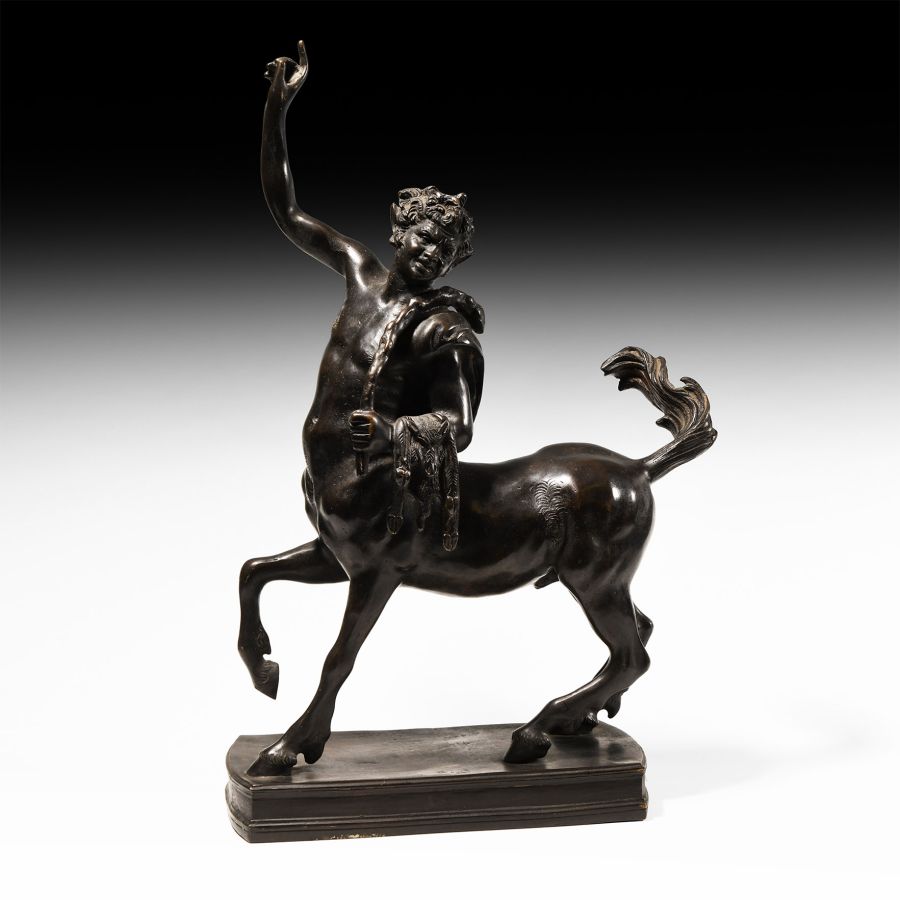
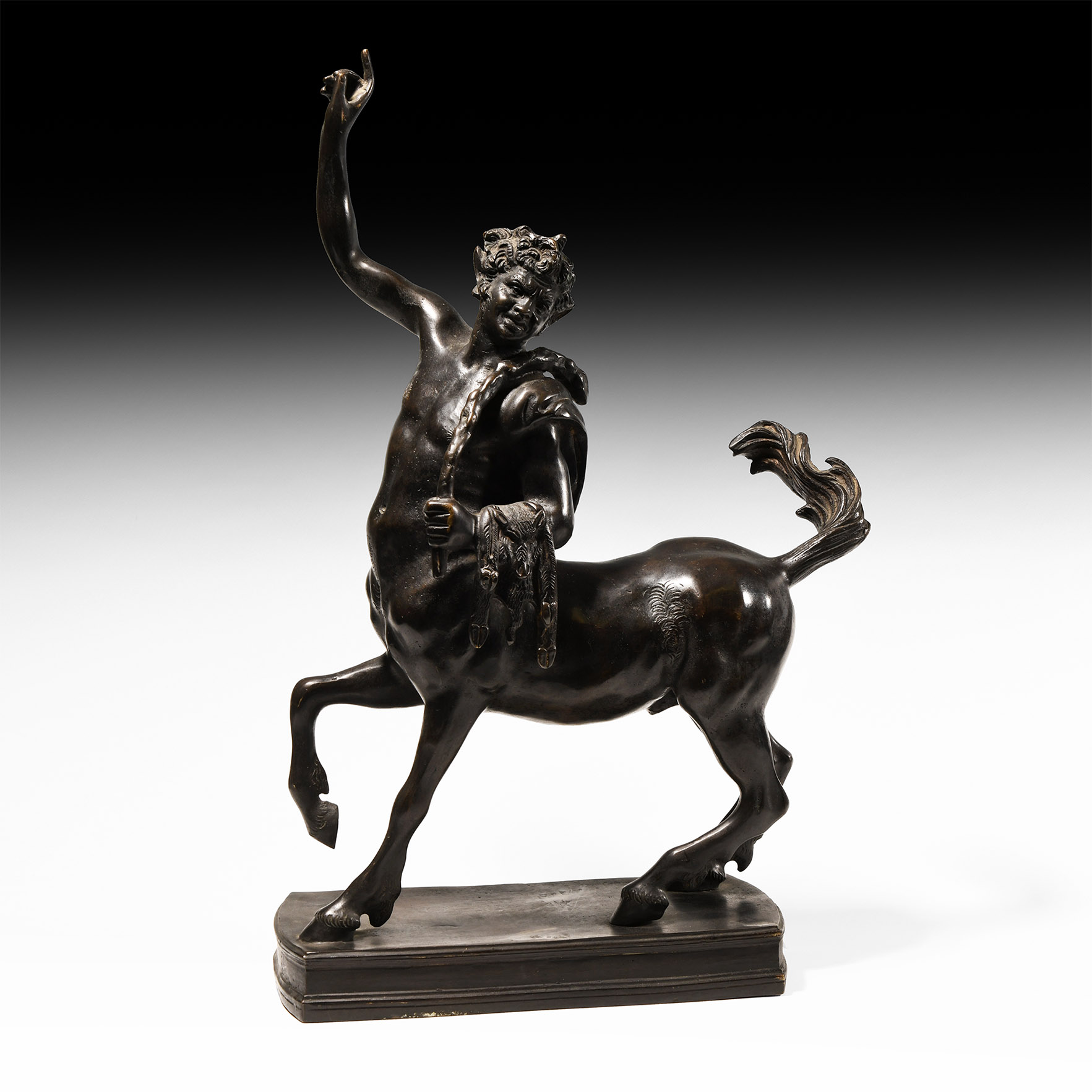
Neoclassical Bronze Young Centaur Statue
20TH CENTURY A.D.
20 7/8 in. (10.3 kg, 53 cm high).
A bronze figure of a centaur in animated pose with upper body turned, right arm raised, left arm bent and hand holding a cudgel supported on the shoulder; cloak draped over the left shoulder and skin of a boar folded over the left forearm; on a tiered socle base.
ProvenanceFrench collection, 1960s-early 2000s.
From an important Paris gallery, France.
Modelled on the so-called Capitoline Centaurs, specifically the Young Centaur, which was found as one of a pair of centaurs during the excavation of Hadrian’s Villa in 1736; the Roman Old and Young centaur pair were themselves based on Hellenistic originals.
CONDITIONTimeLine Auctions follows a vetting process to ensure the authenticity and legality of all items, reinforcing our commitment to integrity and responsible trading. Each antiquity, antique, and coin lot undergoes thorough examination by a vetting committee of at least ten external specialists, professional trade association members, scientists, and archaeologists: Our Vetting Process
AUCTIONS:
TimeLine is a leading auction house specialising in antiquities, ancient art, collectables, natural history, coins, medals, and books. Our auctions offer museums, collectors, historians, and enthusiasts the opportunity to acquire unique and historically significant pieces.
-
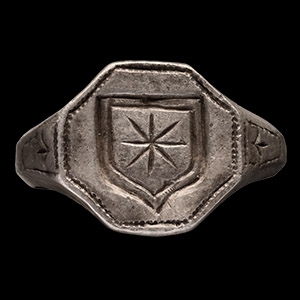
Stuart Period Silver Ring with Shield and Star
Circa 17th century A.D.Sold for (Inc. bp): £169
A silver finger ring with facetted hop and shoulders, octagonal bezel with pointillé border, parcel-gilt outline to heater shield with star motif. 6.08 grams, 21.96 mm overall, 18.85 mm internal diameter (approximate size British P, USA 7 1/2, Europe 16.23, Japan 15)
Acquired in the late 1990s-2000. Property of an East London gentleman. -

Bactrian Style Lapis Lazuli Bead Necklace
20th century A.D.Sold for (Inc. bp): £46
A string of lapis lazuli beads of various types. 102 grams total, 42 cm long
Acquired 1980-2015. Ex Abelita family collection. -
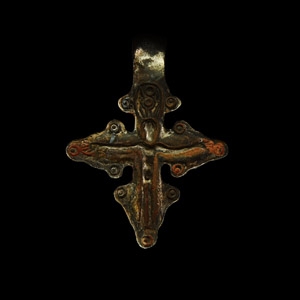
Post Medieval Silver Cross Pendant
17th-19th century A.D.Sold for (Inc. bp): £44
A silver cruciform pendant with lobed arms ornamented with pellets, bearing an image of Christ crucified in low relief, suspension loop above. 5.2 grams, 34 mm
Fine condition.
Acquired on the UK art market in the late 1990s. Property of a UK gentleman.
