
Loading, please wait...
LOT 0391
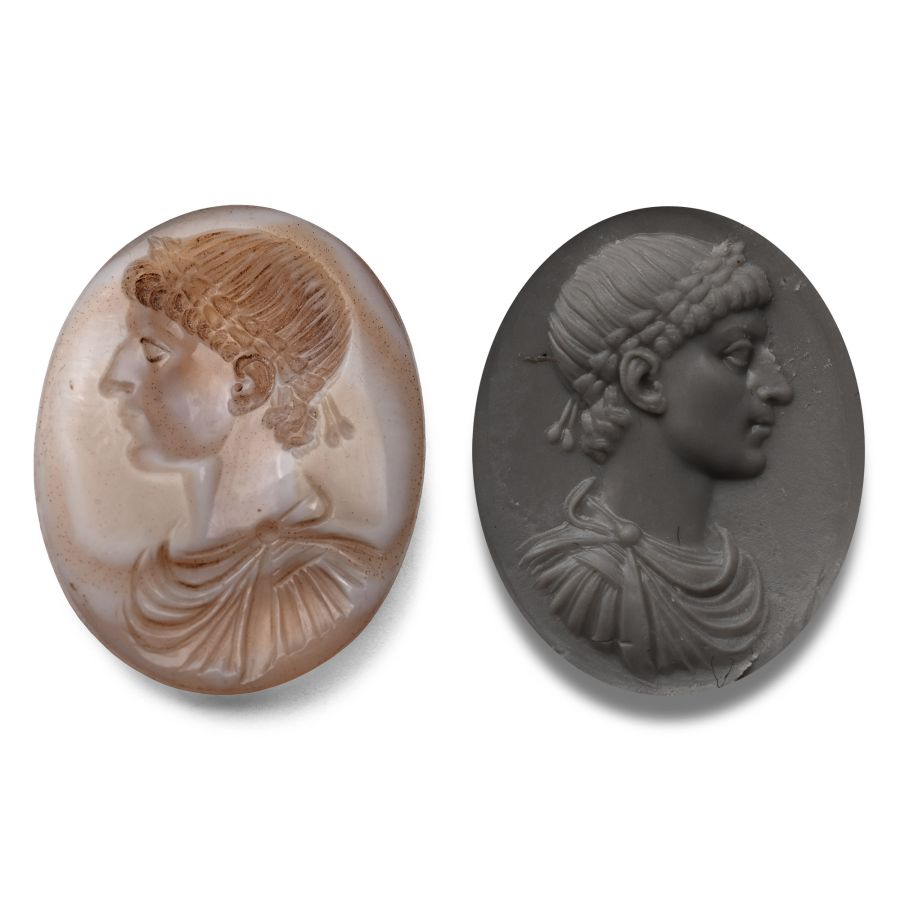
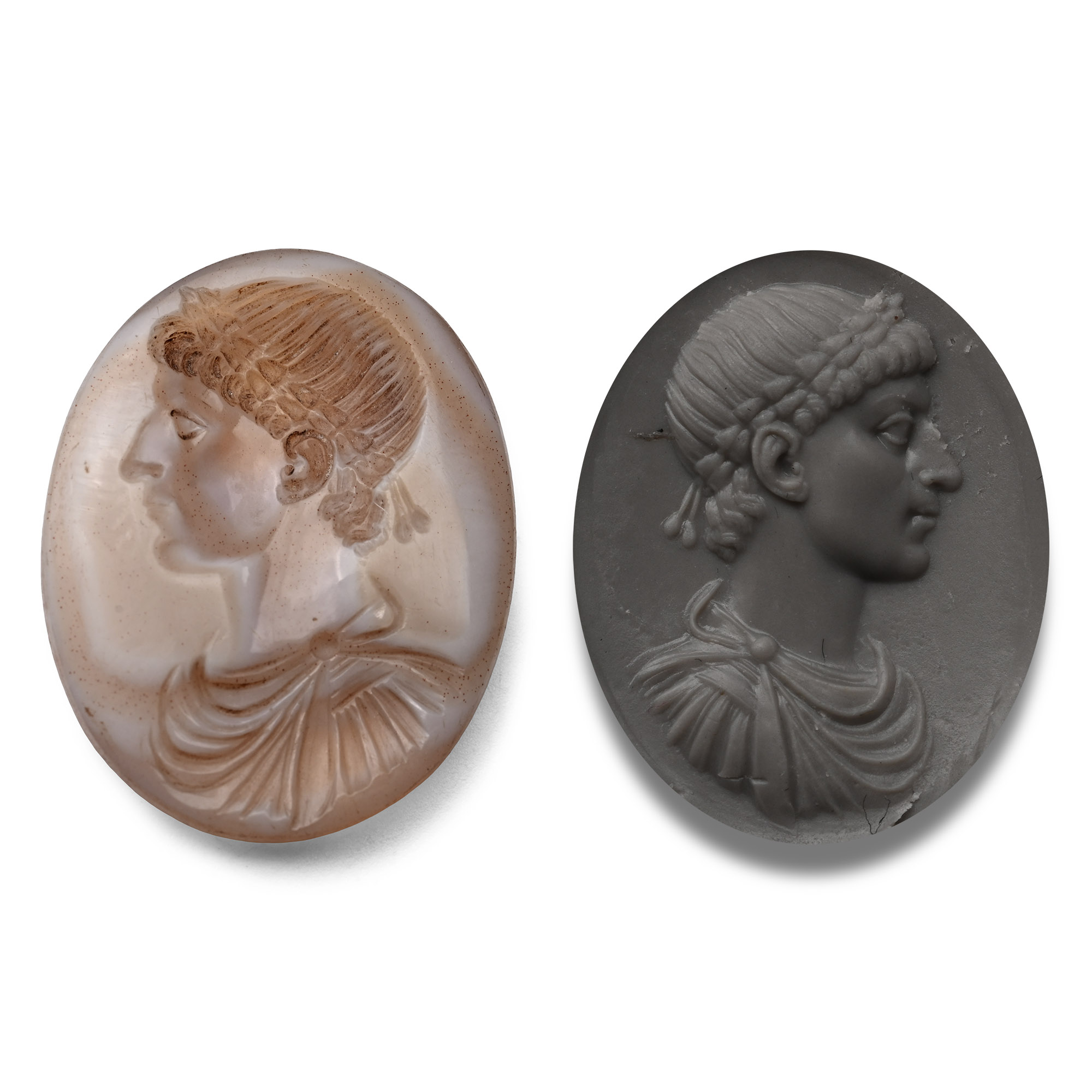
Neoclassical Agate Gemstone of a Late Roman Emperor
ITALY, 17TH-18TH CENTURY A.D.
7/8 in. (1.75 grams, 21 mm).
Intaglio profile bust with heavy jewelled diadem to the brow, ties to the rear, mantle clasped at the shoulder with a small disc brooch; supplied with a museum-quality impression.
ProvenancePrivate English collection, formed between the late 1970s and early 1990s.
Private collection, London, UK.
TimeLine Auctions follows a vetting process to ensure the authenticity and legality of all items, reinforcing our commitment to integrity and responsible trading. Each antiquity, antique, and coin lot undergoes thorough examination by a vetting committee of at least ten external specialists, professional trade association members, scientists, and archaeologists: Our Vetting Process
AUCTIONS:
TimeLine is a leading auction house specialising in antiquities, ancient art, collectables, natural history, coins, medals, and books. Our auctions offer museums, collectors, historians, and enthusiasts the opportunity to acquire unique and historically significant pieces.
-
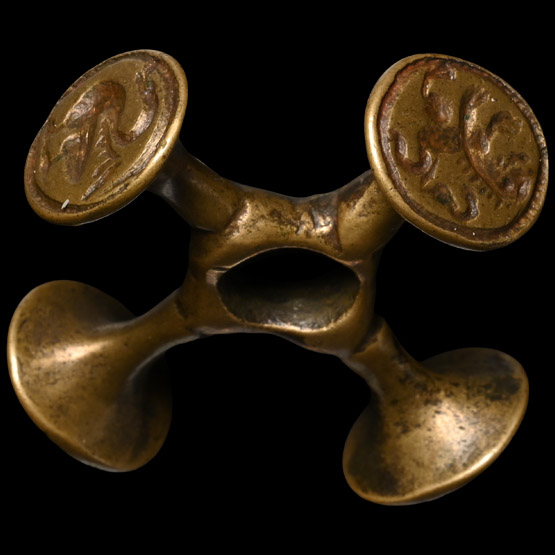
Late Tudor Bronze Four-Way Seal Matrix
16th-17th century A.D.Sold for (Inc. bp): £104
Cruciform with a central oval loop for suspension; each arm with flat discoid bezel; engraved with anchor, ship, rampant lion, and swan motives. 12.3 grams, 35 mm
From the private collection of the late Graham Slater (1927-2024), Cambridge, UK, acquired 1980s-1990s. -
.jpg)
Post Medieval Silver Memento Mori Ring with Skull and Crossed Bones
18th-19th century A.D.Sold for (Inc. bp): £247
Openwork fronds to the shoulders, rectangular plaque with raised border, incuse skull motif over two long bones crossed, script capital 'B'. 7.9 grams, 24.6 mm overall, 21.29 mm internal diameter (approximate size British U 1/2, USA 10 1/4, Europe 23.15, Japan 22)
Ex East Sussex private collection, 1970s-1980s. -
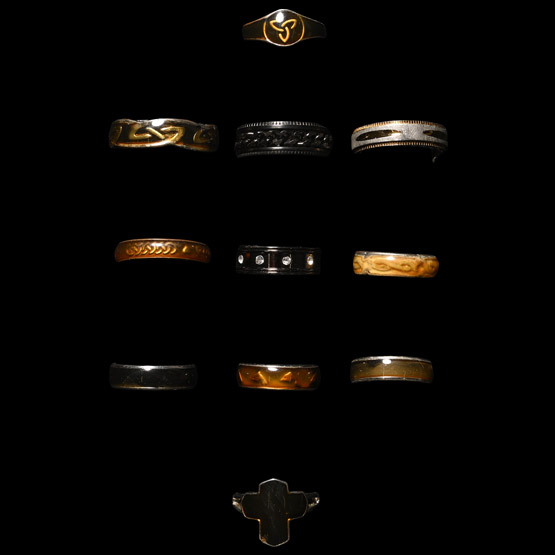
White Metal and Enamel Ring Collection
20th-21st century A.D.Sold for (Inc. bp): £33
Including triquetra, knotwork, sliding-chain and other types. 46.7 grams total, 20-26 mm
From a Tyne and Wear, UK, collection.
