
Loading, please wait...
LOT 0183
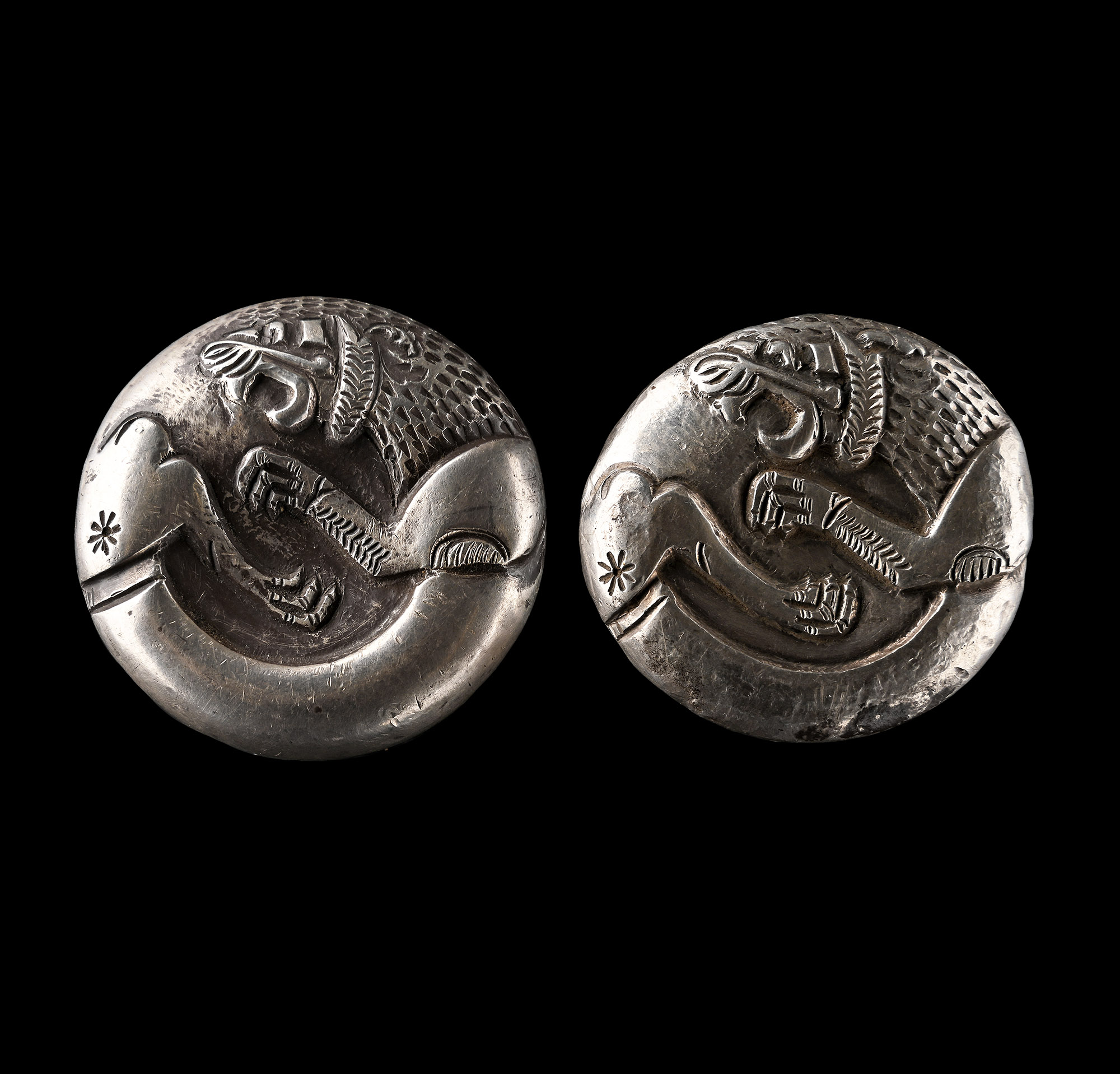
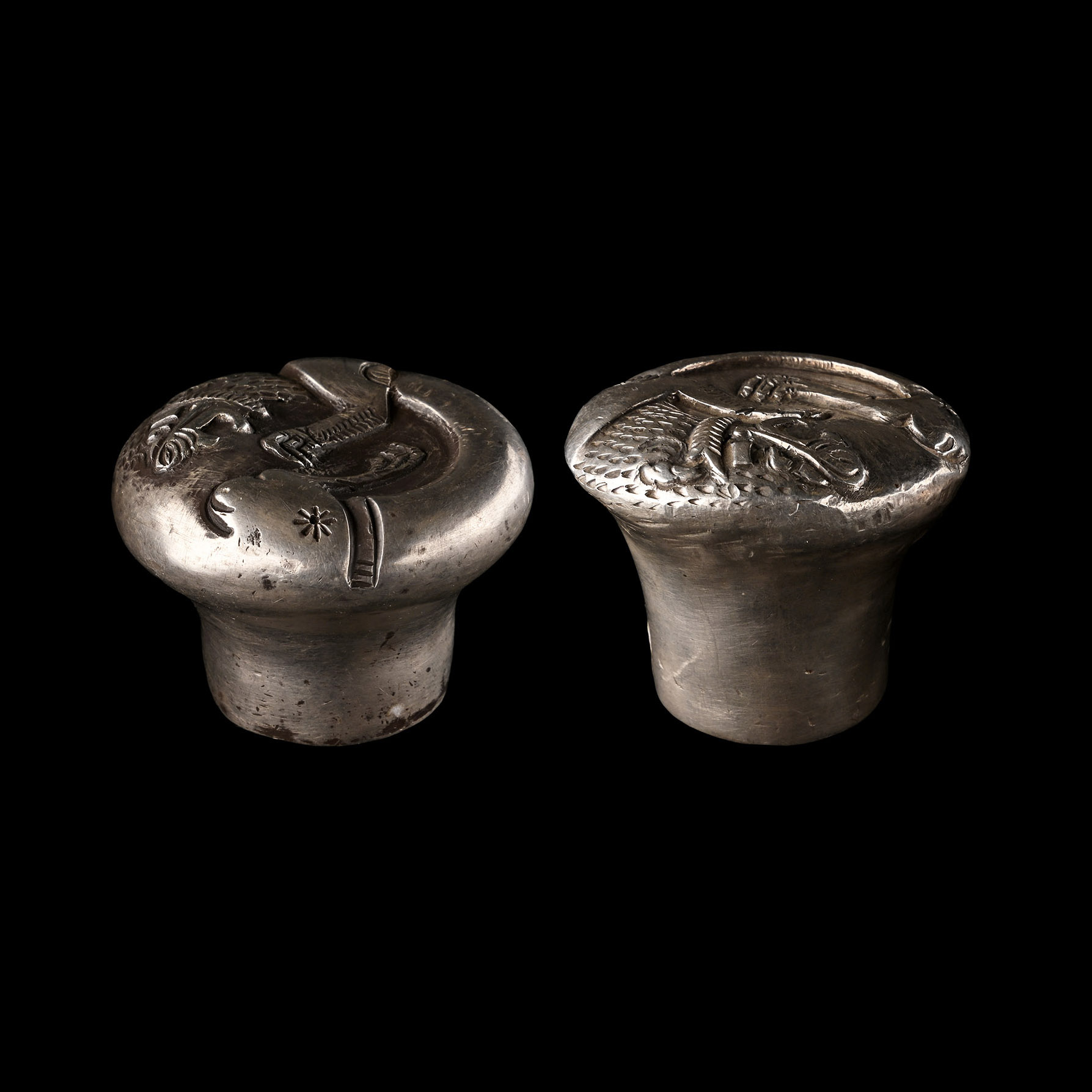
Neo-Elamite Silver Repousse Finial Pair
6TH CENTURY B.C.
2 in. (184 grams total, 49-51 mm).
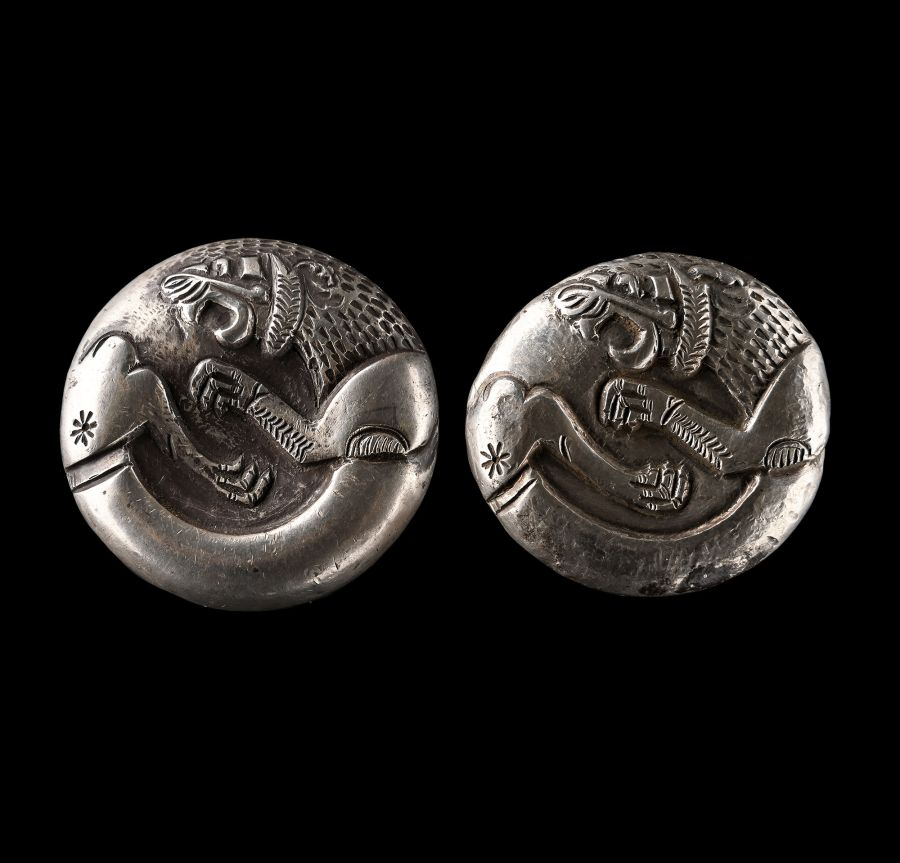
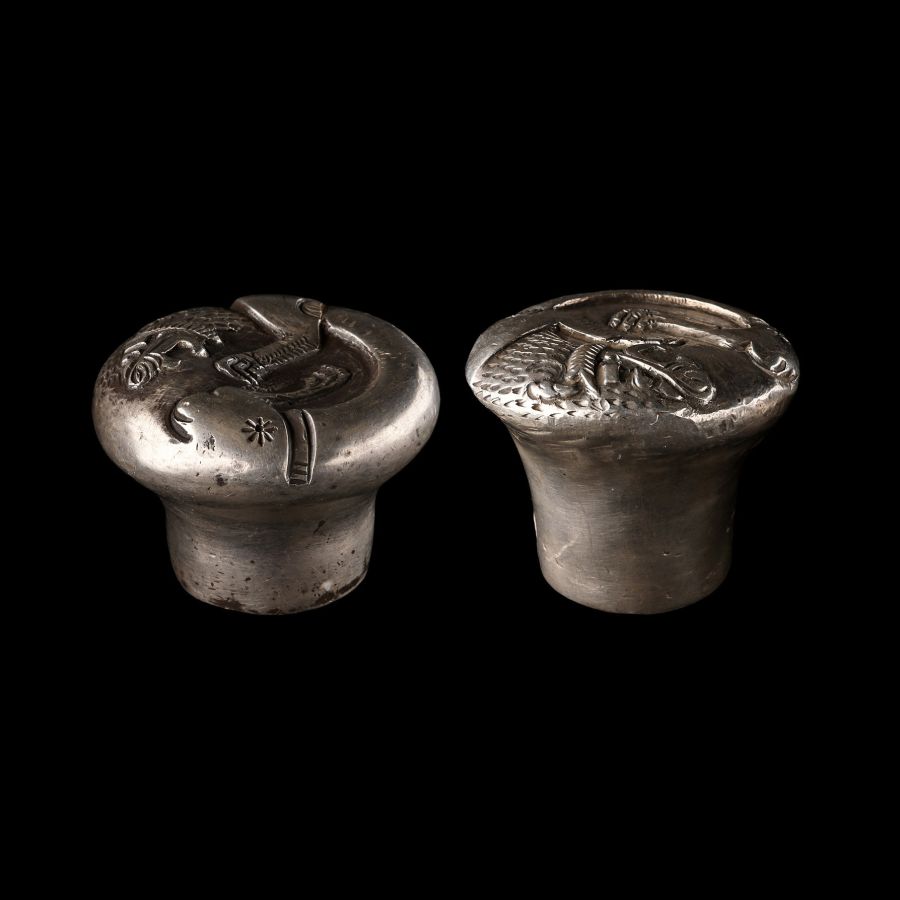
Each bell-shaped in profile with broad socket; underside with savage beast in profile, coiled to fit the tondo, with high-relief claws and head. [2]
ProvenancePrivate collection of a London gentleman, acquired between 1965-2020.
Accompanied by an academic report by Dr Raffaele D'Amato.
This lot has been checked against the Interpol Database of stolen works of art and is accompanied by search certificate number no.12781-239316.
This lot has been cleared against the Art Loss Register database, and is accompanied by an illustrated lot declaration signed by the Head of the Antiquities Department, Dr Raffaele D'Amato.
Cf. Álvarez-Mon, Basello, G.P., Wicks, Y., The Elamite World, fig. 29.3, for similar iconography of lions in Elamite art; Wicks, J., ‘The Tomb of Two Priestess? The Neo-Elamite Jubaji Tomb in a Religious-Royal context’ in Asia Anterior Antica. Journal of Ancient Near Eastern Cultures 2024, pp.1-38.
FootnotesThese intricate lion head appliqués offer a glimpse into the ancient artistry and symbolism of Khuzistan (Susiana). They are embodying the cultural reverence for lions as symbols of power and protection. These omphaloi could have been used as furniture decoration or on top of a religious staff or sceptre. The lion heads are common in Neo-Elamite art. The heads of our lions find good parallels with a gold bracelet with lion-head terminals from the Jubaji tomb (Wicks, pl.8).
CONDITIONTimeLine Auctions follows a vetting process to ensure the authenticity and legality of all items, reinforcing our commitment to integrity and responsible trading. Each antiquity, antique, and coin lot undergoes thorough examination by a vetting committee of at least ten external specialists, professional trade association members, scientists, and archaeologists: Our Vetting Process
AUCTIONS:
TimeLine is a leading auction house specialising in antiquities, ancient art, collectables, natural history, coins, medals, and books. Our auctions offer museums, collectors, historians, and enthusiasts the opportunity to acquire unique and historically significant pieces.
LOT 0183
Neo-Elamite Silver Repousse Finial Pair
Estimate £6,000 - 8,000€6,960 - 9,280 (for guidance only)$8,100 - 10,800 (for guidance only)
-
Neo-Elamite Silver Repousse Finial Pair
6th century B.C.Estimate: £6,000 - 8,000 (+bp*)
Opening Bid: £3,000
Each bell-shaped in profile with broad socket; underside with savage beast in profile, coiled to fit the tondo, with high-relief claws and head. 184 grams total, 49-51 mm
Private collection of a London gentleman, acquired between 1965-2020. Accompanied by an academic report by Dr Raffaele D'Amato. This lot has been checked against the Interpol Database of stolen works of art and is accompanied by search certificate number no.12781-239316. This lot has been cleared against the Art Loss Register database, and is accompanied by an illustrated lot declaration signed by the Head of the Antiquities Department, Dr Raffaele D'Amato.
These intricate lion head appliqués offer a glimpse into the ancient artistry and symbolism of Khuzistan (Susiana). They are embodying the cultural reverence for lions as symbols of power and protection. These omphaloi could have been used as furniture decoration or on top of a religious staff or sceptre. The lion heads are common in Neo-Elamite art. The heads of our lions find good parallels with a gold bracelet with lion-head terminals from the Jubaji tomb (Wicks, pl.8). -
Old Babylonian Hematite Cylinder Seal for Ahi-shagish, son of Sinia, Servant of Amurru
Circa 2000-1530 B.C.Sold for (Inc. bp): £910
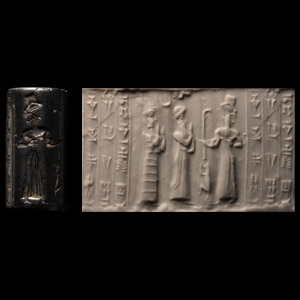
With three columns of cuneiform text: 'Ahi-shagish, son of Sinia, Servant of Amurru', standing figure of a god holding sceptre facing a worshipper accompanied by a goddess wearing long robe and horned crown; supplied with a museum-quality impression. 14.4 grams, 26 mm
From the collection of the late S, London, UK, 1970-2000. Examined by Professor Wilfrid George Lambert FBA (1926-2011), historian, archaeologist, and specialist in Assyriology and Near Eastern archaeology, in the 1990s. This lot has been cleared against the Art Loss Register database, and is accompanied by an illustrated lot declaration signed by the Head of the Antiquities Department, Dr Raffaele D'Amato. -
.jpg)
Old Babylonian Cuneiform Terracotta Tablet
Circa 2000-1530 B.C.Sold for (Inc. bp): £3,640
Rectangular clay tablet with cuneiform text to both broad faces. 138 grams, 96 mm
Ex Oriental Dar Antiques, Jerusalem, 1967. European private collection. Accompanied by a thermoluminescence analysis report no.N125e33 from Oxford Authentication. This lot has been checked against the Interpol Database of stolen works of art and is accompanied by search certificate number no.12770-237184. This lot has been cleared against the Art Loss Register database, and is accompanied by an illustrated lot declaration signed by the Head of the Antiquities Department, Dr Raffaele D'Amato.
Old Babylonian tablets were found in regular excavations from Khafaje and Kish, although still today the main body came from dealers. A definite date can be assigned to them only on the basis of internal evidence. The scripts of the tablets varies a good deal: some tablets are written in archaic cursive, others in younger cursive, still others mix archaic and younger sign forms.
