
Loading, please wait...
LOT 2529
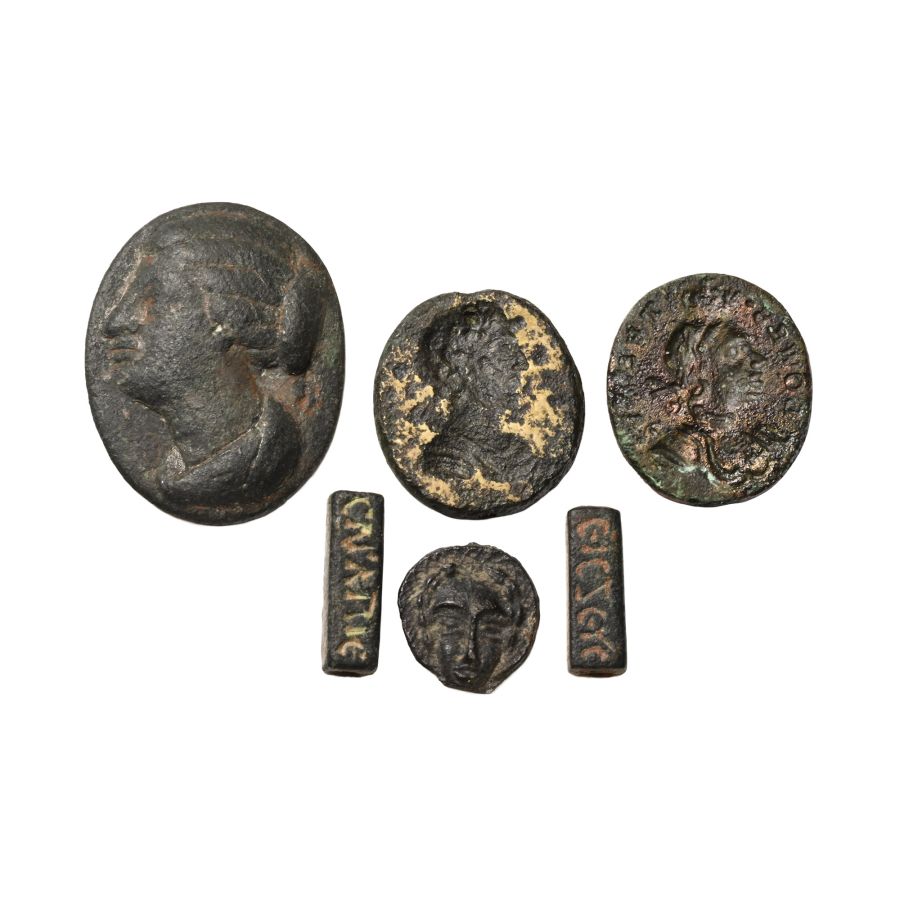
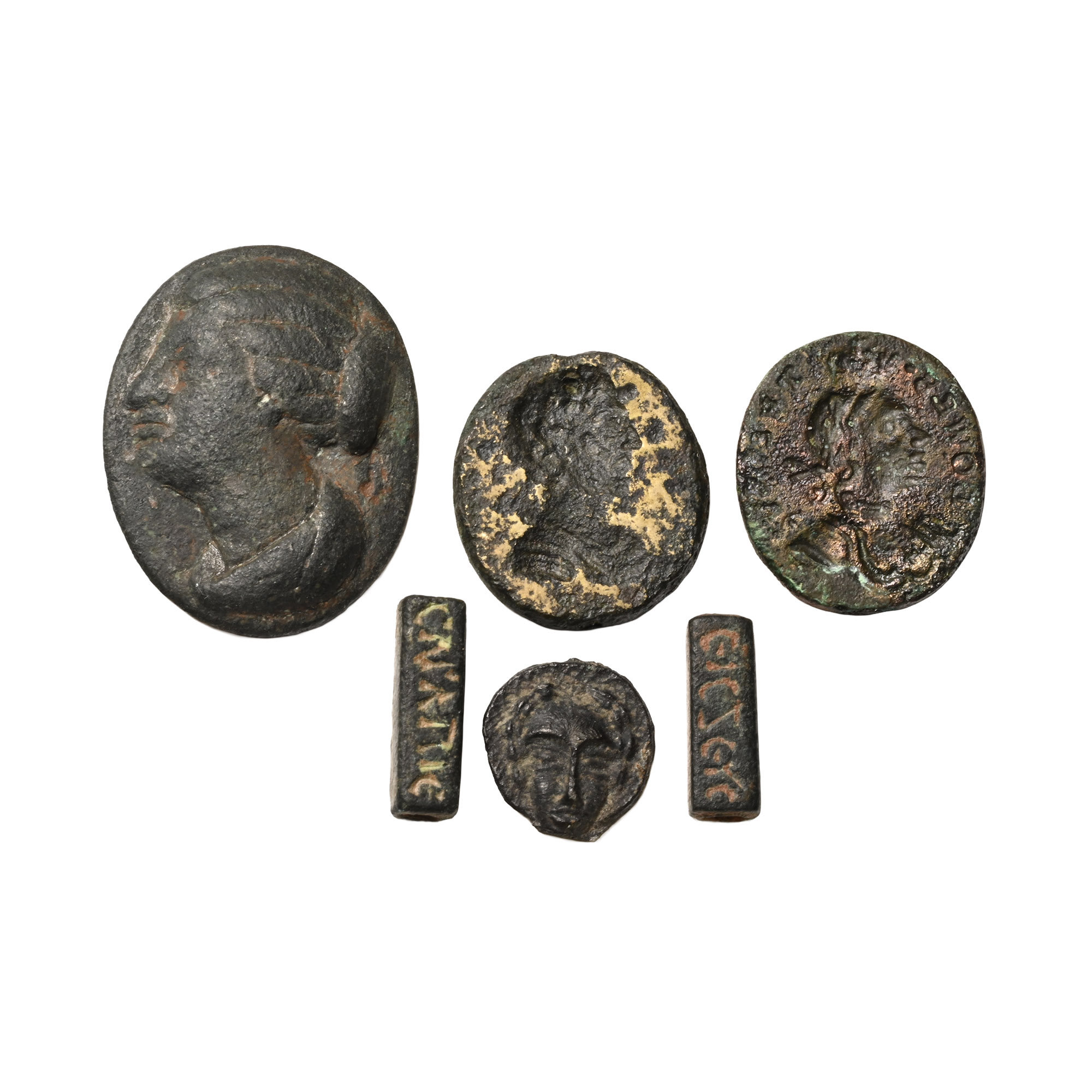
Neo-Classical Bronze Artefact Group
CIRCA LATE 18TH-19TH CENTURY A.D.
3/8 - 7/8 in. (16.22 grams total, 10-23 mm).
Including square-section tubular beads, disc with a scrolled monogram to obverse, bust to reverse and other items. [6, No Reserve]
ProvenanceFrom the private collection of a European gentleman (1942-2024), formed since the 1970s.
CONDITIONTimeLine Auctions follows a vetting process to ensure the authenticity and legality of all items, reinforcing our commitment to integrity and responsible trading. Each antiquity, antique, and coin lot undergoes thorough examination by a vetting committee of at least ten external specialists, professional trade association members, scientists, and archaeologists: Our Vetting Process
AUCTIONS:
TimeLine is a leading auction house specialising in antiquities, ancient art, collectables, natural history, coins, medals, and books. Our auctions offer museums, collectors, historians, and enthusiasts the opportunity to acquire unique and historically significant pieces.
LOT 2529
Neo-Classical Bronze Artefact Group
Estimate £60 - 80€70 - 93 (for guidance only)$81 - 108 (for guidance only)
Opening Bid
£5 (EUR 6; USD 7) +BP*
-
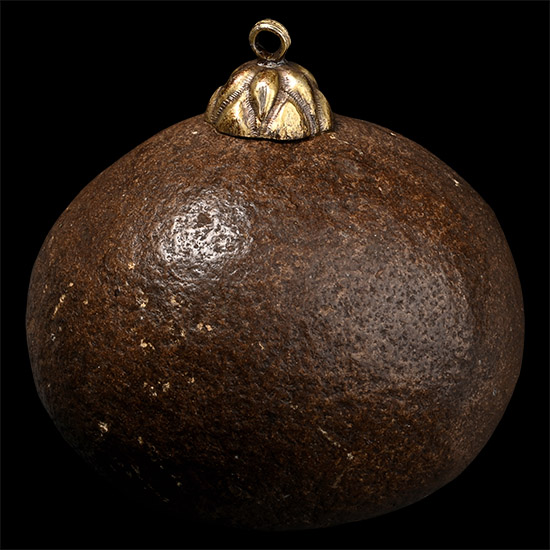
Bezoar with Silver-Gilt Suspension Mount
Circa 17th-18th century A.D.Estimate: £2,000 - 3,000 (+bp*)
Opening Bid: £1,000
Dark brown, rounded bezoar with a granular surface, fitted with a domed silver-gilt cap and circular suspension loop, the cap decorated with pointed leaves, their outlines and central veins defined against textured grounds. 74 grams, 80 mm
Acquired on the European art market. UK, private collection. This lot has been checked against the Interpol Database of stolen works of art and is accompanied by search certificate no.13478-263372.
Bezoars were valued in European and Asian medicinal traditions for their supposed ability to counteract poison. Natural examples are concretions formed around indigestible material within the digestive systems of animals. Their historical reputation is reflected in the name, derived from the Persian p ādzahr, meaning “antidote”. During the early modern period, bezoars were furnished with precious-metal caps, cages and containers. Mounted examples could be worn as protective pendants, suspended for medicinal use, or preserved among the natural specimens and costly objects assembled in cabinets of curiosities. The present leaf-decorated cap belongs to this tradition of combining a valued specimen with ornamental metalwork. Surviving comparisons include a 17th-century brown bezoar pendant in a silver mount at the London Museum and an 18th-century silver-mounted example in the Museo Nacional de Ciencias Naturales, Madrid. These documents the continued use of silver mounts for bezoars across both centuries and provide the historical setting for the present example. -
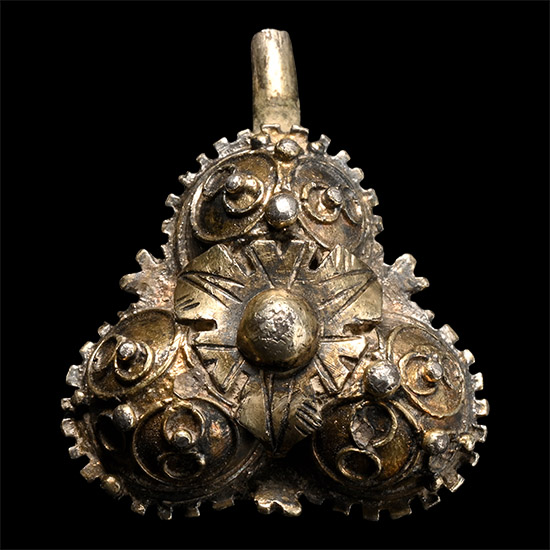
Large Tudor Silver-Gilt Floral Hooked Tag
1500-1600 A.D.Estimate: £80 - 100 (+bp*)
Opening Bid: £5
Of Read's Class D Type 6, trefoil in plan with notched outer edges and a bifid knop to each angle; three applied bosses to the obverse, two with a central applied granule (the third absent); each dome with a pair of wire annulets containing smaller annulets arranged vertically, with a small granule at each junction (one granule absent); set between each pair of large annulets is a small wire annulet with granule cluster; central decorative rove with split shank, flattened on the reverse and with decorative hexafoil head, three pentagonal petals separated by smaller interstitial petals each with a triangular notch on the edge; on the reverse, two silver attachment elements have been soldered in place, a transverse rectangular attachment loop above and the end of a silver hook below (partly absent); some gilding remaining. 11.9 grams, 32 mm
Found near Lewes, East Sussex, UK, in 2023; declared as potential Treasure under the Treasure Act with Treasure reference no.2025T533, subsequently disclaimed and returned to the finder. Accompanied by a copy of the British Museum's Portable Antiquities Scheme (PAS) report no.SUSS-23C7ED. Accompanied by a copy of the Treasure Act 1996 receipt from the Department for Digital, Culture, Media & Sport.
This rather large example of a hooked tag fits with Read's (2008) Class D, Type 6 being a trefoil single sharp-hooked clasp of composite construction which he dates to the 16th century. Read illustrates a number of these in silver gilt, similar to the one recorded here, with three bosses and a splayed pin securing a petalled rove (p. no.s 264-70). Compare also no: 272 with projecting knops in each angle of the back plate. Other examples of this type recorded on the database and submitted for the consideration as Treasure include: KENT-B7A7B4 (2012T826); SF-034BF3 (2008T446); YORYM-708E7A (2023T221); NMS-6DE0F9 (2022T959) and ESS-491A58 (2022T941). -
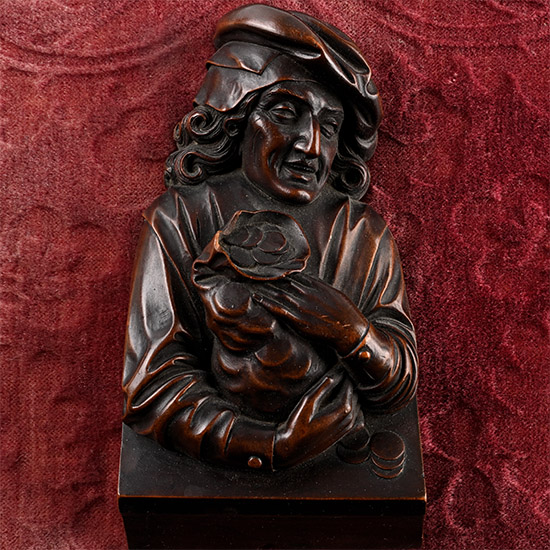
Post Medieval Wooden Bas Relief Representing a Gentleman Illustrating an Allegory of Avarice
Belgium, Antwerp, 17th century A.D.Estimate: £3,000 - 4,000 (+bp*)
Bids: 6 | Current Bid: £330
Carved in the half-round, clean-shaven man with cap and flowing hair clutching a bag of coins to his chest with more coins on the surface of the table; mounted on a velvet-covered board with faux-shell detailing to the frame. 689 grams, 33.5 x 27.1 cm
Private collection, Spain, 2024. This lot has been checked against the Interpol Database of stolen works of art and is accompanied by search certificate no.13546-262841.
In the historical context of the Netherlands and Flanders (particularly during the 16th and 17th centuries), the depiction of the seven deadly sins was a central theme in moralising and satirical art. The allegory of Avarice was frequently represented in paintings, as well as in sculptures and wooden bas-reliefs intended for furnishings, architectural panels, or private collections.
