
Loading, please wait...
LOT 0956
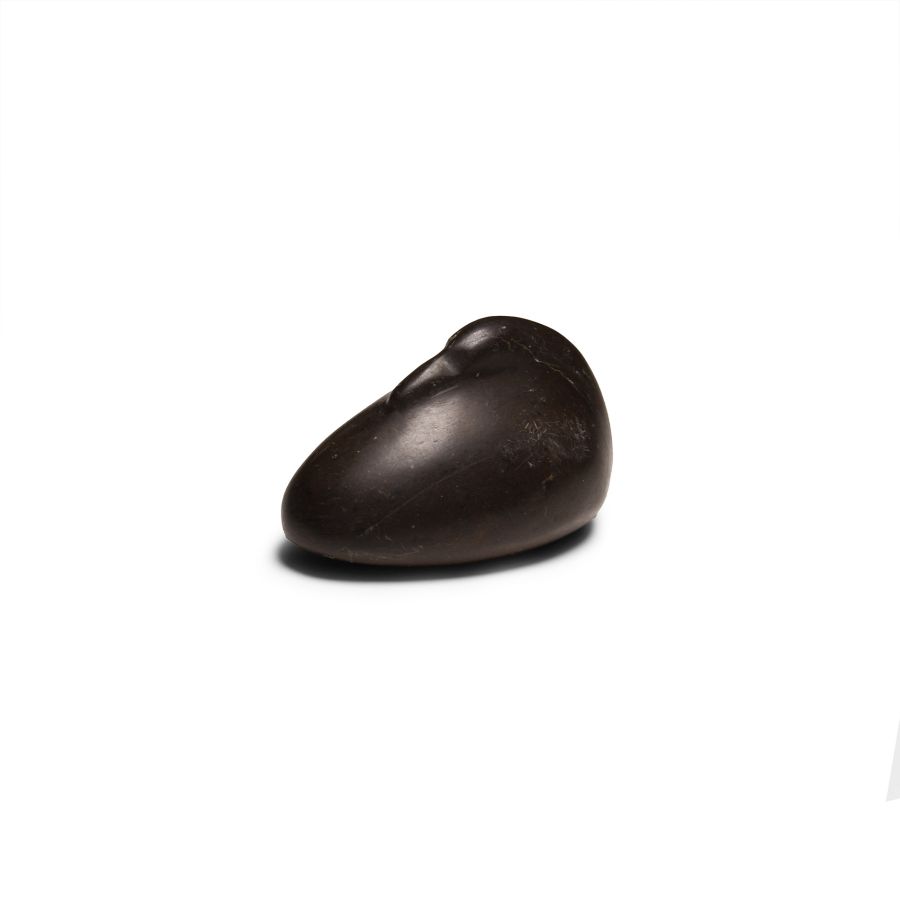
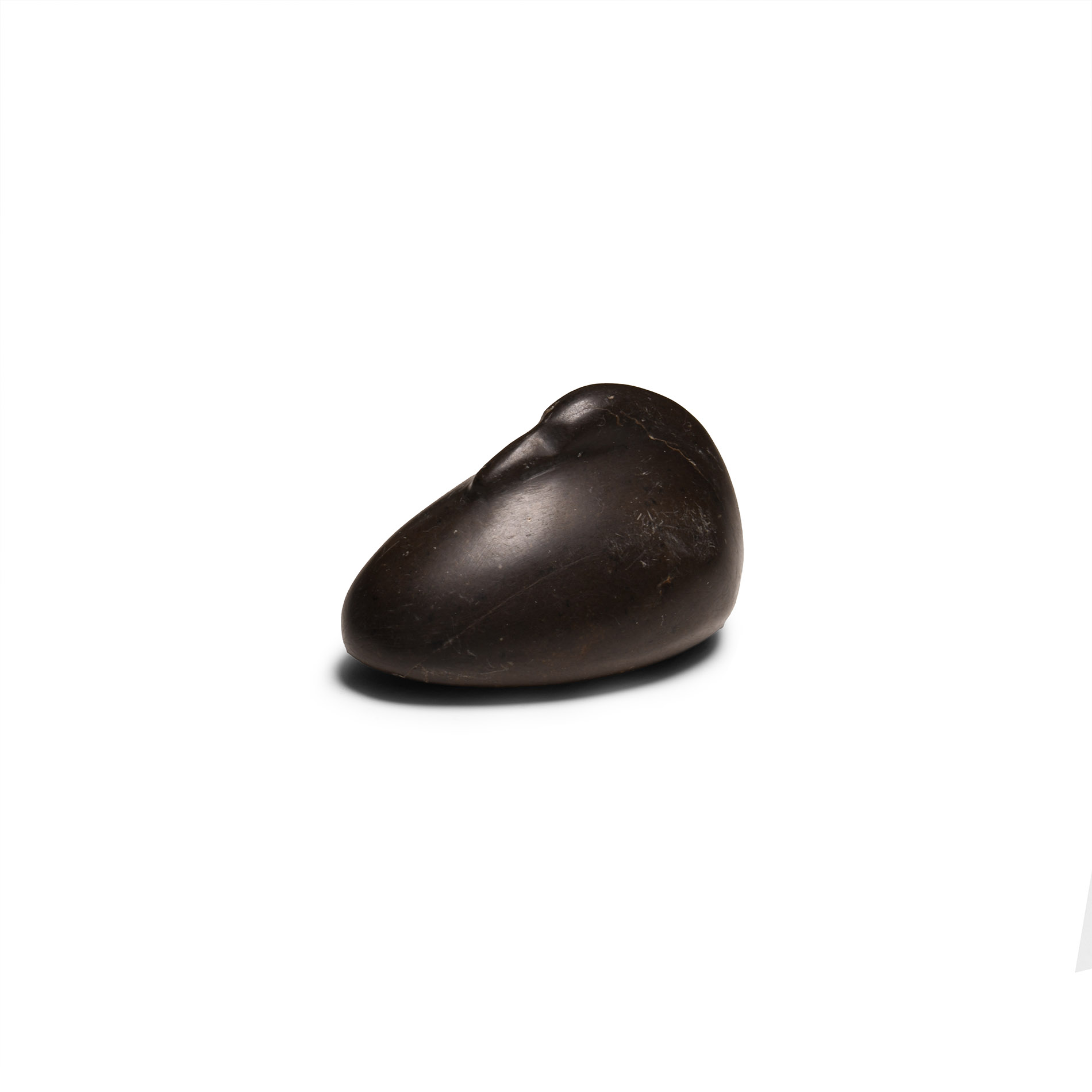
Neo-Babylonian Duck Weight
CIRCA 7TH-6TH CENTURY B.C.
1 5/8 in. (33 grams, 42 mm wide).
A polished haematite duck weight, the animal modelled with its head resting along its back.
ProvenanceAcquired 1980s-1990s.
H.N.collection, Milton Keynes, Bedfordshire, UK.
TimeLine Auctions follows a vetting process to ensure the authenticity and legality of all items, reinforcing our commitment to integrity and responsible trading. Each antiquity, antique, and coin lot undergoes thorough examination by a vetting committee of at least ten external specialists, professional trade association members, scientists, and archaeologists: Our Vetting Process
AUCTIONS:
TimeLine is a leading auction house specialising in antiquities, ancient art, collectables, natural history, coins, medals, and books. Our auctions offer museums, collectors, historians, and enthusiasts the opportunity to acquire unique and historically significant pieces.
-

Luristan Bracelet with Stamp Seals
13th-6th century B.C.Sold for (Inc. bp): £111
A bronze bracelet formed as a coil with the ends wound around the shank, two discoid stamp seals with starburst pattern, iridescent glass bead. 18 grams, 7.5 cm wide
with a London, UK gallery 1971-early 2000s. -
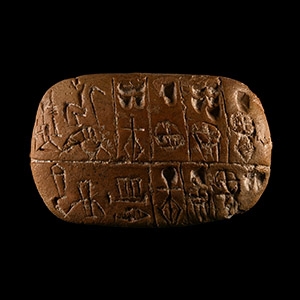
Mesopotamian Pictographic Administrative Tablet
Uruk III, circa 3000 B.C.Sold for (Inc. bp): £4,940
A bifacial, lentoid-section rectangular clay tablet with rounded corners and short sides, medial horizontal line to each face, with hand-drawn pictographs above and below, a count of sheep and caprids. 42 grams, 66 mm wide
Specialised collection of cuneiform texts, the property of a London gentleman and housed in London before 1992. Thence by descent to family members. Examined by Professor Wilfrid George Lambert FBA (1926-2011), historian, archaeologist, and specialist in Assyriology and Near Eastern archaeology, in the late 1980s and early 1990s. The collection is exceptional for the variety of types, including some very rare and well preserved examples. This lot has been checked against the Interpol Database of stolen works of art and is accompanied by search certificate no.11637-198551.
Early writing was used primarily as a means of recording economic data; this tablet likely records deliveries and distributions of grain. At the end of the 4th millennium B.C., written language developed in Mesopotamia as pictographs, later evolving into abstract forms called cuneiform. Pictographs were drawn in the clay with a pointed implement. Circular impressions alongside the pictographs represented numerical symbols. Cuneiform (meaning wedge-shaped) script was written by pressing a reed pen or stylus with a wedge-shaped tip into a clay tablet. -
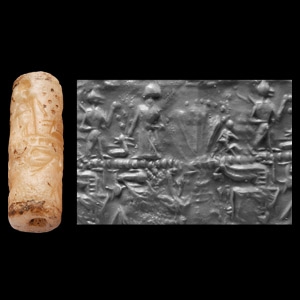
Western Asiatic Rock Crystal Cylinder Seal with Figural Scene
2nd-1st millennium B.C.Estimate: £500 - 700 (+bp*)
Opening Bid: £250
A rock crystal cylinder seal with incuse design divided horizontally by a line of crescents; an advancing figure with smaller figures at his feet, a large tree, animals and other objects in the field. 16.8 grams, 43 mm
From an important family collection. Examined by Professor Wilfrid George Lambert FBA (1926-2011), historian, archaeologist, and specialist in Assyriology and Near Eastern archaeology, in the late 1980s and early 1990s.
