
Loading, please wait...
LOT 1429
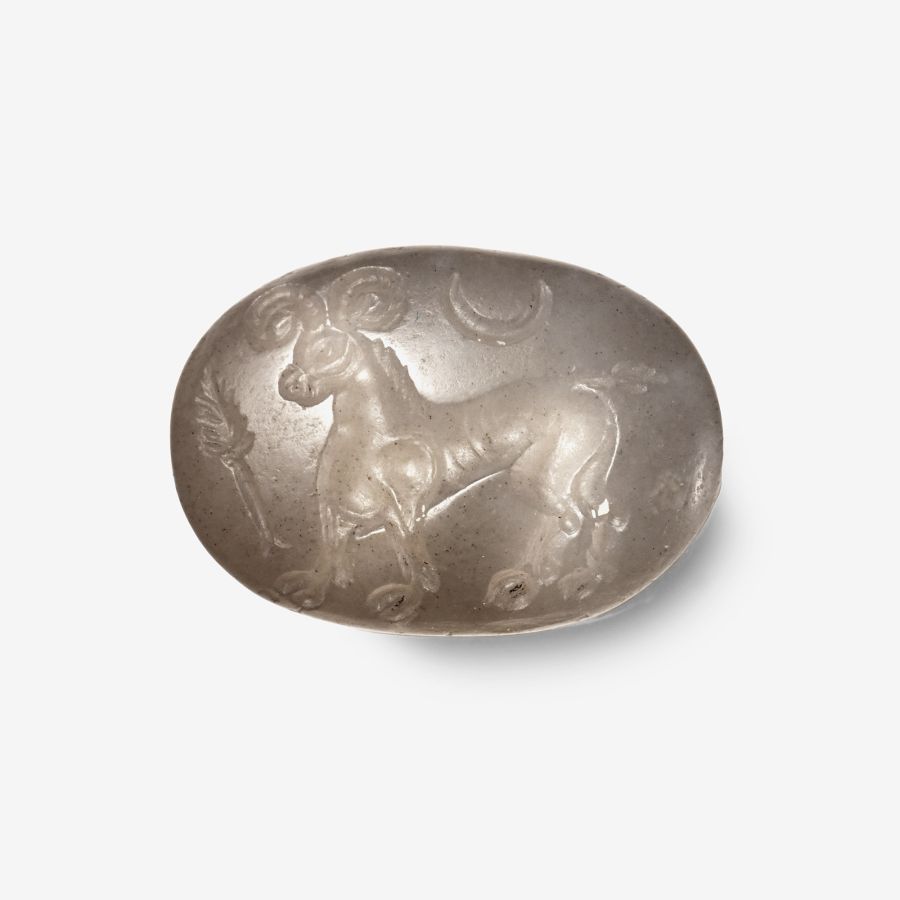
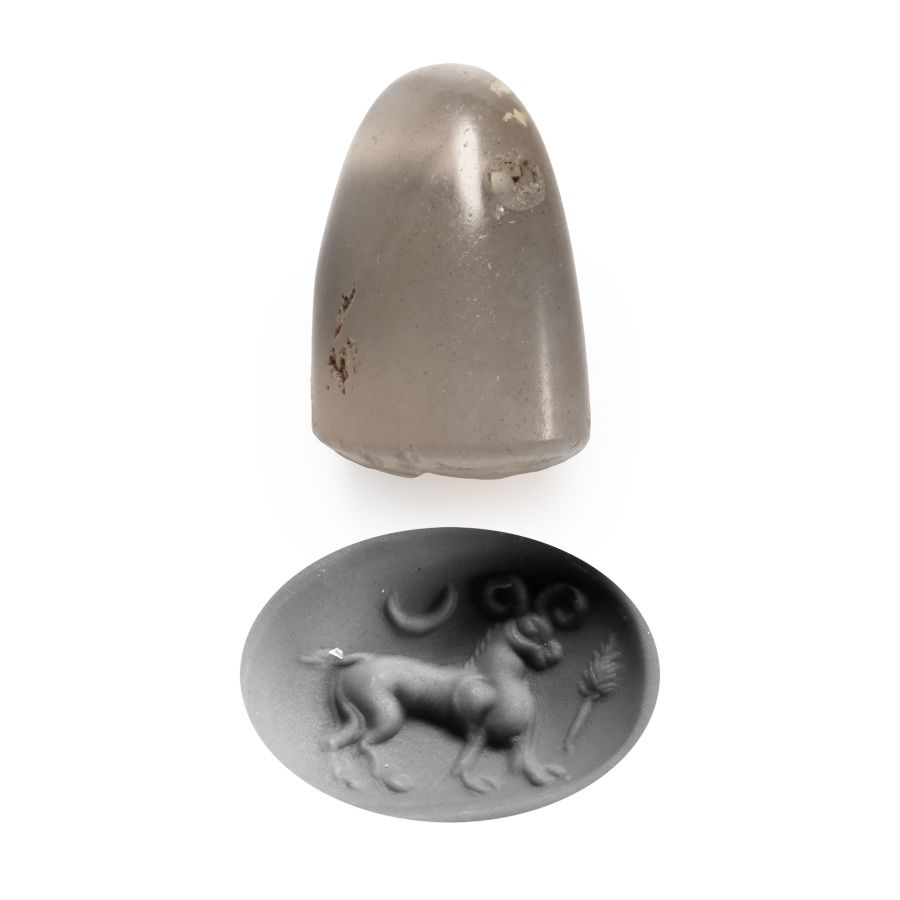
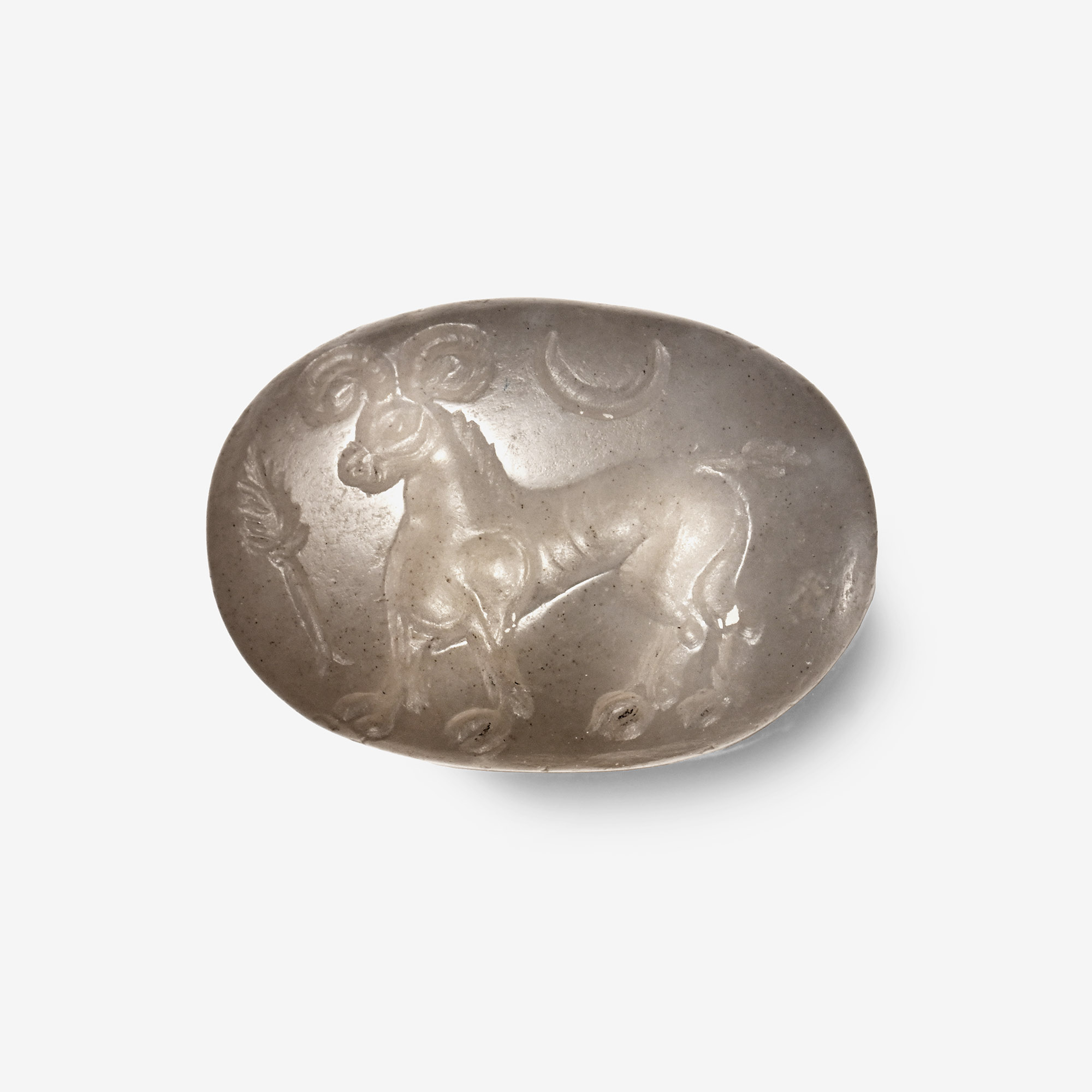
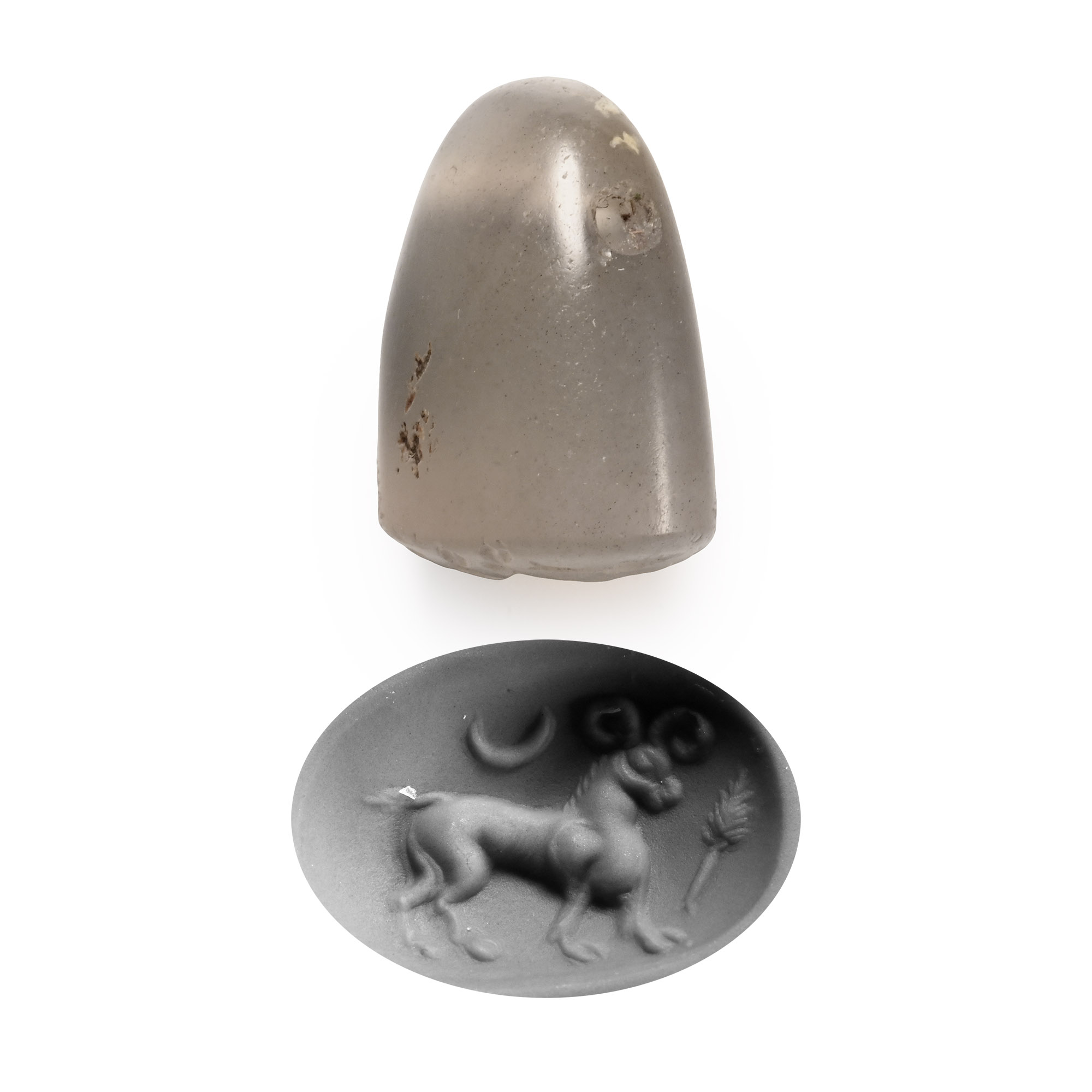
Neo-Babylonian Chalcedony Stamp Seal with Horned Ibex
6TH-4TH CENTURY B.C.
3/4 in. (4.40 grams, 18.46 mm).
Tongue-shaped in profile with incuse image of an advancing ram beneath a crescent moon, arrow in the field.
ProvenanceAcquired in the mid 1980s-1990s.
Private collection, Switzerland, thence by descent.
Private collection, since the late 1990s.
The ibex, a wild mountain goat with distinctive curved horns, was a popular and meaningful motif in ancient Near Eastern art. It often appears in Mesopotamian and Persian imagery, where it could symbolise strength, agility, and a connection to the natural and divine worlds. In some contexts, the ibex is linked with fertility and abundance, particularly through its association with flowing water and vegetation. Its elegant form also made it well suited to small-scale objects such as seals, where its image could serve both a decorative and symbolic purpose, reflecting the beliefs and environment of the cultures that produced them.
CONDITIONTimeLine Auctions follows a vetting process to ensure the authenticity and legality of all items, reinforcing our commitment to integrity and responsible trading. Each antiquity, antique, and coin lot undergoes thorough examination by a vetting committee of at least ten external specialists, professional trade association members, scientists, and archaeologists: Our Vetting Process
AUCTIONS:
TimeLine is a leading auction house specialising in antiquities, ancient art, collectables, natural history, coins, medals, and books. Our auctions offer museums, collectors, historians, and enthusiasts the opportunity to acquire unique and historically significant pieces.
LOT 1429
Neo-Babylonian Chalcedony Stamp Seal with Horned Ibex
Estimate £400 - 600€460 - 700 (for guidance only)$540 - 810 (for guidance only)
-
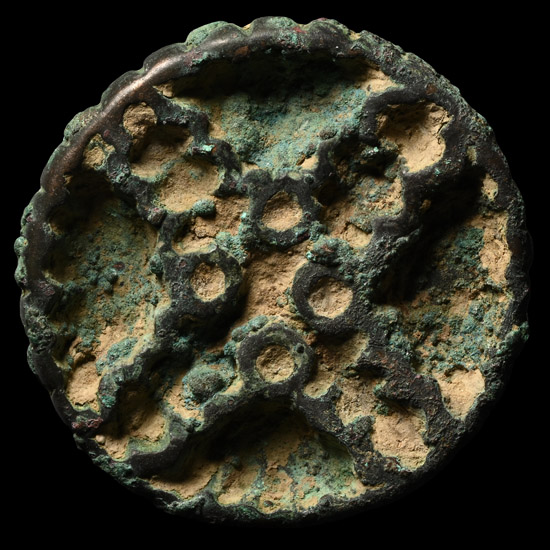
West Central Asian Bronze Stamp Seal with Cross
Circa 2300-2000 B.C.Sold for (Inc. bp): £39
Circular stamp seal with segmented face; accompanied by an old scholarly note, typed and signed by W.G. Lambert, late Professor of Assyriology, University of Birmingham, 1970-1993, which states: 'Stamp Seal of Silver 45 x 45 x 19 mm. This is round with notched outer edge, flat face and flat back on which is mounted a handle of inverted U-shape. The design is compartmented and consists of kind of four-armed cross with four small circles at its centre and more (drilled) circles along the arms, which diminish in width toward the edges. This comes from West Central Asia and dates to c. 2300-2000 B.C. It is heavy and generally in good condition. The incrustation on the surface could be removed.' 67.1 grams, 45.5 mm
Ex London, UK, collection, 1990s. Accompanied by an old scholarly note, typed and signed by Professor W.G. Lambert with reference no.W.861. -
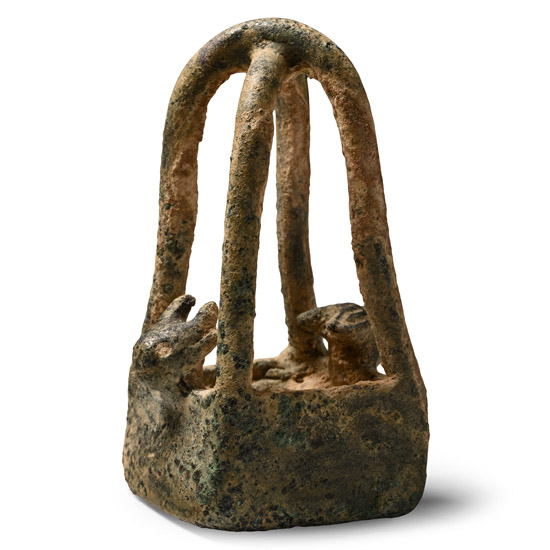
Western Asiatic Bronze Cage Weight
2nd-1st millennium B.C.Estimate: £500 - 700 (+bp*)
Opening Bid: £270
Comprising a rectangular basket with two overlapping U-shaped handles, two bull heads resting on the edge of the basket. 198 grams, 74 mm
From the collection of a gentleman, acquired on the London art market in the 1990s. -
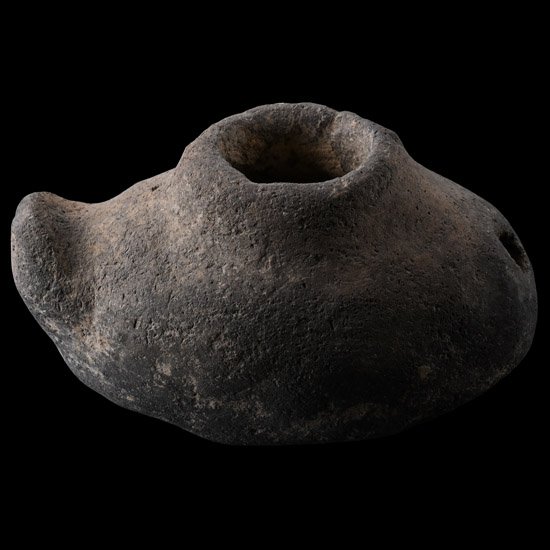
Holy Land Black-Burnished Oil Lamp
Late 1st millennium B.C.Sold for (Inc. bp): £39
Bulbous body with low rim, a short spout and a small ledge handle at the rear. 212 grams, 98.6 mm
From the collection of a Yorkshire, UK gentleman, items collected in the Holy Land in the 1960s.
