
Loading, please wait...
LOT 0932
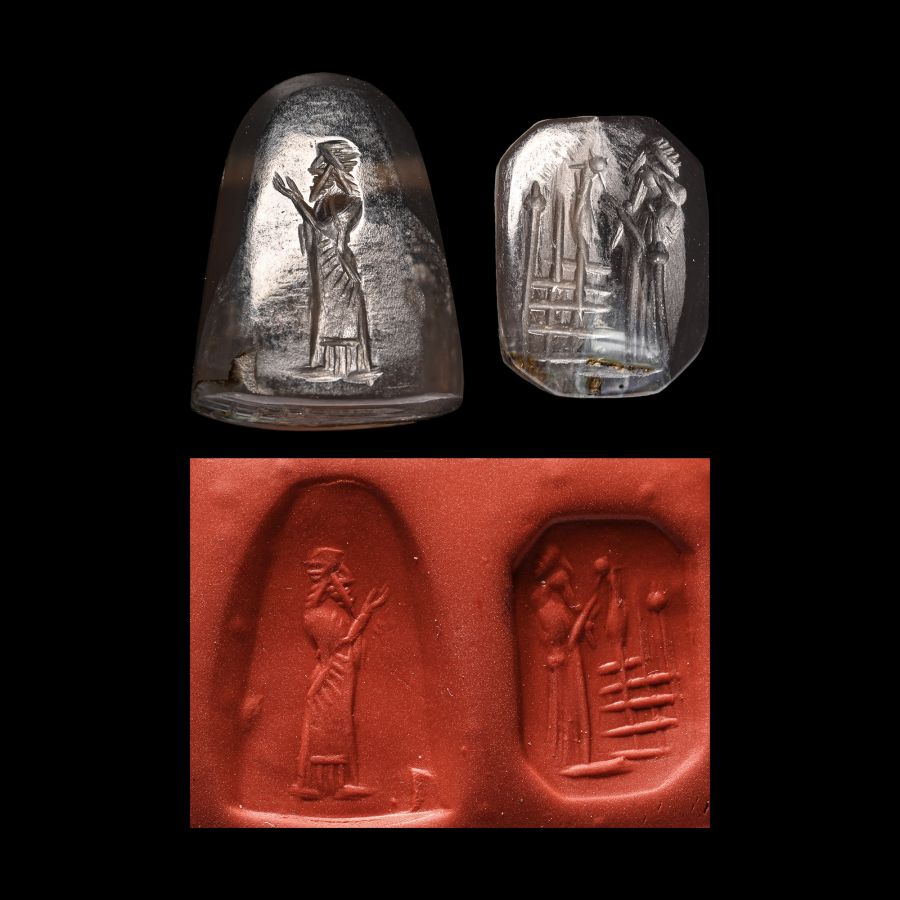
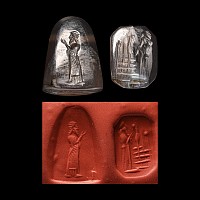
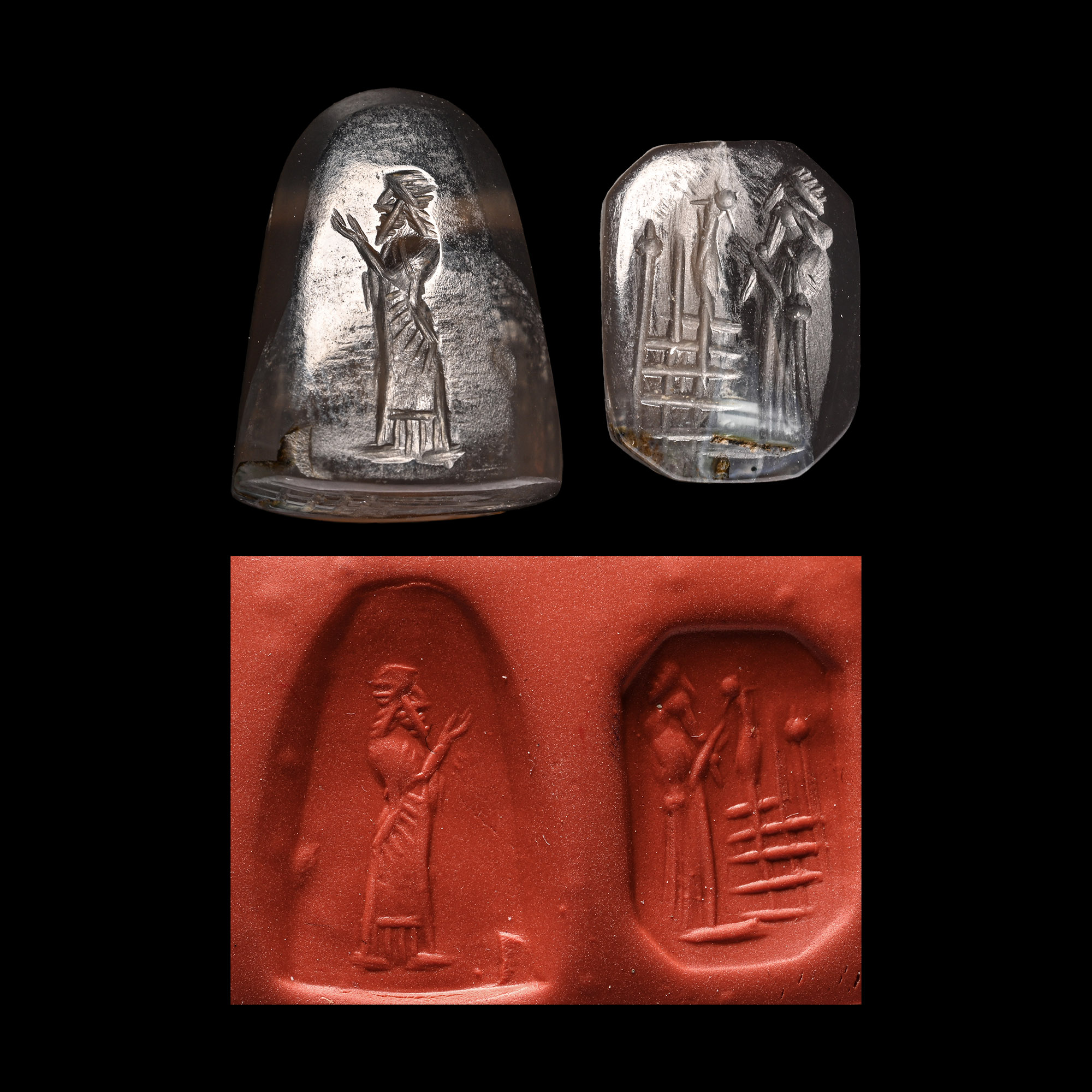
Neo Babylonian Bifacial Quartz Stamp Seal
CIRCA MID 1ST MILLENNIUM B.C.
1 in. (9.36 grams, 23 mm).
Rectangular-section tongue-shaped seal with suspension holes; to the underside, an incuse engraved scene of a standing figure in floor-length robe beside a grid or hurdle with trefoil finial; to one broad face, a similar figure in a fringed garment with one hand raised; supplied with a museum-quality impression.
ProvenanceEx West Country collection before 1992.
Examined by Professor Wilfrid George Lambert FBA (1926-2011), historian, archaeologist, and specialist in Assyriology and Near Eastern archaeology, in the late 1980s and early 1990s.
TimeLine Auctions follows a vetting process to ensure the authenticity and legality of all items, reinforcing our commitment to integrity and responsible trading. Each antiquity, antique, and coin lot undergoes thorough examination by a vetting committee of at least ten external specialists, professional trade association members, scientists, and archaeologists: Our Vetting Process
AUCTIONS:
TimeLine is a leading auction house specialising in antiquities, ancient art, collectables, natural history, coins, medals, and books. Our auctions offer museums, collectors, historians, and enthusiasts the opportunity to acquire unique and historically significant pieces.
-
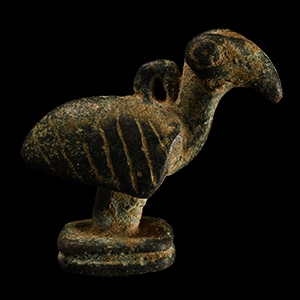
Western Asiatic Bronze Bird Seal Matrix with Cross and Pellets
1st millennium B.C.Sold for (Inc. bp): £286
The handle formed as a stylised standing bird, possibly a vulture, with large almond-shaped eyes and curved beak, large striated wings with a loop behind the neck; the rectangular matrix with a cross motif and a pellet to each quadrant. 23.6 grams, 36 mm wide
Private collection formed in the 1990s. UK art market. Property of an Essex gentleman. -

Western Asiatic Haematite Cylinder Seal with Presentation Scene and Inscription
Circa 2nd millennium B.C.Sold for (Inc. bp): £1,170
With frieze depicting a seated figure holding up a vessel in one extended hand, star and crescent above; before him, a facing figure in fringed robe and another in flounced robe with hands raised; two columns of cuneiform text; supplied with a museum-quality impression. 2.23 grams, 17 mm
From an important London, UK, collection, 1970-1990. Examined by Professor Wilfrid George Lambert FBA (1926-2011), historian, archaeologist, and specialist in Assyriology and Near Eastern archaeology, in the late 1980s and early 1990s. -

Western Asiatic Haematite Cylinder Seal with Presentation Scene
Circa 2nd millennium B.C.Sold for (Inc. bp): £1,170
With detailed frieze including a standing figure with tall helmet, raising his arm to strike a similar figure with both hands raised, bird above the scene and ankh below, smaller combat scene below with beast and kneeling figure with an axe; guilloche and other items in the field; supplied with a museum-quality impression. 4.04 grams, 18 mm
From an important London, UK, collection, 1970-1990. Examined by Professor Wilfrid George Lambert FBA (1926-2011), historian, archaeologist, and specialist in Assyriology and Near Eastern archaeology, in the late 1980s and early 1990s.
