
Loading, please wait...
LOT 1323
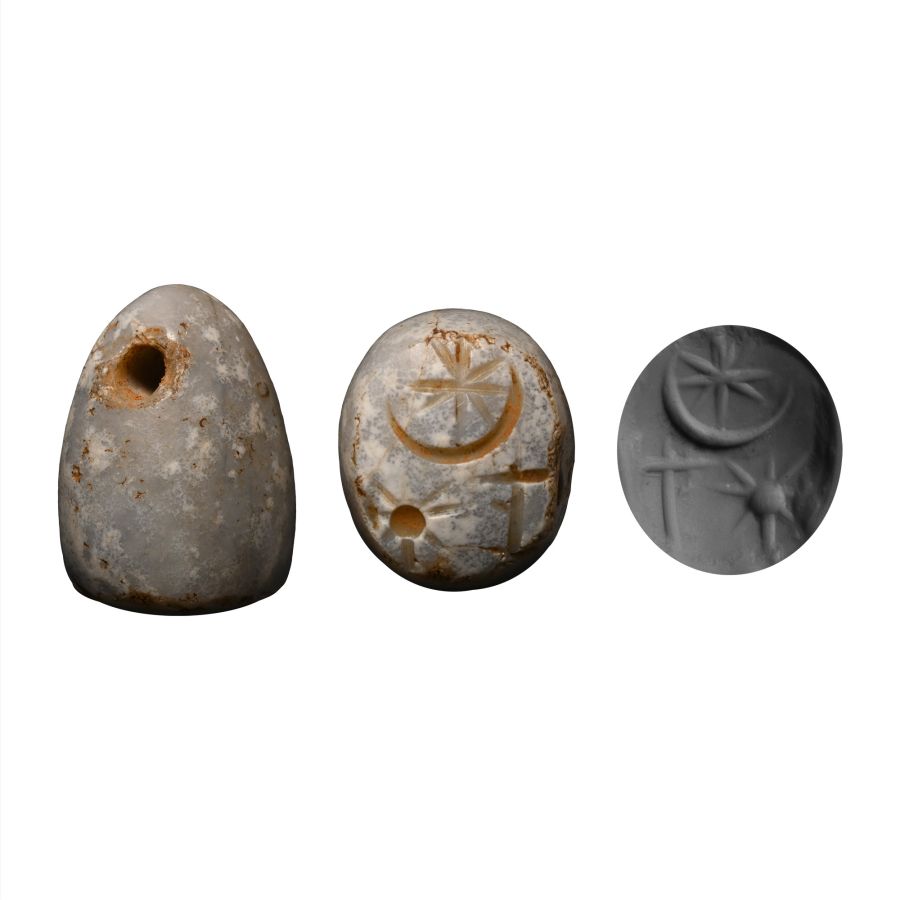
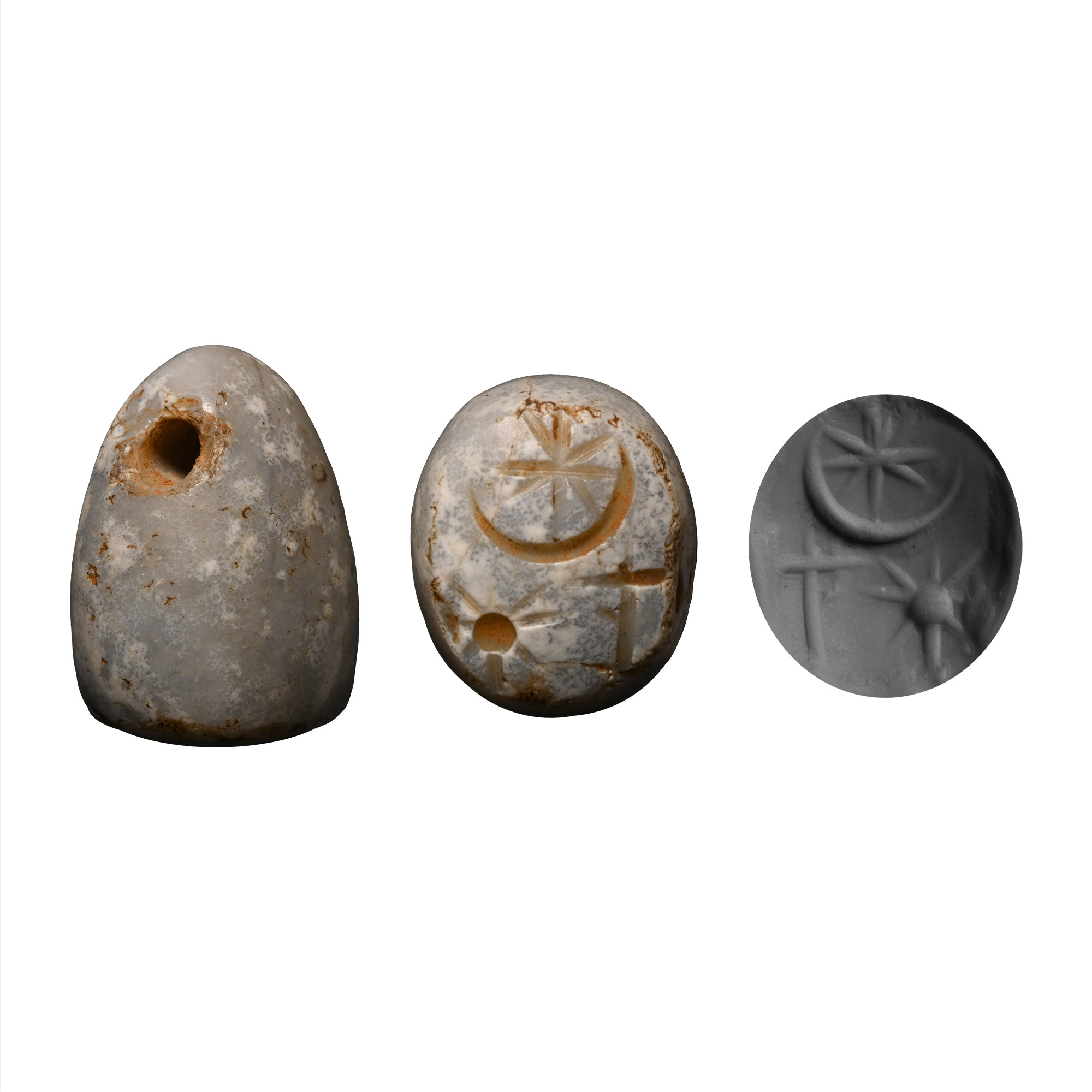
Neo Babylonian Agate Stamp Seal with Star and Moon
7TH-6TH CENTURY B.C.
3/4 in. (7.33 grams, 21 mm).
Conical body pierced through the top, underside engraved with a crescent moon and star above, sun and an altar(?) below. [No Reserve]
ProvenanceUK private collection before 2000.
Acquired on the UK art market.
Property of a London gentleman.
This lot has been cleared against the Art Loss Register database, and is accompanied by an illustrated lot declaration signed by the Head of the Antiquities Department, Dr Raffaele D'Amato.
TimeLine Auctions follows a vetting process to ensure the authenticity and legality of all items, reinforcing our commitment to integrity and responsible trading. Each antiquity, antique, and coin lot undergoes thorough examination by a vetting committee of at least ten external specialists, professional trade association members, scientists, and archaeologists: Our Vetting Process
AUCTIONS:
TimeLine is a leading auction house specialising in antiquities, ancient art, collectables, natural history, coins, medals, and books. Our auctions offer museums, collectors, historians, and enthusiasts the opportunity to acquire unique and historically significant pieces.
-
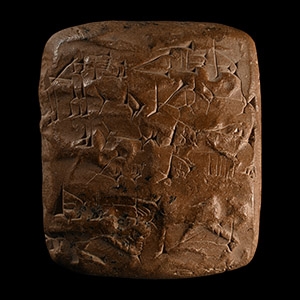
Old Babylonian Terracotta Cuneiform Tablet, Dated to the Seventh Year of King Amar-Suen
21st century B.C.Sold for (Inc. bp): £2,340
Pillow-shaped tablet containing a record of administrative records for arrears owed by Lugal-Ishtaran from the Bala-Offerings, at the end of day 15, it is dated to the year seven of King Amar-Suen, one side with a seal impression showing a man fighting with a rampant lion, possibly depicting Gilgamesh, cuneiform text behind the beast; the other side with cuneiform text overlapped by a seal impression in two registers showing advancing offerants with their arms raised; supplied in an old box with typed collection label to the cover. 40 grams, 45 mm
Found at Jokha, the ruin of the ancient city of Umma in Central Babylonia. Ex Edgar J. Banks (1866-1945). Purchased by Dr John Harvey Kellogg (1852-1943); by family descent to consignor. Edgar Banks was a diplomat and archaeologist upon whom the fictional character of Indiana Jones was based. Dr J.H. Kellogg was the founder of the Battle Creek Sanitarium and inventor of the Corn Flake. This lot has been cleared against the Art Loss Register database, and is accompanied by an illustrated lot declaration signed by the Head of the Antiquities Department, Dr Raffaele D'Amato. -

Indo-Gangetic Copper Anthropomorphic Idol
India, circa 1500-1300 B.C.Sold for (Inc. bp): £41,600
A large flat-section figure with curled arms, spread legs, lobed head; mounted on a custom-made stand. 3.24 kg total, 36.3 cm wide
Private English collection, 1950s, and kept in England. Ex Atigh Gallery, pre-1986. with Aaron Gallery, acquired from the above. Accompanied by a copy of the 1986 invoice from Atigh Gallery. This lot has been checked against the Interpol Database of stolen works of art and is accompanied by search certificate no.12492-230324. This lot has been cleared against the Art Loss Register database, and is accompanied by an illustrated lot declaration signed by the Head of the Antiquities Department, Dr Raffaele D'Amato.
A cluster of copper artefacts dating to 1500-1000 B.C. was found in the Indo-Gangetic plains (region of Uttar Pradesh), including a number of anthropomorphic figures with downwards curving arms, dome-shaped heads, and spread legs. They were cast in moulds and then hammered with often discernible chisel marks. They can be divided in several distinct categories based on their characteristics, and it has been suggested that these idols functioned as protective guardian spirits. -
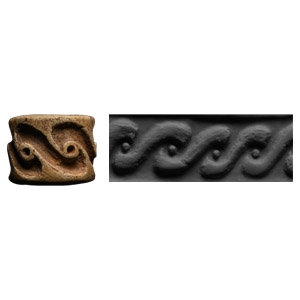
Jemdet Nasr Type Stone Cylinder Seal with Geometric Motifs
Circa 3200-3000 B.C.Sold for (Inc. bp): £286
Engraved with a continuous wave design and drilled pellets. 5.25 grams, 18 mm
UK private collection before 2000. Acquired on the UK art market. Property of a London gentleman. This lot has been cleared against the Art Loss Register database, and is accompanied by an illustrated lot declaration signed by the Head of the Antiquities Department, Dr Raffaele D'Amato.
