
Loading, please wait...
LOT 0816
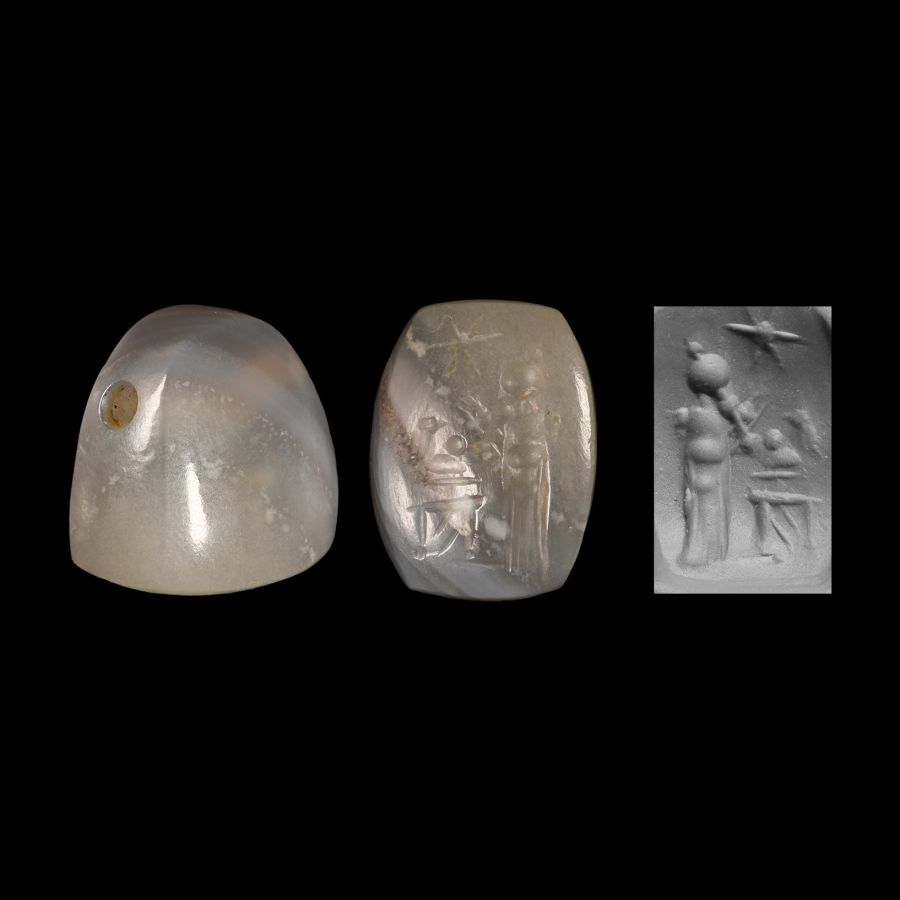
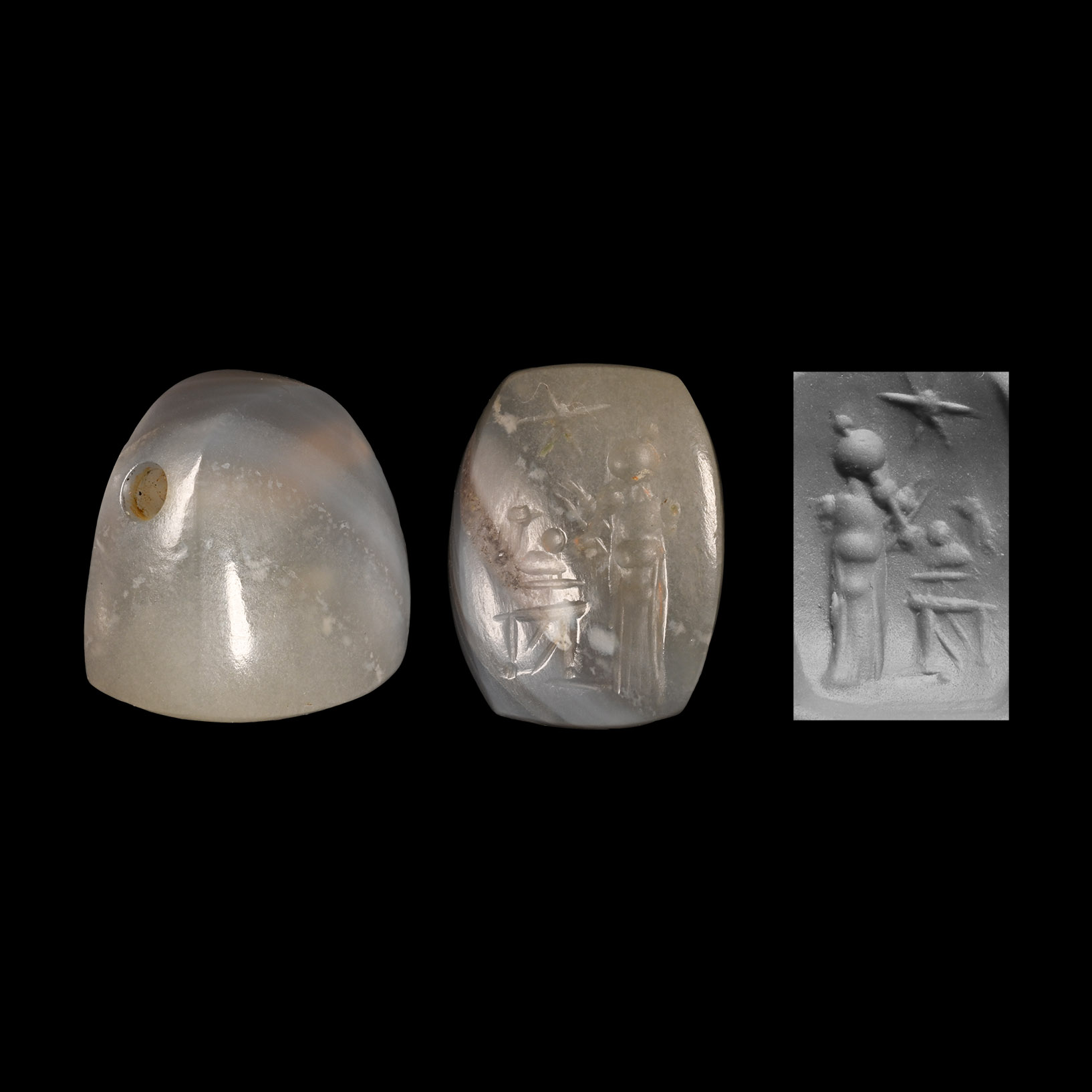
Neo-Babylonian Agate Stamp Seal with King Worshipping
CIRCA 6TH CENTURY B.C.
3/4 in. (11.68 grams, 22.09 mm).
An agate stamp seal with slightly convex base bearing intaglio scene of a worshipping king standing left, a star above; pierced towards the apex for suspension.
ProvenanceAcquired 1969-1999.
London collection of the late Mr S.M., thence by descent.
TimeLine Auctions follows a vetting process to ensure the authenticity and legality of all items, reinforcing our commitment to integrity and responsible trading. Each antiquity, antique, and coin lot undergoes thorough examination by a vetting committee of at least ten external specialists, professional trade association members, scientists, and archaeologists: Our Vetting Process
AUCTIONS:
TimeLine is a leading auction house specialising in antiquities, ancient art, collectables, natural history, coins, medals, and books. Our auctions offer museums, collectors, historians, and enthusiasts the opportunity to acquire unique and historically significant pieces.
-
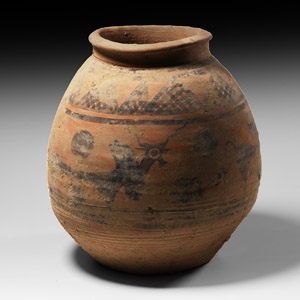
Western Asiatic Painted Vessel with Zebu
1st millennium B.C.Sold for (Inc. bp): £169
A piriform ceramic vessel with short neck and inverted rim, painted with hatched triangles over a frieze of processing zebu bulls with solid circles in the field. 380 grams, 20 cm high
Acquired 1980-2015. Ex Abelita family collection. -
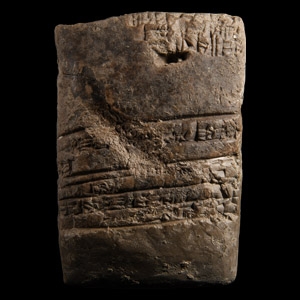
Mesopotamian Cuneiform Tablet
2nd-1st millennium B.C.Sold for (Inc. bp): £312
A pillow-shaped clay tablet bearing remains of cuneiform text to one face. 116 grams, 76 mm
Acquired 1980s. Private collection of L.H., Staffordshire, UK. Property of a Sussex, UK, teacher. -
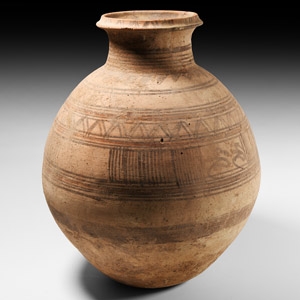
Western Asiatic Jar with Birds
3rd-2nd millennium B.C.Estimate: £350 - 450 (+bp*)
Opening Bid: £194
An ovoid ceramic jar with waisted neck and collared rim, decorated with polychrome geometric motifs including circumferential bands of chevrons, plain bands and hatching. 3.4 kg, 32.5 cm high
Fine condition.
Acquired 1970s-1990s. Ex Pars Gallery, Mayfair, London, UK. From a specialist collection of pottery.
