
Loading, please wait...
LOT 0270
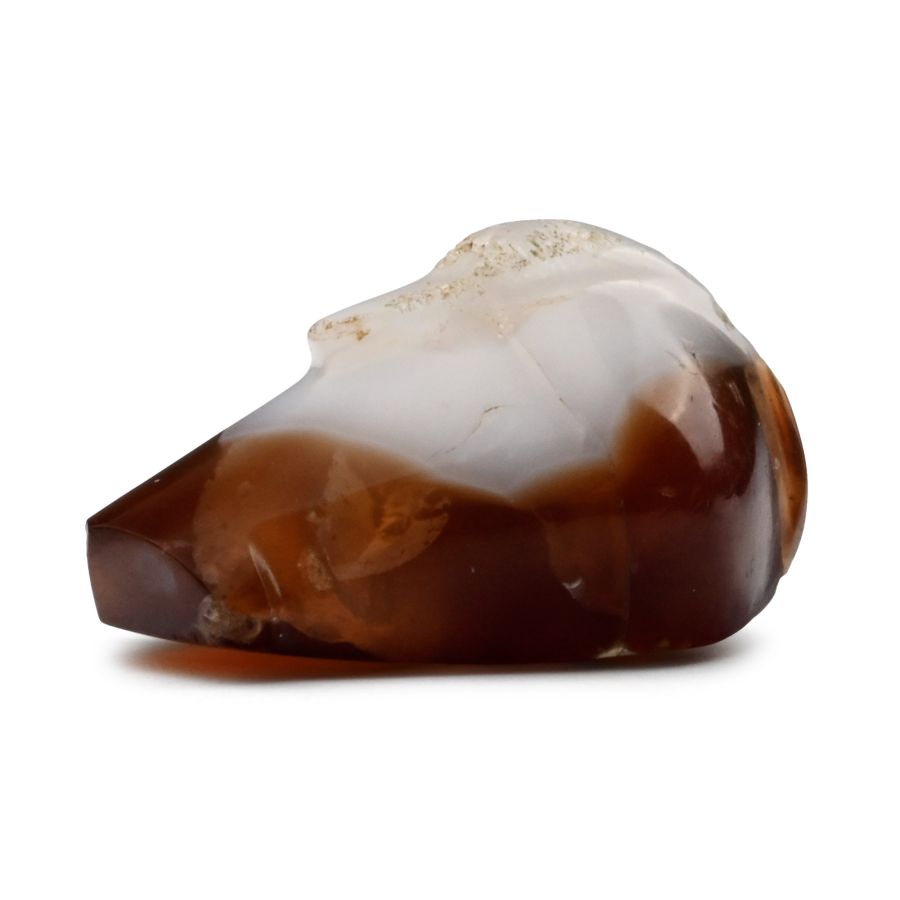
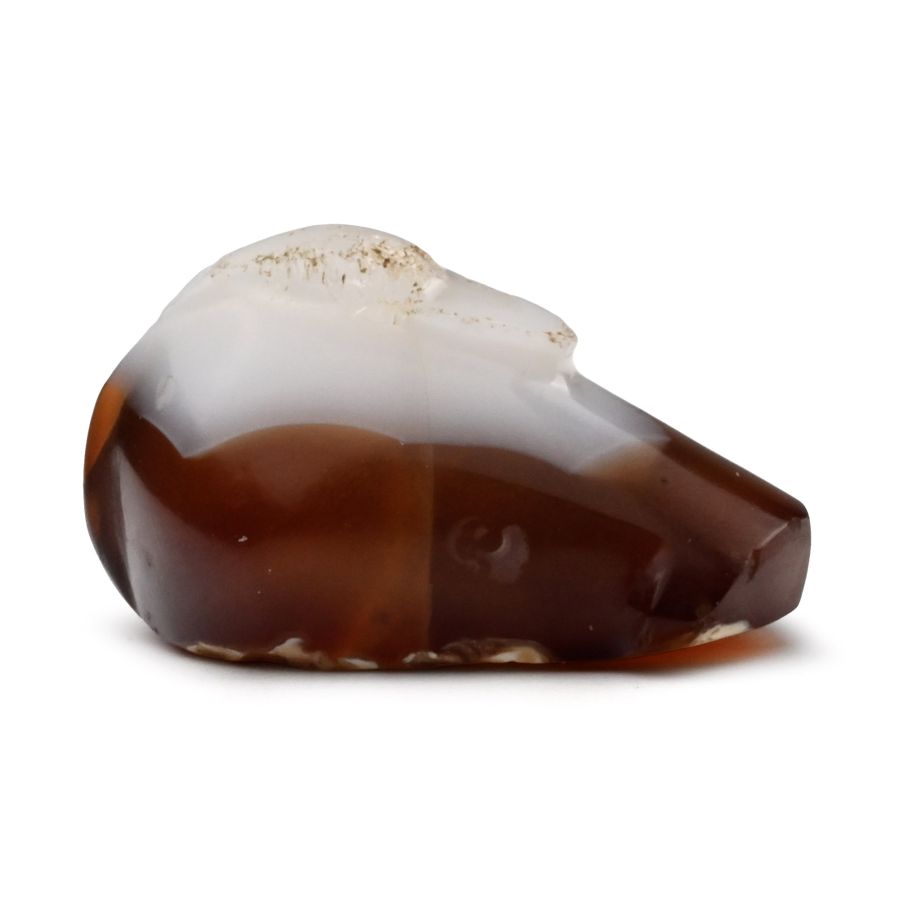
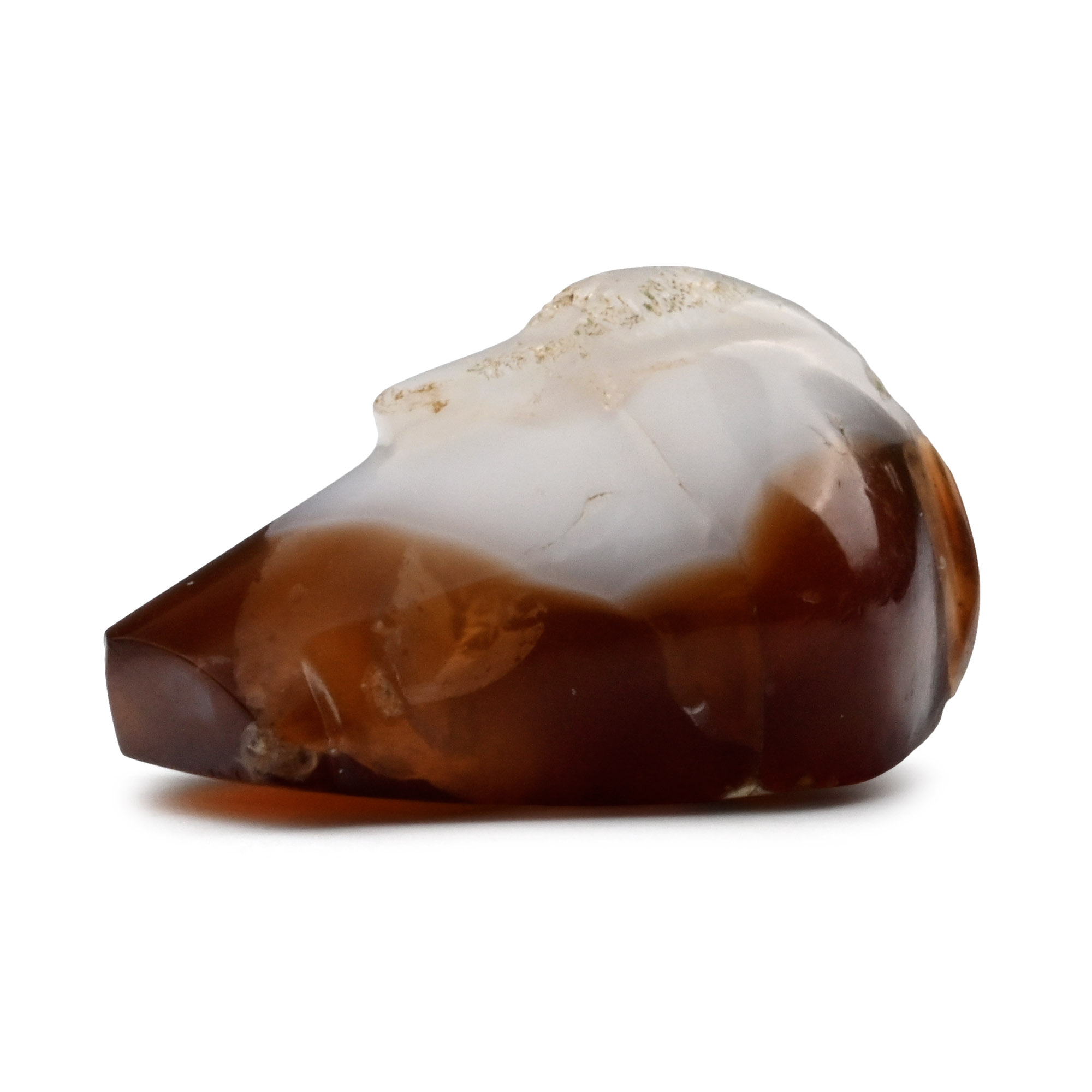
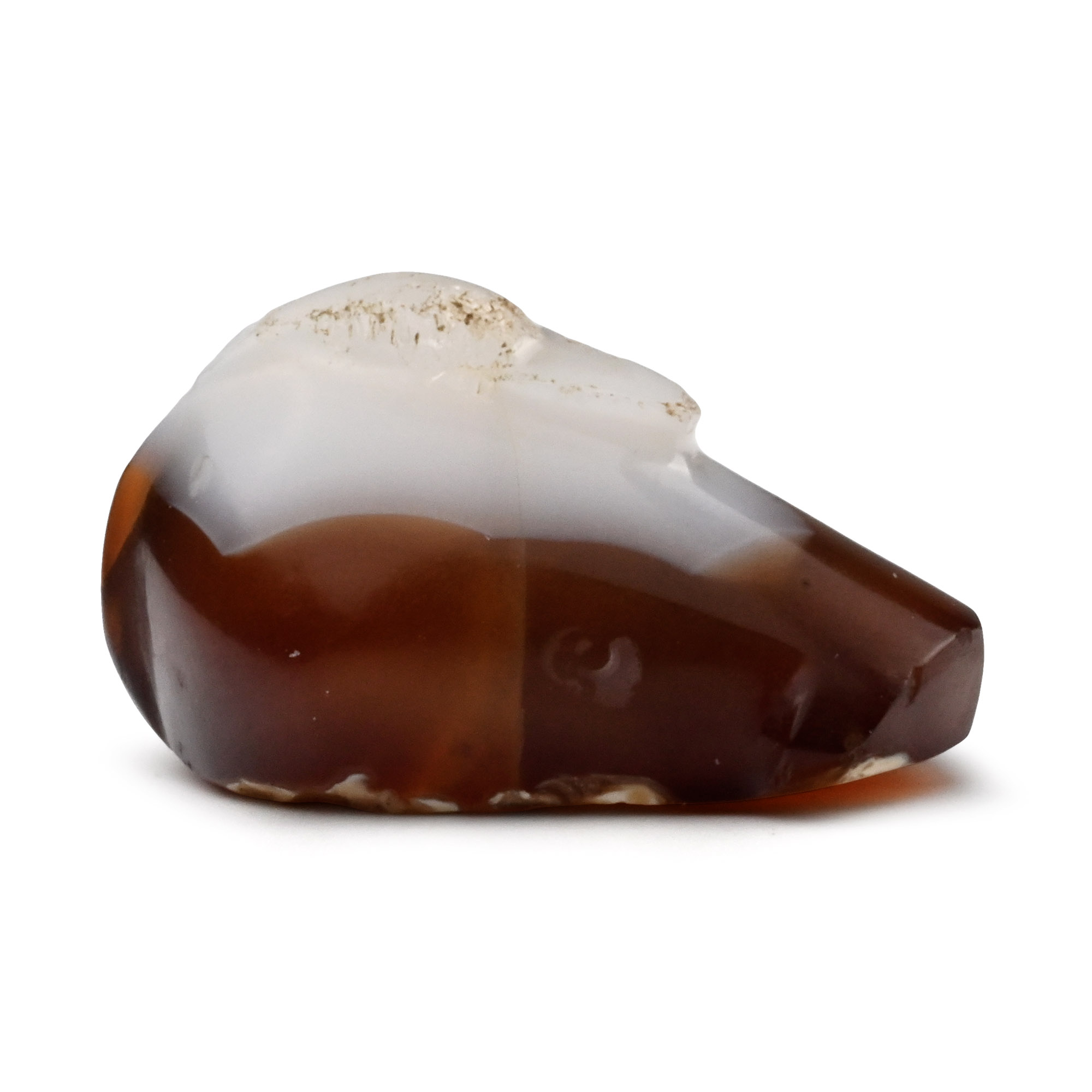
Neo-Babylonian Agate Duck Weight
700-600 B.C.
1 in. (4.76 grams, 23 mm).
Carved in banded agate so that the head and upper back are in opaque white stone, the rest in translucent orange-tan stone.
ProvenanceAcquired in 1996.
Private collection, Switzerland, thence by descent.
Private collection, since the late 1990s.
This lot has been cleared against the Art Loss Register database, and is accompanied by an illustrated lot declaration signed by the Head of the Antiquities Department, Dr Raffaele D'Amato.
TimeLine Auctions follows a vetting process to ensure the authenticity and legality of all items, reinforcing our commitment to integrity and responsible trading. Each antiquity, antique, and coin lot undergoes thorough examination by a vetting committee of at least ten external specialists, professional trade association members, scientists, and archaeologists: Our Vetting Process
AUCTIONS:
TimeLine is a leading auction house specialising in antiquities, ancient art, collectables, natural history, coins, medals, and books. Our auctions offer museums, collectors, historians, and enthusiasts the opportunity to acquire unique and historically significant pieces.
LOT 0270
Neo-Babylonian Agate Duck Weight
Estimate £1,000 - 1,400€1,160 - 1,620 (for guidance only)$1,350 - 1,890 (for guidance only)
-
Large Mesopotamian Bronze Torch Bearer
Early Dynastic Period II, mid 3rd millennium B.C.Estimate: £70,000 - 90,000 (+bp*)
Opening Bid: £35,000
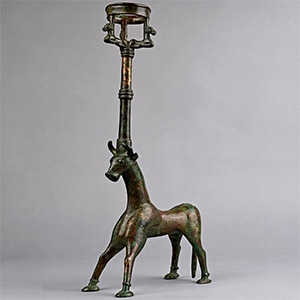
Depicting a bull standing with legs splayed and firmly planted, tail extending to the ground, billetted bands to the neck, chest, shoulders, rump and hips, rosette sun wheel to each shoulder and hip; mounted on the brow a tubular socket, extended stem with three median collars, and three more at the top; three radiating feline figures each supporting a post with gusseted ring above. 3.44 kg, 42.8 cm
Acquired before 1983. Ex London gallery, 1990s. Private collection, London. Accompanied by an academic report by Dr Raffaele D'Amato. This lot has been checked against the Interpol Database of stolen works of art and is accompanied by a search certificate number no.12796-241374. This lot has been cleared against the Art Loss Register database, and is accompanied by an illustrated lot declaration signed by the Head of the Antiquities Department, Dr Raffaele D'Amato.
The artefact belongs to a series of bronze works attesting the wide regional trade existing in the mid to late 3rd millennium B.C. in the Mesopotamian lands. They were realised with human or animal figures planted on a rectangular stand with a massive armature or candelabra issuing from the back. -
Amorite Terracotta Saddled Animal
1800-1600 B.C.Estimate: £600 - 800 (‡+bp*)
Opening Bid: £333
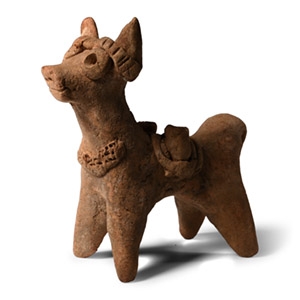
Modelled in the round with halter to the chest, strap to the brow and saddle with two lateral containers and straps. 88 grams, 85 mm
Acquired in the mid 1980s-1990s. Private collection, Switzerland, thence by descent. Private collection, since the late 1990s. This lot has been cleared against the Art Loss Register database, and is accompanied by an illustrated lot declaration signed by the Head of the Antiquities Department, Dr Raffaele D'Amato. -
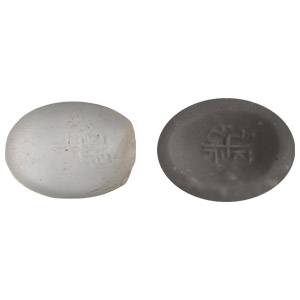
Western Asiatic Rock Crystal Gemstone
9th-10th century A.D.Sold for (Inc. bp): £117
Plano-convex cabochon with engraved Kufic legend to the domed face; supplied with a museum-quality impression. 1.08 grams, 14 mm
Acquired in 1994. Private collection, Switzerland, thence by descent. Private collection, since the late 1990s This lot has been cleared against the Art Loss Register database, and is accompanied by an illustrated lot declaration signed by the Head of the Antiquities Department, Dr Raffaele D'Amato.
