
Loading, please wait...
LOT 0252
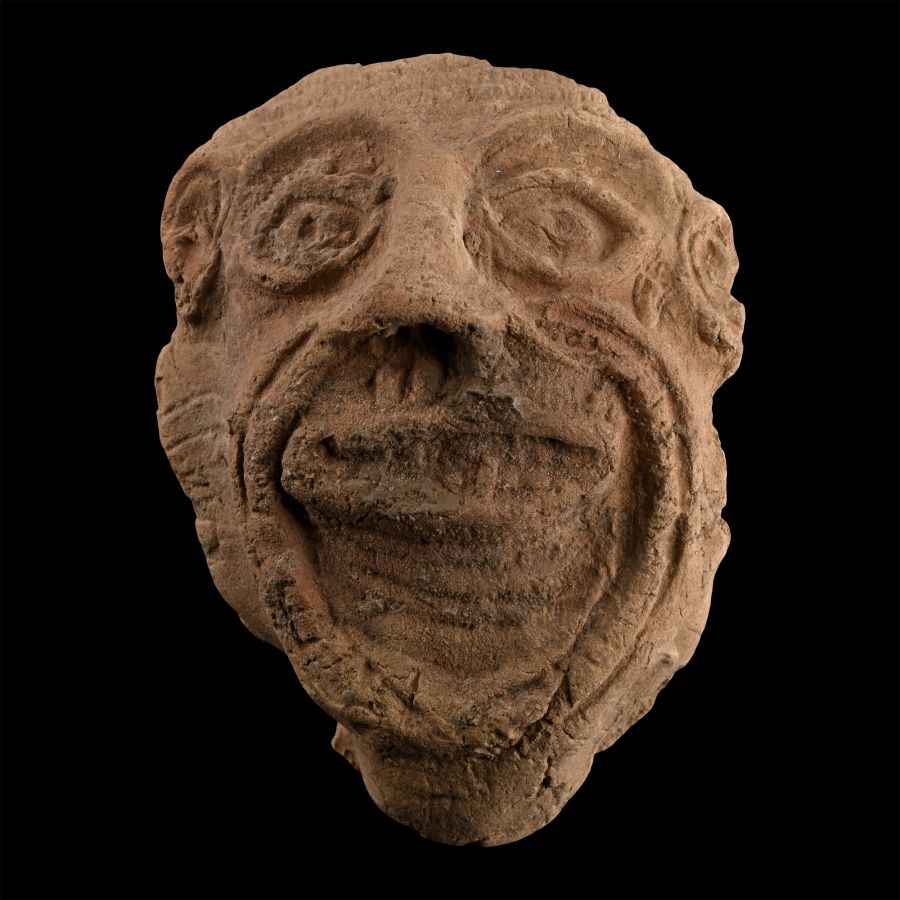
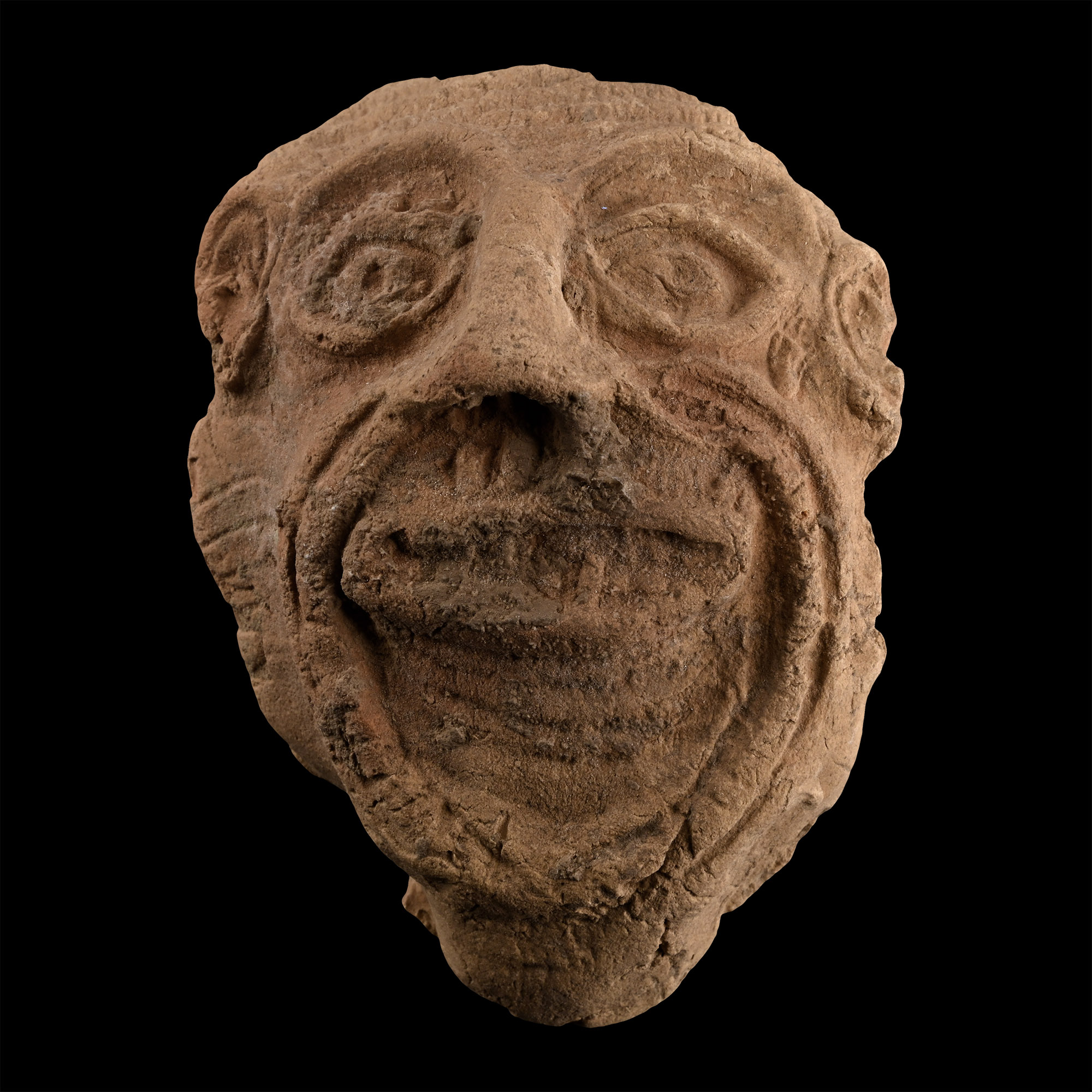
Neo-Assyrian Terracotta Plaque of Demon Humbaba
CIRCA 800-600 B.C.
4 1/4 in. (170 grams, 10.9 cm).
Ovoid in plan with moulded high-relief facial detailing, suspension ledge to reverse.
ProvenanceFrom the collection of Contessa L.G., assembled in the 1980s.
Private collection, acquired in Switzerland in 1999.
Accompanied by a copy of an Art Loss Register certificate, no.S00066787.
TimeLine Auctions follows a vetting process to ensure the authenticity and legality of all items, reinforcing our commitment to integrity and responsible trading. Each antiquity, antique, and coin lot undergoes thorough examination by a vetting committee of at least ten external specialists, professional trade association members, scientists, and archaeologists: Our Vetting Process
AUCTIONS:
TimeLine is a leading auction house specialising in antiquities, ancient art, collectables, natural history, coins, medals, and books. Our auctions offer museums, collectors, historians, and enthusiasts the opportunity to acquire unique and historically significant pieces.
LOT 0252
Neo-Assyrian Terracotta Plaque of Demon Humbaba
Estimate £700 - 900€810 - 1,040 (for guidance only)$950 - 1,220 (for guidance only)
-
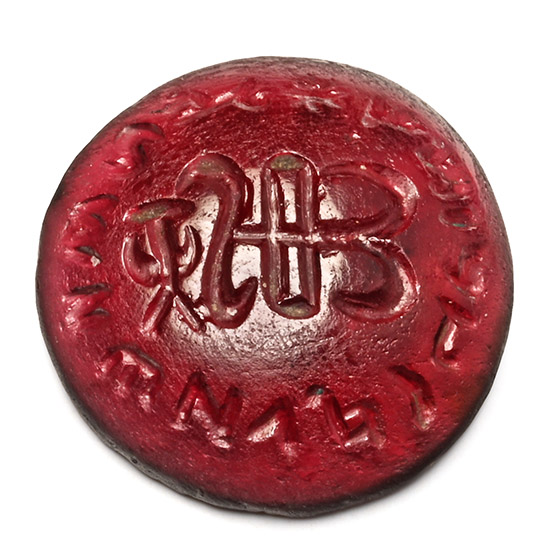
Sasanian Garnet Gemstone with Device and Pahlavi Inscription
Circa 4th-5th century AD.Estimate: £150 - 200 (+bp*)
Bids: 1 | Current Bid: £5
Plano-convex in profile with a legend of Pahlavi inscription enclosing a stylised geometric device. 1.29 grams, 14 mm
From a privately held London, UK, collection from the late 1990s. -
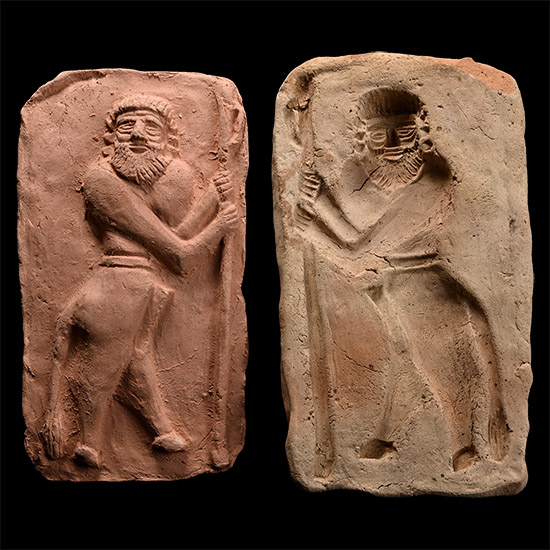
Old Babylonian Ceramic Plaque Mould of a Standing God
Early 2nd millennium B.C.Estimate: £2,000 - 3,000 (+bp*)
Opening Bid: £1,000
Rectangular mould with a recess formed as Kusarikku holding a long standard, his bearded face depicted frontally, whereas his lower body formed as a bull's legs and tail is depicted facing the staff; accompanied by an impression of the mould. 330 grams, 13.3 cm
Mayfair gallery, early 1990s. Ex North American gentleman collection. This lot has been checked against the Interpol Database of stolen works of art and is accompanied by search certificate no.13480-263297.
Kusarikku was a benevolent protective deity used to ward off evil spirits from temples and homes. -
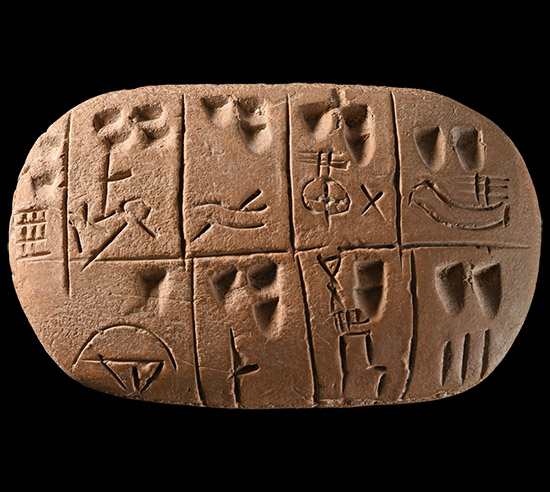
Sumerian Proto-Cuneiform Tablet with Symbols
Jemdet Nasr Period, Uruk III, 3200-3000 B.C.Estimate: £4,000 - 6,000 (+bp*)
Opening Bid: £2,000
Pillow-shaped with incised grid to the broad faces, dense cuneiform pictographic text in the columns with impressed pellet numerals. 45.6 grams, 63 mm
Percy Barnevik, Sweden. Private collection, UK, acquired June 2000. with Sam Fogg, London. Acquired by the current owner from the above, 2015. Accompanied by a copy of Professor Lambert’s notes and two-page cataloguing report. This lot has been checked against the Interpol Database of stolen works of art and is accompanied by search certificate no.13429-259930.
Various collections of cuneiform tablets form a corpus of texts mainly of administrative nature, from the Uruk III and Ur III periods. The proto-cuneiform, as a system of proto-writing, emerged in Mesopotamia ca.3500-3200 BC, during the Uruk period.
