
Loading, please wait...
LOT 0289
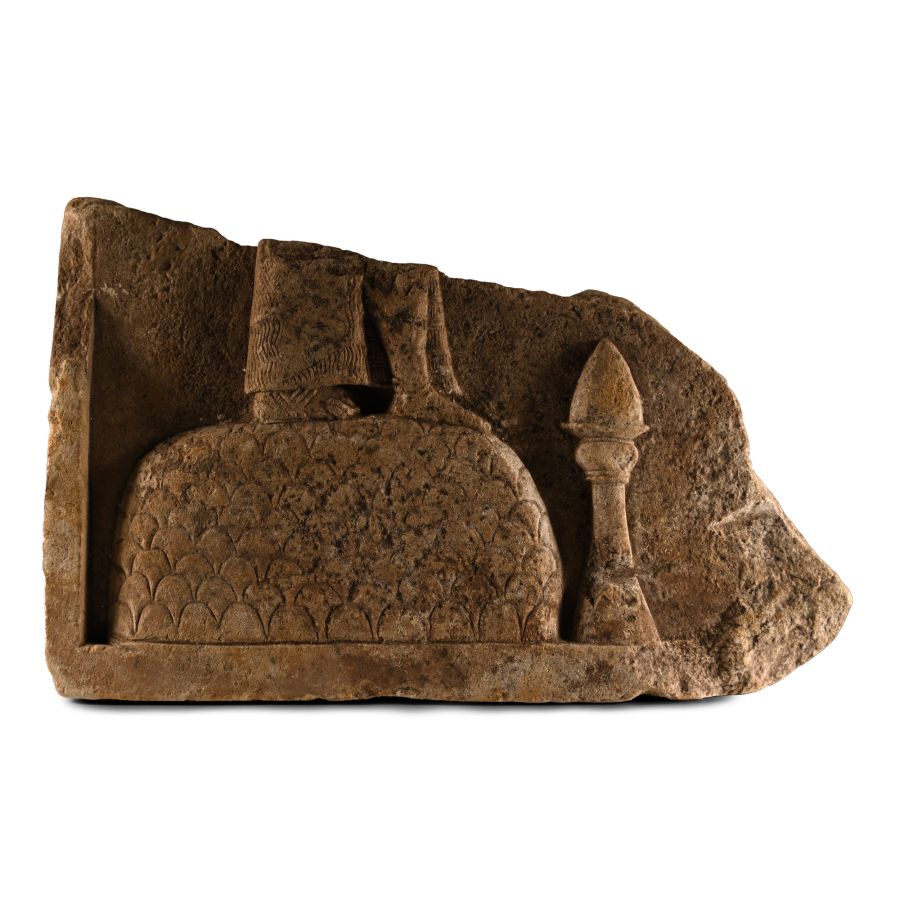
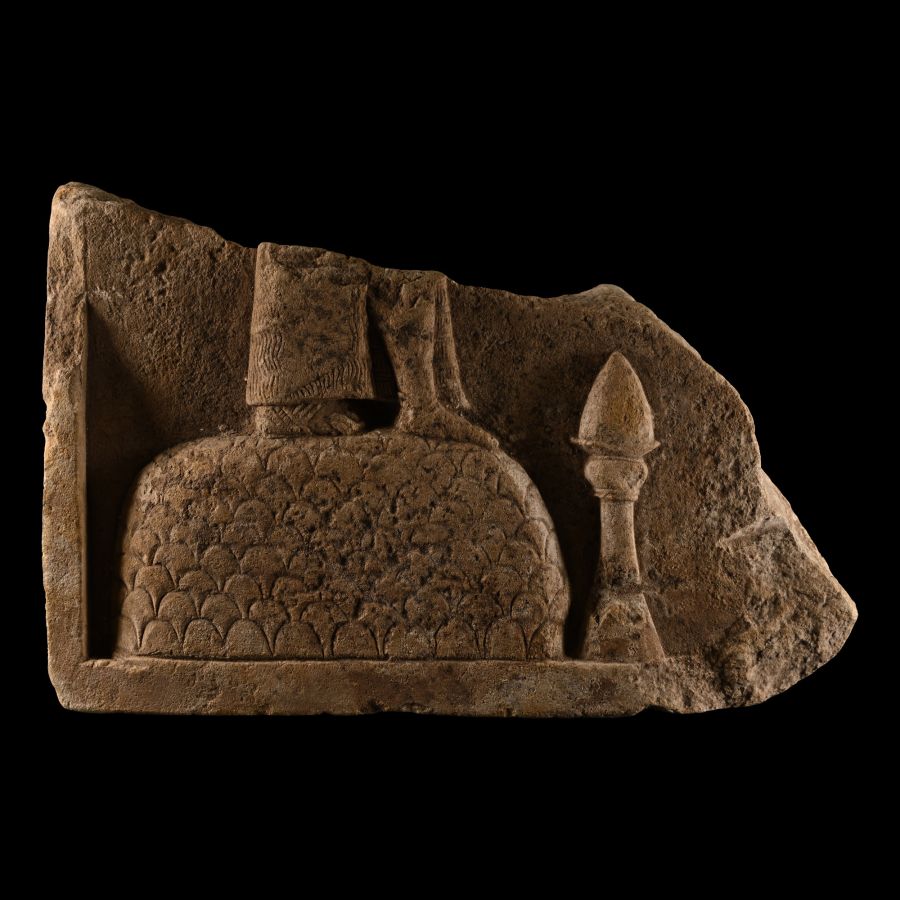
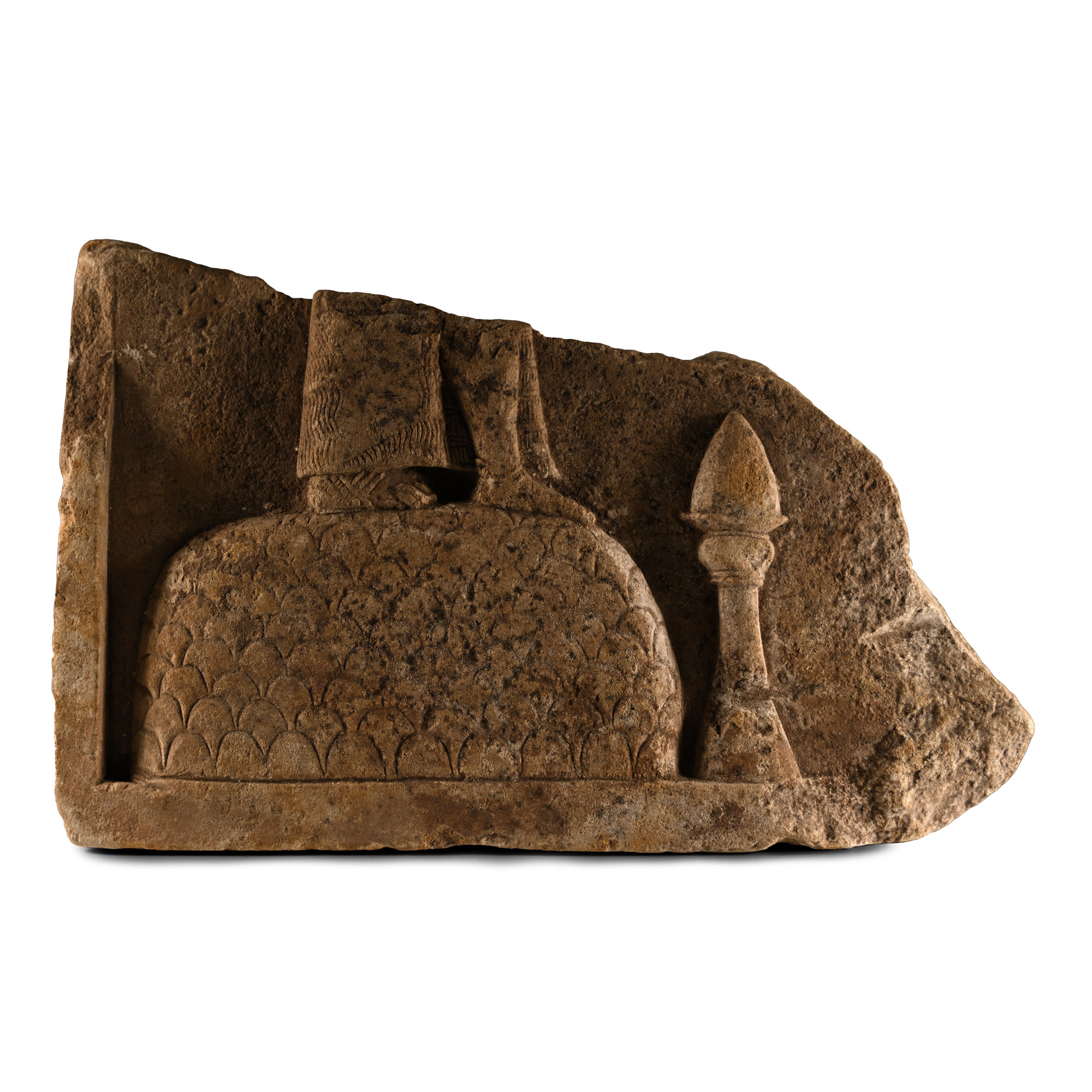
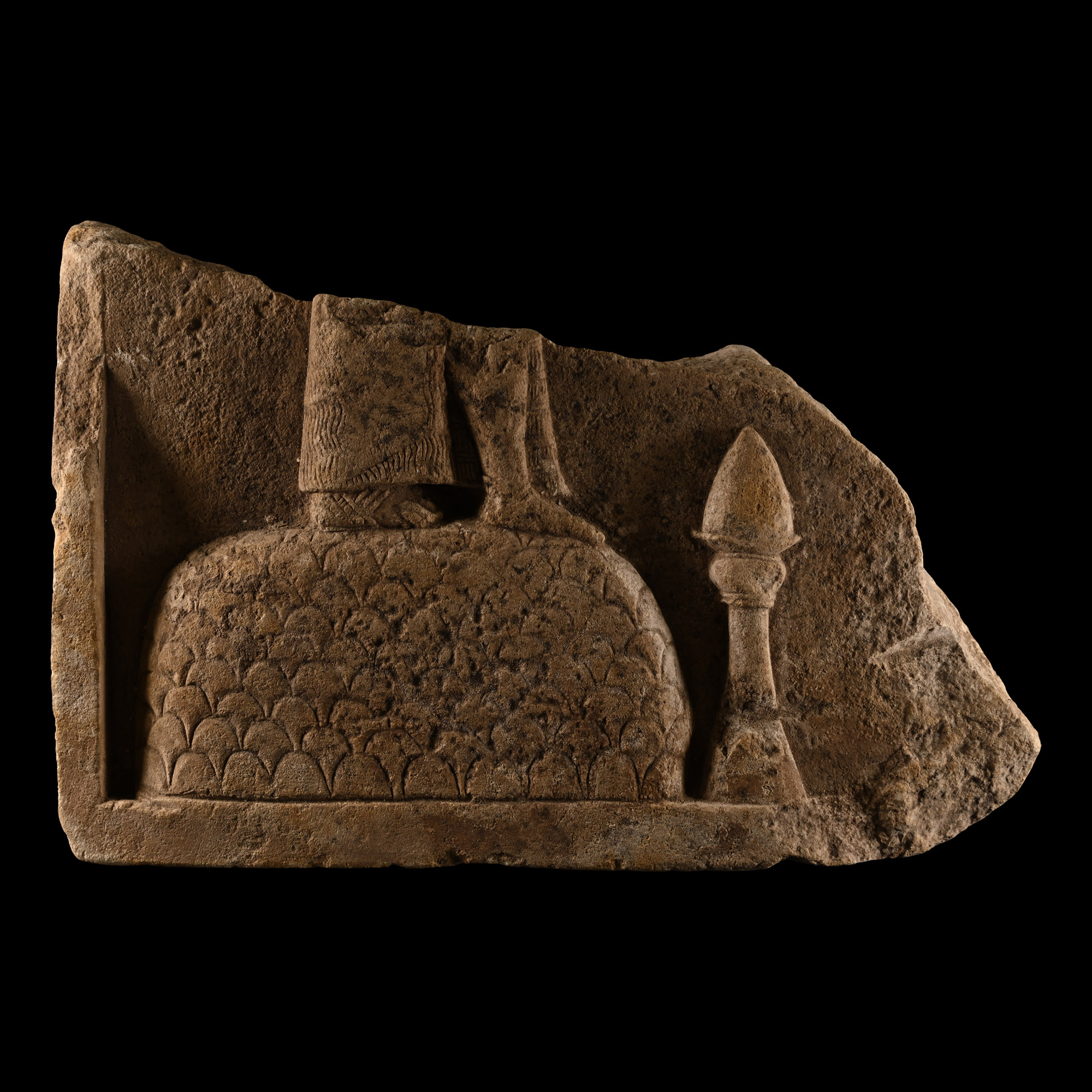
Neo-Assyrian Stone Relief with Standing Figure
9TH-8TH CENTURY B.C.
9 5/8 in. (2.81 kg, 24.3 cm).
Corner fragment from a high-relief pictorial panel with raised border; domed dais with low-relief scaled detailing; lower legs and sandaled feet in advancing pose with ankle-length open-fronted robe, horizontal woven texture and curled fleece; high-relief stele with flared base, bulbous upper and sugar-loaf finial; pitted surface, with tooling to reverse.
ProvenanceEx German collection, c.1980.
with Toufic Arakji, Hamburg, 1997.
Private collection, Europe.
Accompanied by an academic report by Dr Raffaele D'Amato.
This lot has been checked against the Interpol Database of stolen works of art and is accompanied by search certificate no.12579-232134.
Cf. similar costumes and sandals in Directorate General of Antiquities, Assyrian Costumes, Les Costumes Assyriens, Baghdad, 1971, figs.2, 7, 8, 9 (Ashurnasirpal II), 28 (mythological hero), 29 (priest); Houston, M.G., Ancient Egyptian, Mesopotamian & Persian costume, London, 1954 (2002), fig.130; see also Assyrian cultic scene in Budge, E.A.W., Assyrian Sculptures in the British Museum, Reign of Ashur-nasir-pal, 885-890 B.C., London, 1914, pl. XI & LIII.4 & LIII.7.
FootnotesStylistically, the figure seems to be linked to the kingdom of Ashurnasirpal II (883-859 B.C.) or his son Shalmaneser III (858-824 B.C.). The exposed lower leg with exaggerated musculature is seen in many Assyrian and Babylonian depictions of divine and heroic figures. The position of the figure, corresponding to some reliefs kept in the Louvre, where a spirit is worshipping a poppy flower (Houston, 1954, pl.V.1), and the high-relief carving, strongly refer to a cult scene.
CONDITIONTimeLine Auctions follows a vetting process to ensure the authenticity and legality of all items, reinforcing our commitment to integrity and responsible trading. Each antiquity, antique, and coin lot undergoes thorough examination by a vetting committee of at least ten external specialists, professional trade association members, scientists, and archaeologists: Our Vetting Process
AUCTIONS:
TimeLine is a leading auction house specialising in antiquities, ancient art, collectables, natural history, coins, medals, and books. Our auctions offer museums, collectors, historians, and enthusiasts the opportunity to acquire unique and historically significant pieces.
-
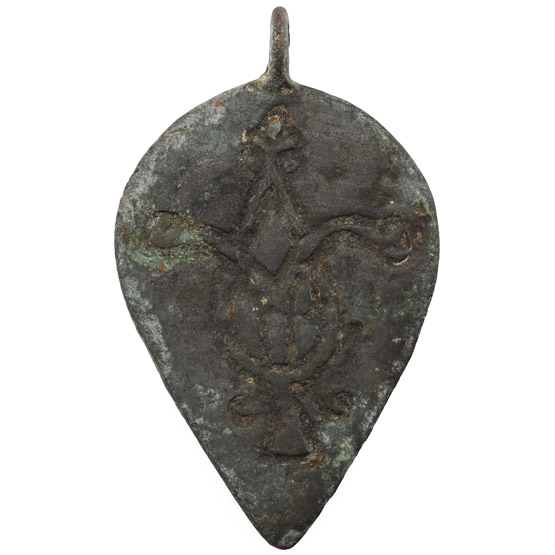
Western Asiatic Bronze Bifacial Pendant with Inscription
12th-14th century A.D.Estimate: £100 - 140 (+bp*)
Opening Bid: £50
Teardrop-shaped with integral loop, obverse with lobed plant motif, reverse with seven lines of Arabic script. 12.7 grams, 51 mm
Ex Abelita family collection, 1980s-2000s. -
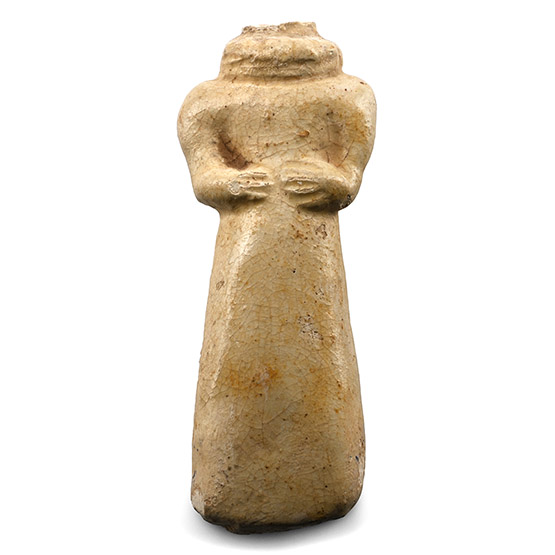
Parthian Glazed Terracotta Fertility Figure
2nd century B.C.-2nd century A.D.Sold for (Inc. bp): £33
Modelled in the round in floor-length robed with hands placed flat on the abdomen, tiered collar. 47 grams, 84 mm
Ex private collection, London, UK, 1969-1999. -
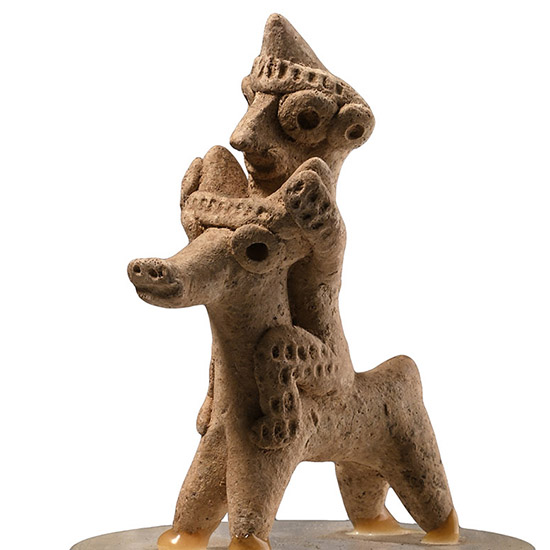
Western Asiatic Terracotta Animal Rider
2nd-1st millennium B.C.Sold for (Inc. bp): £195
Modelled in the round standing facing, the rider gripping the animal with his thighs and by its ears, stylised detailing to both figures in the form of applied circular eyes and pricked headbands, the rider wearing a conical cap; mounted on a substantial cylindrical perspex display base. 676 grams total, 20 cm high including stand
Collected from 1979-1999. From the collection of the late Mr S.M., London, UK. From the Moussieff salon cabinet display. From the private collection of John Meredith, acquired since the 1990s; thence by descent.
