
Loading, please wait...
LOT 1474
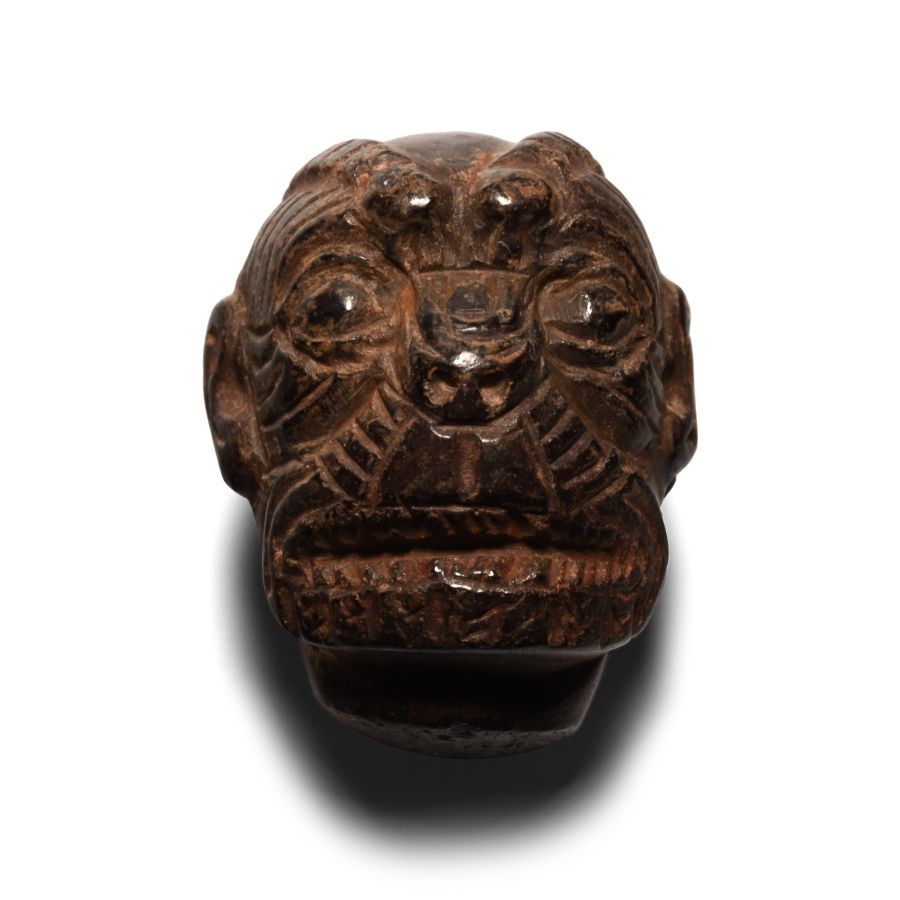
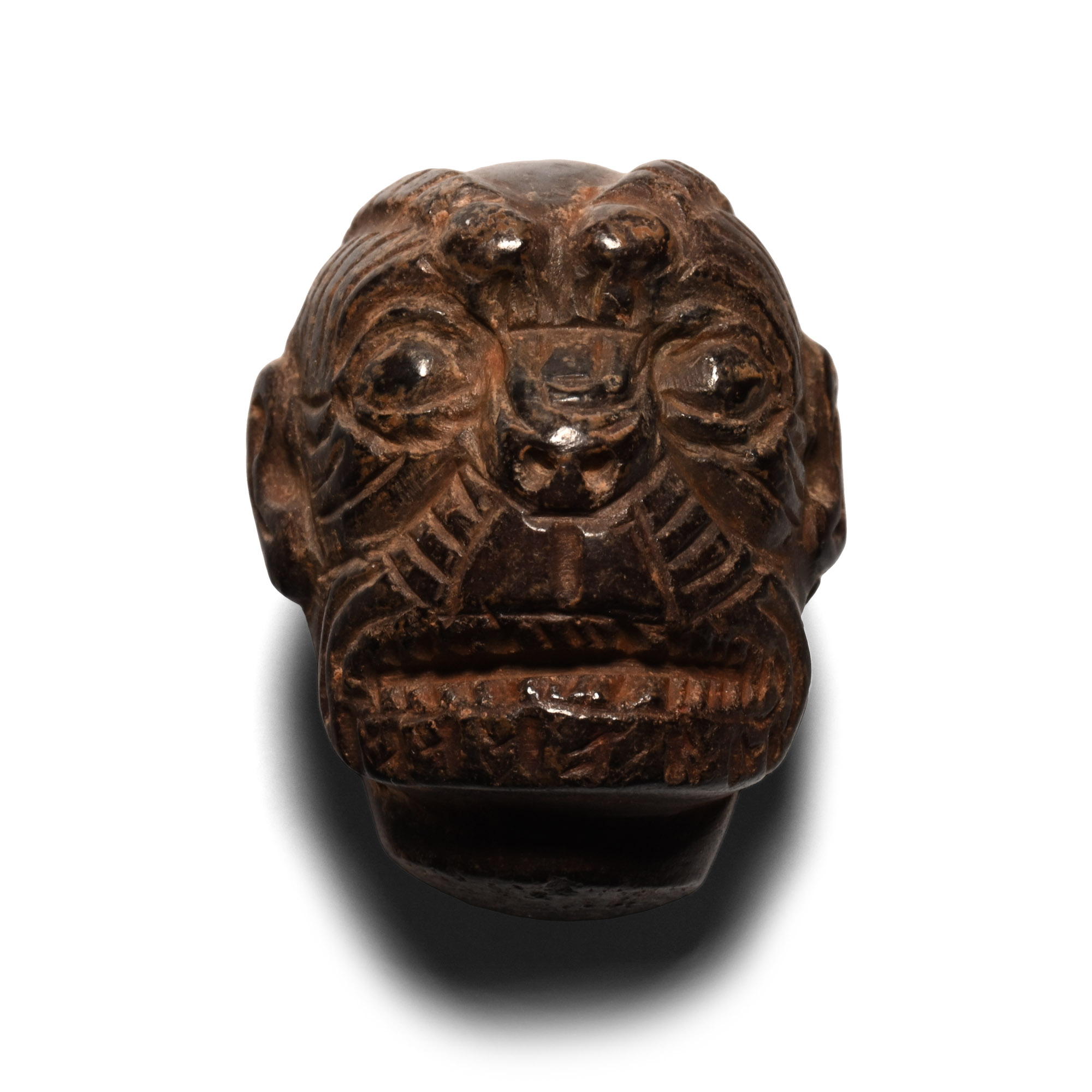
Neo Assyrian Haematite Pazuzu Head
8TH-7TH CENTURY B.C.
1 in. (16.2 grams, 24 mm).
Modelled in the round with grotesque features and fierce teeth exposed; drilled through the head for suspension.
ProvenanceUK private collection before 2000.
Acquired on the UK art market.
Property of a London gentleman.
This lot has been cleared against the Art Loss Register database, and is accompanied by an illustrated lot declaration signed by the Head of the Antiquities Department, Dr Raffaele D'Amato.
See British Museum, Splendours of Mesopotamia, London, 2011, p.203, cat.180, for type.
FootnotesIn Babylonian mythology the demon Pazuzu was the son of the god Hanpa. His consort, the demon Lamaštu, carried fever and preyed upon children and pregnant women. She could be neutralised with appropriate spells and amulets, which also protected against other demons. For this reason, women wore an amulet with the effigy of Pazuzu around their necks during pregnancy.
CONDITIONTimeLine Auctions follows a vetting process to ensure the authenticity and legality of all items, reinforcing our commitment to integrity and responsible trading. Each antiquity, antique, and coin lot undergoes thorough examination by a vetting committee of at least ten external specialists, professional trade association members, scientists, and archaeologists: Our Vetting Process
AUCTIONS:
TimeLine is a leading auction house specialising in antiquities, ancient art, collectables, natural history, coins, medals, and books. Our auctions offer museums, collectors, historians, and enthusiasts the opportunity to acquire unique and historically significant pieces.
-
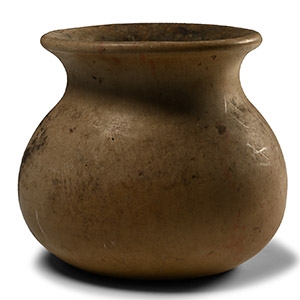
Western Asiatic Limestone Jar
1st millennium B.C.Estimate: £600 - 800 (+bp*)
Opening Bid: £300
Indurate limestone vessel with squat profile, broad flat base, carinated shoulder and broad rounded rim. 405 grams, 88 mm wide
From a London, UK, gentleman's collection of ancient pottery and artefacts, 1990s. This lot has been cleared against the Art Loss Register database, and is accompanied by an illustrated lot declaration signed by the Head of the Antiquities Department, Dr Raffaele D'Amato. -
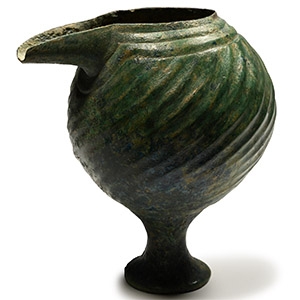
Elamite Spouted Vessel with Twisted Design
Late 2nd-early 1st millennium B.C.Estimate: £1,800 - 2,400 (+bp*)
Opening Bid: £1,000
Comprising a bulbous body with short stem and flared foot, radiating twisted ribs to the sidewall, stepped shoulder and short tapering spout. 281 grams, 13.1 cm high
Acquired before 1983. Ex London gallery, 1990s. This lot has been checked against the Interpol Database of stolen works of art and is accompanied by a search certificate number no.12533-231944. This lot has been cleared against the Art Loss Register database, and is accompanied by an illustrated lot declaration signed by the Head of the Antiquities Department, Dr Raffaele D'Amato. -
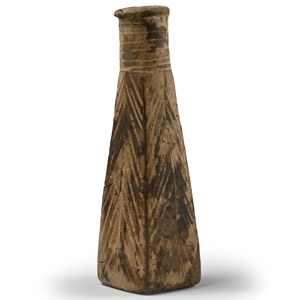
Western Asiatic Terracotta Flask with Incised Decoration
1st millennium B.C.Sold for (Inc. bp): £72
With an almost square base, sloping walls and circular mouth; incised encircling lines on the neck and herringbone-pattern on the walls. 38 grams, 73 mm
with Dorotheum Auction, Vienna, 13 December 2000, no.61. This lot has been cleared against the Art Loss Register database, and is accompanied by an illustrated lot declaration signed by the Head of the Antiquities Department, Dr Raffaele D'Amato.
Various materials were used in Antiquity to manufacture containers for expensive perfume extracts. Clay was one of the most common materials before glass containers were invented. The clay containers were easy to make and blocked sunlight, protecting the perfume.
