
Loading, please wait...
LOT 1299
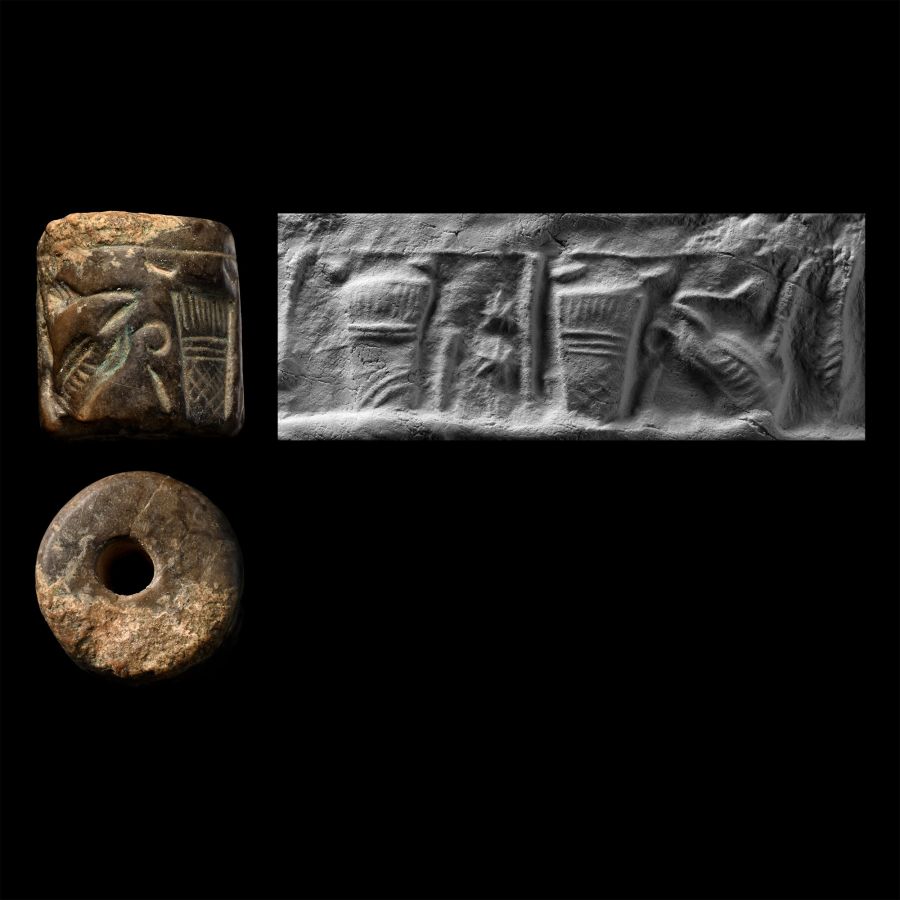
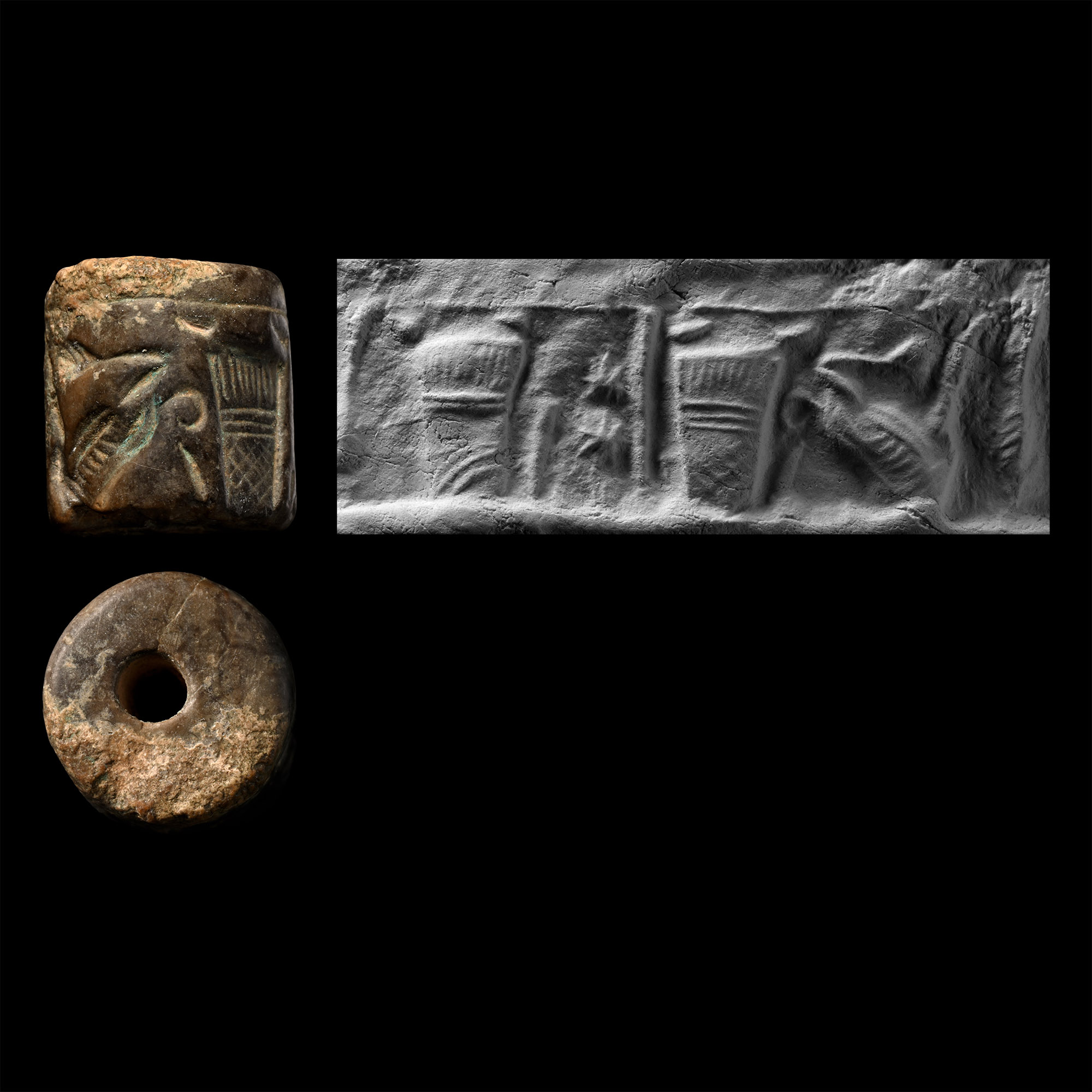
Neo-Assyrian Brown Steatite Cylinder Seal with a Dog
CIRCA 900-700 B.C.
5/8 in. (5.38 grams, 16 mm).
The lower half of a cylinder seal showing the bottom part of two Syrian dresses and a sitting dog, a tree and two stars; supplied with a museum-quality impression. [No Reserve]
ProvenanceFrom the private collection of a European gentleman (1942-2024), formed since the 1970s.
Accompanied by a previous typed catalogue slip with collection no.78.
TimeLine Auctions follows a vetting process to ensure the authenticity and legality of all items, reinforcing our commitment to integrity and responsible trading. Each antiquity, antique, and coin lot undergoes thorough examination by a vetting committee of at least ten external specialists, professional trade association members, scientists, and archaeologists: Our Vetting Process
AUCTIONS:
TimeLine is a leading auction house specialising in antiquities, ancient art, collectables, natural history, coins, medals, and books. Our auctions offer museums, collectors, historians, and enthusiasts the opportunity to acquire unique and historically significant pieces.
-
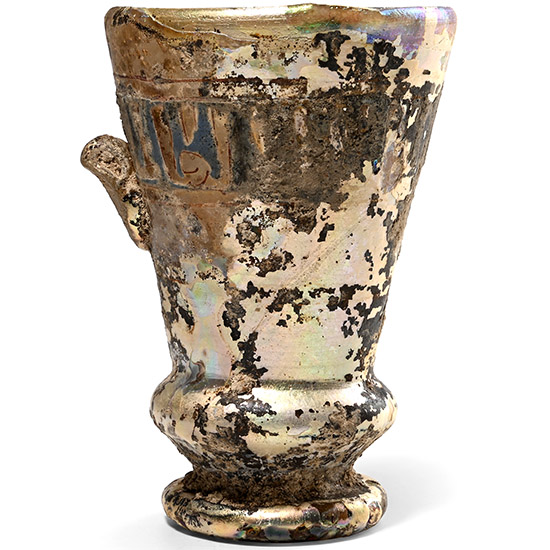
Islamic Glass Calligraphic Vessel with Inscriptions
13th-14th century A.D.Estimate: £2,000 - 3,000 (+bp*)
Current Winning Bid: £1,000
Conical in profile with carinated collar above the waisted foot; iridescent surface; applied band of calligraphic Kufic text within borders; single applied narrow loop handle. 92.3 grams, 93 mm
Acquired on the UK art market, 1990s. Private collection, New York, USA. This lot has been checked against the Interpol Database of stolen works of art and is accompanied by search certificate number no.13375-255455.
Often, the inscriptions on the glass Islamic artworks are in pseudo-Kufic letters, mostly with elements notched or hatched with shallow cuts. Some letters have foliate terminations. -
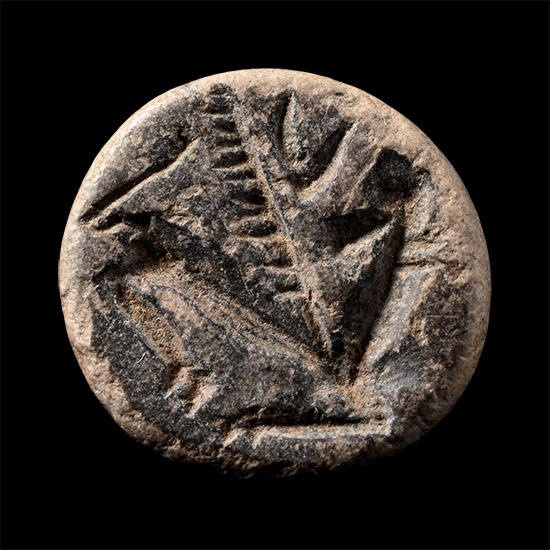
Palestinian or Anatolian Brown Stone Stamp Seal with Sphinx
Circa 1200-900 B.C.Sold for (Inc. bp): £52
Comprising a domed body and a large handle, accompanied by an old scholarly note, typed and signed by W.G. Lambert, late Professor of Assyriology, University of Birmingham, 1970-1993, which states: 'Stamp Seal of Brown Stone with Black Patina, 17 x 17.5 x 18 mm. The seal has an oval face, with domed back with superimposed handle, which is nicely shaped. The design shows a recumbent sphynx: body of a quadruped, but human head and wings. Above its back is a bird or fly. This is a seal from Syria / Palestine or Anatolia, c. 1200-900 B.C. It is in fine condition.' 4.61 grams, 18 mm
Acquired in the late 1980s-early 1990s. Ex property of a West London businessman. Academically researched and catalogued by the late Professor Lambert in the early 1990s. Accompanied by a copy of a scholarly report, numbered 1607, typed and signed by Professor Wilfrid George Lambert. -
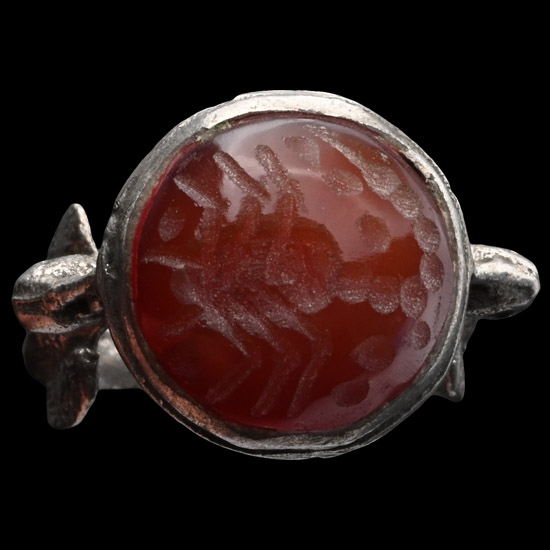
Bedouin Ring with Birds on Shoulders
Circa 18th-19th century A.D.Sold for (Inc. bp): £46
White metal ring with the shoulders formed as birds with spread wings, conical bezel set with a carnelian cabochon engraved with a scorpion. 10.16 grams, 32.39 mm overall, 18.05 mm internal diameter (approximate size British P, USA 7 1/2, Europe 16.23, Japan 15)
Ex English collection of Mr A.H.D. Accompanied by a previously illustrated catalogue card with provenance.
