
Loading, please wait...
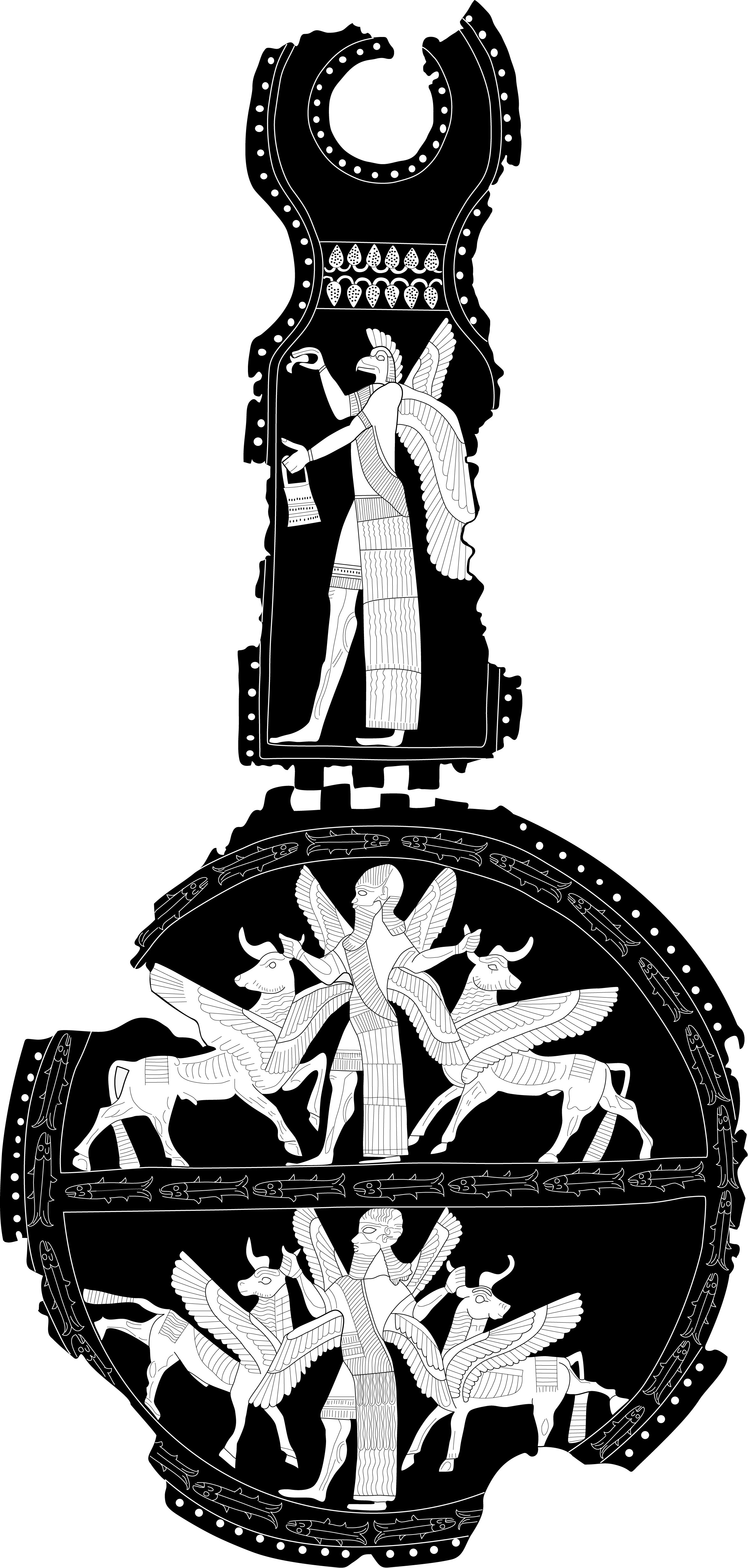
_900x900.jpg "Neo-Assyrian Bronze Horse Trapping with Eagle-Headed God Nisroch and Winged Supernatural Figures")
_200x200.jpg "Neo-Assyrian Bronze Horse Trapping with Eagle-Headed God Nisroch and Winged Supernatural Figures")
.jpg "Neo-Assyrian Bronze Horse Trapping with Eagle-Headed God Nisroch and Winged Supernatural Figures")
LOT 0252
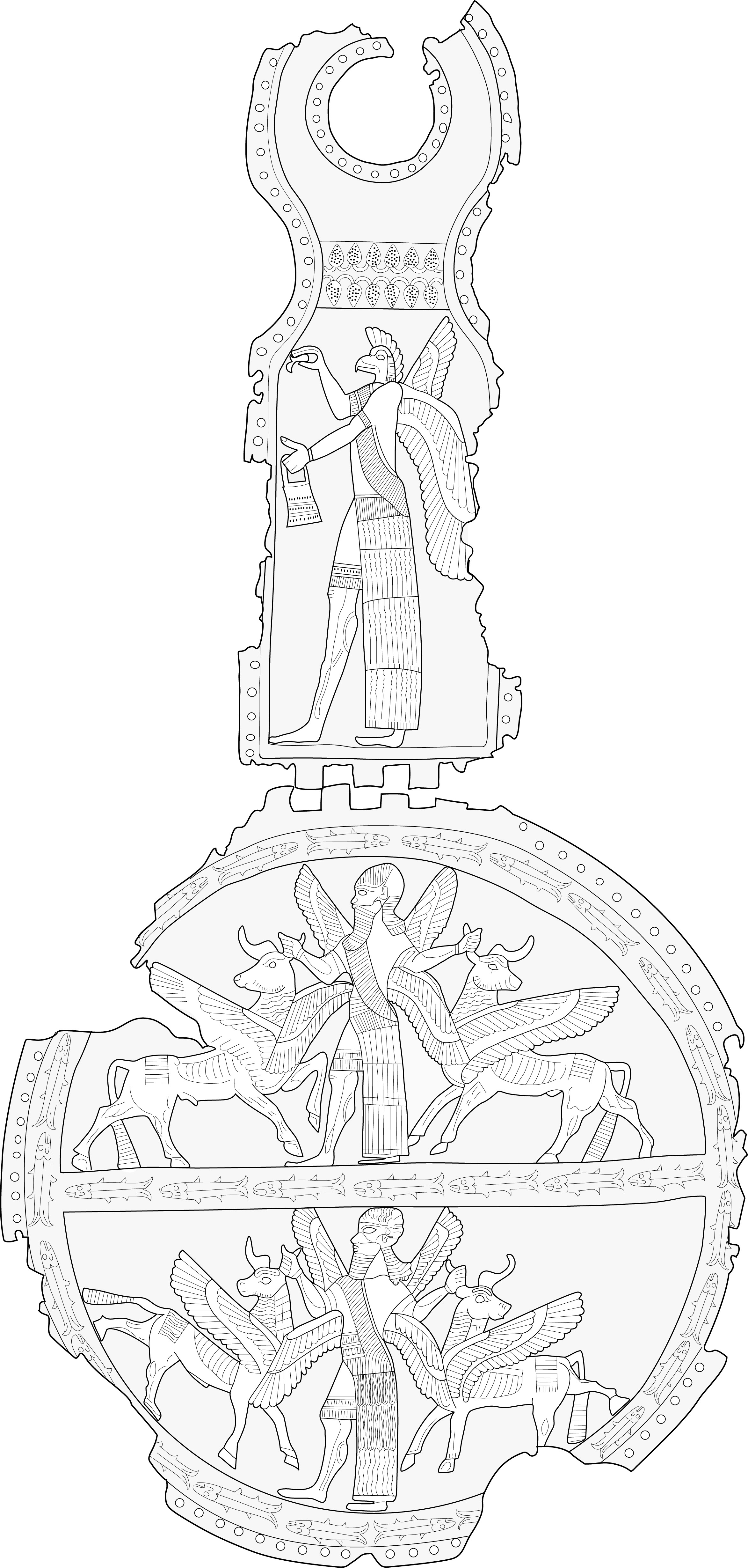
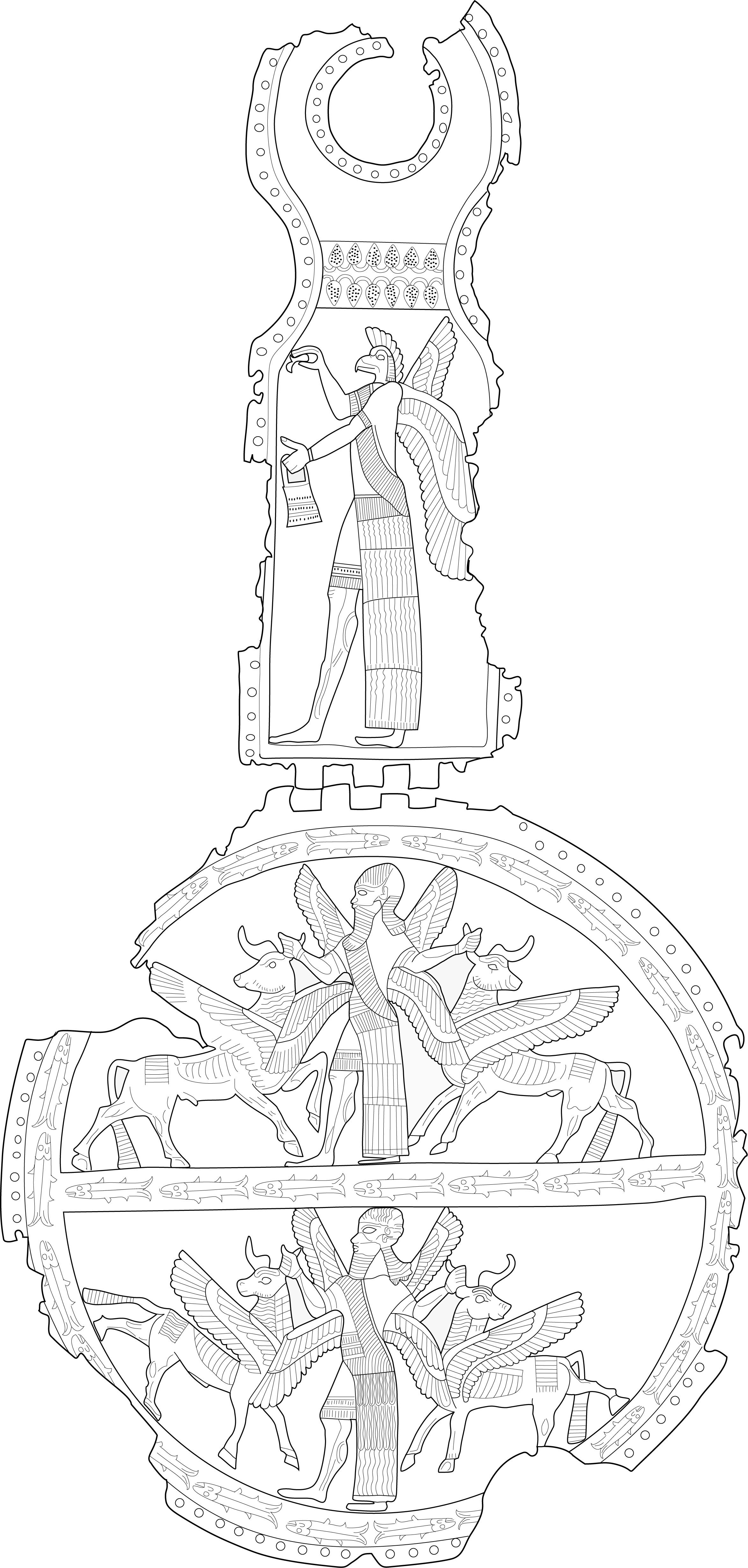
Neo-Assyrian Bronze Horse Trapping with Eagle-Headed God Nisroch and Winged Supernatural Figures
9TH-8TH CENTURY B.C.
33 1/4 in. (3.75 kg total, 59 cm including stand).
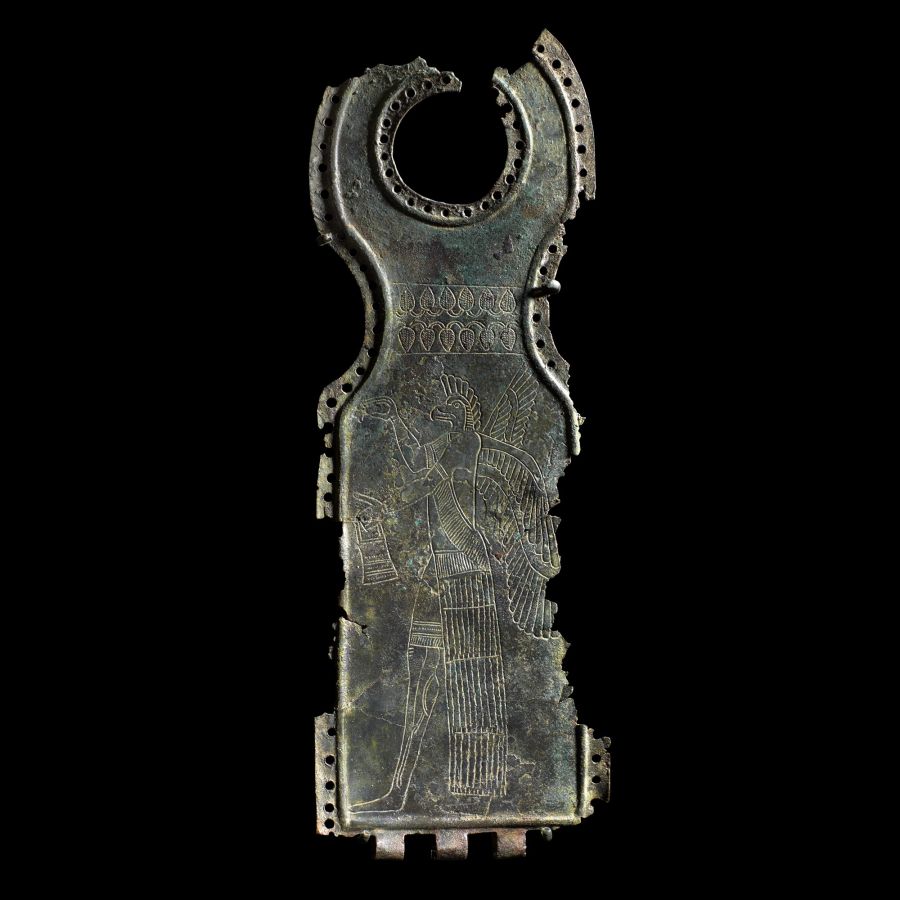
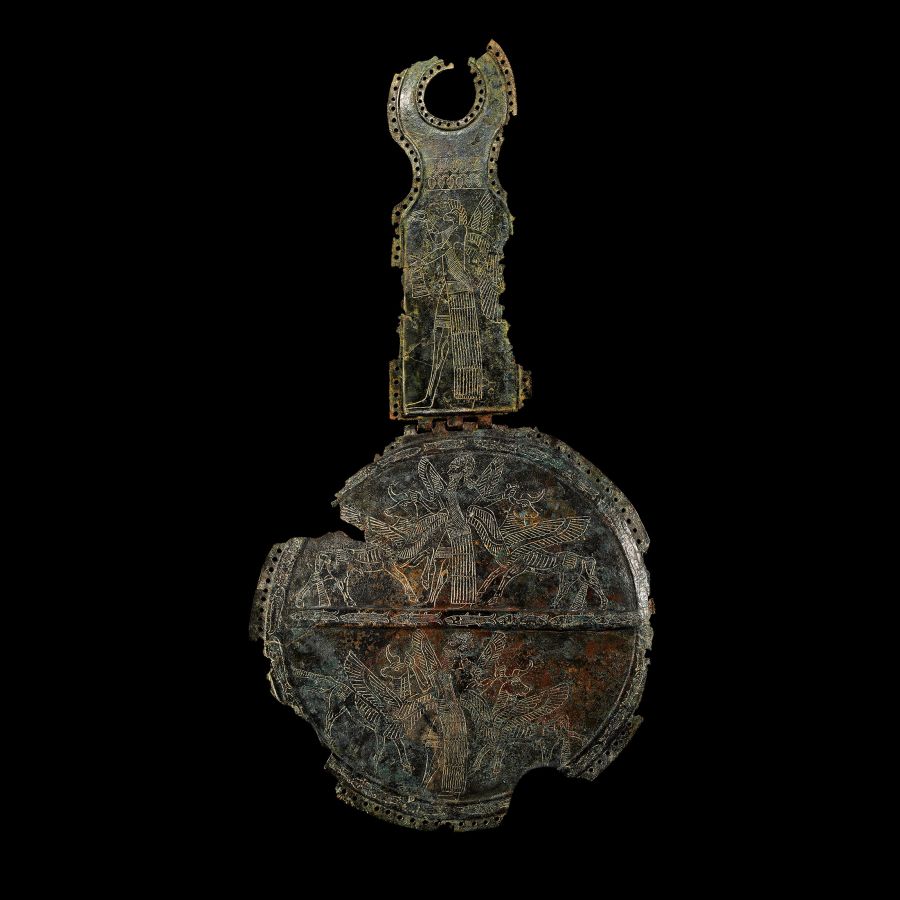
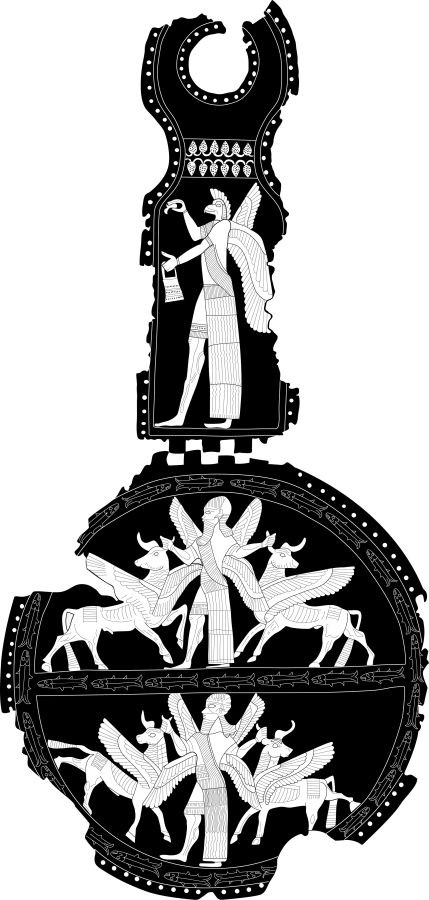
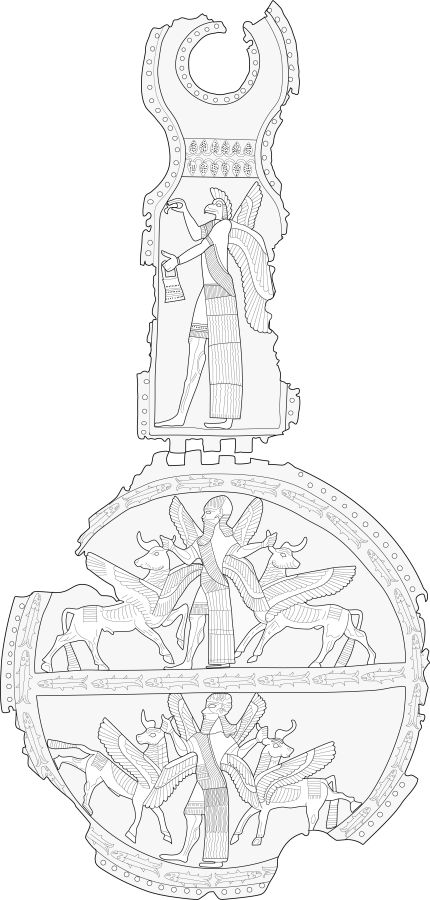
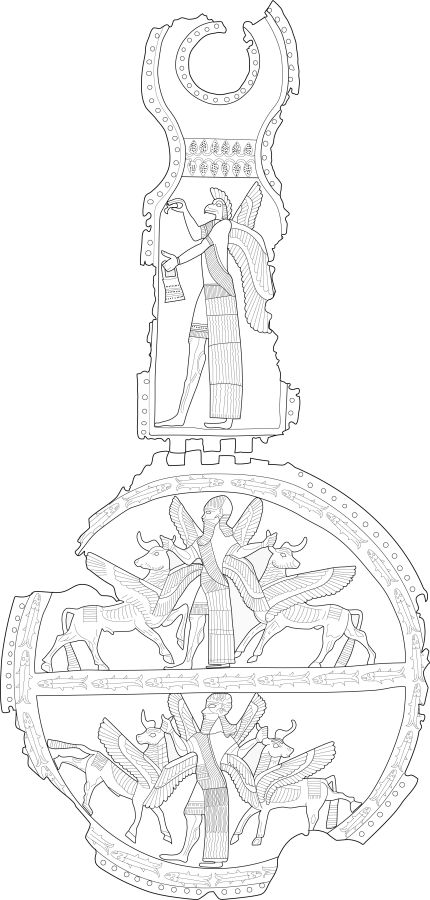
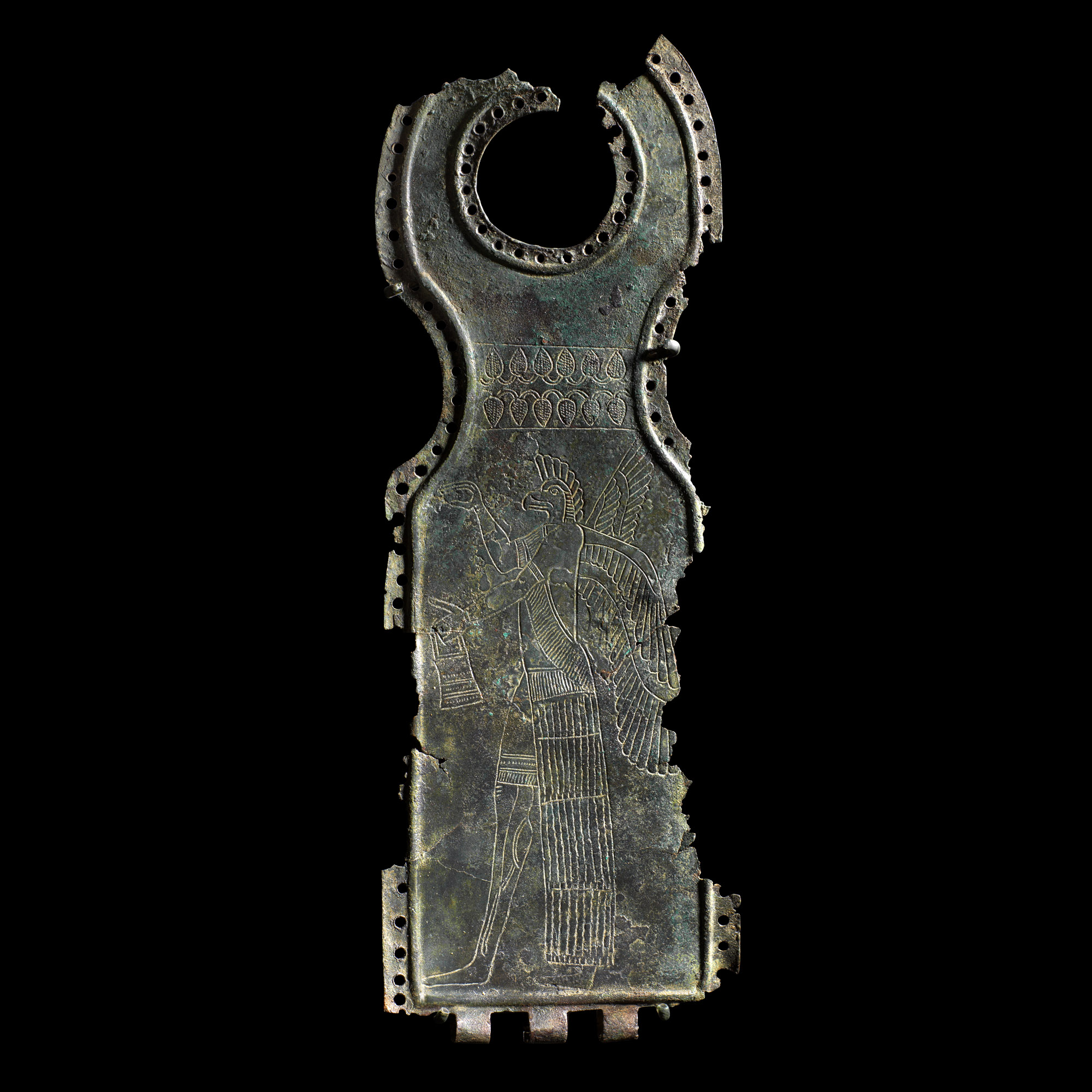
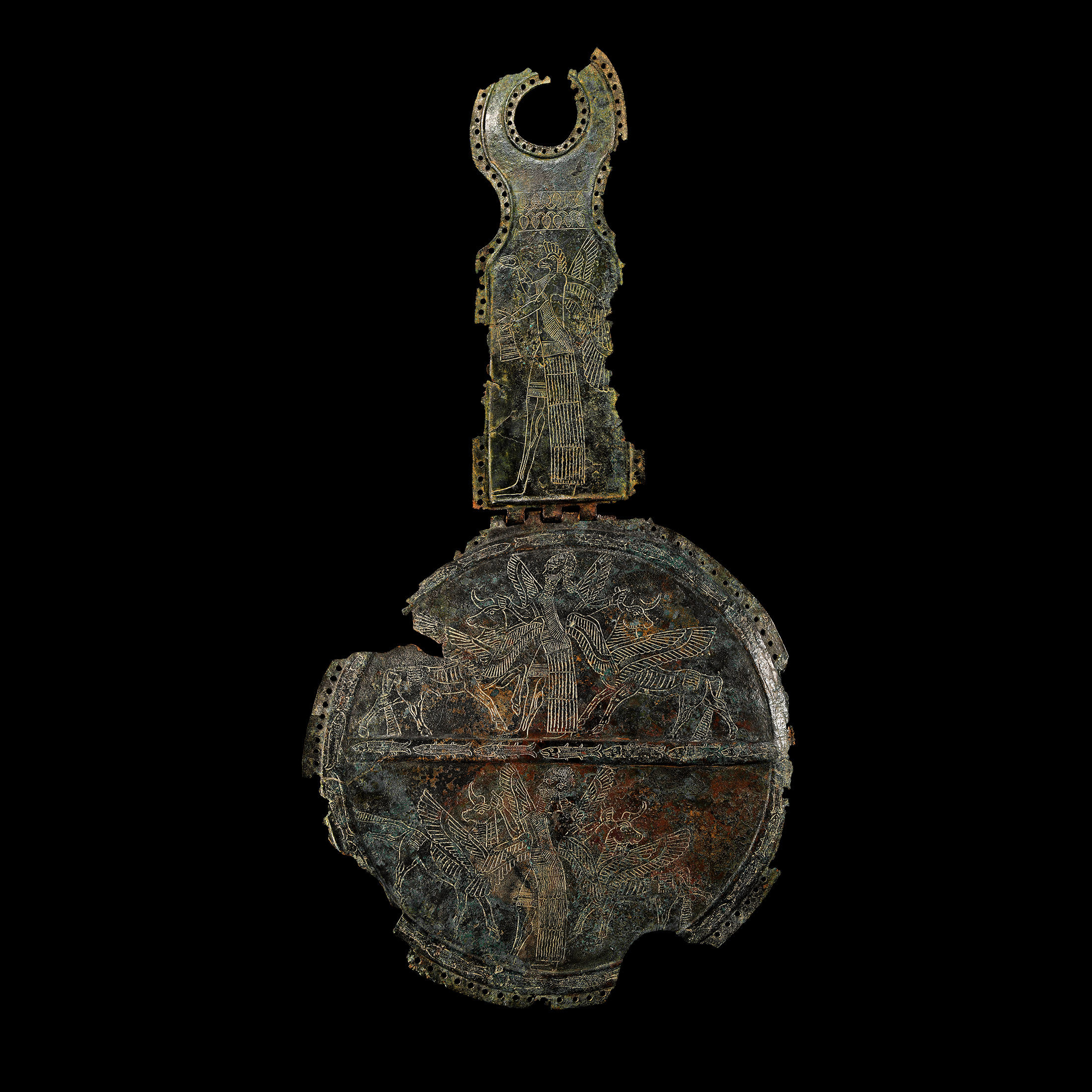
The left side of a trapping for a horse pulling a chariot, comprising two hammered elements with a hinge; rectangular upper section with a loop to one end, decorated with an eagle-headed genius-demon, wearing a tunic and a fringed kilt, a shawl wrapped around the body, hanging down on the back, carrying a bucket of purifying water in his right hand and a conical pot of incense in his left hand, bracelets to arms, two rows of lotus buds above; the discoid lower section divided in two registers, each with a winged genii in combat with winged bulls; the dividing raised band with fish motifs similar to the border formed of fish; the edges of both elements with punched edges for the attachment of leather lining; Neo-Assyrian or Urartian; mounted on a custom-made display stand.
ProvenanceAcquired in the 1960s.
Ex private collection, Switzerland, thence by descent in 1996.
Accompanied by an academic report by Dr Raffaele D'Amato.
This lot has been checked against the Interpol Database of stolen works of art and is accompanied by search certificate number no.11780-205646.
Cf. Born, H., Seidl, U., Schutzwaffen aus Assyrien und Urartu, Sammlung Axel Guttmann, Mainz, 1995; Brereton, G., 'I am Ashurbanipal, king of the world, king of Assyria', catalogue of the exhibition, London, 2018, p.146, no.155; for an example of the presence of a bucket in Urartian decorative arts and a similar depiction of Assyrian eagle-headed demon, see Aruz, J., Graff S. B. and Rakic Y. (eds.), Assyria to Iberia at the Dawn of the Classical Age, New York, 2014, pp.89, 91-92 fig.2.17, cat.no.35a; for examples of the similarities between the Assyrian apkallu and Urartian spirits and deities, see two wall reliefs from Nimrud at the British Museum (inv. nos. 124561 & 102487).
FootnotesThese pieces of horse armour, destined to be the lateral protection for horses, were usually fixed at the four corners of the yoke (Connolly, 1986, p.17). Sometimes these side pendants provided protection for the upper part of horse's legs. Drawings and reconstructions of an Urartian chariot compiled from archaeological evidence shows the likely positioning on the shoulder of the horse (Gorelik, 1995, p.4). They served to protect the horse and also as symbols of divine protection. Similar pieces are visible on Assyrian reliefs (Born-Seidl, 1995, figs.53-54, relief from Nimrod; 62, from Assur; Curtis, 2013, pl.LXXV; Dezső, 2012, pl.12-13).
CONDITIONTimeLine Auctions follows a vetting process to ensure the authenticity and legality of all items, reinforcing our commitment to integrity and responsible trading. Each antiquity, antique, and coin lot undergoes thorough examination by a vetting committee of at least ten external specialists, professional trade association members, scientists, and archaeologists: Our Vetting Process
AUCTIONS:
TimeLine is a leading auction house specialising in antiquities, ancient art, collectables, natural history, coins, medals, and books. Our auctions offer museums, collectors, historians, and enthusiasts the opportunity to acquire unique and historically significant pieces.
LOT 0252
Neo-Assyrian Bronze Horse Trapping with Eagle-Headed God Nisroch and Winged Supernatural Figures
Sold for (Inc. bp): £15,600
-
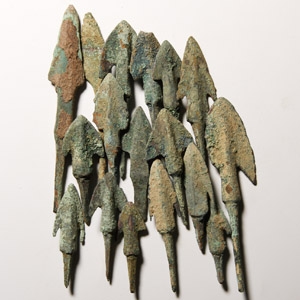
Luristan Bronze Arrowhead Group
12th-10th century B.C.Sold for (Inc. bp): £117
Comprising seventeen tanged arrowheads, most of them having large elongated triangular blades and raised midrib; one with long tang. 105 grams total, 34 - 82 mm
Acquired 1980-2015. Ex Abelita family collection.
Most of these arrowhead seem to belong to the type V, subcategory types A and C according to the classification of Khorasani and Negahban. In the four categories of triangular bronze arrowheads from Luristan, Marlik and Northern Iran individuated by Negahban, subtypes A and C are small triangular arrowheads with barbed shoulders. The arrowhead with squared shoulders belongs to type III of the same classification. -
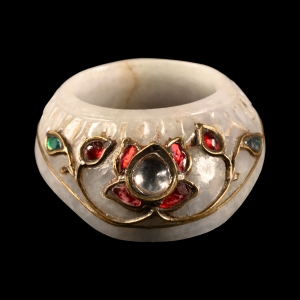
Mughal Jade Archer's Ring with Diamond, Rubies and Emeralds
18th-19th century A.D.Sold for (Inc. bp): £390
Carved in mottled pale grey jade with radiating lotus leaves around the central hole, applied gold wire hoop and tendril detailing with two emeralds and six cabochon rubies inset, the central flower with inset teardrop facetted diamond; with a thin crack to the back of the hoop. 15.5 grams, 44.55 mm overall, 21.86 mm internal diameter (approximate size British Z, USA 12 1/2, Europe 28.77, Japan 27).
Formerly in the family collection of a Hampstead gentleman, from the 1980s. Acquired in TimeLine Auctions sale 119, lot 2518. Property of a Kent collector. -
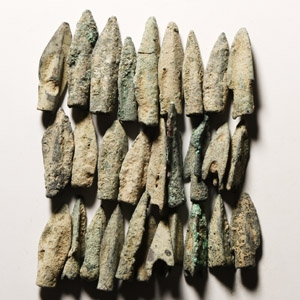
Achaemenid Bronze Arrowhead Group
6th-4th century B.C.Estimate: £100 - 140 (+bp*)
Opening Bid: £50
Comprising 29 shafted trilobate and pyramidal points, some with barbs. 108 grams total, 23-36 mm
Acquired 1980-2015. Ex Abelita family collection.
The Persians used the bow to forge their empire. They would have used bronze or iron arrows of various types which varied in length from three to four centimetres. Many were trilobite in shape, varying from the simple triangular head, the leaf-shaped head or the triangular head with square-section, tang and directional plumes. The old types, created by the Luristan armourers, were still in use in the Achaemenid period.
