
Loading, please wait...
LOT 1504
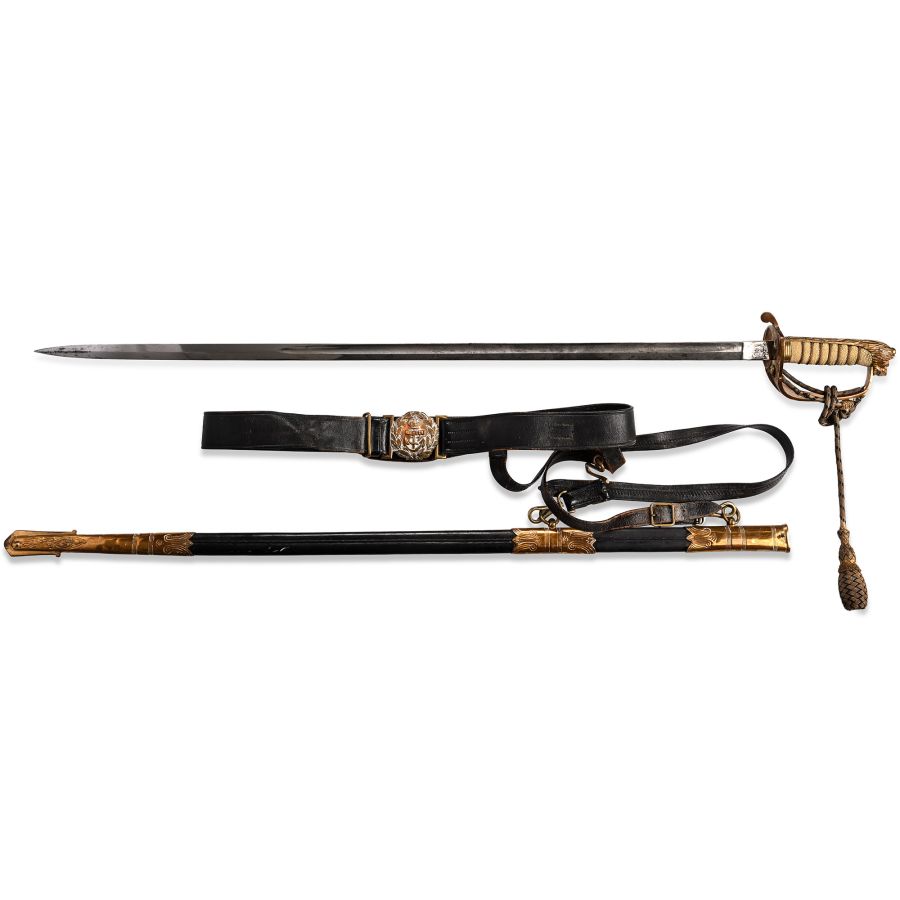
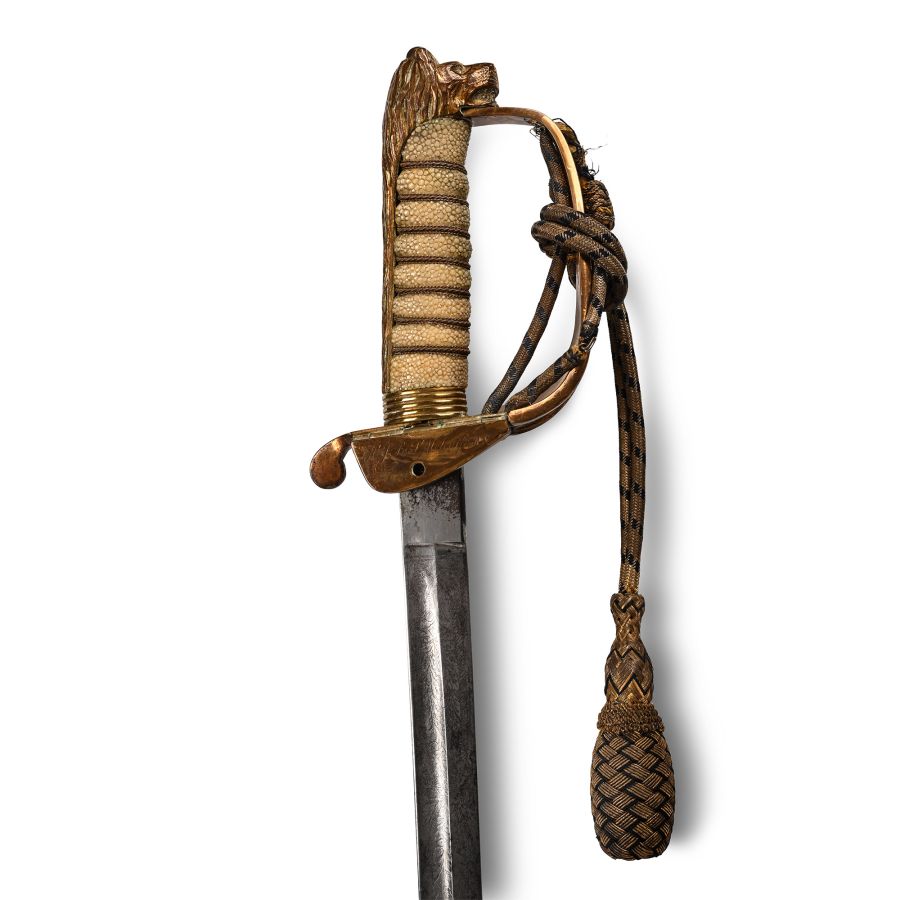
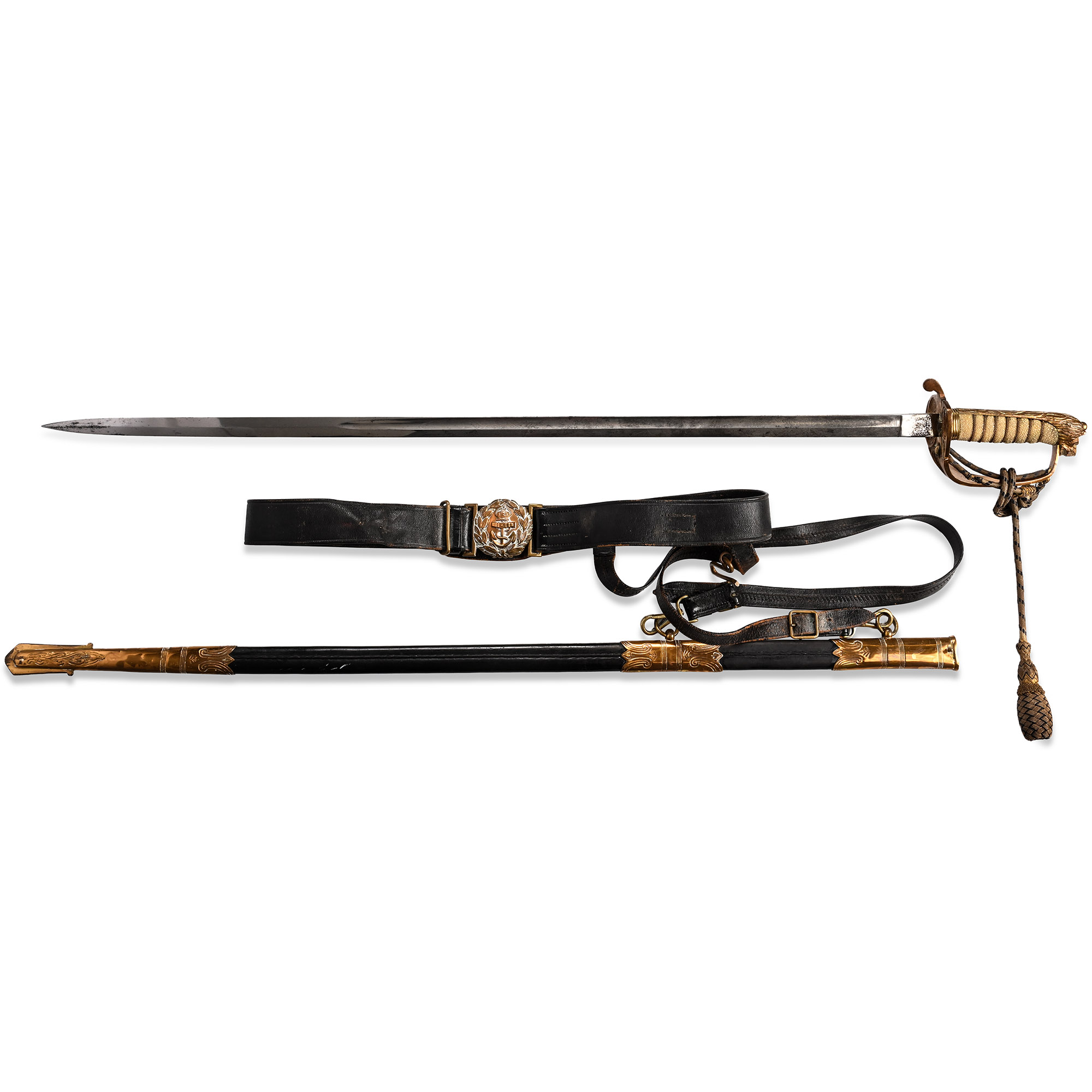
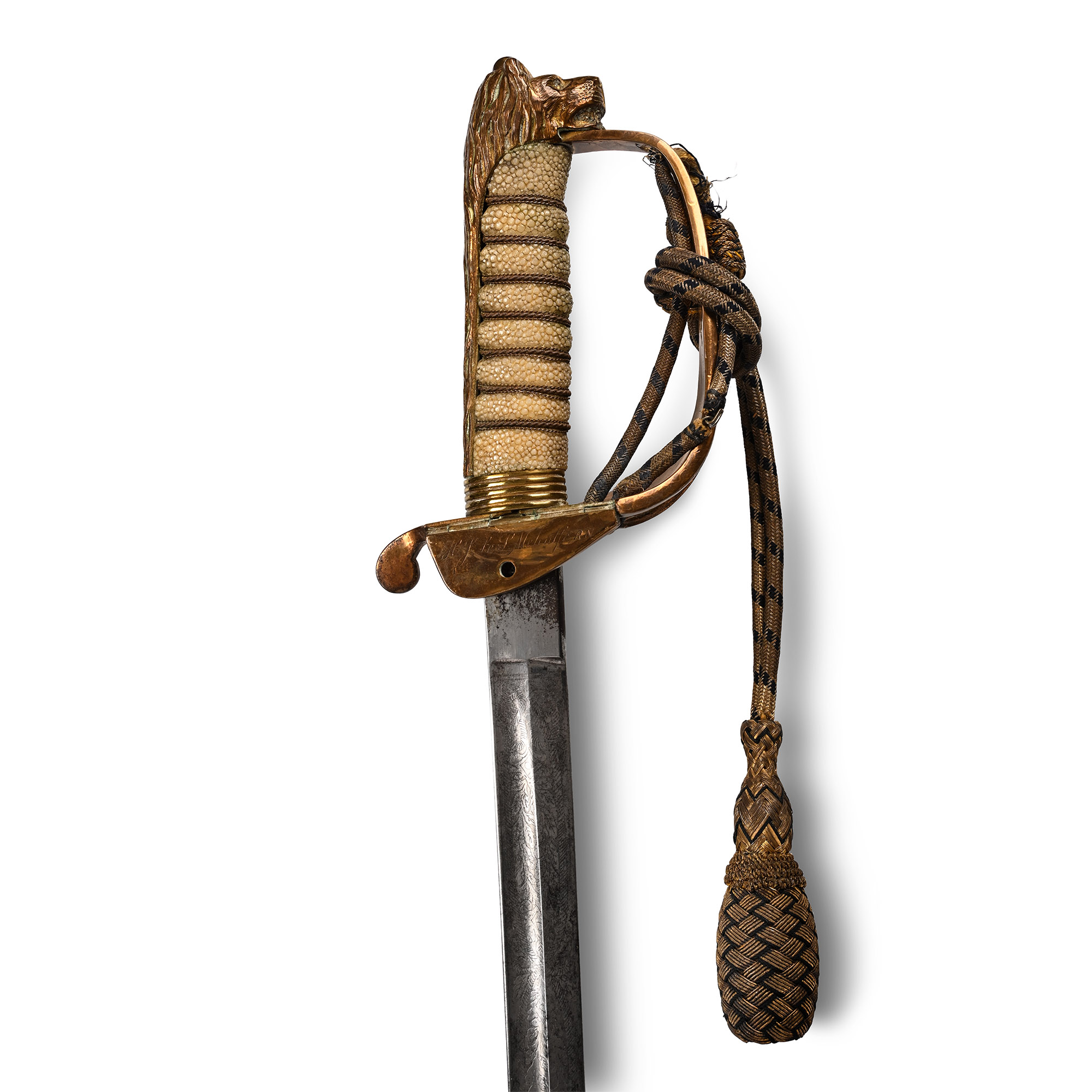
Naval Officer's Dress Sword with Belt
19TH CENTURY A.D.
37 1/4 in. (1.34 kg, 94.7 cm).
Classic 1827 Pattern dress sword in scabbard, comprising brass lion-head pommel, half-basket-hilt with folding guard and fouled anchor motif to underside, wire-bound fishskin grip, sword-knot tied through slot in the knuckle-bow; etched, pipe-backed steel blade with the Royal Arms and Crown/Anchor, housed in a leather scabbard with brass fittings; suspension straps and waist-belt with navy-pattern buckle. [No Reserve]
ProvenanceFrom a Cambridgeshire, UK, collection.
CONDITIONTimeLine Auctions follows a vetting process to ensure the authenticity and legality of all items, reinforcing our commitment to integrity and responsible trading. Each antiquity, antique, and coin lot undergoes thorough examination by a vetting committee of at least ten external specialists, professional trade association members, scientists, and archaeologists: Our Vetting Process
AUCTIONS:
TimeLine is a leading auction house specialising in antiquities, ancient art, collectables, natural history, coins, medals, and books. Our auctions offer museums, collectors, historians, and enthusiasts the opportunity to acquire unique and historically significant pieces.
-
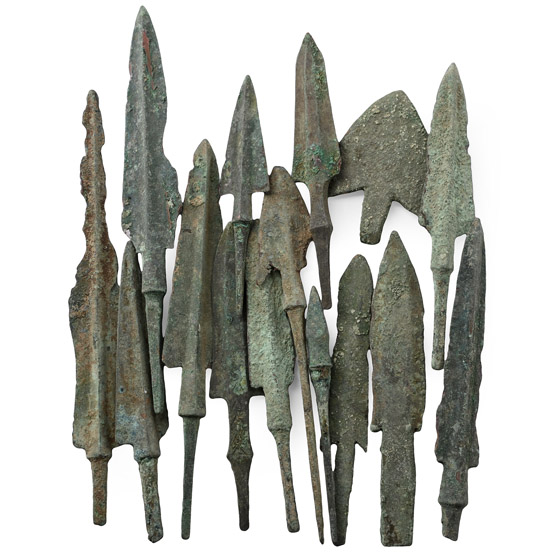
Western Asiatic Bronze Arrowhead Collection
2nd-1st millennium B.C.Sold for (Inc. bp): £156
Comprising tanged arrowheads, four with large elongated triangular blades and raised midrib, sharp central groove, one triangular type with barbed shoulders and flat socket, one with barbed shoulders and cylindrical stem with handle for the shaft; four with squared shoulders and rectangular stem with handle for the shaft, one with trilobate blade, two with barbed shoulder and flat tang, one with short pyramidal head and cylindrical stem, and another with short tang and long blade with raised midrib. 384 grams total, 5.8-15.7 cm
Ex London, UK, collection, 1990s.
These arrowheads seem to belong to the type V, subcategory types A, B, C and D according to the classification of Khorasani and Negahban. In the four categories of triangular bronze arrowheads from Luristan, Marlik, and Northern Iran, individuated by Negahban, subtypes C and D of type V are larger arrow or javelin heads, C with barbed shoulders and D with round shoulders. Most of them were cast in moulds. -
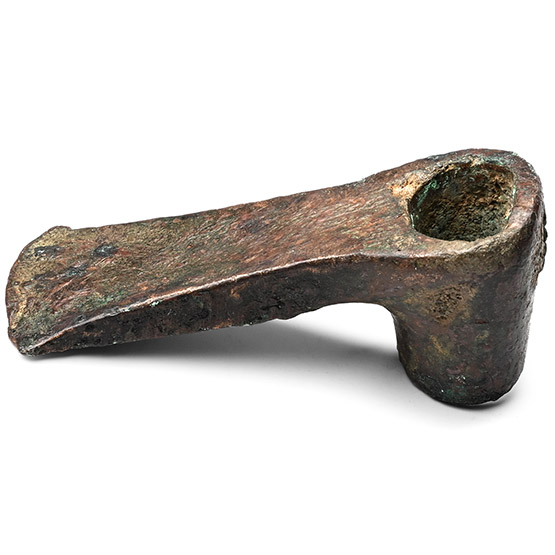
Luristan Socketted Bronze Adze
2nd-1st millennium B.C.Sold for (Inc. bp): £72
Short tubular socket, perpendicular rectangular-section blade with convex cutting edge. 326 grams, 11.1 cm
From an old English collection, 1980s. -
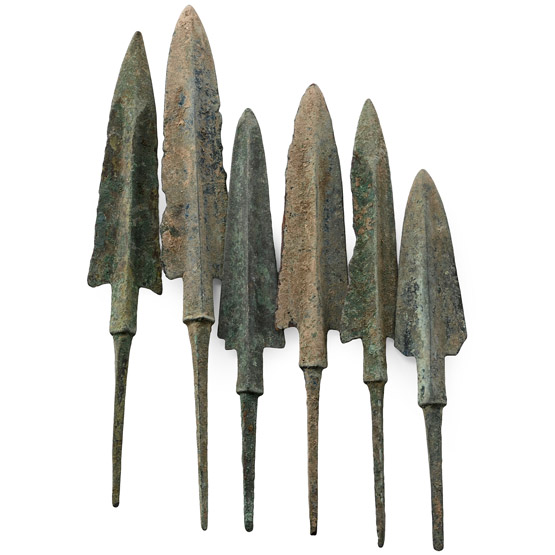
Western Asiatic Bronze Arrowhead Collection
1st millennium B.C.Sold for (Inc. bp): £117
Each a narrow barbed-and-tanged type with a thick midrib. 216 grams total, 12.6-18.5 cm
Ex London, UK, collection, 1990s.
