
Loading, please wait...
LOT 2453
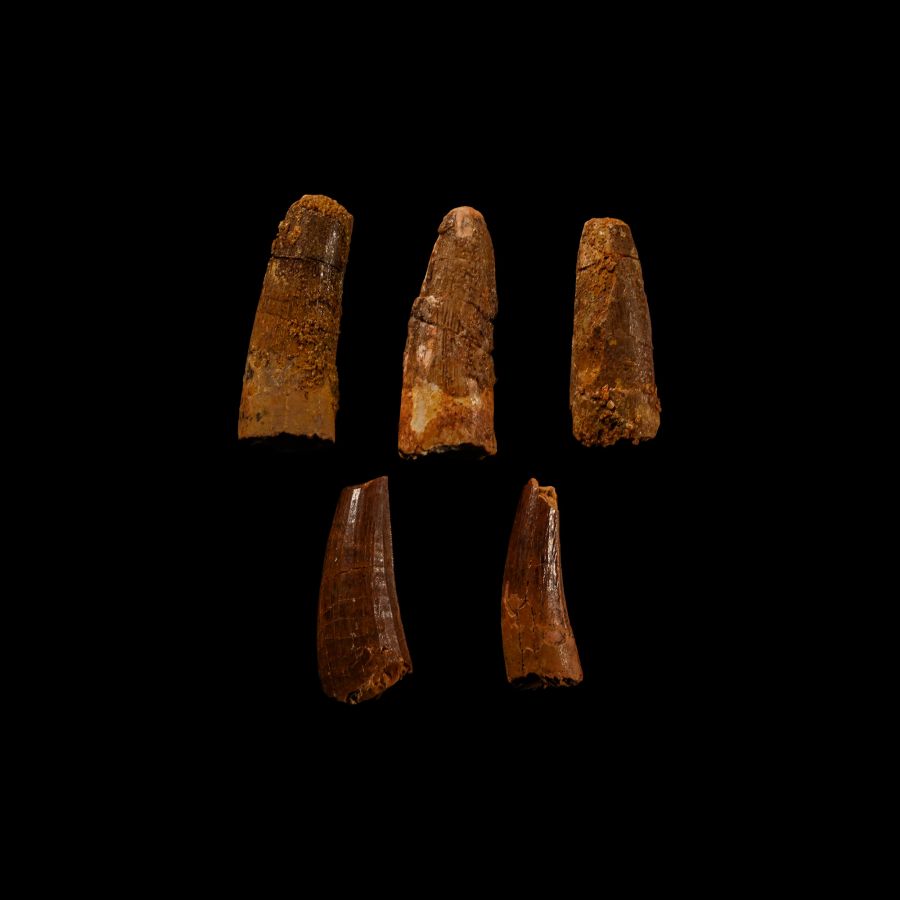
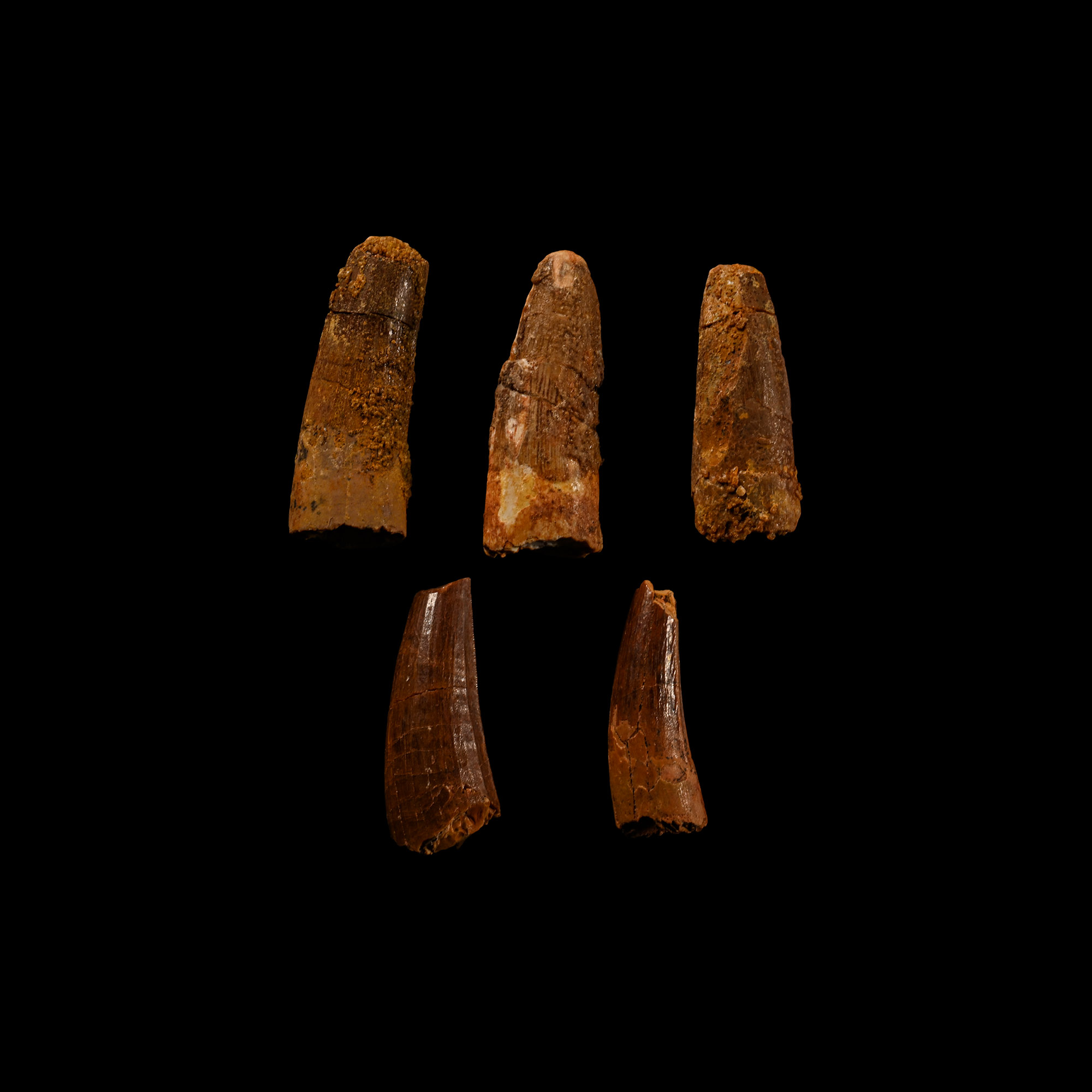
Natural History - Spinosaurus Dinosaur Fossil Tooth Group
CRETACEOUS PERIOD, CIRCA 125-113 MILLION YEARS B.P.
7/8 - 1 1/8 in. (13 grams total, 23-29 mm).
Comprising five Spinosaurs maroccanus teeth; three repaired. [5, No Reserve]
ProvenanceFrom the Tegana Formation, Taouz, Morocco.
From an old German paleontological collection.
The Spinosaurus was both a beachcomber type scavenger and an active hunter taking small stranded Plesiosaurs, Pterosaurs, Turtles and large fish.
CONDITIONTimeLine Auctions follows a vetting process to ensure the authenticity and legality of all items, reinforcing our commitment to integrity and responsible trading. Each antiquity, antique, and coin lot undergoes thorough examination by a vetting committee of at least ten external specialists, professional trade association members, scientists, and archaeologists: Our Vetting Process
AUCTIONS:
TimeLine is a leading auction house specialising in antiquities, ancient art, collectables, natural history, coins, medals, and books. Our auctions offer museums, collectors, historians, and enthusiasts the opportunity to acquire unique and historically significant pieces.
LOT 2453
Natural History - Spinosaurus Dinosaur Fossil Tooth Group
Sold for (Inc. bp): £78
-

Natural History - Complete Ice Age Juvenile Mammoth Tusk
Pleistocene Period, 2.6 million-11,700 years B.P.Sold for (Inc. bp): £2,340
A right-side 'fossil' tusk of the extinct Mammuthus Primigenius; ivory yellow-brown in colour and finely preserved with the typically marked curvature of this species; with custom-made display stand. 2.29 kg total, 54 cm wide including stand
From the Siberian Tundra. From the private collection of Mr J S, Northamptonshire, UK. Property of a Cambridgeshire gentleman.
Mammoths were animals of the Ice Age; they co-existed with and were hunted by early man; Siberia is famed for discoveries of frozen mammoth carcasses (see 'Dima' and 'Lyuba' for examples) and for the hut circles where mammoth bones and tusks were used as building materials; tusks have been traded for at least 2,000 years and in modern times, Siberian natives still hunt for them and use the fossil ivory as raw material. -
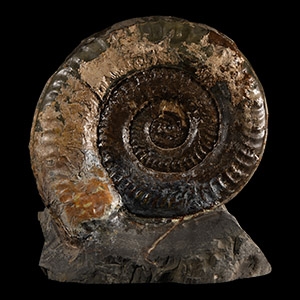
Natural History - Large British Hildoceras Fossil Ammonite Display
Jurassic Period, Toarcian, circa 190 million years B.P.Sold for (Inc. bp): £65
Showing a Hildoceras bifrons fossil ammonite specimen in a free-standing matrix. 1.8 kg, 15.5 cm
From North Yorkshire, UK. -

Natural History - Polished Orthoceras Fossil Display
Upper Devonian Period, 370 million years B.P.Sold for (Inc. bp): £39
Comprising a cluster of vertical Orthoceras sp. specimens. 1.54 kg, 20.5 cm high
Ex Cambridgeshire, UK, collection.
