
Loading, please wait...
_900x900.jpg "Natural History - Sikhote Alin Meteorite")
_200x200.jpg "Natural History - Sikhote Alin Meteorite")
.jpg "Natural History - Sikhote Alin Meteorite")
LOT 1920
Natural History - Sikhote Alin Meteorite
FELL 12TH FEBRUARY 1947 A.D.
1 1/8 in. (13 grams, 29 mm).
An entire piece of the the Sikhote-Alin meteorite, showing the characteristic outer surface; held in a white card collector's tray. [No Reserve]
ProvenanceFrom the Sikhote-Alin Mountains.
Ex Lincolnshire, UK, collection.
See The Meteoritical Society for discussion of this fall.
FootnotesClassified as an iron meteorite belonging to the chemical group IIAB and with a coarse octahedrite structure. The Sikhote-Alin meteorite fell during daylight at 10:38 am. local time on 12th February, 1947. Witnesses reported a fireball that was brighter than the sun. It came from about 15 degrees east of north and descended at an angle of 41 degrees. It left a trail of smoke and dust 20 miles long which lingered for several hours. Light and sound of the fall were observed for two hundred miles around the point of impact.
CONDITIONTimeLine Auctions follows a vetting process to ensure the authenticity and legality of all items, reinforcing our commitment to integrity and responsible trading. Each antiquity, antique, and coin lot undergoes thorough examination by a vetting committee of at least ten external specialists, professional trade association members, scientists, and archaeologists: Our Vetting Process
AUCTIONS:
TimeLine is a leading auction house specialising in antiquities, ancient art, collectables, natural history, coins, medals, and books. Our auctions offer museums, collectors, historians, and enthusiasts the opportunity to acquire unique and historically significant pieces.
-
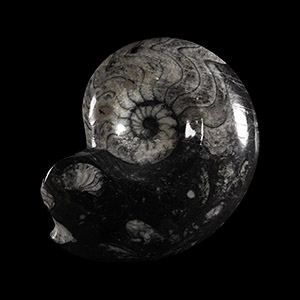
Natural History - Sporadoceras Fossil Goniatite
Upper Devonian Period, 385-359 million years B.P.Sold for (Inc. bp): £78
A large free standing Sporadoceras sp. goniatite, polished through to reveal the calcite preserved inside and showing the dividing gas chambers known as suture patterns. 805 grams, 15.5 cm
From the Atlas Mountains, Morocco, North Africa. Acquired 1950s-1960s. From an old Bristol, UK, paleontological collection. -
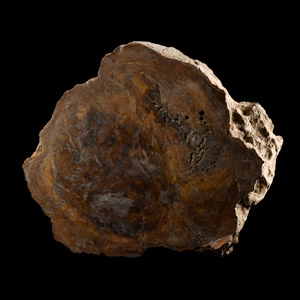
Natural History - Large Cut Fossilised Arizona Tree Section
Sold for (Inc. bp): £46
A large cut section of Arizona fossil wood. 8.2 kg, 29 cm
From Arizona, USA. Mineral Imports, London, UK. Gregory, Bottley & Lloyd (Gregory's). -
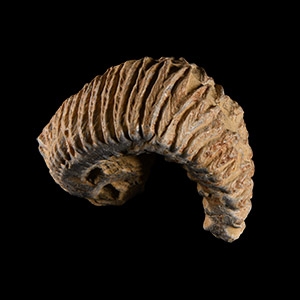
Natural History - Rastellum Fossil Bivalve
Jurassic Period, circa 155 million years B.P.Sold for (Inc. bp): £33
A Rastellum carinatum fossil bivalve; held in a card collector's tray. 105 grams, 61 mm
From Madagascar. Ex Cambridgeshire, UK, collection.
Rastellum carinatum specimens have wide, angled ribs that have led to it being called the 'denture clam'; the zig-zag join between the two shells stopped coarse dirt and debris entering the shell and damaging its soft body. Like modern oysters, it lived in shallow coastal waters including the interstitial zone and fed on food particles that it filtered out of the sea water.
