
Loading, please wait...
LOT 2208
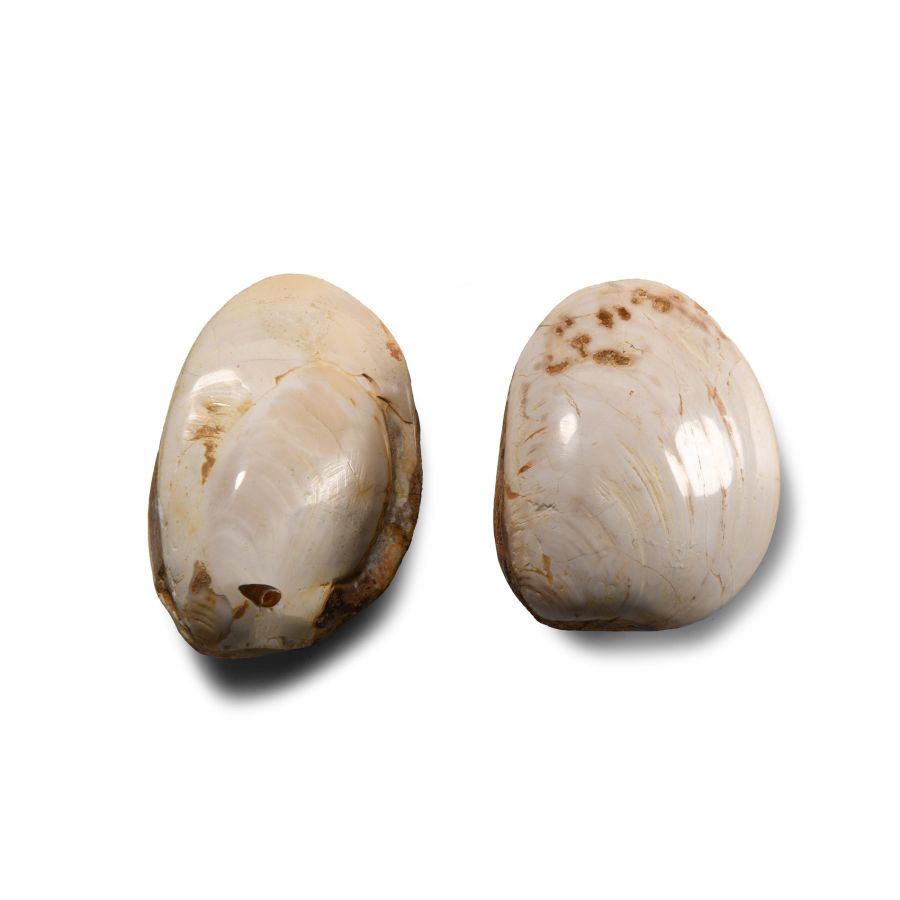
Natural History - Polished Fossil Bivalve Group
JURASSIC PERIOD, CIRCA 160 MILLION YEARS B.P.
2 3/4 - 3 in. (298 grams total, 69-76 mm).
Comprising two complete polished bivalves. [2, No Reserve]
ProvenanceFrom Morondava River Basin, Atsimo-Andrefana Region, Southwest Madagascar.
From an old Oxfordshire, UK, fossil and mineral collection.
TimeLine Auctions follows a vetting process to ensure the authenticity and legality of all items, reinforcing our commitment to integrity and responsible trading. Each antiquity, antique, and coin lot undergoes thorough examination by a vetting committee of at least ten external specialists, professional trade association members, scientists, and archaeologists: Our Vetting Process
AUCTIONS:
TimeLine is a leading auction house specialising in antiquities, ancient art, collectables, natural history, coins, medals, and books. Our auctions offer museums, collectors, historians, and enthusiasts the opportunity to acquire unique and historically significant pieces.
-
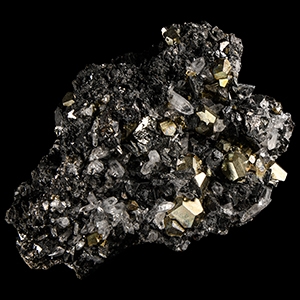
Natural History - Boxed Pyrite & Quartz on Sphalerite
Sold for (Inc. bp): £20
The sphalerite matrix with prismatic quartz crystals and pyritohedral pyrite crystals; supplied in a labelled specimen tray. 169 grams, 74 mm
From Huanuco, Peru. Ex Mineral Imports, London, UK. Gregory, Bottley & Lloyd (Gregory's). -
![Natural History - Kalahari Desert Wind Stone Group [3]](https://timelineauctions.com/upload/images/items/small/208102-s.jpg)
Natural History - Kalahari Desert Wind Stone Group [3]
Sold for (Inc. bp): £20
Comprising three wind-rounded pebbles with their individual hollowed out 'nests', from the Kalahari Desert region; each set provided with a hessian draw-ribbon pouch. 320 grams total, 33-53 mm
From the Kalahari Desert, Southern Africa. Ex Mineral Imports, London, UK. Gregory, Bottley & Lloyd (Gregory's). -
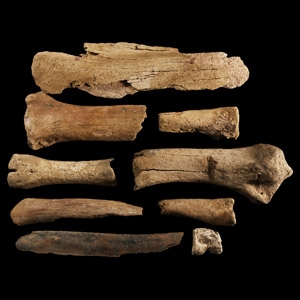
Natural History - British Bison Bone Group
Pleistocene Period, circa 2.6 million-11,700 years B.P.Sold for (Inc. bp): £85
Comprising sections of ribs, leg and other bones from Bison priscus. 2.45 kg total, 4.7-37 cm
From Oxfordshire, UK. From a Norfolk, UK, collection.
