
Loading, please wait...
LOT 0450
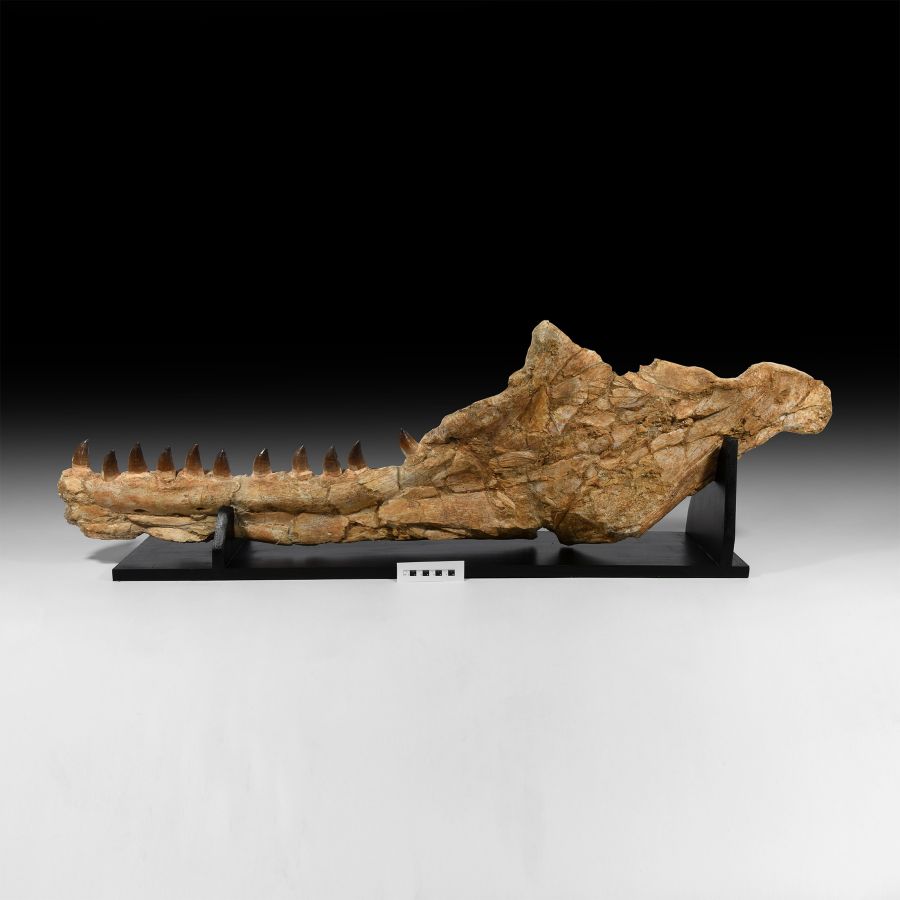
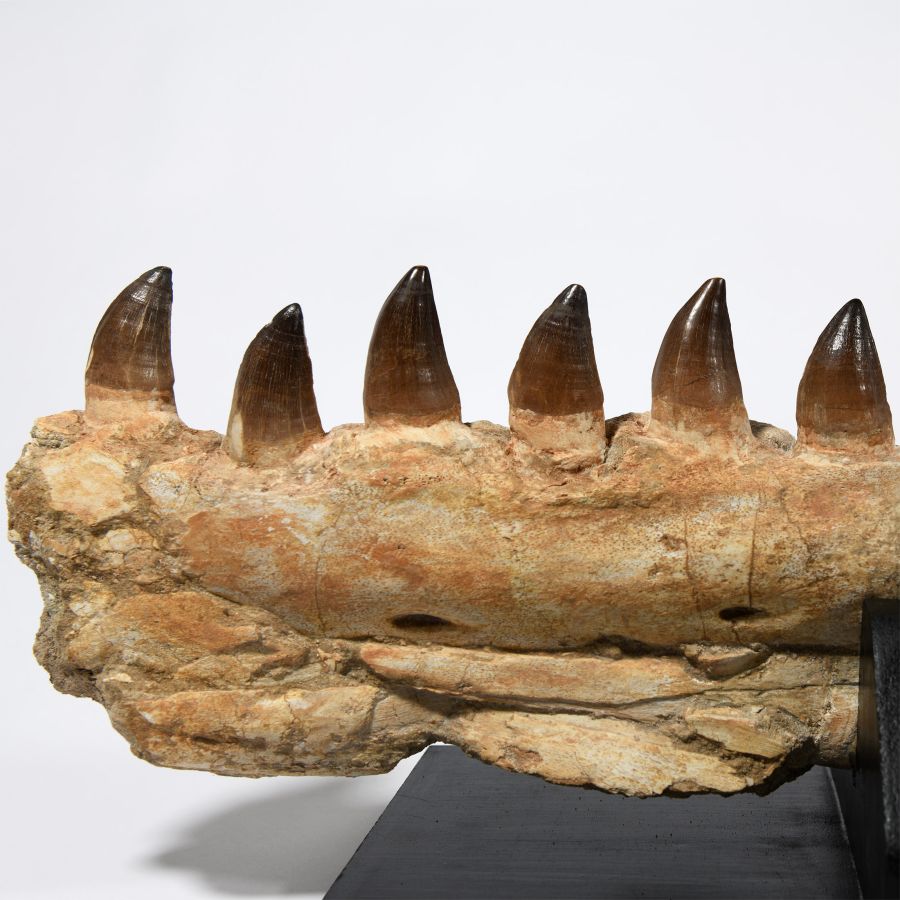
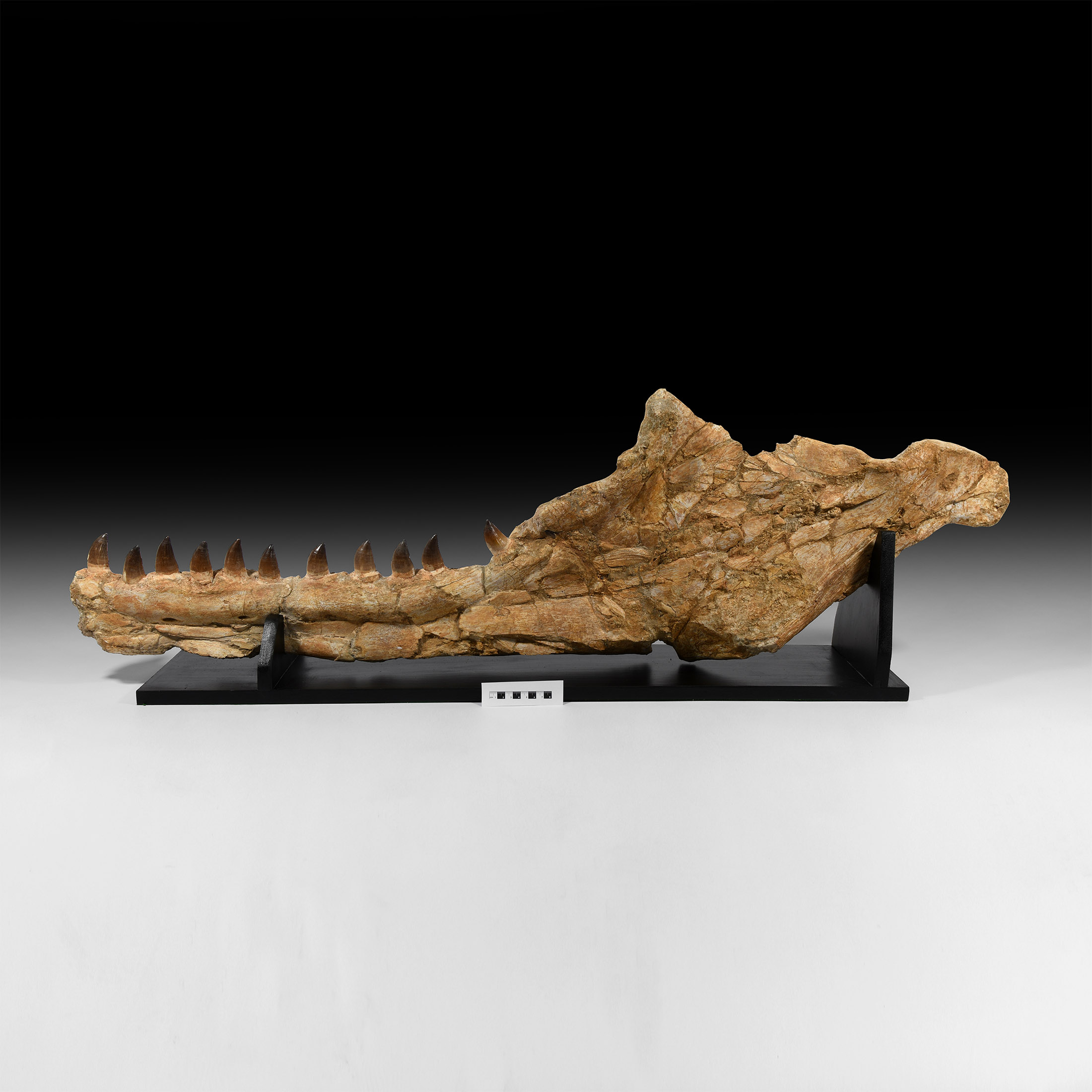
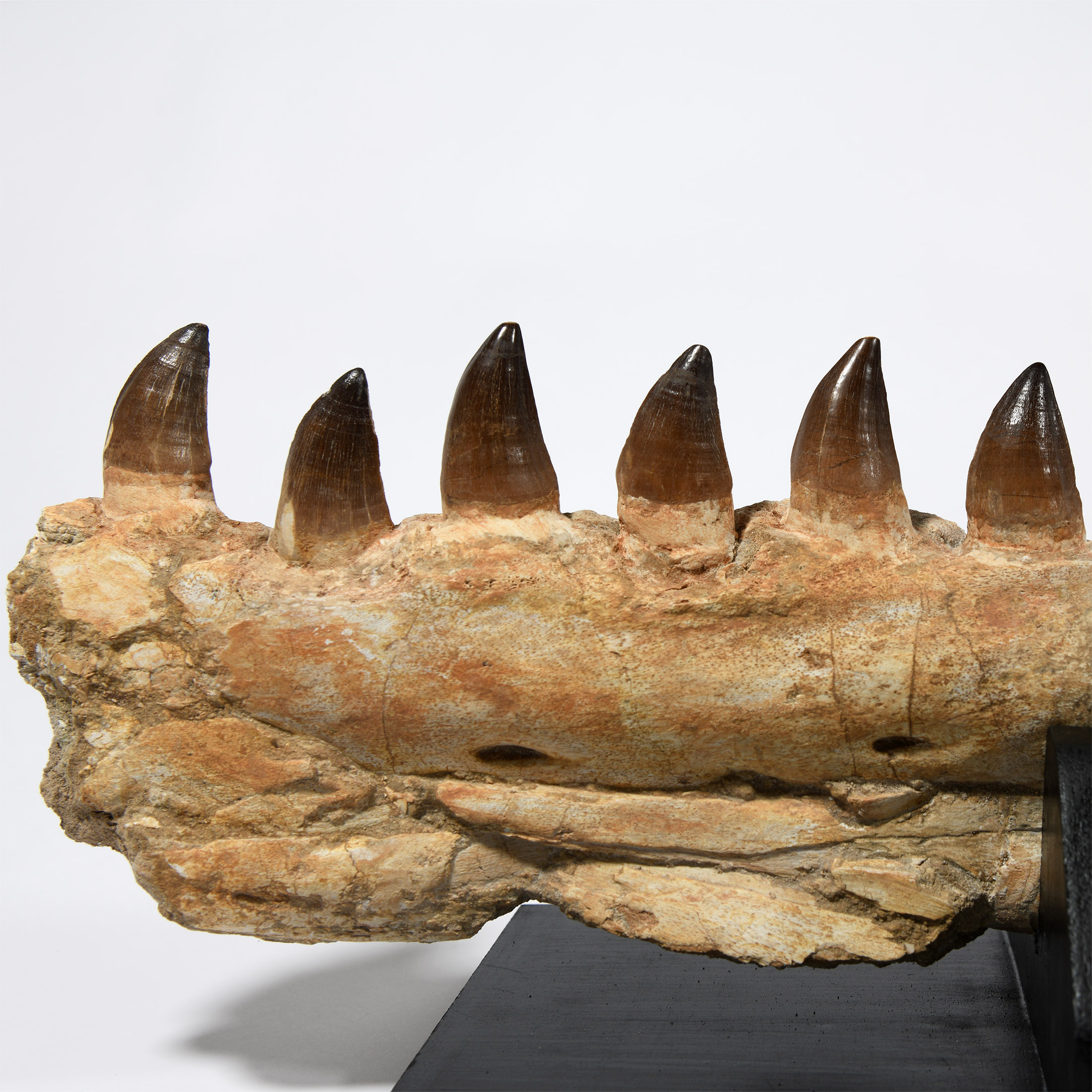
Natural History - Large Mosasaur Fossil Jaw on Stand
CRETACEOUS PERIOD, 145-65 MILLION YEARS B.P.
50 3/8 in. (15.5 kg total, 1.28 m wide including stand).
A large fossil lower jaw section from the aquatic dinosaur Mosasaur sp., displaying 11 teeth each with good remains of enamelling and some serration; mounted on a custom-made display stand.
ProvenanceFrom a Cambridgeshire, UK, collection.
This lot has been checked against the Interpol Database of stolen works of art and is accompanied by search certificate number no.11723-197546.
TimeLine Auctions follows a vetting process to ensure the authenticity and legality of all items, reinforcing our commitment to integrity and responsible trading. Each antiquity, antique, and coin lot undergoes thorough examination by a vetting committee of at least ten external specialists, professional trade association members, scientists, and archaeologists: Our Vetting Process
AUCTIONS:
TimeLine is a leading auction house specialising in antiquities, ancient art, collectables, natural history, coins, medals, and books. Our auctions offer museums, collectors, historians, and enthusiasts the opportunity to acquire unique and historically significant pieces.
LOT 0450
Natural History - Large Mosasaur Fossil Jaw on Stand
Estimate £2,000 - 3,000€2,320 - 3,480 (for guidance only)$2,700 - 4,050 (for guidance only)
-
Natural History - Mesacristata Fossil Trilobite
Devonian Period, 417-354 million years B.P.Sold for (Inc. bp): £65
A Hollardops mesacristata trilobite on a matrix. 154 grams, 75 mm
From the Atlas Mountains, Pragian, (Alnif), Morocco, North Africa. From an old Oxfordshire, UK, fossil and mineral collection. -
.jpg)
Natural History - Fossil Barasaurus Parareptile Skeleton
Early Triassic Period, circa 255 million years B.P.Sold for (Inc. bp): £845
A complete fossil Barasaurus besairiei skeleton on a matrix. 2.37 kg, 23 cm wide
From Plateau de I'lsala, Madagascar. Acquired 1950s-1960s. From an old Bristol, UK, paleontological collection.
Barasaurus is an extinct genus of the Owenettid procolophonoid parareptile. -
Natural History - Fossil Ginkgo Leaf in Matrix
Paleocene Period, circa 66-56 million years B.P.Sold for (Inc. bp): £7
A fossil Ginkgo sp. leaf in an amorphous matrix; held in a white card collector's tray. 91 grams, 77 mm
From the Sentinel Butte Formation, North Dakota. Ex Cambridgeshire, UK, collection.
