
Loading, please wait...
_900x900.jpg "Natural History - Fossil Smilodon Tooth")
_200x200.jpg "Natural History - Fossil Smilodon Tooth")
.jpg "Natural History - Fossil Smilodon Tooth")
LOT 0440
Natural History - Fossil Smilodon Tooth
PLEISTOCENE PERIOD, CIRCA 2.5 MILLION YEARS–10,000 YEARS B.P.
7 7/8 in. (588 grams, 20 cm).
The saber tooth from Smilodon fatalis, commonly known as a saber-toothed tiger.
ProvenanceFrom the La Brea Tar Pits, USA.
Originally acquired from a USA dealer.
From an old Northern Ireland collection.
Smilodon is a genus of the extinct machairodont subfamily of the felids. It is one of the best known saber-toothed predators and one of the most famous prehistoric mammals. Although commonly known as the saber-toothed tiger, it was not closely related to the tiger or other modern cats.
CONDITIONTimeLine Auctions follows a vetting process to ensure the authenticity and legality of all items, reinforcing our commitment to integrity and responsible trading. Each antiquity, antique, and coin lot undergoes thorough examination by a vetting committee of at least ten external specialists, professional trade association members, scientists, and archaeologists: Our Vetting Process
AUCTIONS:
TimeLine is a leading auction house specialising in antiquities, ancient art, collectables, natural history, coins, medals, and books. Our auctions offer museums, collectors, historians, and enthusiasts the opportunity to acquire unique and historically significant pieces.
-
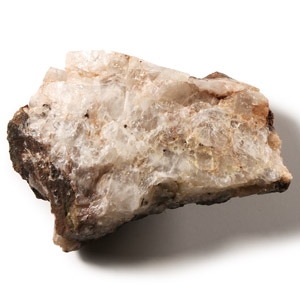
Natural History - Historic Tsumeb Crystal Formation
Sold for (Inc. bp): £4
The example on a calcite matrix with small wulfenite(?) crystals. 129 grams, 86 mm
Collected in person in 1966. From the private mineral collection of Stephen Atkinson, Harpenden, UK. Accompanied by a copy of a letter from the vendor giving details of him collecting these minerals throughout his life. -
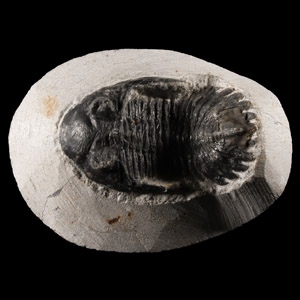
Natural History - Fossil Hollardops Trilobite
Devonian Period, circa 417-354 million years B.P.Sold for (Inc. bp): £33
Hollardops mesacristata on a matrix. 165 grams, 80 mm
From Morocco, North Africa. From a Lincolnshire, UK, collection. -
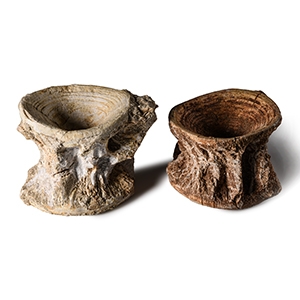
Natural History - Fossil Shark Vertebra Group
Upper Palaeocene Period, circa 56 million years B.P.Sold for (Inc. bp): £72
Comprising two Otodus obliquus, Agassiz 1843 (mackerel shark) vertebrae. 302 grams total, 63-77 mm
From Ouled Abdoun Basin Formation (Phosphate beds), Oued Zem, Morocco. From an old Oxfordshire fossil and mineral collection.
