
Loading, please wait...
LOT 1896
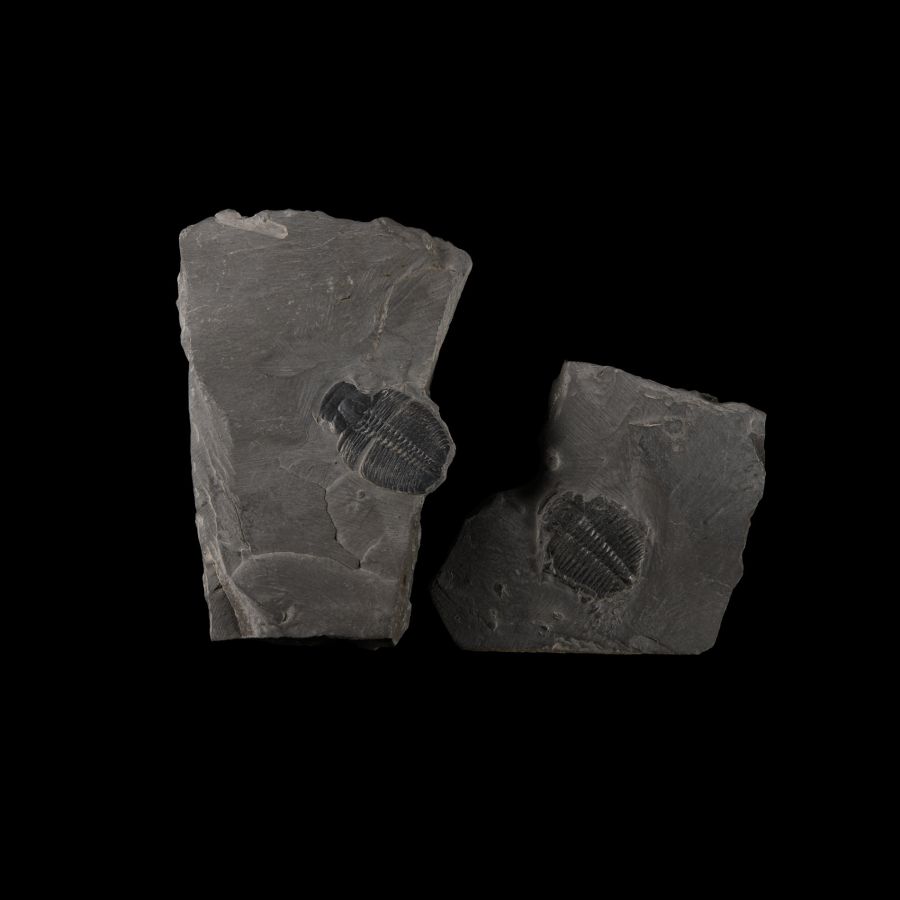
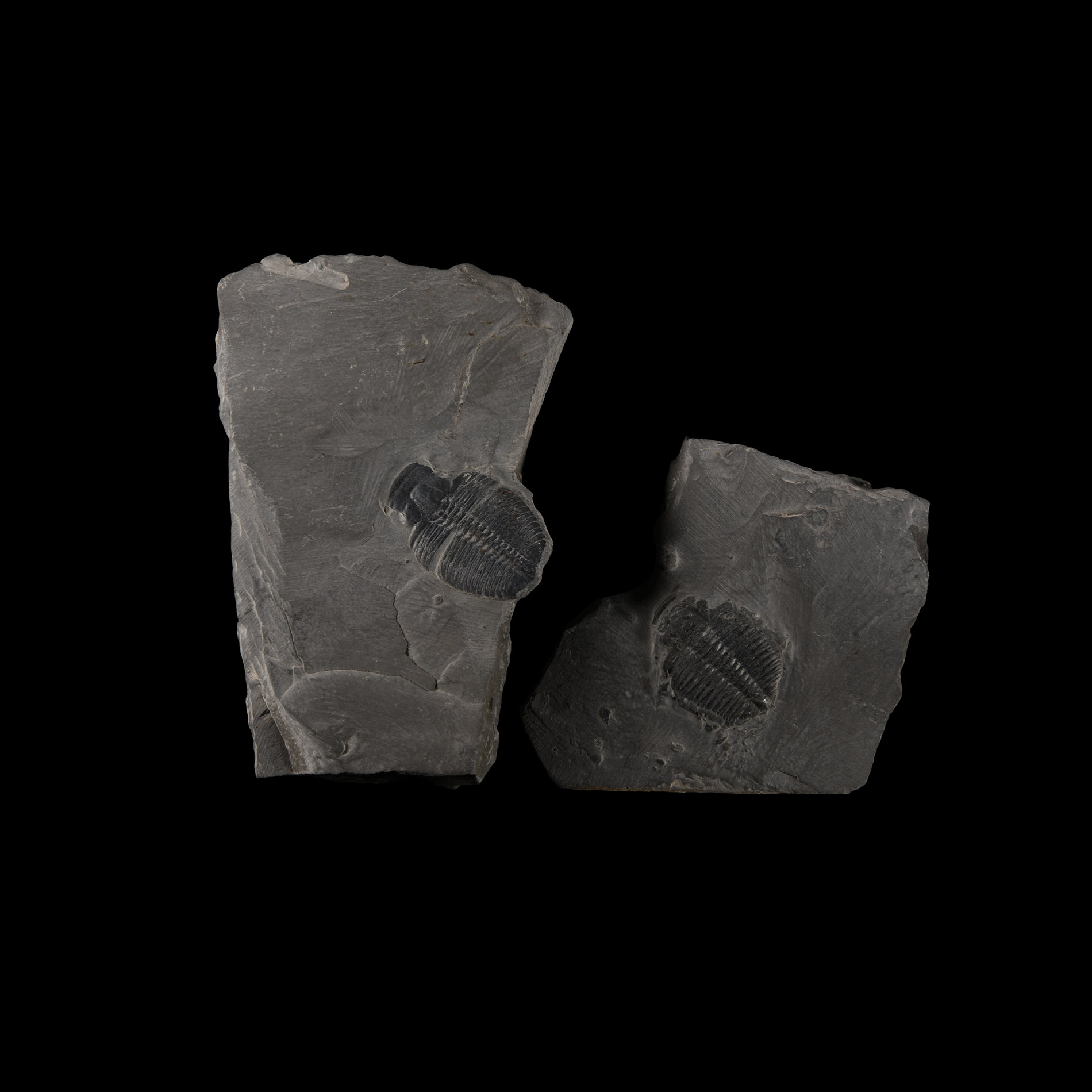
Natural History - Elrathia Fossil Trilobites
MIDDLE CAMBRIAN PERIOD, CIRCA 500 MILLION YEARS B.P.
2 3/8 - 31/4 in. (160 grams total, 62-83 mm).
A pair of irregular matrices, each containing an Elrathia sp. fossil trilobite. [2, No Reserve]
ProvenanceEx Lincolnshire, UK, collection.
CONDITIONTimeLine Auctions follows a vetting process to ensure the authenticity and legality of all items, reinforcing our commitment to integrity and responsible trading. Each antiquity, antique, and coin lot undergoes thorough examination by a vetting committee of at least ten external specialists, professional trade association members, scientists, and archaeologists: Our Vetting Process
AUCTIONS:
TimeLine is a leading auction house specialising in antiquities, ancient art, collectables, natural history, coins, medals, and books. Our auctions offer museums, collectors, historians, and enthusiasts the opportunity to acquire unique and historically significant pieces.
-

Natural History - Large Pink Cut and Polished Agate Crystal Slice
Sold for (Inc. bp): £59
A large pink agate crystal slice, polished on both faces; colour-enhanced. 484 grams, 23.5 cm
From Antigas, Uraguay. Mineral Imports, London, UK. Gregory, Bottley & Lloyd (Gregory's). -

Natural History - Large Mocha Dendritic Agate Mineral 'Plant Picture' Stone
Sold for (Inc. bp): £20
A rectangular limestone matrix exhibiting finely formed dendrites of manganese oxide. 1.39 grams, 23.5 cm
Mineral Imports, London, UK. Gregory, Bottley & Lloyd (Gregory's). -

Natural History - Coelacanth Fossil Fish
Triassic Period, circa 247 million years B.P.Sold for (Inc. bp): £98
A fossil coelacanth Whiteia woodwardia fish showing good details, including fins, tail and bony skull structure; supplied in a glazed display case. 118 grams, 15.8 cm (280 grams total, 16 x 13.5 cm including case)
Fine condition, professionally repaired and conserved.
From the Karoo formation of Madagascar. Private Shropshire, UK, collection.
The primitive-looking coelacanth was thought to have gone extinct with the dinosaurs 65 million years ago. Its discovery in 1938, by a South African museum curator on a local fishing trawler, fascinated the world and ignited a debate about how this bizarre lobe-finned fish fits into the evolution of land animals. It is often referred to as a ‘living fossil’, referencing its anomalous form in the fossil record.
