
Loading, please wait...
LOT 1723
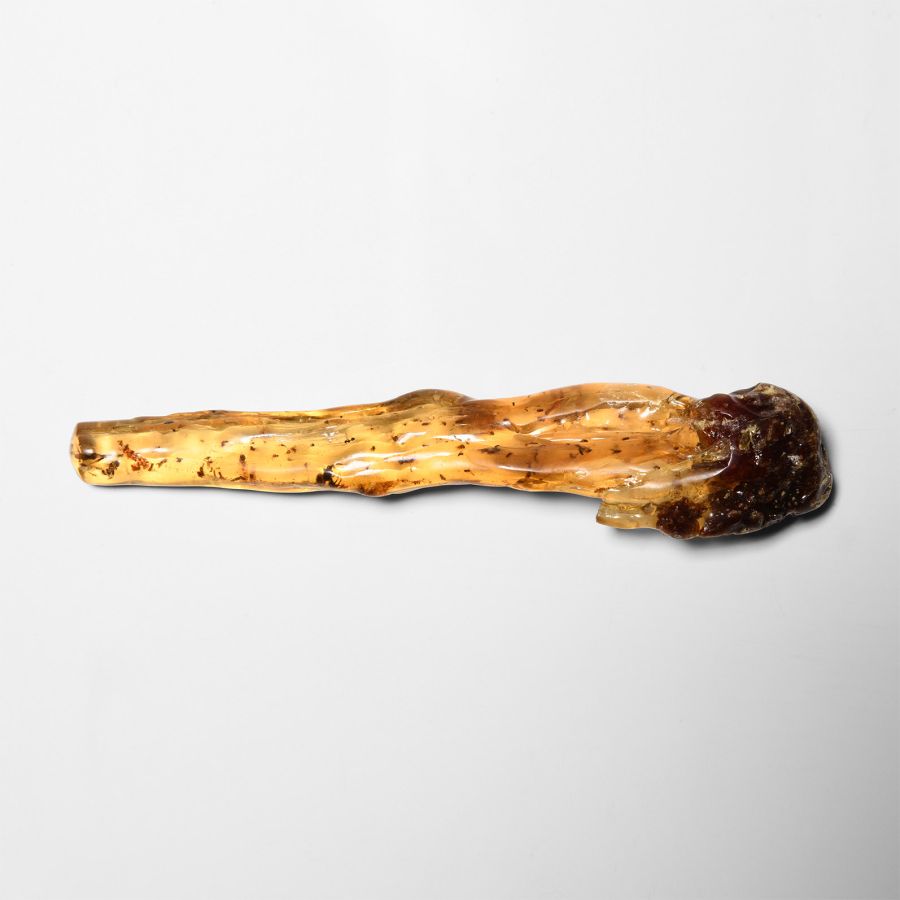
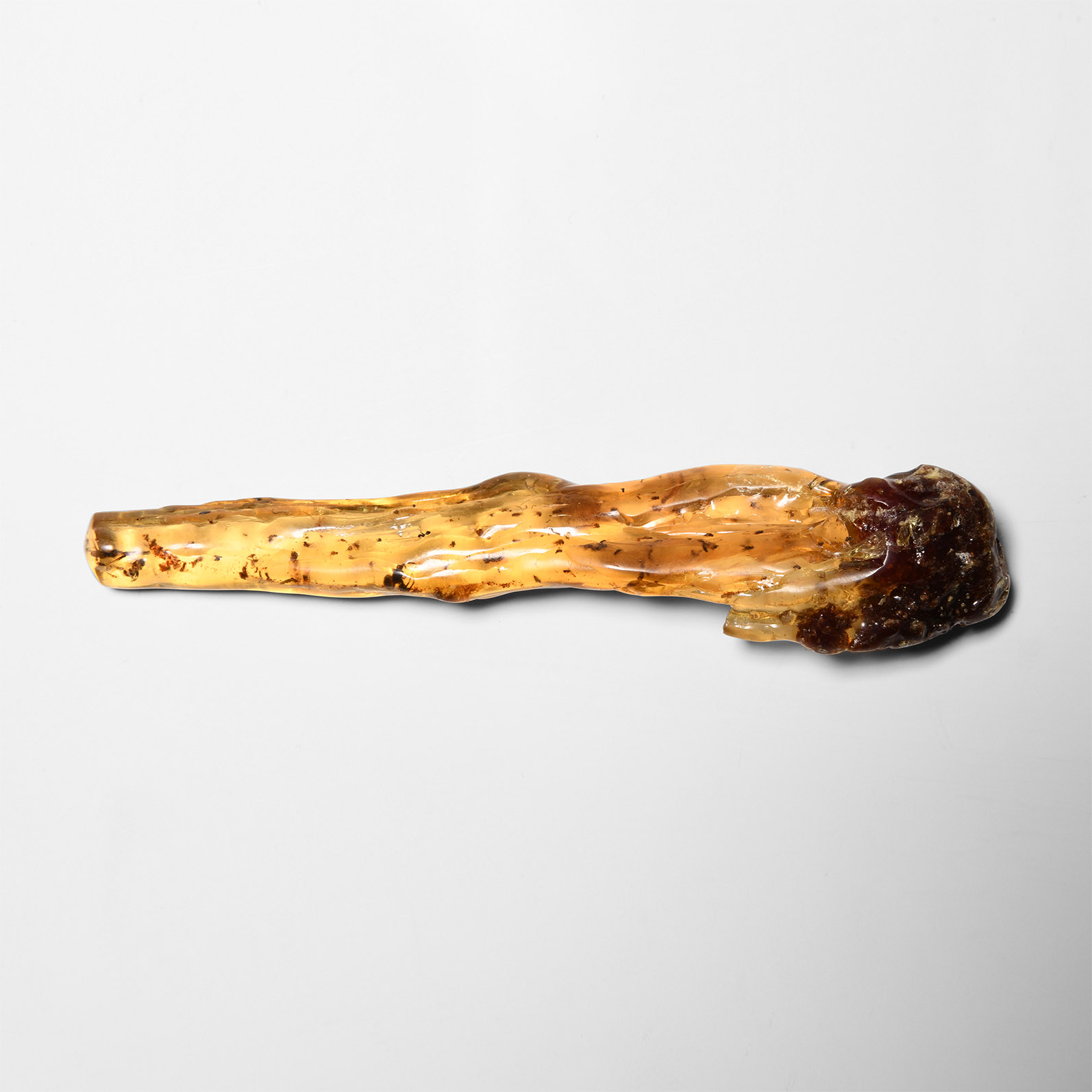
Natural History - Copal with Spider and Insects
CARBONIFEROUS PERIOD, CIRCA 3 MILLION YEARS B.P.
6 in. (33 grams, 15 cm).
A tapering finger of copal with spider and insect inclusions; held in a display box with a decorative fabric cover. [No Reserve]
ProvenanceEx Lincolnshire, UK, collection.
CONDITIONTimeLine Auctions follows a vetting process to ensure the authenticity and legality of all items, reinforcing our commitment to integrity and responsible trading. Each antiquity, antique, and coin lot undergoes thorough examination by a vetting committee of at least ten external specialists, professional trade association members, scientists, and archaeologists: Our Vetting Process
AUCTIONS:
TimeLine is a leading auction house specialising in antiquities, ancient art, collectables, natural history, coins, medals, and books. Our auctions offer museums, collectors, historians, and enthusiasts the opportunity to acquire unique and historically significant pieces.
-

Natural History - Mastodon Bone Carving
Pliocene Period, 5.2-2.5 million years B.P.Sold for (Inc. bp): £78
A Mastodon bone carving depicting a stylised face with emphasised features. 444 grams, 11.5 cm
From the Island of Java. Acquired 1950s-1960s. From an old Bristol, UK, paleontological collection. -
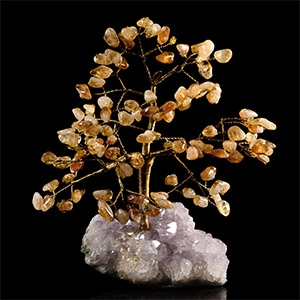
Natural History - Citrine and Amethyst Gem Tree
Sold for (Inc. bp): £13
A medium size gemstone tree comprising a brass trunk and branches tipped with polished citrine pebbles, mounted on a section of amethyst geode. 623 grams, 16 cm high
Mineral Imports, London, UK. Gregory, Bottley & Lloyd (Gregory's). -
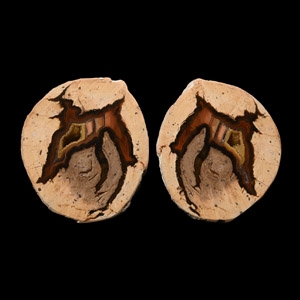
Natural History - Australian Agate Creek Cut and Polished 'Thunder Egg' Pair
Sold for (Inc. bp): £34
Two halves of a cut Australian 'thunder egg', with both exposed faces polished. 455 grams total, 82 mm each
Agate Creek, Australia. Mineral Imports, London, UK. Gregory, Bottley & Lloyd (Gregory's).
