
Loading, please wait...
_900x900.jpg "Natural History - Cave Hyena Upper Jaw")
_200x200.jpg "Natural History - Cave Hyena Upper Jaw")
.jpg "Natural History - Cave Hyena Upper Jaw")
LOT 0439
Natural History - Cave Hyena Upper Jaw
PLEISTOCENE PERIOD, 90,000-40,000 YEARS B.P.
5 in. (160 grams, 12.8 cm).
From Crocuta crocuta spelaea, comprising the majority of the upper jaw with both canines, molars, premolars and carnassials. [No Reserve]
ProvenanceFrom the private collection of a London gentleman.
FootnotesThe cave hyena is also known as the Ice Age spotted hyena, a paleosubspecies of spotted hyena in Eurasia. It was a highly specialised mammal that preyed on large mammals such as the woolly rhino and steppe bison.
CONDITIONTimeLine Auctions follows a vetting process to ensure the authenticity and legality of all items, reinforcing our commitment to integrity and responsible trading. Each antiquity, antique, and coin lot undergoes thorough examination by a vetting committee of at least ten external specialists, professional trade association members, scientists, and archaeologists: Our Vetting Process
AUCTIONS:
TimeLine is a leading auction house specialising in antiquities, ancient art, collectables, natural history, coins, medals, and books. Our auctions offer museums, collectors, historians, and enthusiasts the opportunity to acquire unique and historically significant pieces.
-
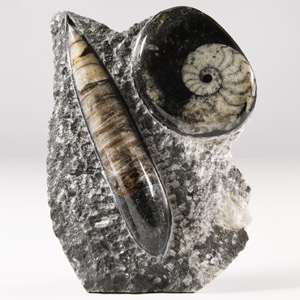
Natural History - Polished Fossil Goniatite and Orthoceras Stand
Devonian Period, circa 417-354 million years B.P.Sold for (Inc. bp): £20
Both set on a textured freestanding matrix and polished to reveal the internal gas chambers. 810 grams, 16 cm high
From a Cambridgeshire, UK, collection. -
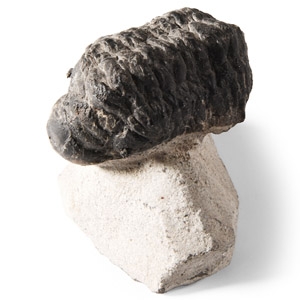
Natural History - Fossil Phacops Trilobite
Upper Devonian Period, circa 419-358 million years B.P.Sold for (Inc. bp): £7
Phacops rana trilobite on a freestanding matrix. 120 grams, 46 mm
From a Lincolnshire, UK, collection. -
![Natural History - Mocha Stone (Dendritic Limestone) Tile Group [3]](https://timelineauctions.com/upload/images/items/small/208049-s.jpg)
Natural History - Mocha Stone (Dendritic Limestone) Tile Group [3]
Sold for (Inc. bp): £91
Superb examples exhibiting finely formed dendrites of manganese oxide. 623 grams total, 11.1-14.5 cm
From India. Ex Mineral Imports, London, UK. Gregory, Bottley & Lloyd (Gregory's).
