
Loading, please wait...


LOT 2780
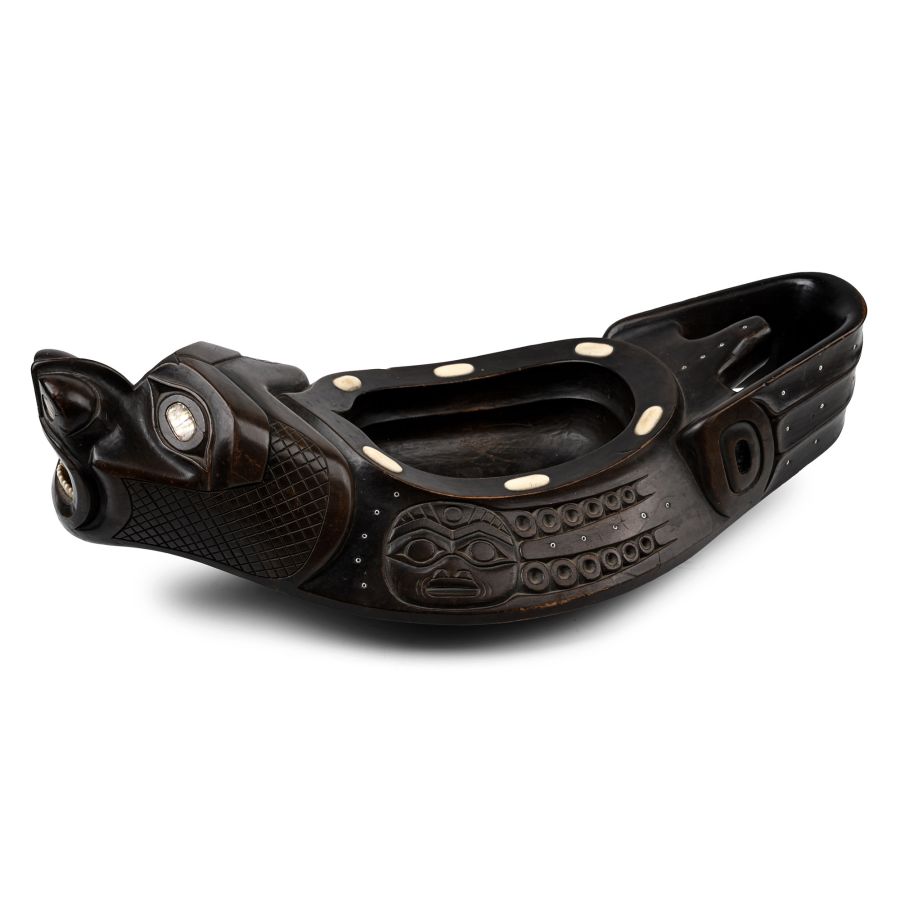
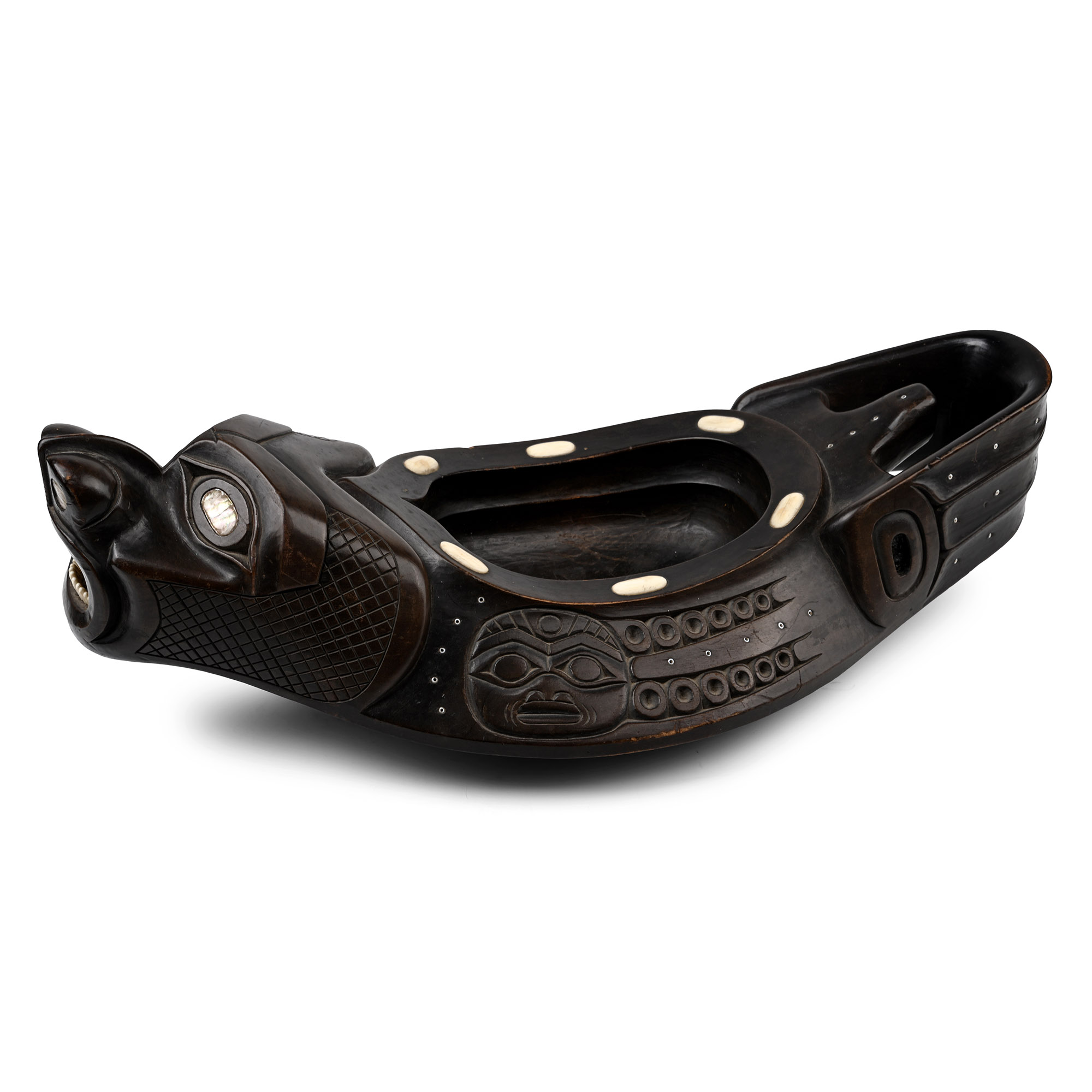
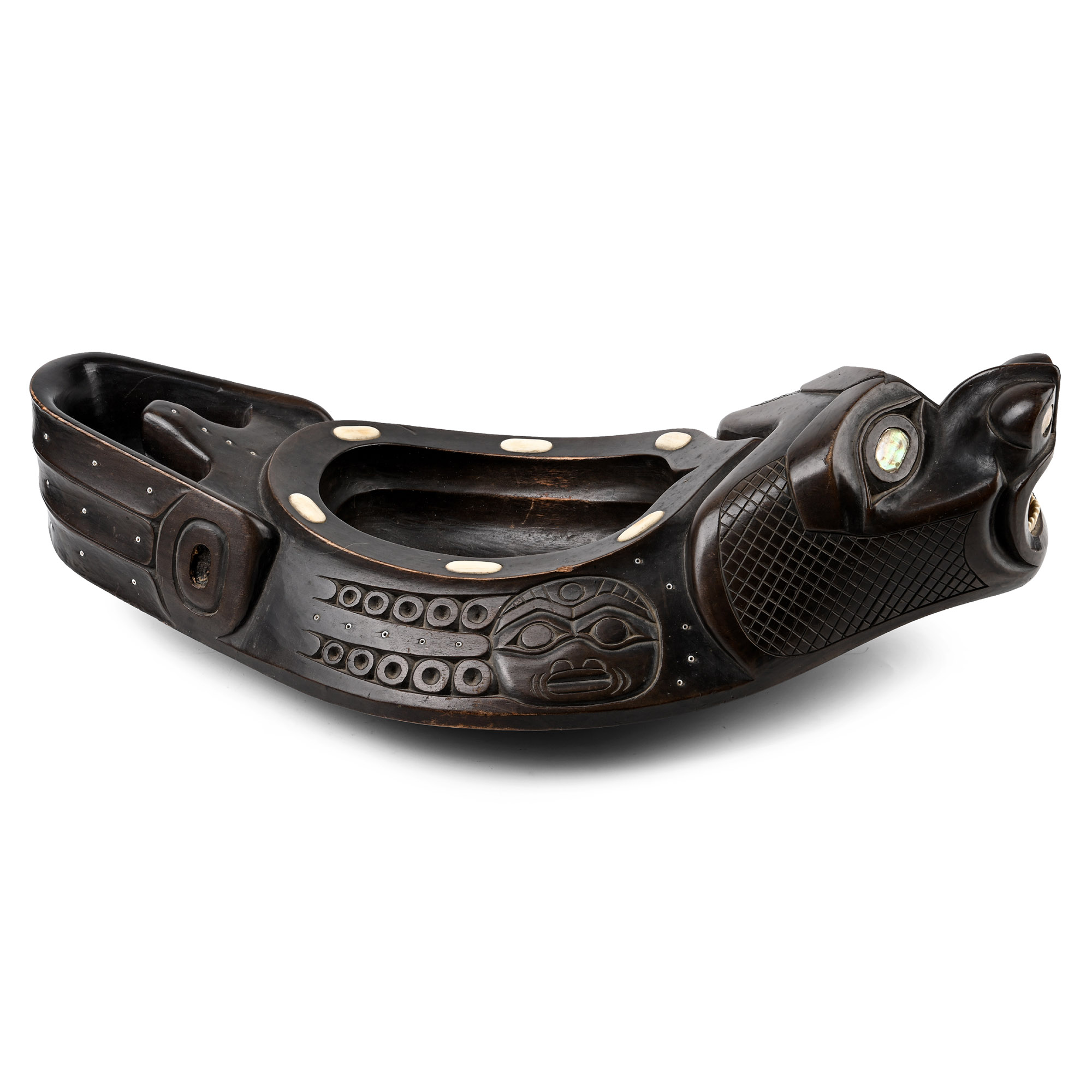
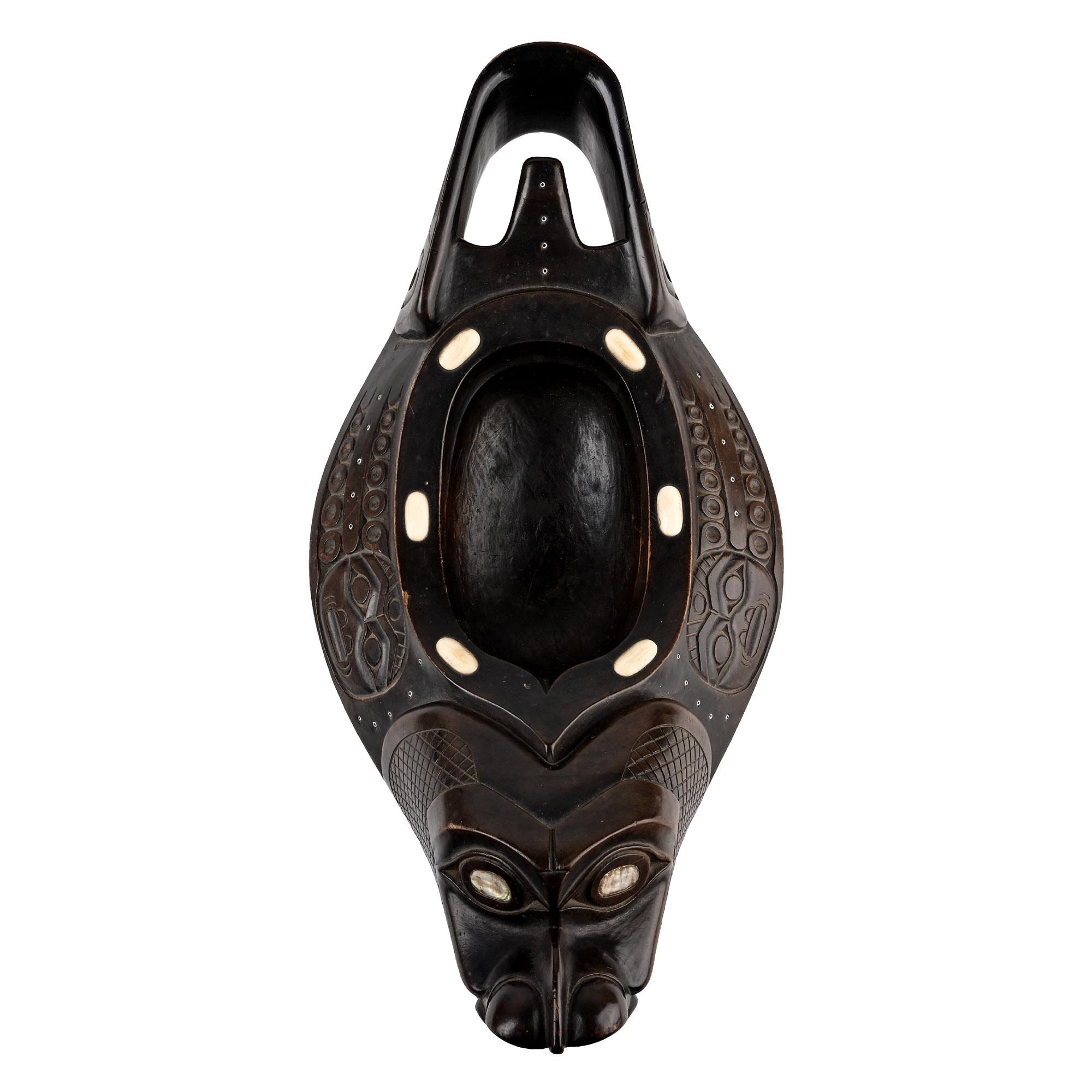
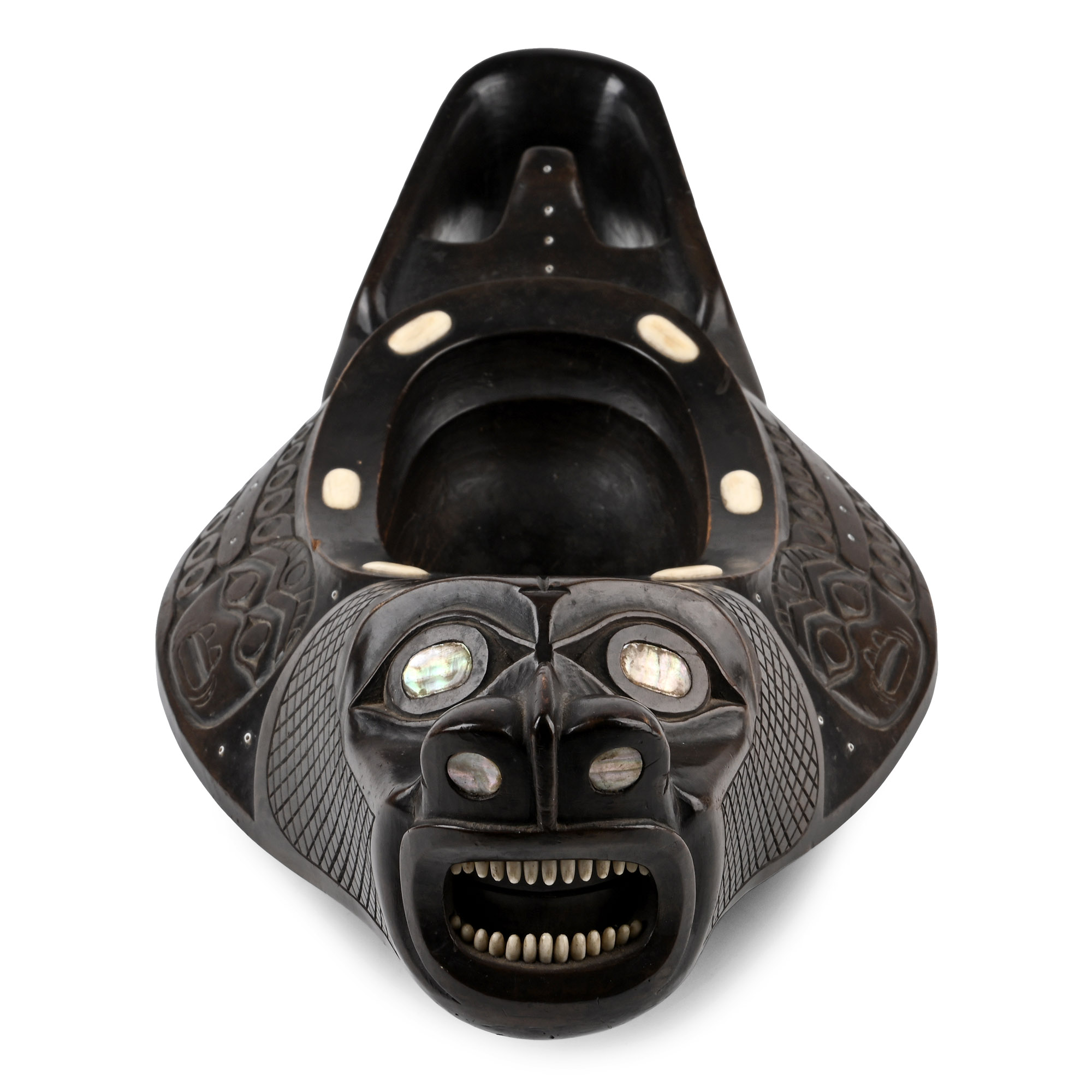
Native North American Tlingit Effigy of a Seal
ALASKA, LATE 19TH-EARLY 20TH CENTURY A.D.
15 in. (755 grams, 38.3 cm).
Finely carved head facing upwards with open mouth bristling with teeth, abalone shell inserts, the sides with images of sucker fish in relief, oval plaques surround the basin rim, tiny white beads used as accents; made by Rudolph Walton and Augustus Bean (1864-1951 & 1850-1926).
ProvenanceBonham's, Los Angeles, U.S.A., 11 December 2018, no.422.
From the collection of Mr Carlos Bahamonde, Manchester, UK.
See The British Museum, item no. Am1976,03.12; Saint Louis Art Museum, item no. 275:1982.
FootnotesAugustus Bean (1850-1926) and Rudolf Walton (1867-1951) were a Tlingit carving duo from Sitka Alaska. They were active in the late 19th to early 20th centuries. They are best known for their highly detailed style, often using embellishments such as beads, bone, and ivory inlays. This form of embellishment became a signature style for the duo.
CONDITIONTimeLine Auctions follows a vetting process to ensure the authenticity and legality of all items, reinforcing our commitment to integrity and responsible trading. Each antiquity, antique, and coin lot undergoes thorough examination by a vetting committee of at least ten external specialists, professional trade association members, scientists, and archaeologists: Our Vetting Process
AUCTIONS:
TimeLine is a leading auction house specialising in antiquities, ancient art, collectables, natural history, coins, medals, and books. Our auctions offer museums, collectors, historians, and enthusiasts the opportunity to acquire unique and historically significant pieces.
LOT 2780
Native North American Tlingit Effigy of a Seal
Estimate £1,000 - 1,400€1,160 - 1,620 (for guidance only)$1,350 - 1,890 (for guidance only)
Opening Bid
£500 (EUR 580; USD 675) +BP*
-
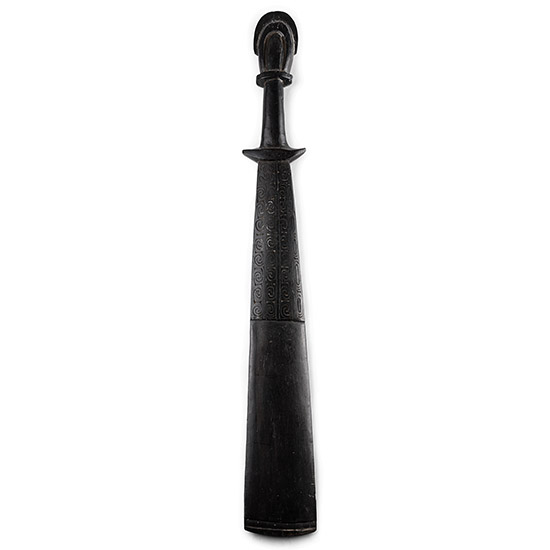
Oceanic Wooden Massim War Club
Trobriand Islands, early-mid 20th century A.D.Estimate: £400 - 600 (+bp*)
Opening Bid: £100
Paddle-shaped club with carved scroll decoration at the top of the blade. 783 grams, 74.2 cm
From the private collection of Frank Hurley (1885-1962), Australian photographer, filmmaker and adventurer. From the collection of Mr Carlos Bahamonde, Manchester, UK.
The Trobriand Islands are coral atolls off the east coast of New Guinea. The Massim clubs were both for ceremonial use and fighting, and were decorated with scrolls and abstract snake designs. Some of them were connected to sorcery: when a shaman pointed such a club towards someone, it was a death sentence. Frank Hurley worked on Shackleton's Antarctic expedition of 1914-1917, photographing the Endurance whilst being marooned with the rest of the crew. In the 1920s, he mounted various expeditions to Papua New Guinea, which involved filmmaking and collecting on behalf of the Australian Museum and himself. He stored a number of artefacts in a log cabin at Whale Beach, which became an exotic setting for Sydney's glitterati attending raucous parties there in the 1930s. Selling the property after the war, he left the contents of the cabin, which were kept by the new owners, who moved to London in 1959. -
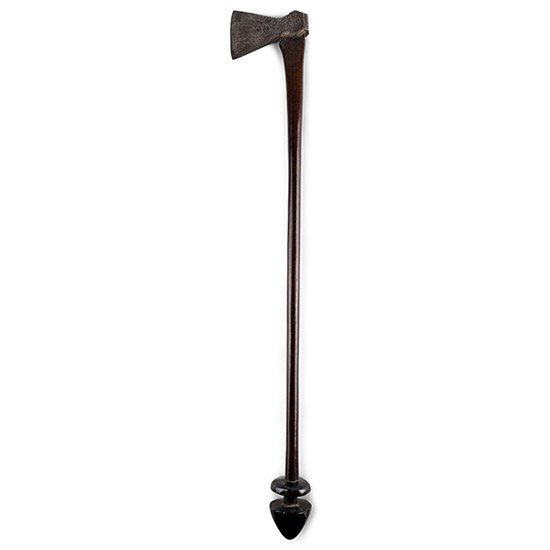
Oceanic Wooden Vanuatu Fighting Axe
Melensia, early-mid 20th century A.D.Estimate: £400 - 600 (+bp*)
Opening Bid: £100
Comprising a polished shaft with a disc and pointed terminal, the iron trade blade stamped with a B, a 2, and a six-pointed star. 957 grams, 93.7 cm
From the collection of Mr Carlos Bahamonde, Manchester, UK.
Vanuatu is an archipelagic country in Melanesia located in the South Pacific Ocean. -
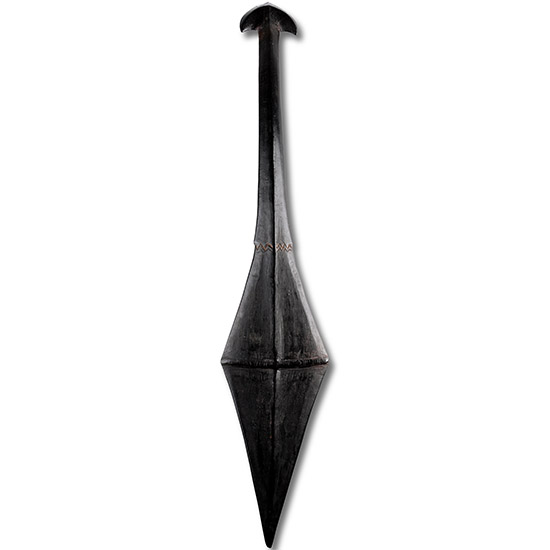
Oceanic Malaita Island Wooden War Club Supe
Solomon Islands, Melensia, early-mid 20th century A.D.Estimate: £400 - 600 (+bp*)
Opening Bid: £100
The blade with a raised medial cross, zig-zag carving above and a tapered handle ending in a fish-tail terminal; a collection sticker: 'MHMC-169'. 925 grams, 86 cm
From the collection of Mr Carlos Bahamonde, Manchester, UK.
These weapons come from Malaita Island and originally had a coir string binding on the handle. Hundreds of these were made for sale and barter to servicemen in World War II. Old ones are quite rare, but World War II examples are very common.
