
Loading, please wait...
LOT 2764
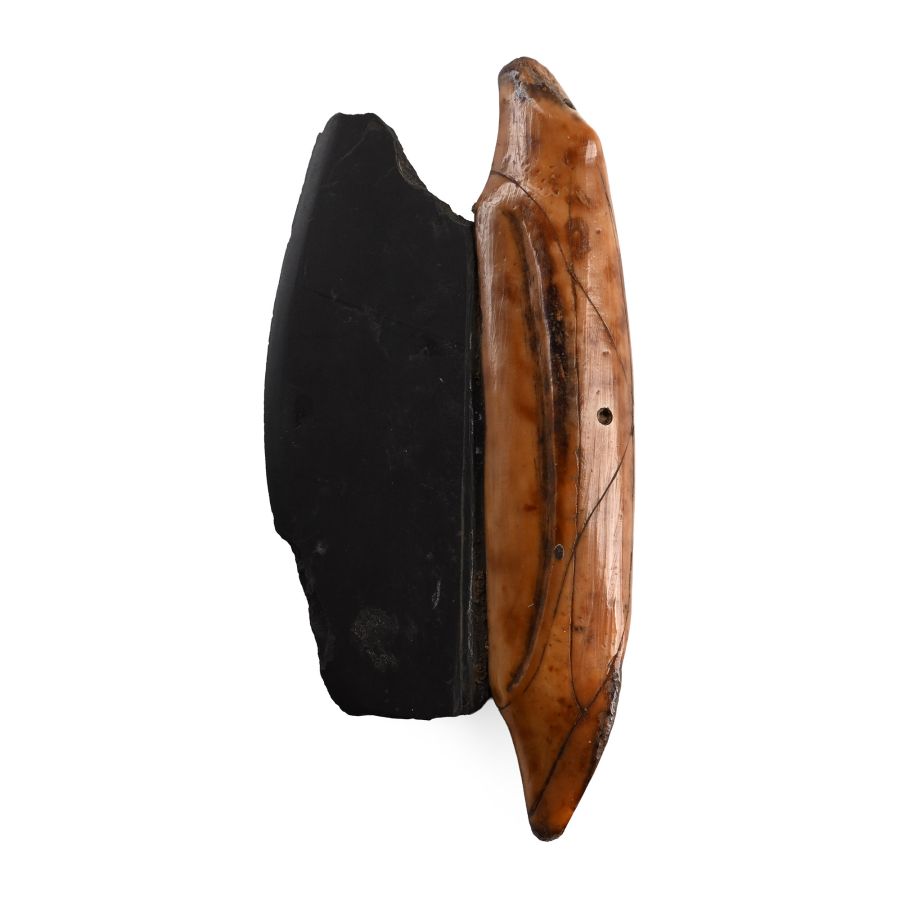
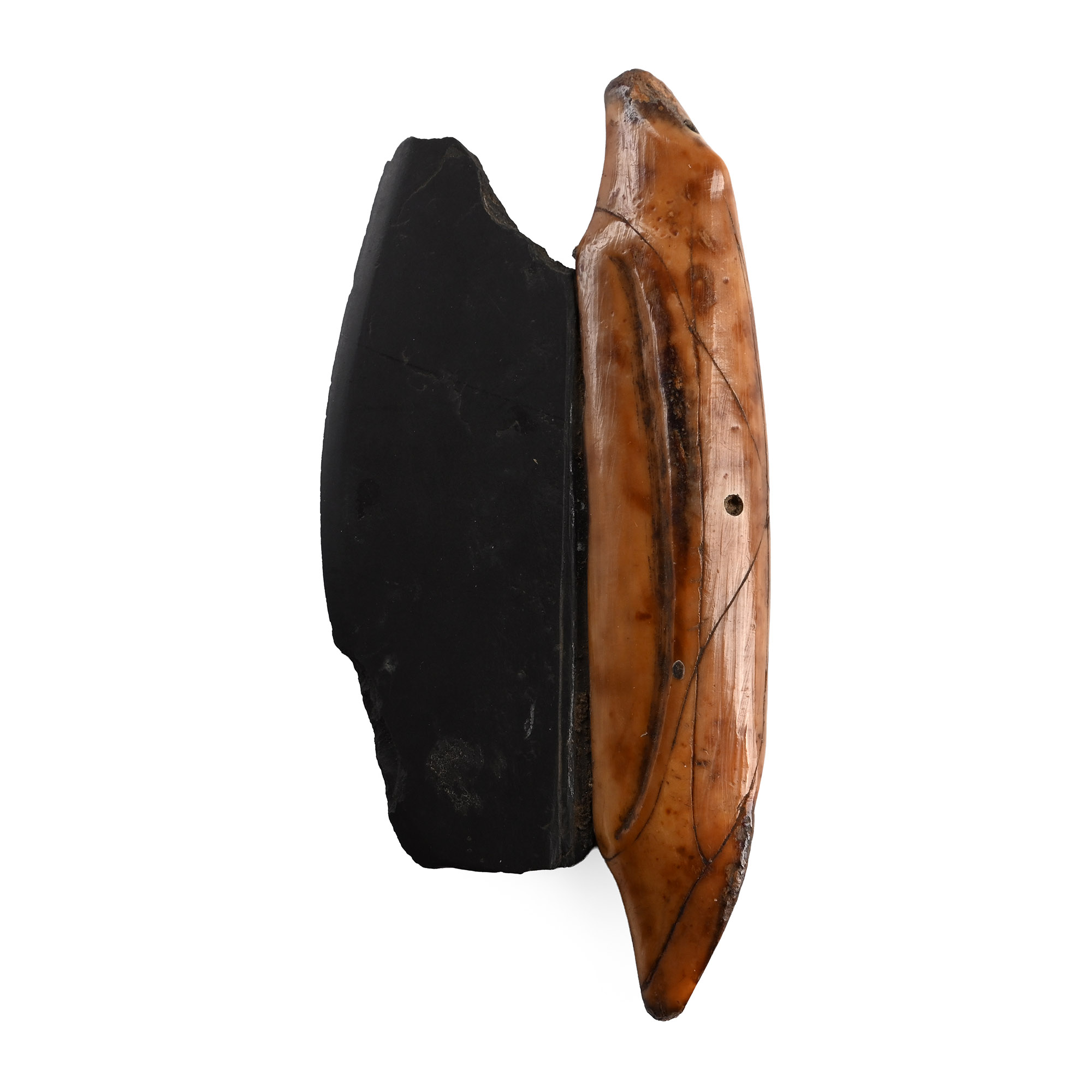
Native North American Punuk Carved Fossilized Bone Knife Handle
ALASKA, CIRCA 500-1,000 CENTURY A.D.
4 in. (43.1 grams, 10.1 cm).
Modelled as a finely carved zoomorphic body with circular eyes and a rounded mouth, lines and dots decoration to the body, securing a smooth black stone blade.
ProvenanceExcavated on St Lawrence Island, Alaska.
Ex John and Valerie Arieta, 1996.
Dr Alan Black collection.
From the collection of Mr Carlos Bahamonde, Manchester, UK.
See Sukhorukova, E.S., The Question of a Unified Birnirk-Punuk Artistic Tradition in the Eskimo Art of Chukotka, 2006, figure 5.
CONDITIONTimeLine Auctions follows a vetting process to ensure the authenticity and legality of all items, reinforcing our commitment to integrity and responsible trading. Each antiquity, antique, and coin lot undergoes thorough examination by a vetting committee of at least ten external specialists, professional trade association members, scientists, and archaeologists: Our Vetting Process
AUCTIONS:
TimeLine is a leading auction house specialising in antiquities, ancient art, collectables, natural history, coins, medals, and books. Our auctions offer museums, collectors, historians, and enthusiasts the opportunity to acquire unique and historically significant pieces.
LOT 2764
Native North American Punuk Carved Fossilized Bone Knife Handle
Estimate £300 - 400€350 - 460 (for guidance only)$410 - 540 (for guidance only)
Opening Bid
£150 (EUR 174; USD 203) +BP*
-
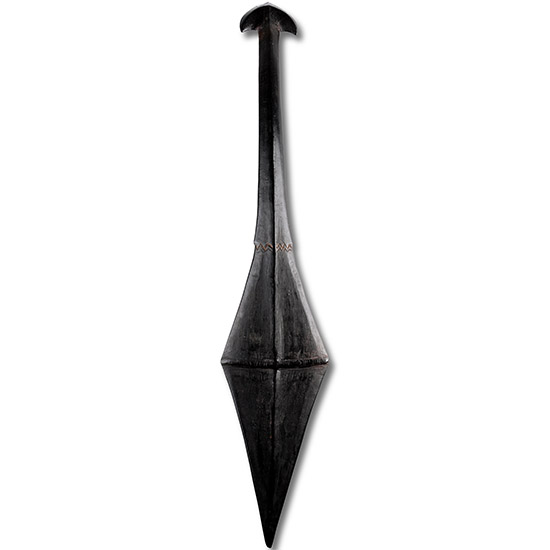
Oceanic Malaita Island Wooden War Club Supe
Solomon Islands, Melensia, early-mid 20th century A.D.Estimate: £400 - 600 (+bp*)
Opening Bid: £100
The blade with a raised medial cross, zig-zag carving above and a tapered handle ending in a fish-tail terminal; a collection sticker: 'MHMC-169'. 925 grams, 86 cm
From the collection of Mr Carlos Bahamonde, Manchester, UK.
These weapons come from Malaita Island and originally had a coir string binding on the handle. Hundreds of these were made for sale and barter to servicemen in World War II. Old ones are quite rare, but World War II examples are very common. -
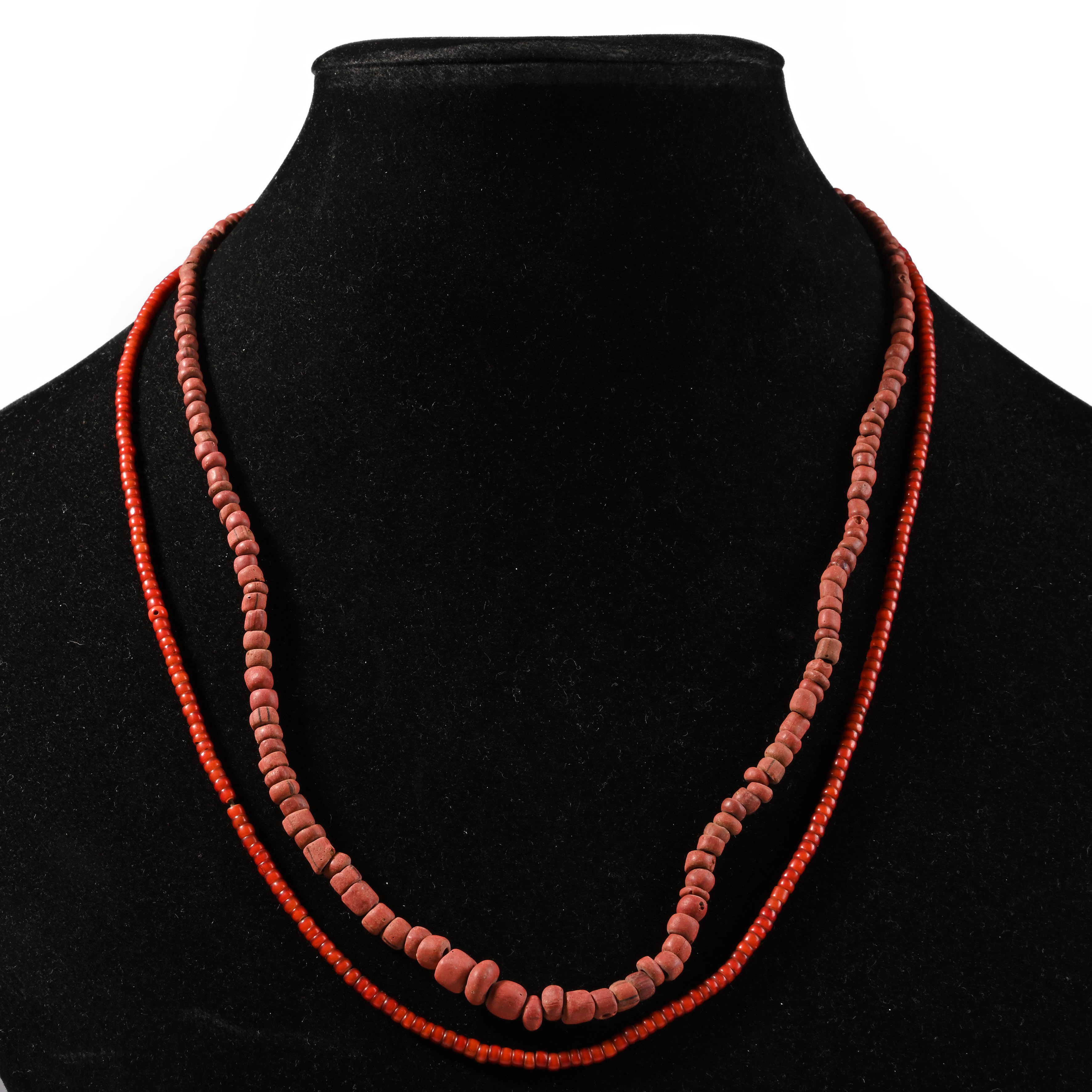
Javanese Trade Beads
Majopahit, circa 13th century A.D.Estimate: £20 - 30 (+bp*)
Opening Bid: £5
Two strings of red glass beads; old collector's cards: 'Majopahit 13th c. opaque red glass beads. Java 1293-1520 and its maritime empire. Beads used trading in E. Indies' and 'Majopahit 1293-1520 Kingdom of East Java (Sumatra, S. Malaysia = coastal Borneo.) These 13 c.' 23.7 grams total, 58-59 cm
From a specialised collection of trade items and money formed in the 1970s. -
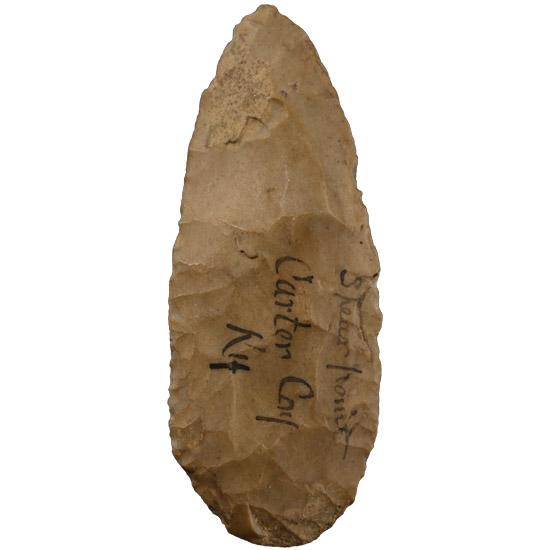
North American Indian 'Carter Cay' Knapped Spear Point
Late 1st millennium A.D.Estimate: £80 - 100 (+bp*)
Opening Bid: £5
Leaf-shaped with rounded butt; inked findspot 'Spearpoint / Carter Cay / Ky'. 40.7 grams, 92 mm
Found Carter Cay, Bahamas. From the collection of Haselmere Parish Priest, Charles Borelli (c.1914-2000) of Farnham, who was part of the Borelli family from Italy, who emigrated from Lake Como in 1828 to set up the Borelli family watch and jewellery business; thence by family descent to his nephew.
