
Loading, please wait...

LOT 2362
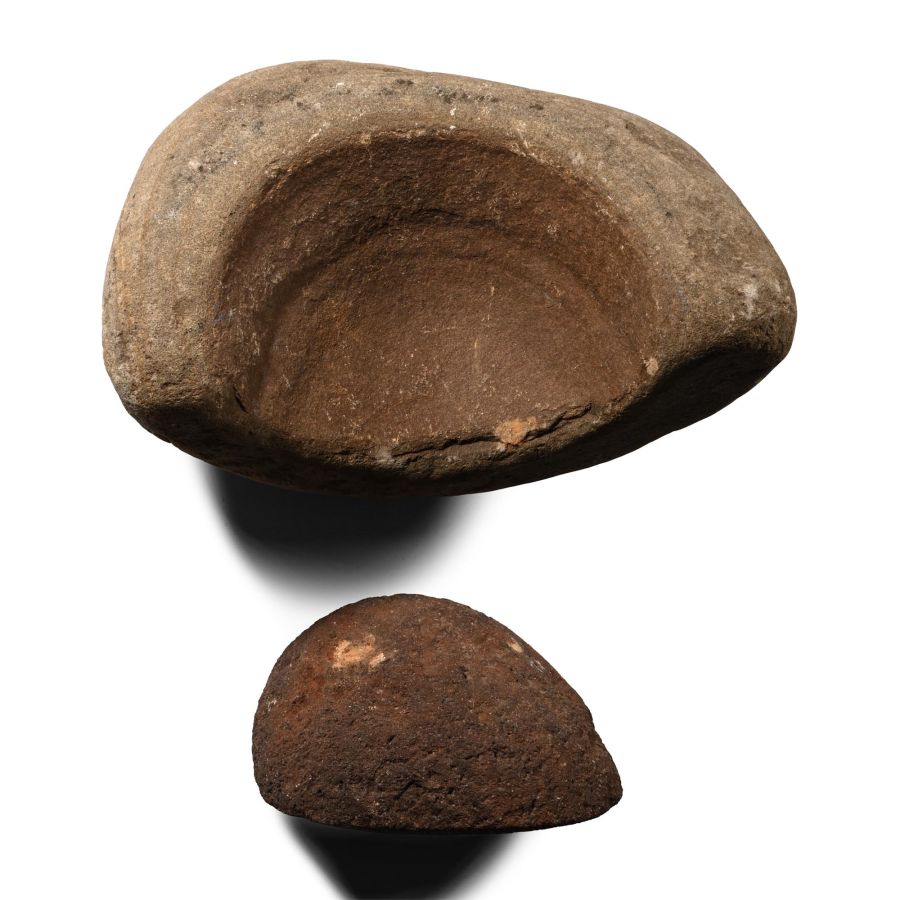
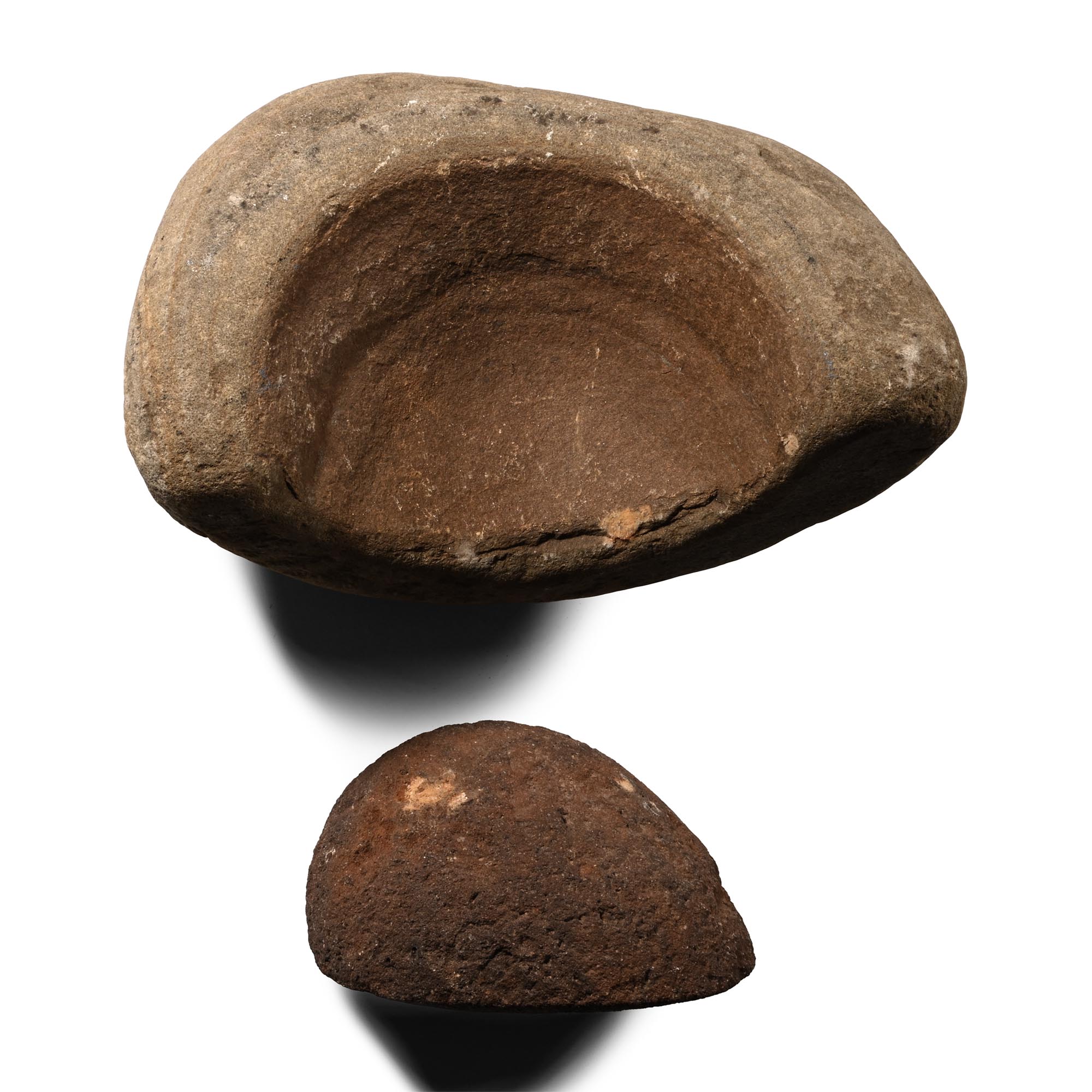
Native American Stone Grinding Stone Pair
WOODLAND PERIOD, 3RD-10TH CENTURY A.D.
4 3/8 - 7 7/8 in. (2.94 kg total, 11.1-20 cm).
Quernstone with rounded underside, handstone with carinated upper face. [2, No Reserve]
ProvenanceFrom a collection acquired on the UK art market from various auction houses and collections mostly before 2000.
From an important Cambridgeshire estate; thence by descent.
TimeLine Auctions follows a vetting process to ensure the authenticity and legality of all items, reinforcing our commitment to integrity and responsible trading. Each antiquity, antique, and coin lot undergoes thorough examination by a vetting committee of at least ten external specialists, professional trade association members, scientists, and archaeologists: Our Vetting Process
AUCTIONS:
TimeLine is a leading auction house specialising in antiquities, ancient art, collectables, natural history, coins, medals, and books. Our auctions offer museums, collectors, historians, and enthusiasts the opportunity to acquire unique and historically significant pieces.
-
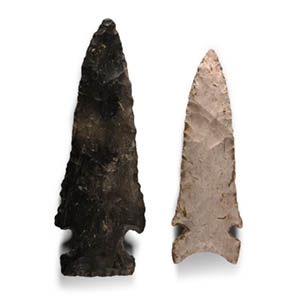
Native American Ohio Barbed Stone Arrowhead Group
Early Archaic Period, 8th-5th millennium B.C.Sold for (Inc. bp): £104
Each with broad triangular blade. stepped profile to neck, one with scooped upper edge to the tang; one with pencilled note 'Cuss.Co / Mo', the other with inked noe 'ELYRIA, OHIO / LORRAIN CO'. 70 grams total, 9.5-11.4 cm
From a family collection mostly formed in the 1940s-1950s, thence by descent. -
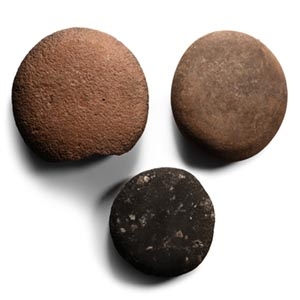
Native American Smoothing Stone Group
Woodland Period, 3rd-10th century A.D.Sold for (Inc. bp): £20
Comprising three rounded handstones with abraded surfaces. 2.94 kg total, 10.9-14 cm
From a collection acquired on the UK art market from various auction houses and collections mostly before 2000. From an important Cambridgeshire estate; thence by descent. -
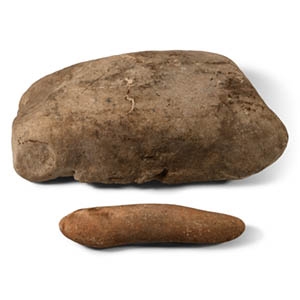
Native American Smoothing Stone Pair
Woodland Period, 3rd-10th century A.D.Sold for (Inc. bp): £7
Comprising a sub-rectangular quern with slightly dished upper face, and a round-section muller or handstone with one pointed end. 19.5 kg total, 26-42 cm
From a collection acquired on the UK art market from various auction houses and collections mostly before 2000. From an important Cambridgeshire estate; thence by descent.
