Loading, please wait...

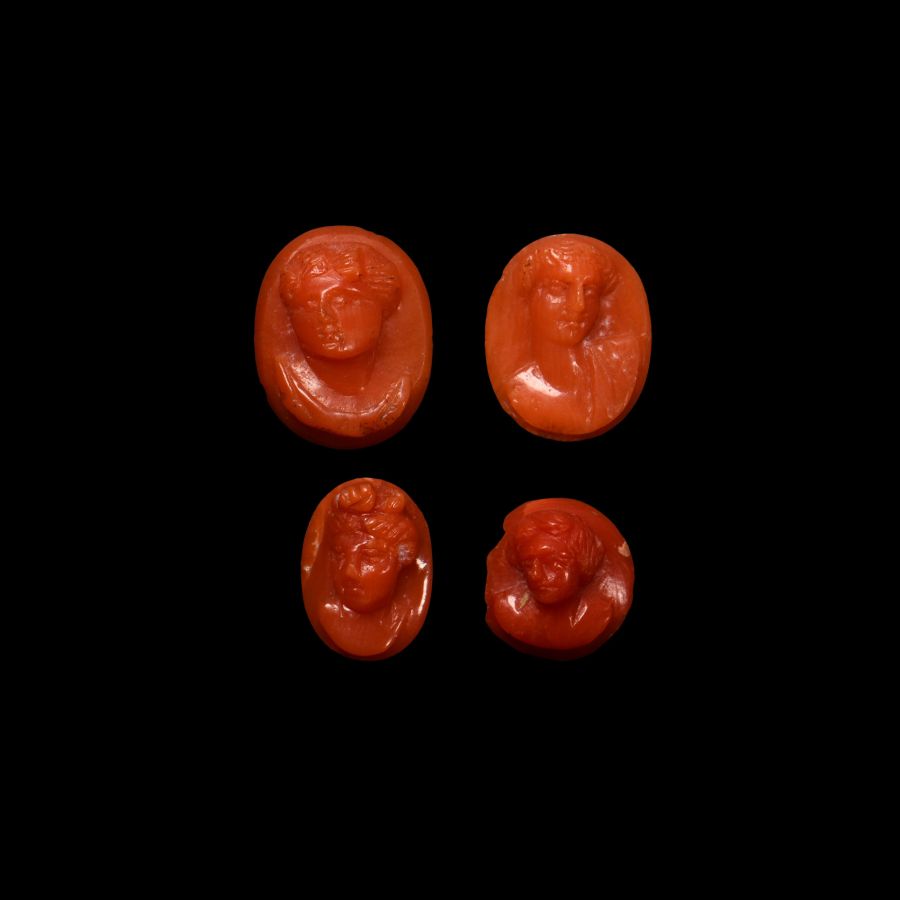
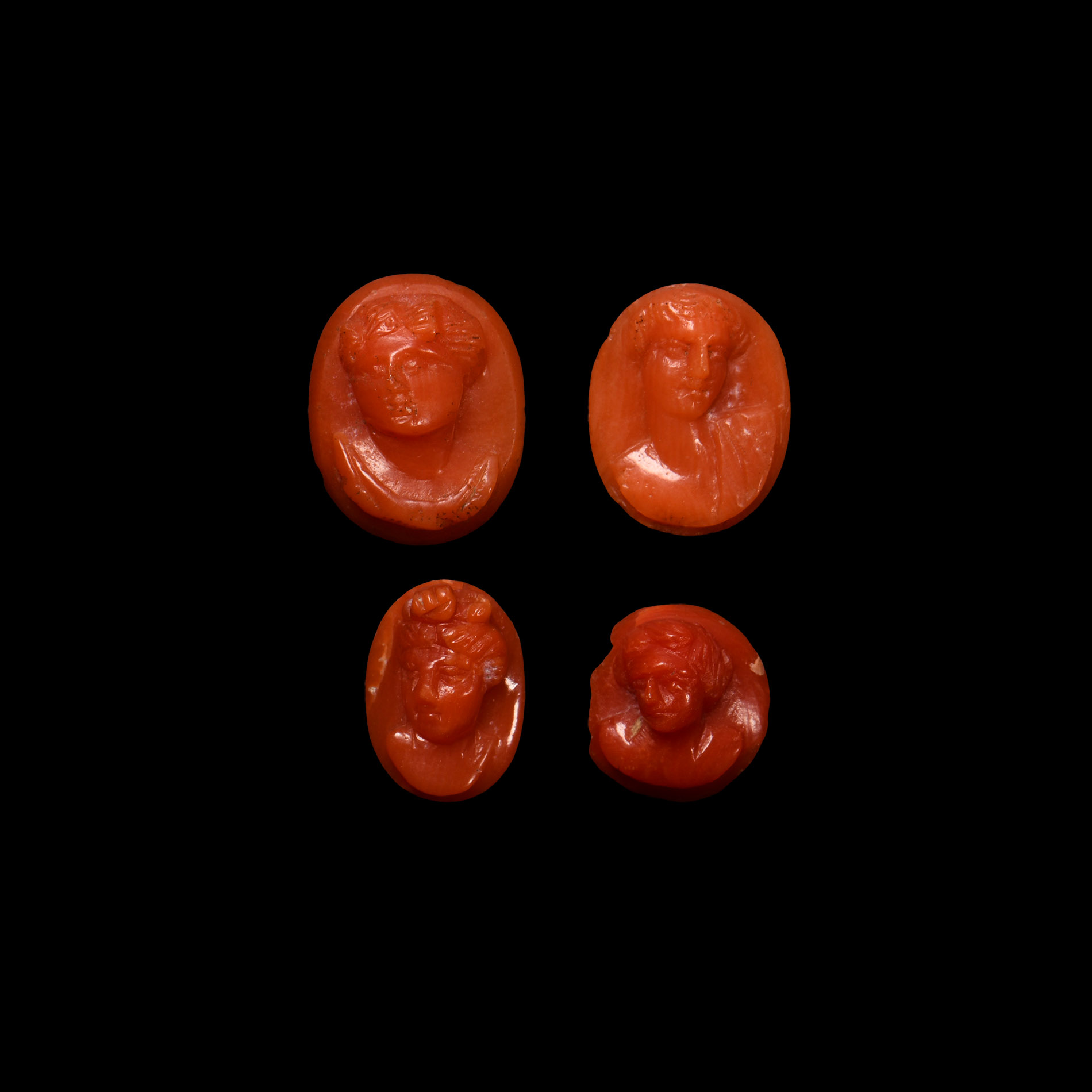
Naples Cameo Group Naples Cameo Group Naples Cameo Group
Use mousewheel to zoom in and out, click to enlarge
Details

LOT 1418

Naples Cameo Group

LATE 19TH CENTURY A.D.

1/4 - 3/8 in. (1.49 grams total, 8-12 mm).

A group of four coral cameos displaying ladies of fashion in relief, each individual in pose, character and detail. [4, No Reserve]

Provenance

From the collection of G.M.R.H., London, UK.

CONDITION
VETTING:

TimeLine Auctions follows a vetting process to ensure the authenticity and legality of all items, reinforcing our commitment to integrity and responsible trading. Each antiquity, antique, and coin lot undergoes thorough examination by a vetting committee of at least ten external specialists, professional trade association members, scientists, and archaeologists: Our Vetting Process


AUCTIONS:

TimeLine is a leading auction house specialising in antiquities, ancient art, collectables, natural history, coins, medals, and books. Our auctions offer museums, collectors, historians, and enthusiasts the opportunity to acquire unique and historically significant pieces.

LOT 1418

Naples Cameo Group

Sold for (Inc. bp): £72

Print page

RELATED LOTS
  • Massive Painted Oak Framed Slate Altar Screen
    Massive Painted Oak Framed Slate Altar Screen
    19th century A.D.

    Sold for (Inc. bp): £169

    A magnificent and superb quality Victorian Gothic revival painted altar or reredos panel, as exemplified by the works and designs of Augustus Pugin, on Welsh slate depicting a large golden cross with latticed arms and squared quatrefoil terminals showing the emblems and names of the four Evangelists, Matthew, Mark, Luke and John; the cross set over a circle enclosing a quatrefoil background with the main discus showing a white cross trefoil on a red expanding cross against a green background with the Christogram letters 'IHS' entwined for Jesus Christ; the design set against a dark blue field ornamented with 48 golden radiant six-pointed stars; complete with the original carved oak frame together with the carved oak projecting base plinth shelf with quatrefoil perforations and another Christogram 'IHS' within a blue oval to the central projection. 73 kg total, 134.5 cm base and 159 cm high

    Fine condition.

    Collection formed in the 2000s. Property of an East Anglia gentleman.

    From the 4th century A.D., the vision of Ezekiel and John's Apocalypse, assigned the lion, the angel, the eagle and the ox a stable place in the iconography of the tetramorph to represent the evangelist Mark (lion) next to the calf (Luke), the angel (Matthew) and the eagle (John). They are, in Christian iconography and theology, the four winged cherubs singing the triumphal hymn, exclaiming, proclaiming, and saying: 'Holy, holy, holy, Lord Sabaoth'. The oldest representations date back to the 5th century A.D., and are found in the mosaics of the baptistry of Naples and in the apse of S. Prudenziana in Rome. The tetramorph was a favourite subject in 12th century ecclesiastic art and its use has continued to the present day.

    Lot Details

  • Decorated Bronze Container
    Decorated Bronze Container
    Circa 17th-19th century A.D.

    Estimate: £1,000 - 1,400 (+bp*)

    Opening Bid: £500

    A bronze trinket-box or container with separate lid; the slightly flared body with three stub feet formed as bunches of grapes, field with frieze divided by twisted branches and leaves into three scenes featuring foxes and a snake; domed lid with with vines, leaves and bunches of grapes, knop handle formed as a twig stump. 1.28 kg, 12.3 cm high


    English private collection.

    Lot Details

  • Stuart Period Gold Renaissance Memento Mori Signet Ring with C.L. and Skull
    Stuart Period Gold Renaissance Memento Mori Signet Ring with C.L. and Skull
    17th century A.D.

    Sold for (Inc. bp): £19,500

    A substantial gold signet ring composed of a lentoid-section hoop, expanding capital style shaped shoulders and irregular octagonal bezel engraved with a skull, two flowers below separating the reversed initials in capitals: 'CL', framed by a beaded border. 15.65 grams, 27.14 mm overall, 22.68 mm internal diameter (approximate size British X, USA 11 1/2, Europe 26.29, Japan 25)


    Acquired in the 1980s. Property of a London gentleman. This lot has been checked against the Interpol Database of stolen works of art and is accompanied by search certificate no.11664-197587.

    Signet rings were jewellery items serving practical functions, and were pressed into hot wax to seal letters and packets. Personal seals or secreta acted as a legal safeguard, since they were used to witness wills, loans, commercial, personal and other documents. Such rings were often engraved with a coat of arms, initials, merchant's mark or some other personal symbol. Painted portraits of this period portray the wearer with the signet ring on the thumb or forefinger, allowing for practical use. Skulls on rings were potent symbols of mortality. 'Memento mori' or 'remember that you must die' imagery served as a reminder to the Christian of the need to keep their soul in good order for the final judgment.

    Lot Details

Stay up-to-date with the latest from TimeLine Auctions by joining our mailing list