
Loading, please wait...

LOT 2282
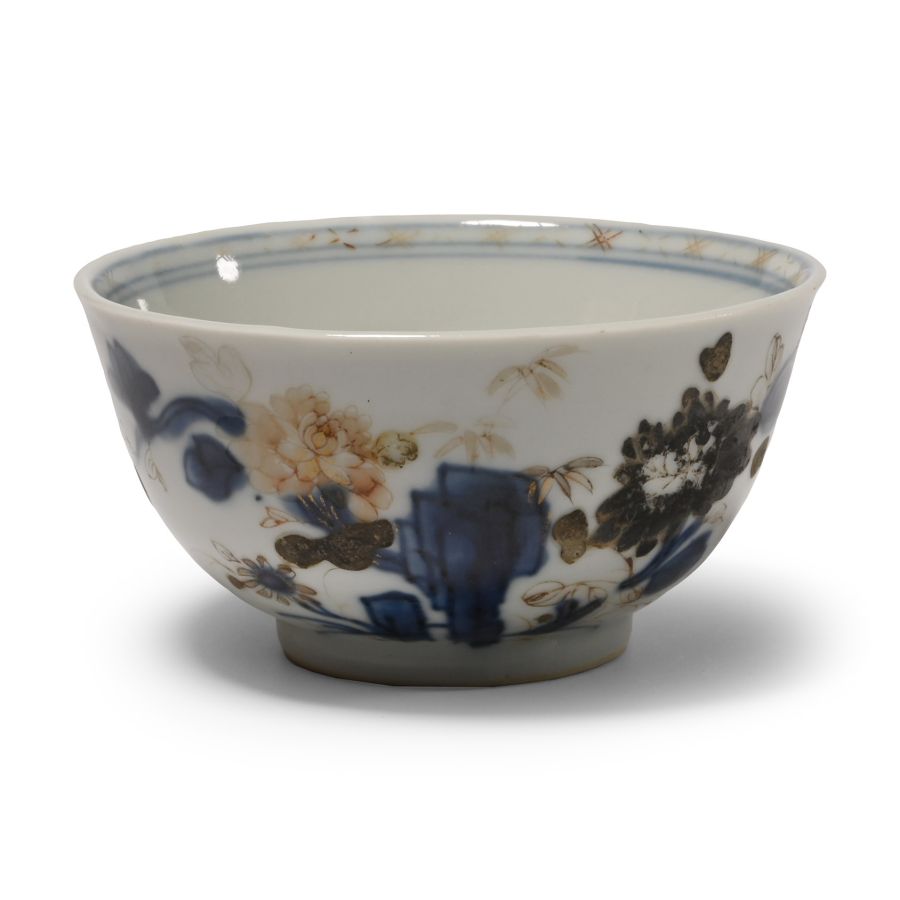
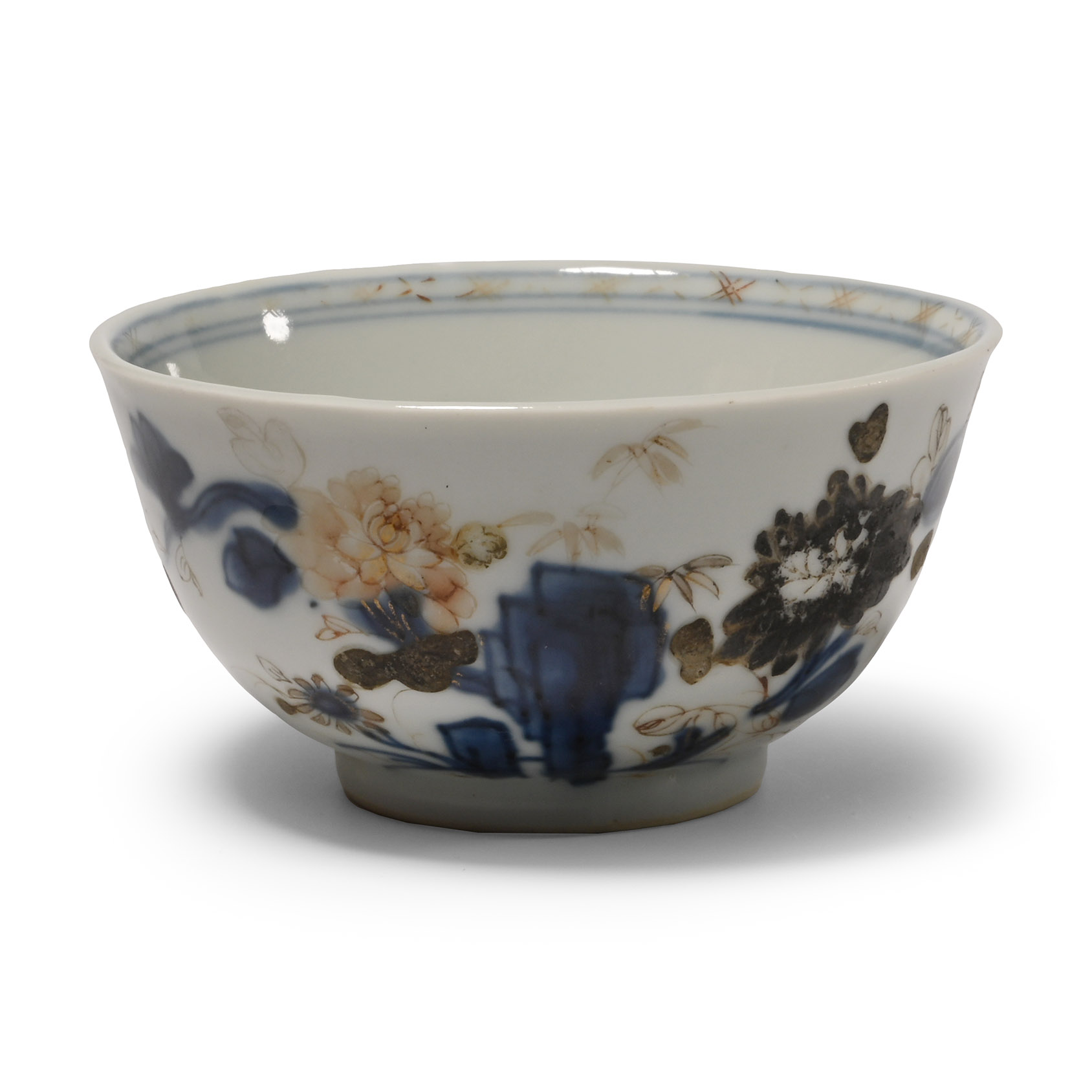
Nanking Cargo Shipwreck Gilt Glazed Blue and White Tea Bowl
EARLY 18TH CENTURY A.D.
3 3/8 in. (74 grams, 87 mm).
Of wide profile with shallow foot, painted floral motifs with blue and gilt lotus flowers. [No Reserve]
ProvenanceEx Christie's, Amsterdam, 28 April-2 May 1985.
Accompanied by an illustrated information sheet about the Nanking shipwreck.
This lot is accompanied by an illustrated lot declaration signed by the Head of the Antiquities Department, Dr Raffaele D’Amato.
On Monday 3rd January 1752, the Dutch East India Company ship Geldermalsen, struck a reef on her return journey to the Netherlands and sank in the South China Sea. The cargo of Chinese porcelain was originally potted in Jingdezhen, Jiangzi province. The cargo was recovered by Captain Michael Hatcher and his team in 1985.
CONDITIONTimeLine Auctions follows a vetting process to ensure the authenticity and legality of all items, reinforcing our commitment to integrity and responsible trading. Each antiquity, antique, and coin lot undergoes thorough examination by a vetting committee of at least ten external specialists, professional trade association members, scientists, and archaeologists: Our Vetting Process
AUCTIONS:
TimeLine is a leading auction house specialising in antiquities, ancient art, collectables, natural history, coins, medals, and books. Our auctions offer museums, collectors, historians, and enthusiasts the opportunity to acquire unique and historically significant pieces.
LOT 2282
Nanking Cargo Shipwreck Gilt Glazed Blue and White Tea Bowl
Sold for (Inc. bp): £221
-
Chinese Vung Tau Wreck Porcelain
Circa 1690 A.D.Sold for (Inc. bp): £52
Bell-shaped in profile with basal ring and slightly everted rim; tin-glazed export ware. 384 grams, 14.5 cm
Property of a North London, UK, gentleman. This lot is accompanied by an illustrated lot declaration signed by the Head of the Antiquities Department, Dr Raffaele D’Amato. -
Chinese Warring States Caparisoned Terracotta Horse
Warring Dynasties, 475-221 B.C.Sold for (Inc. bp): £3,510
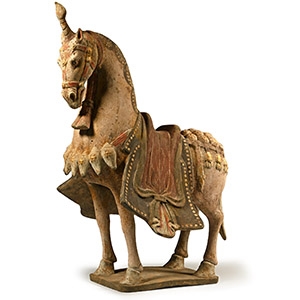
In erect pose with straightened neck; the detailed caparison including a breast-band with bells, billowing saddle-cloth and integral saddle outlined with painted beading; blanket-like crupper with applied bosses, gilt flowers and hanging tassels, the bridle with gilt bosses, decorative rosette detailing to the mane. 4.8 kg, 45 cm
Ex West Country, UK, collection, 2000s. Accompanied by thermoluminescence analysis report no.18CM180321 by Laboratory Kotalla. This lot has been checked against the Interpol Database of stolen works of art and is accompanied by a search certificate number no.12564-231127. This lot has been cleared against the Art Loss Register database, and is accompanied by an illustrated lot declaration signed by the Head of the Antiquities Department, Dr Raffaele D’Amato. -
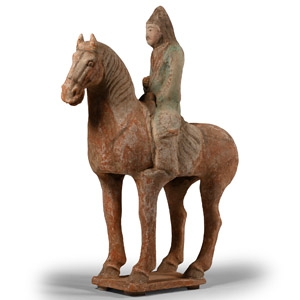
Chinese Tang Terracotta Horse and Rider
Tang Dynasty, 618-907 A.D. or laterEstimate: £550 - 750 (+bp*)
Opening Bid: £300
Modelled on a rectangular base, the horse standing with a rounded saddlecloth picked out in grey pigment; the rider modelled seated in the saddle, right arm bent and left arm held before the body. 1.5 kg, 32.5 cm
From a West Country, UK, collection, 1990s. This lot is accompanied by an illustrated lot declaration signed by the Head of the Antiquities Department, Dr Raffaele D’Amato.
