
Loading, please wait...
LOT 0212
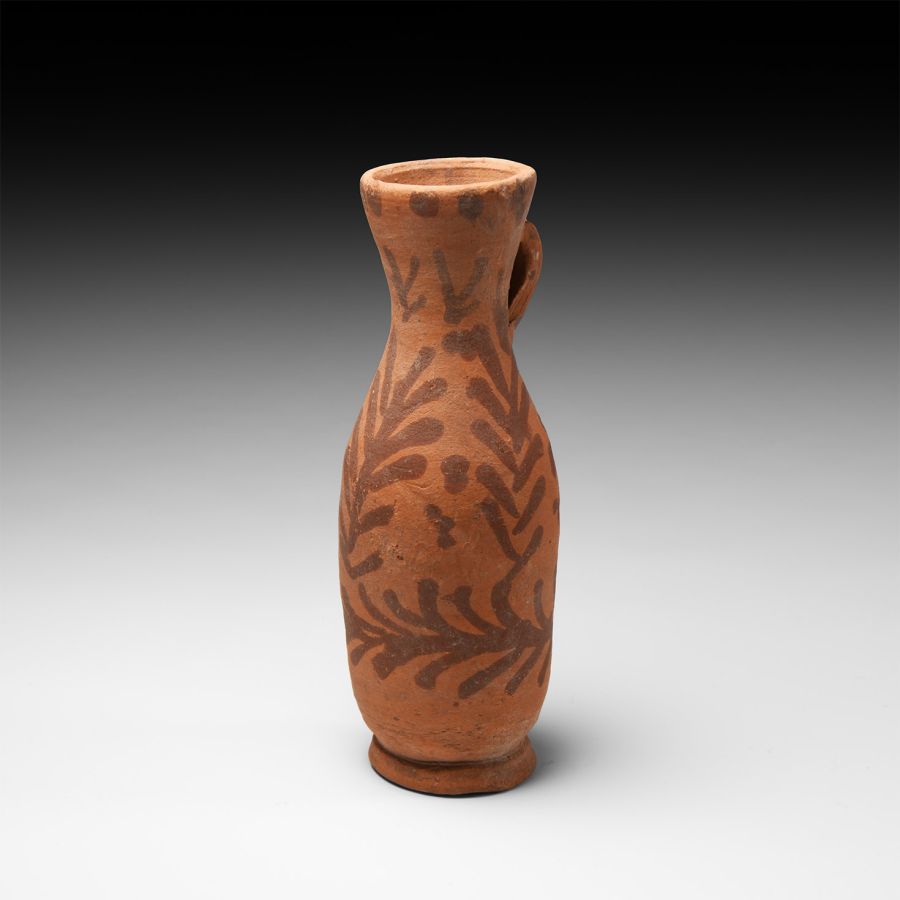
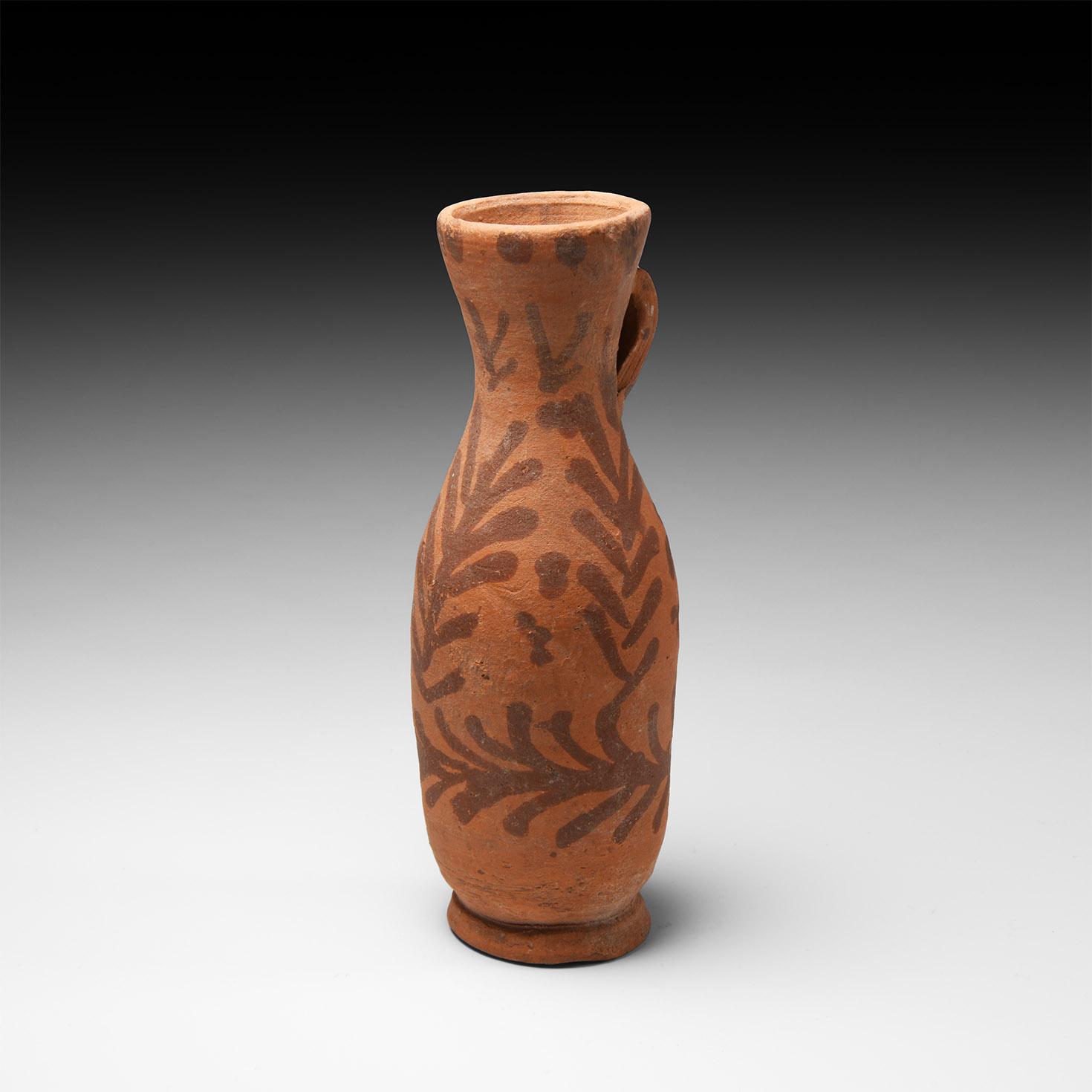
Nabataean Painted Jug
1ST CENTURY B.C.-1ST CENTURY A.D.
47/8 in. (76 grams, 12.4 cm high).
A small terracotta jug with strap handle above the shoulder, painted frond patterns to the body, shoulder and neck.
ProvenanceFrom an important collection of Holy Land pottery formed pre 1988, thence by descent.
CONDITIONTimeLine Auctions follows a vetting process to ensure the authenticity and legality of all items, reinforcing our commitment to integrity and responsible trading. Each antiquity, antique, and coin lot undergoes thorough examination by a vetting committee of at least ten external specialists, professional trade association members, scientists, and archaeologists: Our Vetting Process
AUCTIONS:
TimeLine is a leading auction house specialising in antiquities, ancient art, collectables, natural history, coins, medals, and books. Our auctions offer museums, collectors, historians, and enthusiasts the opportunity to acquire unique and historically significant pieces.
-
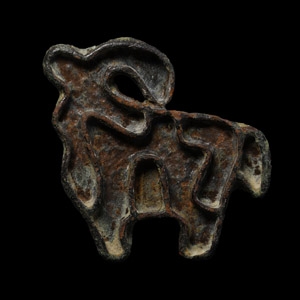
Central Asian Seal Pendant with Horned Quadruped
23rd-20th century B.C.Sold for (Inc. bp): £156
A bronze compartmented stamp seal pendant in the form of a horned quadruped, with suspension loop to reverse; accompanied by a typed and signed scholarly note by W.G. Lambert, the late Professor of Assyriology at the University of Birmingham, 1970-1993, which states: '...This has the shape of what is depicted: a standing horned quadruped looking upwards. The face is flat and compartmented. The back is also flat and has a loop handle with two grooves over it. This comes from west central Asia and dates to c.2300-2000 B.C. It is in very good condition and the metal has been conserved.' 11 grams, 38 mm
1980s-early 1990s collection, UK. Accompanied by an original typed and signed scholarly note issued by the late Professor W.G. Lambert. -
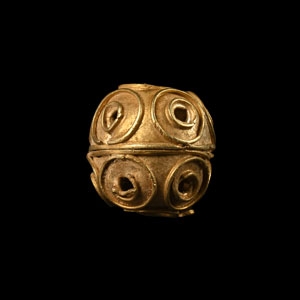
Western Asiatic Gold Filigree Bead
11th-12th century A.D.Sold for (Inc. bp): £72
An ovoid gold bead with filigree gold wire to the equator, five piercings to each hemisphere, each enclosed by concentric gold wire circlets, repeated at both terminals; hollow-formed. 0.82 grams, 10 mm
Acquired 1969-1999. London collection of the late Mr S.M., thence by descent. -
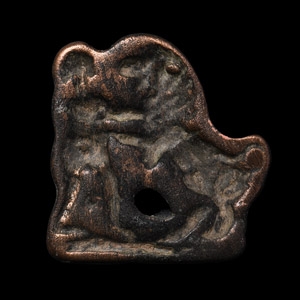
Central Asian Seal Pendant with Lion Attacking a Standing Figure
23rd-20th century B.C.Sold for (Inc. bp): £338
A copper-alloy stamp seal formed as a rearing lion grappling with a standing figure, suspension loop to reverse. 15.9 grams, 29 mm
1980s-early 1990s collection, UK.
