
Loading, please wait...
LOT 0211
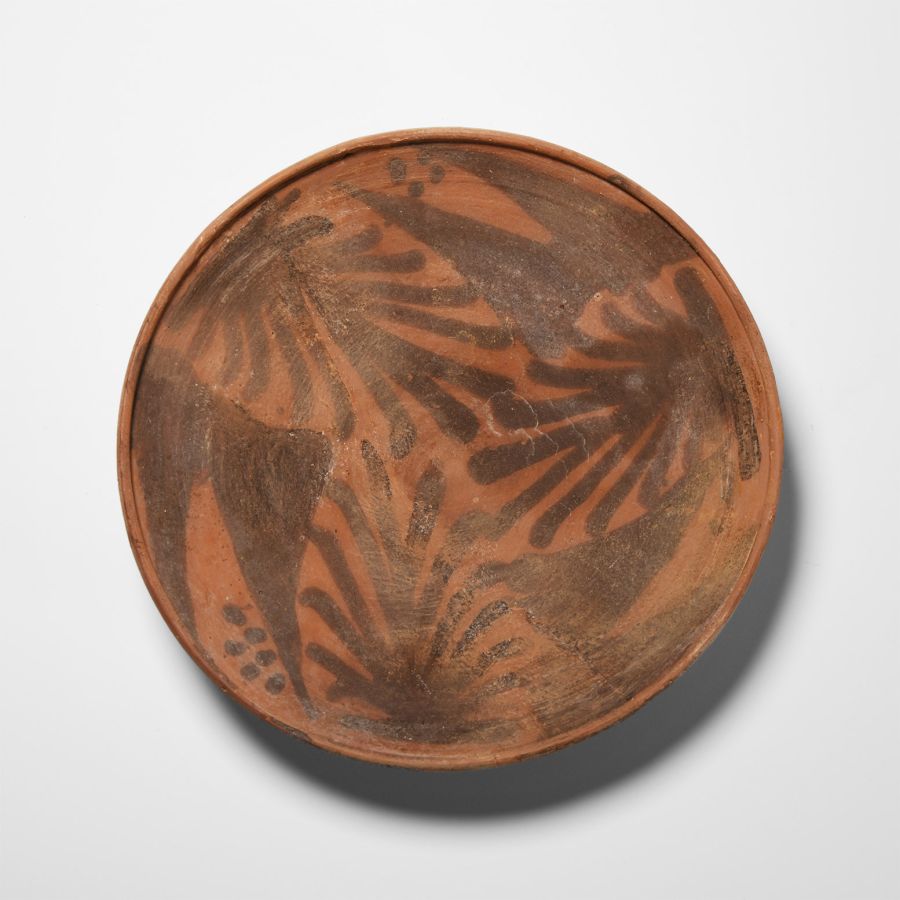
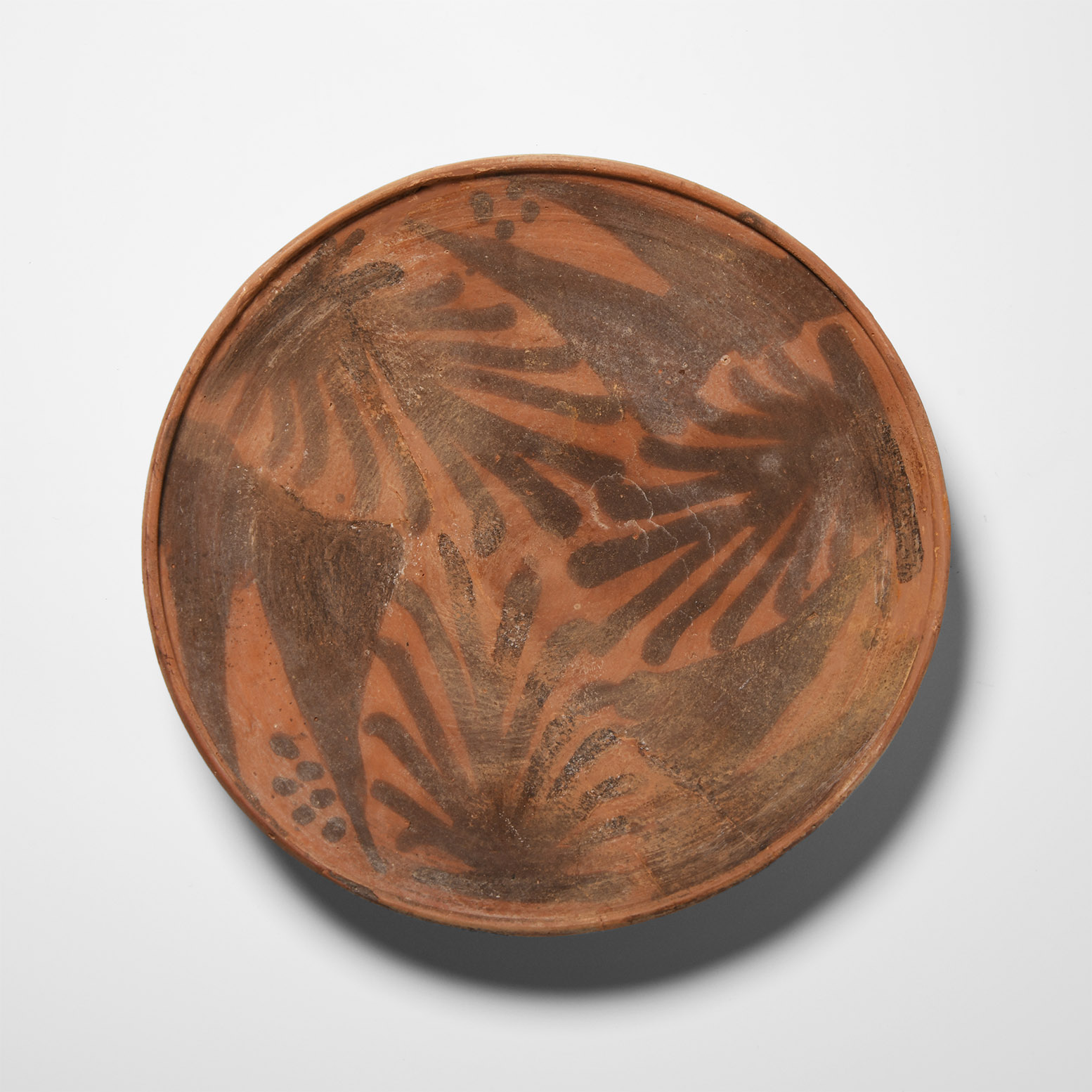
Nabataean Painted Dish
4TH CENTURY B.C.-1ST CENTURY A.D.
6 1/2 in. (117 grams, 16.5 cm wide).
A shallow terracotta dish with raised rim, painted design of fronds and triangles.
ProvenanceFrom an important collection of Holy Land pottery formed pre 1988, thence by descent.
CONDITIONTimeLine Auctions follows a vetting process to ensure the authenticity and legality of all items, reinforcing our commitment to integrity and responsible trading. Each antiquity, antique, and coin lot undergoes thorough examination by a vetting committee of at least ten external specialists, professional trade association members, scientists, and archaeologists: Our Vetting Process
AUCTIONS:
TimeLine is a leading auction house specialising in antiquities, ancient art, collectables, natural history, coins, medals, and books. Our auctions offer museums, collectors, historians, and enthusiasts the opportunity to acquire unique and historically significant pieces.
-
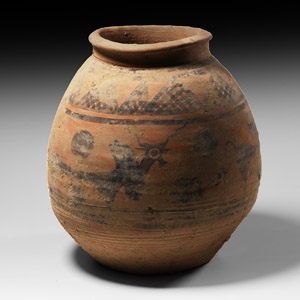
Western Asiatic Painted Vessel with Zebu
1st millennium B.C.Sold for (Inc. bp): £169
A piriform ceramic vessel with short neck and inverted rim, painted with hatched triangles over a frieze of processing zebu bulls with solid circles in the field. 380 grams, 20 cm high
Acquired 1980-2015. Ex Abelita family collection. -
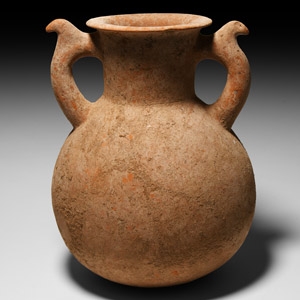
Amlash Terracotta Amphora
2nd-1st millennium B.C.Sold for (Inc. bp): £229
A finely modelled red terracotta amphora featuring a globular body rising from a flat base, a short neck, and a wide, flaring rim; two applied handles extending from the shoulder to the rim with bird-head detailing. 1 kg, 22 cm high
Fine condition.
Acquired 1970s-1990s. Ex Pars Gallery, Mayfair, London, UK. From a specialist collection of pottery. -
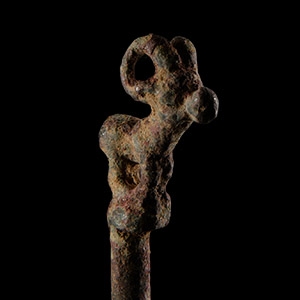
Luristan Pin with Mouflon Terminal
13th-7th century B.C.Sold for (Inc. bp): £78
A copper-alloy pin with a round-section stem, finial formed as a stylised mouflon modelled in the round. 56 grams, 22.5 cm
Acquired 1980-2015. Ex Abelita family collection.
