
Loading, please wait...
LOT 1020
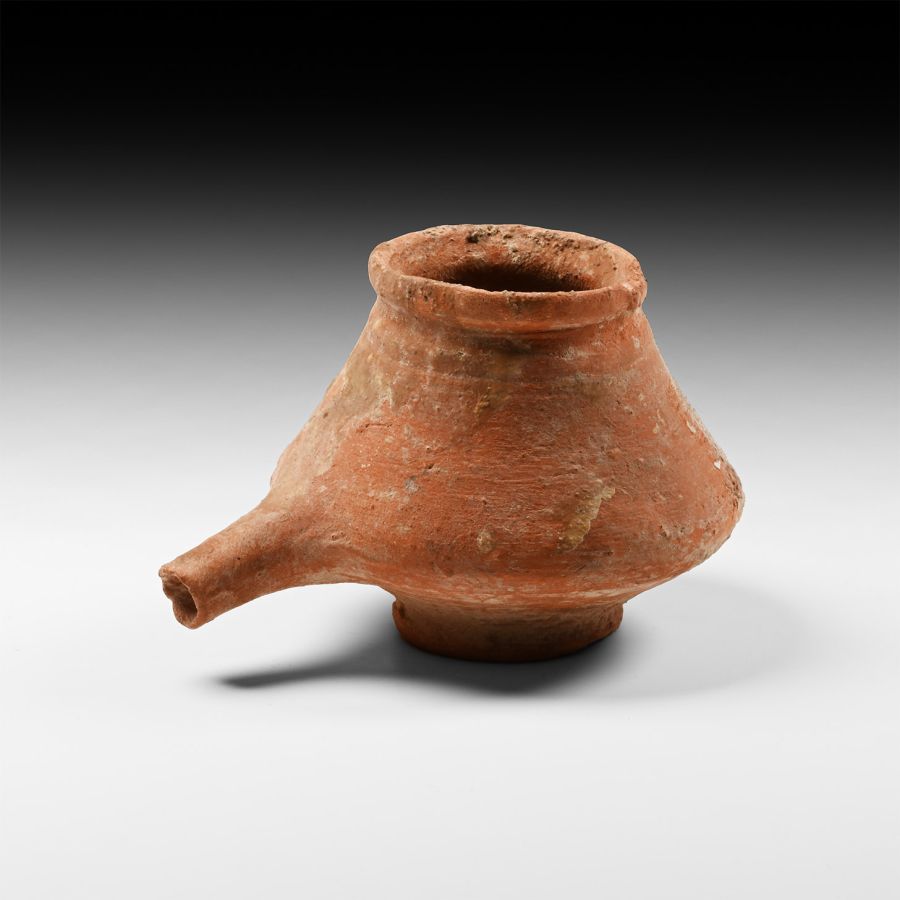
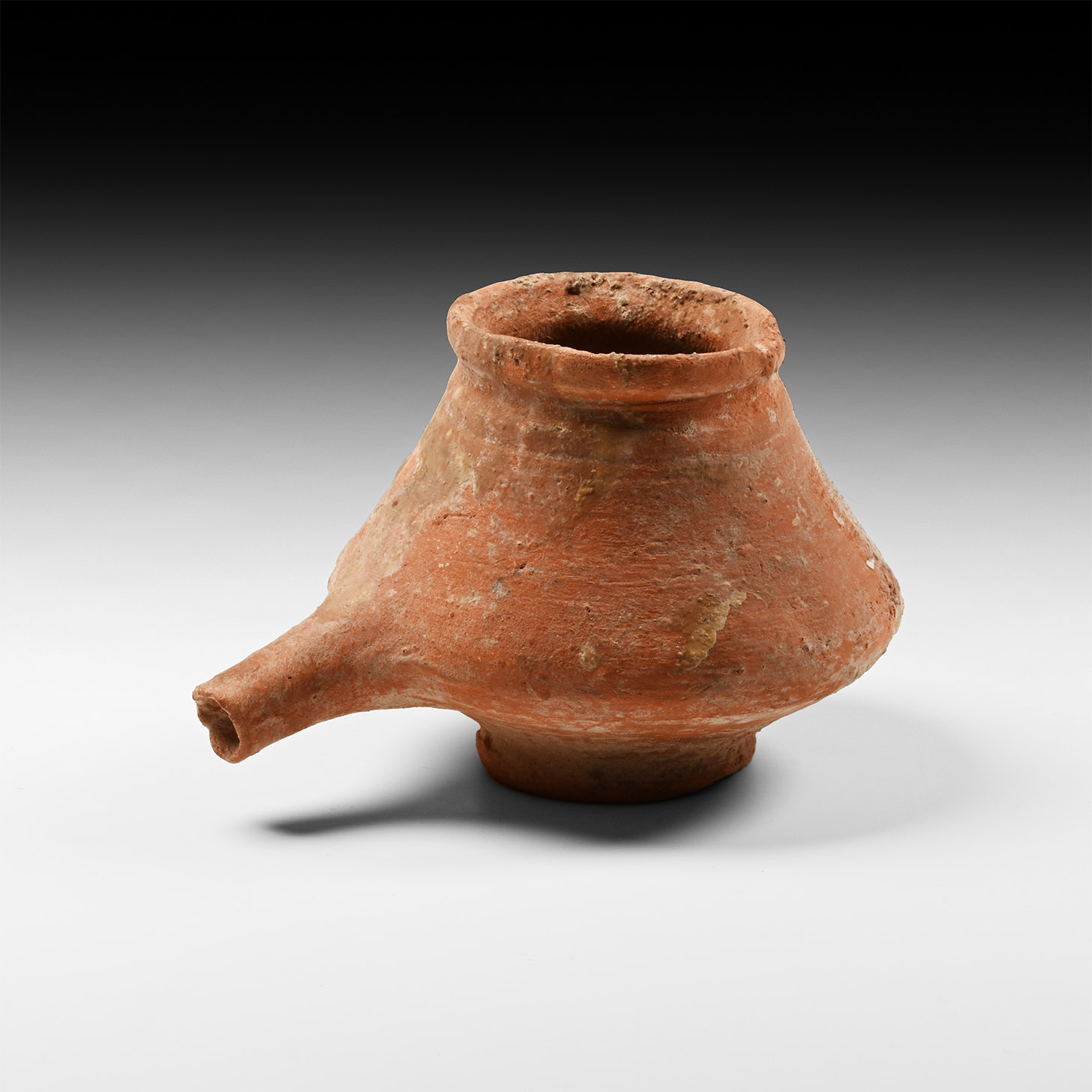
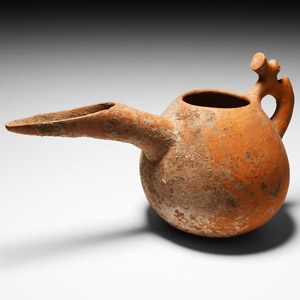
Nabataean Feeder Jar
1ST CENTURY B.C.-1ST CENTURY A.D.
3 in. (41 grams, 74 mm).
A squat terracotta vessel with carinated profile, ribbing to the lower body, open mouth, short spout.
ProvenanceFrom an important collection of Holy Land pottery formed pre 1988, thence by descent.
CONDITIONTimeLine Auctions follows a vetting process to ensure the authenticity and legality of all items, reinforcing our commitment to integrity and responsible trading. Each antiquity, antique, and coin lot undergoes thorough examination by a vetting committee of at least ten external specialists, professional trade association members, scientists, and archaeologists: Our Vetting Process
AUCTIONS:
TimeLine is a leading auction house specialising in antiquities, ancient art, collectables, natural history, coins, medals, and books. Our auctions offer museums, collectors, historians, and enthusiasts the opportunity to acquire unique and historically significant pieces.
-
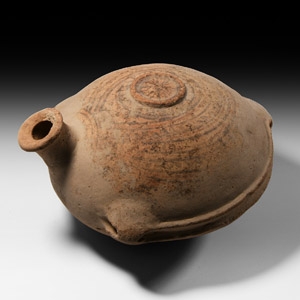
Western Asiatic Flask with Star Design
1st millennium B.C.Estimate: £150 - 200 (+bp*)
Opening Bid: £75
A ceramic flask of lentoid form with u-section medial channel incorporating three suspension lugs, short spout with rounded rim, central raised ring to the upper face decorated with a stylised star, the body with concentric roundels. 1.4 kg, 26 cm wide
Acquired 1980-2015. Ex Abelita family collection. -
Amlash Terracotta Vessel
2nd-1st millennium B.C.Estimate: £300 - 400 (+bp*)
Opening Bid: £167
Of zoomorphic form. 545 grams, 26.5 cm wide
Fine condition.
Acquired 1970s-1990s. Ex Rabi Gallery, Mayfair, London, UK. From a specialist collection of pottery.
Likely representing a wading bird. -
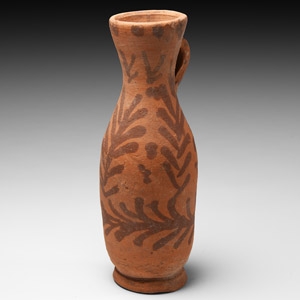
Nabataean Painted Jug
1st century B.C.-1st century A.D.Sold for (Inc. bp): £520
A small terracotta jug with strap handle above the shoulder, painted frond patterns to the body, shoulder and neck. 76 grams, 12.4 cm high
From an important collection of Holy Land pottery formed pre 1988, thence by descent.
