
Loading, please wait...
LOT 0827
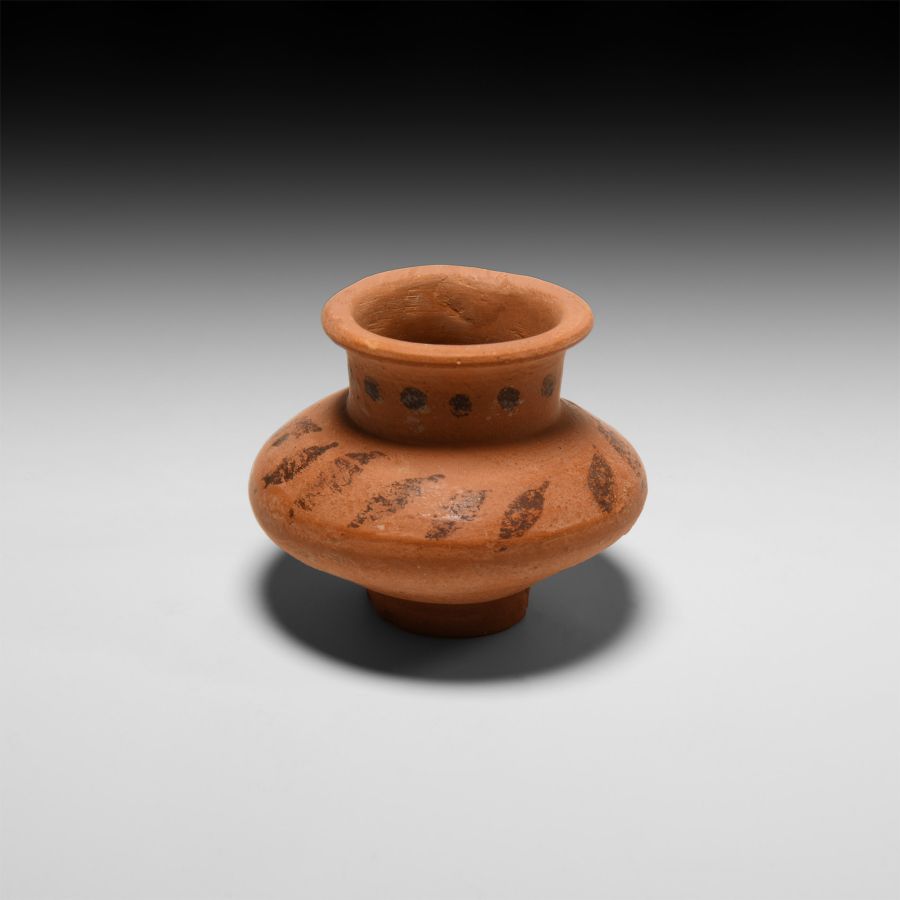
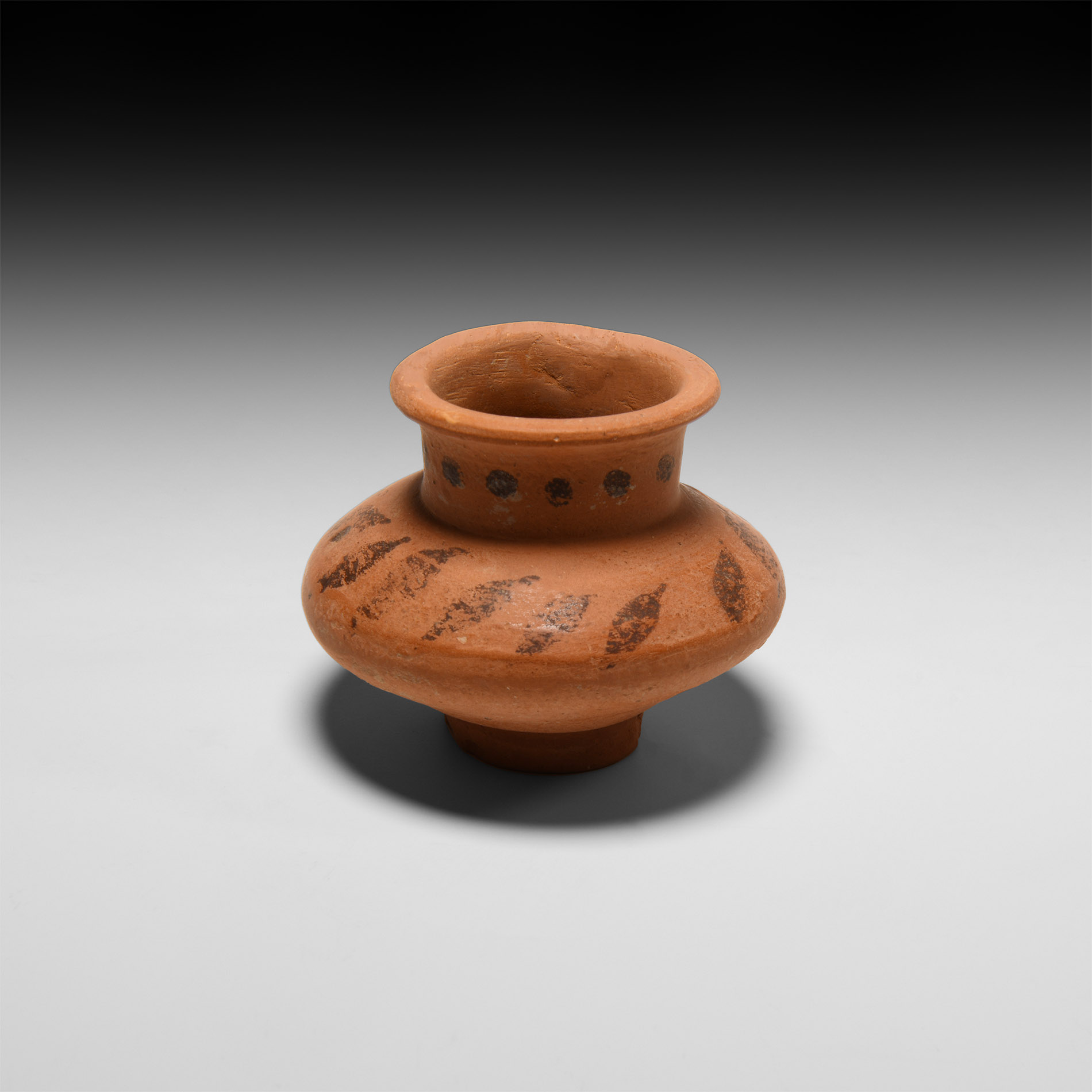
Nabataean cosmetic Jar
1ST CENTURY B.C.-1ST CENTURY A.D.
2 1/4 in. (36 grams, 56 mm wide).
A miniature ceramic jar with a squat body, broad neck with everted rim and plinth foot, painted band of dots around the neck and stylised leaf motif around the shoulder.
ProvenanceFrom an important collection of Holy Land pottery formed pre 1988, thence by descent.
CONDITIONTimeLine Auctions follows a vetting process to ensure the authenticity and legality of all items, reinforcing our commitment to integrity and responsible trading. Each antiquity, antique, and coin lot undergoes thorough examination by a vetting committee of at least ten external specialists, professional trade association members, scientists, and archaeologists: Our Vetting Process
AUCTIONS:
TimeLine is a leading auction house specialising in antiquities, ancient art, collectables, natural history, coins, medals, and books. Our auctions offer museums, collectors, historians, and enthusiasts the opportunity to acquire unique and historically significant pieces.
LOT 0827
Nabataean cosmetic Jar
Estimate £150 - 200€170 - 230 (for guidance only)$200 - 270 (for guidance only)
-
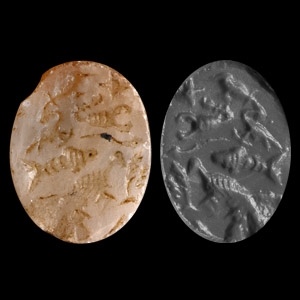
Western Asiatic Gemstone with Myriad of Animals
Late 1st millennium B.C.Estimate: £180 - 240 (+bp*)
Opening Bid: £100
A plano-convex chalcedony engraved with fish, birds, a scorpion and other animals to base, together with a lone star and possible bust; accompanied by a museum-quality impression. 4.5 grams, 21 mm
Fine condition.
Acquired 1980-2000s. Important collection of a London gentleman. -
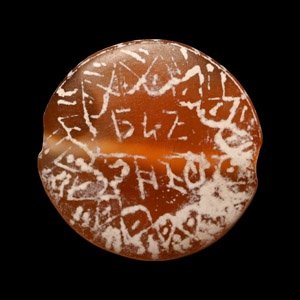
Western Asiatic Bifacial Carnelian Bead with Hebrew Legend
Circa late 1st millennium B.C.Sold for (Inc. bp): £260
A bifacial carnelian coin bead displaying etched Hebrew text within a geometric frame; drilled for suspension. 6.28 grams, 24 mm
Acquired 1969-1999. London collection of the late Mr S.M., thence by descent. -
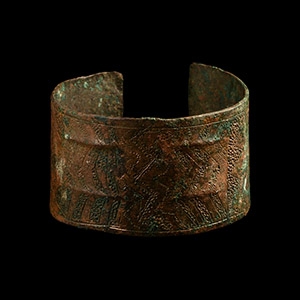
Western Asiatic Decorated Bracelet
1st millennium B.C.Sold for (Inc. bp): £52
A flat-section penannular bronze bracelet, incised with geometric motifs composed of chevrons, lozenges, pricked dots and hatching; pierced terminals. 47 grams, 58 mm
Early 1990s London collection. Acquired on the UK art market. From a private collection, Lancashire, UK.
