
Loading, please wait...
LOT 0278
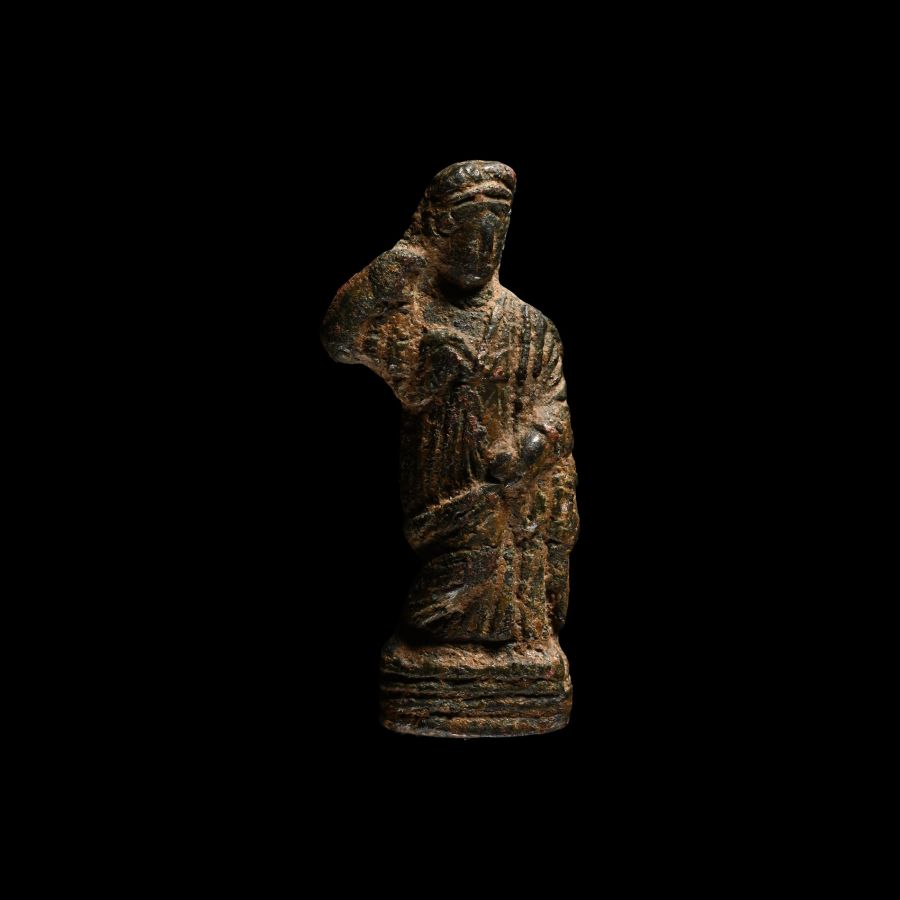
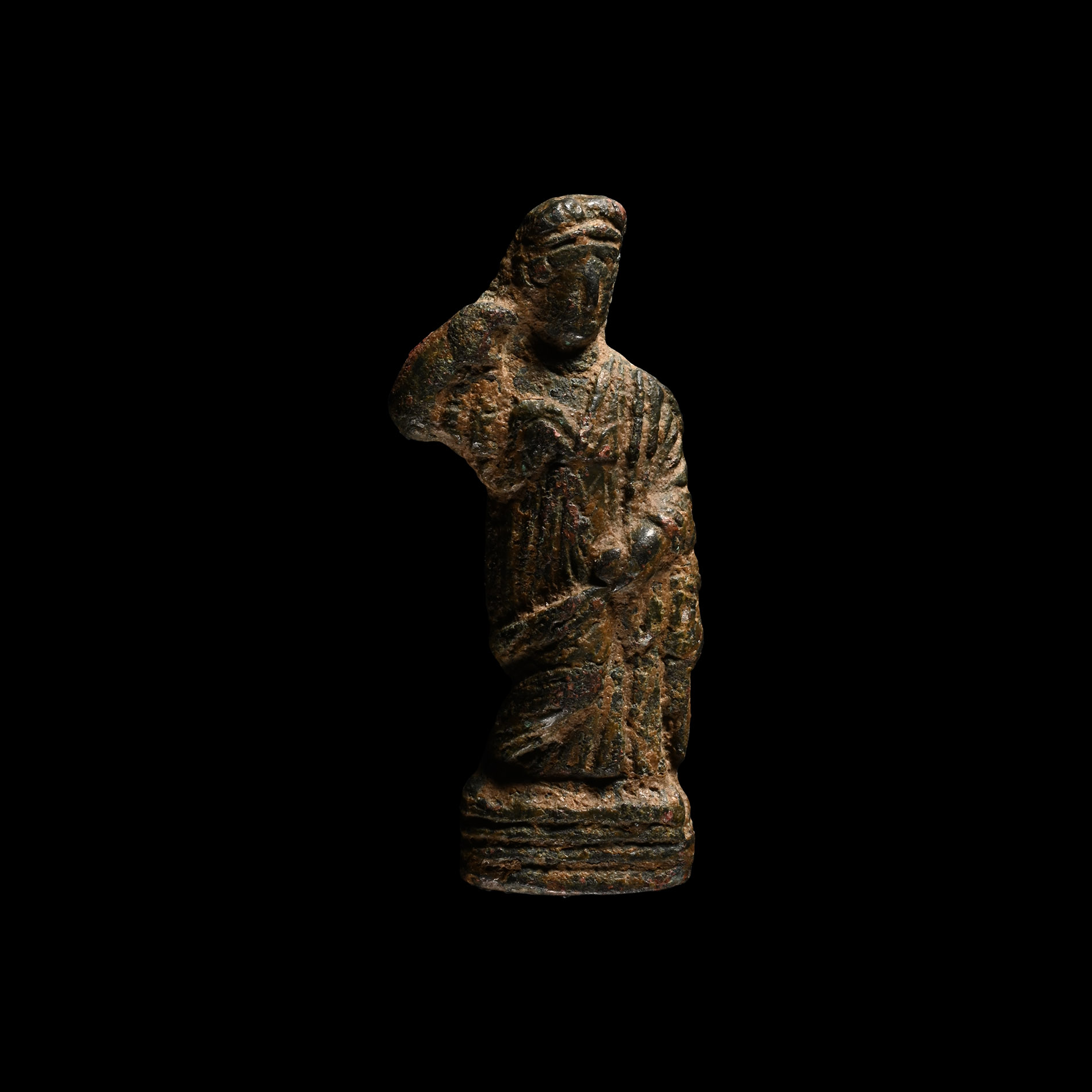
Nabataean Bronze Female Statuette
CIRCA 2ND CENTURY B.C.-1ST CENTURY A.D.
1 7/8 in. (28 grams, 47 mm).
Standing on a tiered base with loosely draped palla gathered across her body and held in the let hand at the waist, right hand raised to her hair.
ProvenanceFrom a private collection formed in the 1990s.
Ex London, UK, gallery.
Cf. Mahdi Alzoubi, Eyad al Masri and Fardous al Ajlouny, Woman in the Nabatean Society, Zarqa, 2012, fig. 3.
CONDITIONTimeLine Auctions follows a vetting process to ensure the authenticity and legality of all items, reinforcing our commitment to integrity and responsible trading. Each antiquity, antique, and coin lot undergoes thorough examination by a vetting committee of at least ten external specialists, professional trade association members, scientists, and archaeologists: Our Vetting Process
AUCTIONS:
TimeLine is a leading auction house specialising in antiquities, ancient art, collectables, natural history, coins, medals, and books. Our auctions offer museums, collectors, historians, and enthusiasts the opportunity to acquire unique and historically significant pieces.
LOT 0278
Nabataean Bronze Female Statuette
Estimate £400 - 600€460 - 700 (for guidance only)$540 - 810 (for guidance only)
-
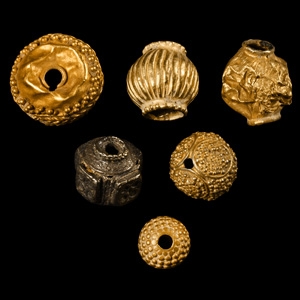
Ancient Gold Bead Collection
Circa 1st millennium B.C.Sold for (Inc. bp): £286
Mixed group comprising three granulated and three collared beads. 3.02 grams total, 5-9 mm
From an old London, UK, collection. Some formerly in the private London collection of the late Mr SM, 1979-1999; thence by descent. -
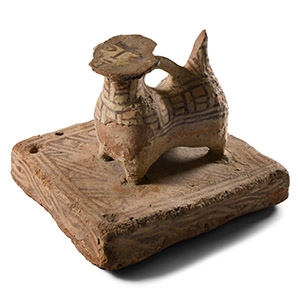
Western Asiatic Painted Ceramic Animal on Base
Circa 9th-12th century A.D.Estimate: £400 - 600 (+bp*)
Opening Bid: £200
Feline with stocky body, erect tail, thick neck developing to a flat head, loop handle from the shoulder to the rump; painted with bands of geometric designs, facial detailing to the head; mounted on a hollow rectangular block with painted hatching to the upper face and edges. 1.46 kg, 16.5 cm wide
From the Steel family collection, 1950s-late 1990s. -
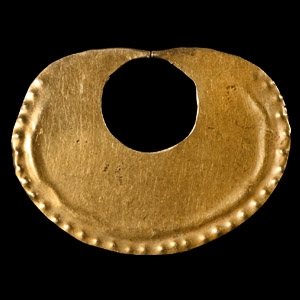
Large Western Asiatic Gold Lunar Pendant
Circa 2nd-1st millennium B.C.Sold for (Inc. bp): £546
Shaped as a crescent moon with pearled border. 5.08 grams, 45 mm
Acquired 1980-2015. Ex Abelita family collection.
The gold lunula was a characteristic type of necklace, collar, or crescent-shaped pendant of the late Neolithic, Chalcolithic, and most often early Bronze Age. The crescent appears in various forms in the material culture of the southern Levant. It also appears in Mesopotamian and Egyptian iconography. It is most frequently associated with the crescent moon and its related deity. Such pendants were worn at the neck, in contact with the body, as protective amulets.
