
Loading, please wait...
LOT 0064
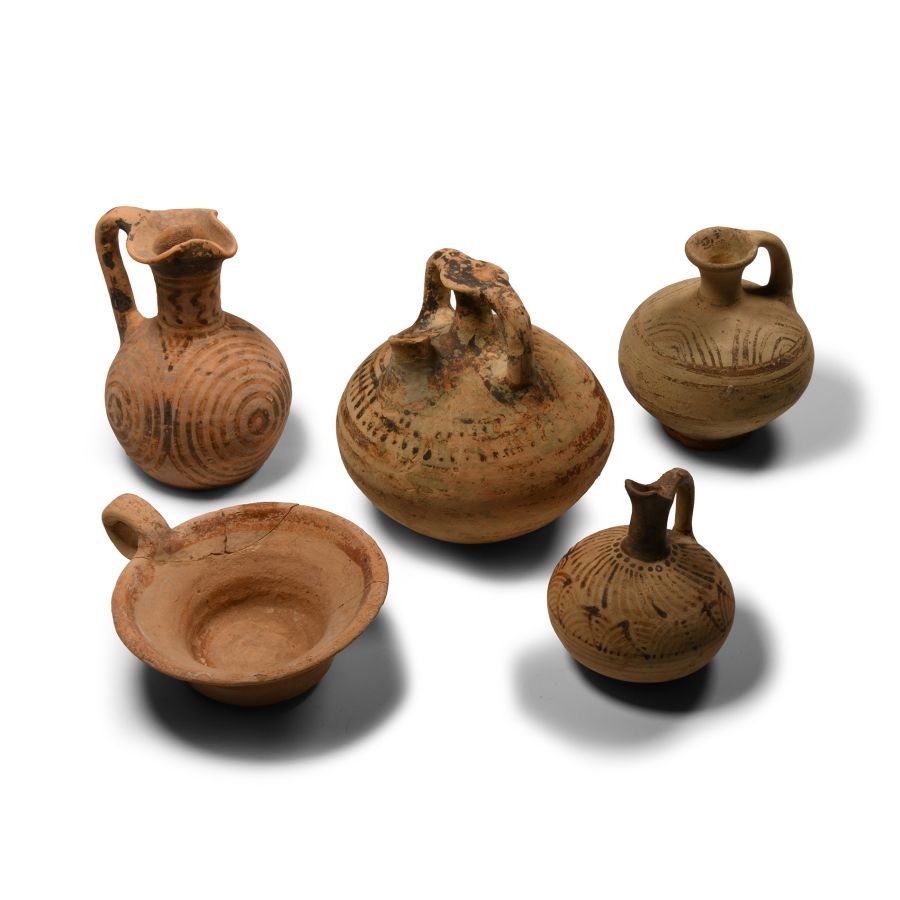
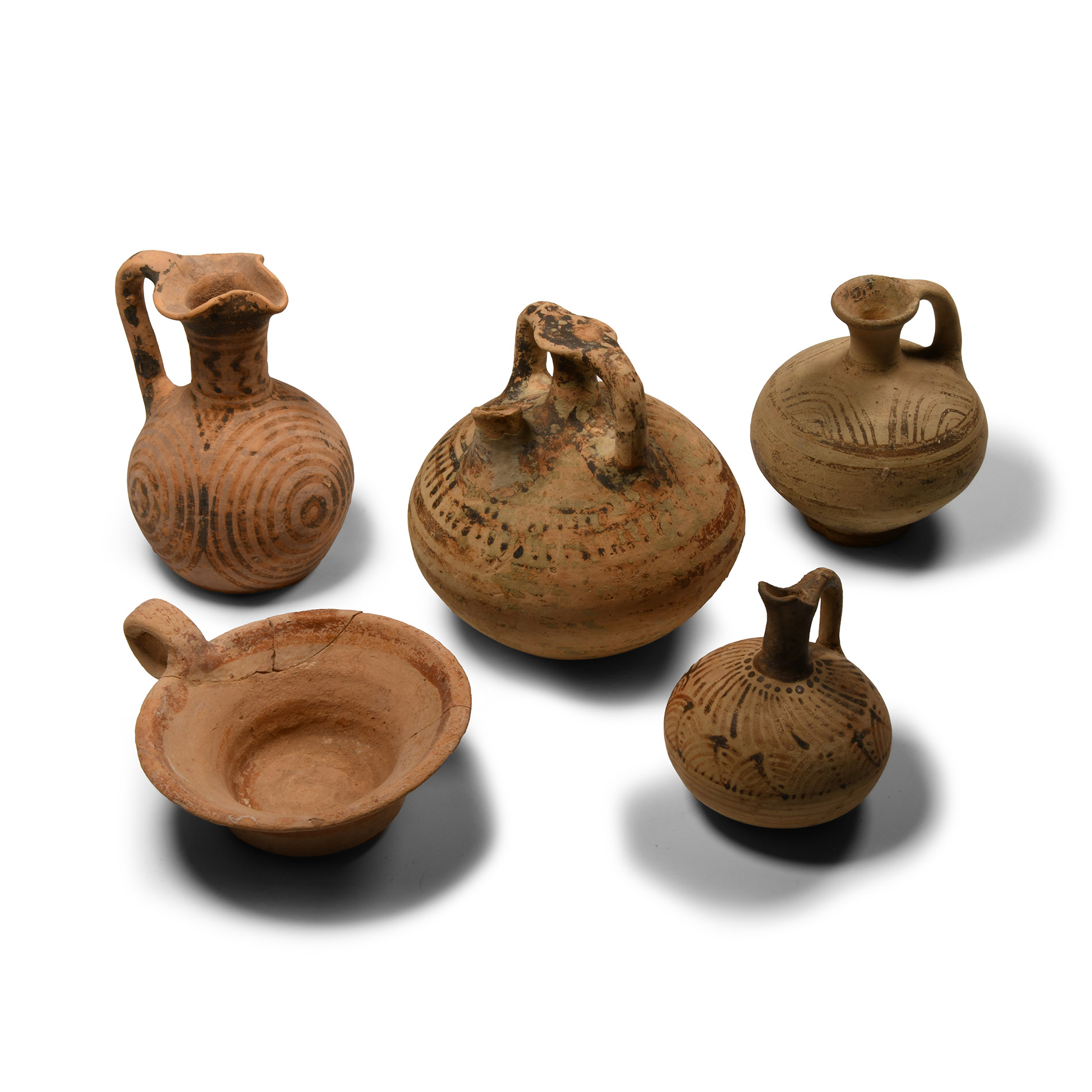
Mycenaean Terracotta Vessel Collection
12TH-11TH CENTURY B.C.
3 1/4 - 5 in. (693 grams total, 8.3-12.6 cm).
Comprising: a stirrup jar; trefoil jug; a jar; juglet and handled dish or cup; all decoratively painted with geometric designs; some repairs. [5]
Provenancewith Sotheby's, 13 December 1990, lot 217.
CONDITIONTimeLine Auctions follows a vetting process to ensure the authenticity and legality of all items, reinforcing our commitment to integrity and responsible trading. Each antiquity, antique, and coin lot undergoes thorough examination by a vetting committee of at least ten external specialists, professional trade association members, scientists, and archaeologists: Our Vetting Process
AUCTIONS:
TimeLine is a leading auction house specialising in antiquities, ancient art, collectables, natural history, coins, medals, and books. Our auctions offer museums, collectors, historians, and enthusiasts the opportunity to acquire unique and historically significant pieces.
-
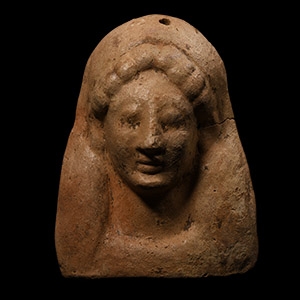
Greek Terracotta Protome Mask
Circa 4th-3rd century B.C.Sold for (Inc. bp): £182
Large D-shaped curved panel with female bust including detailed hairstyling. 194 grams, 13 cm
Acquired 1970s-1996. Property of a North American collector. London collection, 2016. -
.jpg)
Cypriot Terracotta Goddess Figurine
Late 2nd millennium B.C.Sold for (Inc. bp): £1,690
With columnar body and flared base, arms raised, applied domed breasts, pinched facial features with applied mouth and ears; applied band to the brow for the hair or headdress; remains of coral-pink painted detailing. 299 grams, 20.2 cm
From the collection of French scholar and diplomat Auguste Dozon (1822-1890). Subsequently Hotel Des Ventes Monte Carlo, 6th May 2018, lot 7. With French cultural property passport. -
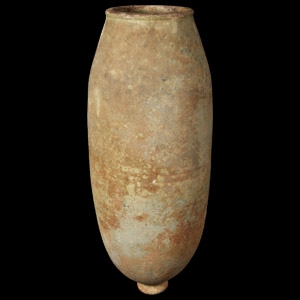
Parthian Blue Glazed Amphora-Type Vessel
2nd century B.C.-1st century A.D. or laterEstimate: £500 - 700 (+bp*)
Opening Bid: £200
The buff, capsule-shaped body with a tapering shoulder and pronounced rim, knop-shaped foot and remains of glaze to the mouth. 4.1 kg, 42.5 cm
London, UK, gallery, 1971-early 2000s.
