
Loading, please wait...
LOT 0044
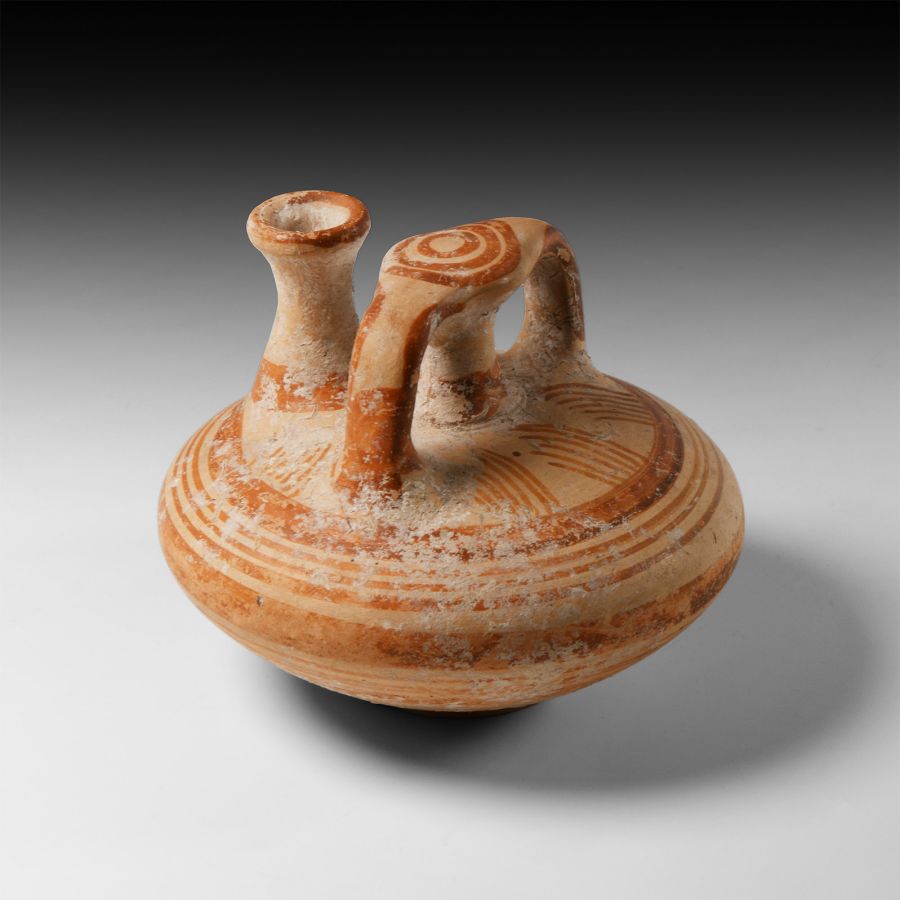
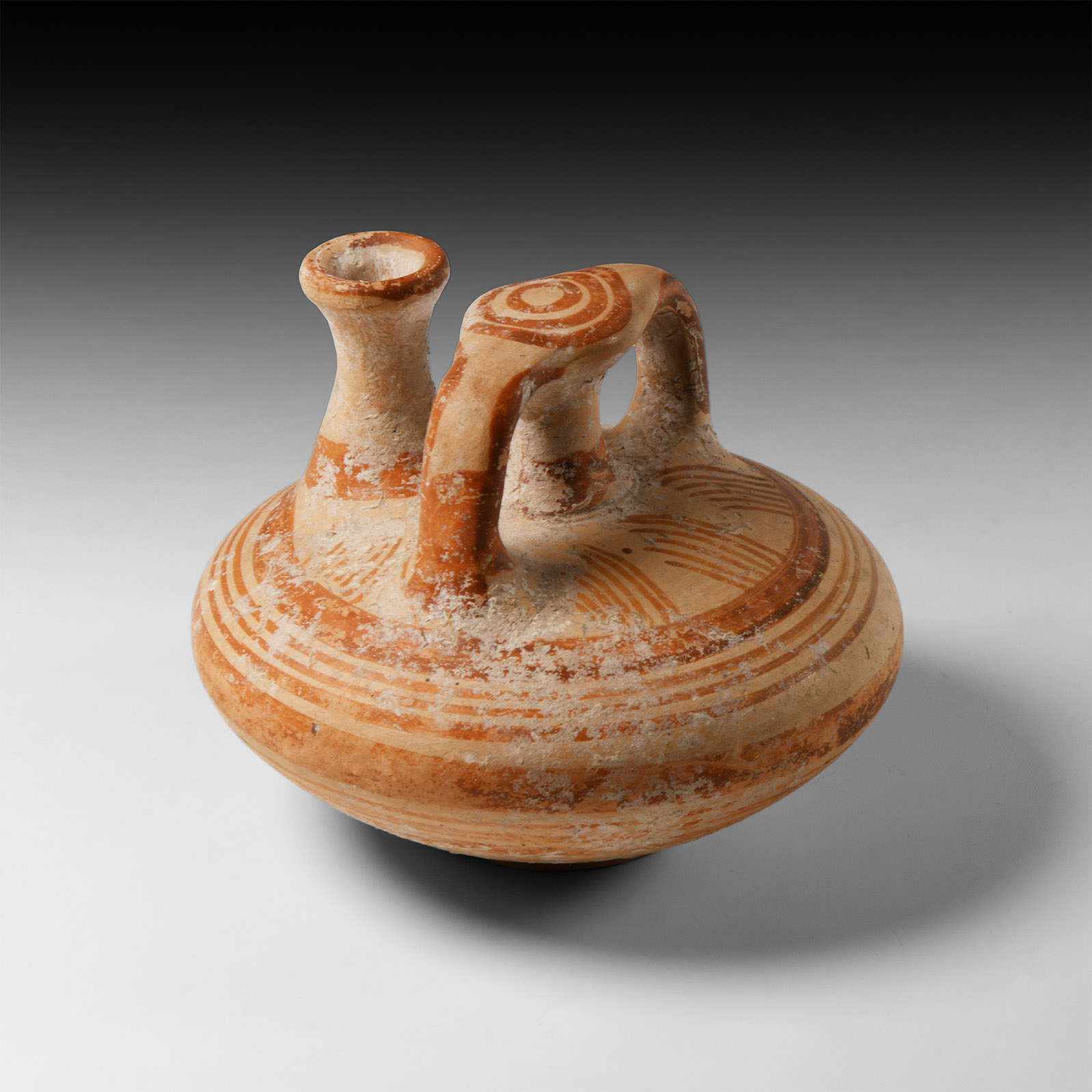
Mycenaean Pottery Stirrup Jar
1400-1200 B.C.
3 1/2 in. (154 grams, 91 mm wide).
A pottery vessel formed with a squat carinated body, slender waisted neck and similar central stem with two flanking handles; painted geometric ornament composed of concentric bands and clusters of lines.
Provenancewith Christie's, London, South Kensington, 12 December 1989, lot 220.
LiteratureCf. The Metropolitan Museum, New York, accession numbers 74.51.5905 and 74.51.768, for similar.
CONDITIONTimeLine Auctions follows a vetting process to ensure the authenticity and legality of all items, reinforcing our commitment to integrity and responsible trading. Each antiquity, antique, and coin lot undergoes thorough examination by a vetting committee of at least ten external specialists, professional trade association members, scientists, and archaeologists: Our Vetting Process
AUCTIONS:
TimeLine is a leading auction house specialising in antiquities, ancient art, collectables, natural history, coins, medals, and books. Our auctions offer museums, collectors, historians, and enthusiasts the opportunity to acquire unique and historically significant pieces.
-
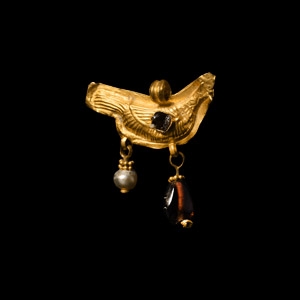
Greek Gold Bird Pendant with Garnet and Pearl Drop
5th-3rd century B.C.Estimate: £450 - 650 (+bp*)
Opening Bid: £250
A gold pendant composed of a bifacial zoomorphic body in the form of a bird, with detailing to the head and feathers; circular cell to one face containing possible remains of black glass; two dangles below, one featuring a granulated gold bead above a pearl bead, the other a granulated gold bead and a polished garnet stone; ribbed suspension loop above; a marriage. 2.29 grams, 26 mm
Fine condition.
Acquired 1970-2010. Collection of a late Japanese gentleman. -
.jpg)
Greek Marble Head of a Female
4th-1st century B.C.Sold for (Inc. bp): £715
A head of a female carved in white marble, modelled in the round with semi-naturalistic facial features and hair tied back into a chignon at the nape of the neck. 163 grams, 59 mm high
Acquired early 1990s. Ex private American collection; thence by descent. Private collection since 1998. -
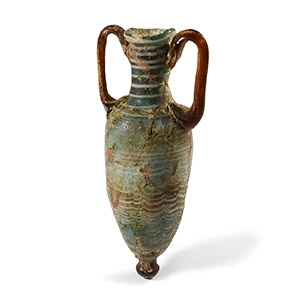
Greek Festooned Glass Amphoriskos
2nd-1st century B.C.Sold for (Inc. bp): £1,404
An aqua coloured amphoriskos with an elongated piriform shape and tubular neck with everted rim, handles and knop foot applied using a contrasting aubergine-coloured glass; decorative white trails and festooning to the body and neck; repaired. 124 grams, 14.4 cm high
Acquired early 1990s. Ex private American collection; thence by descent. Private collection since 1998.
