
Loading, please wait...
LOT 0083
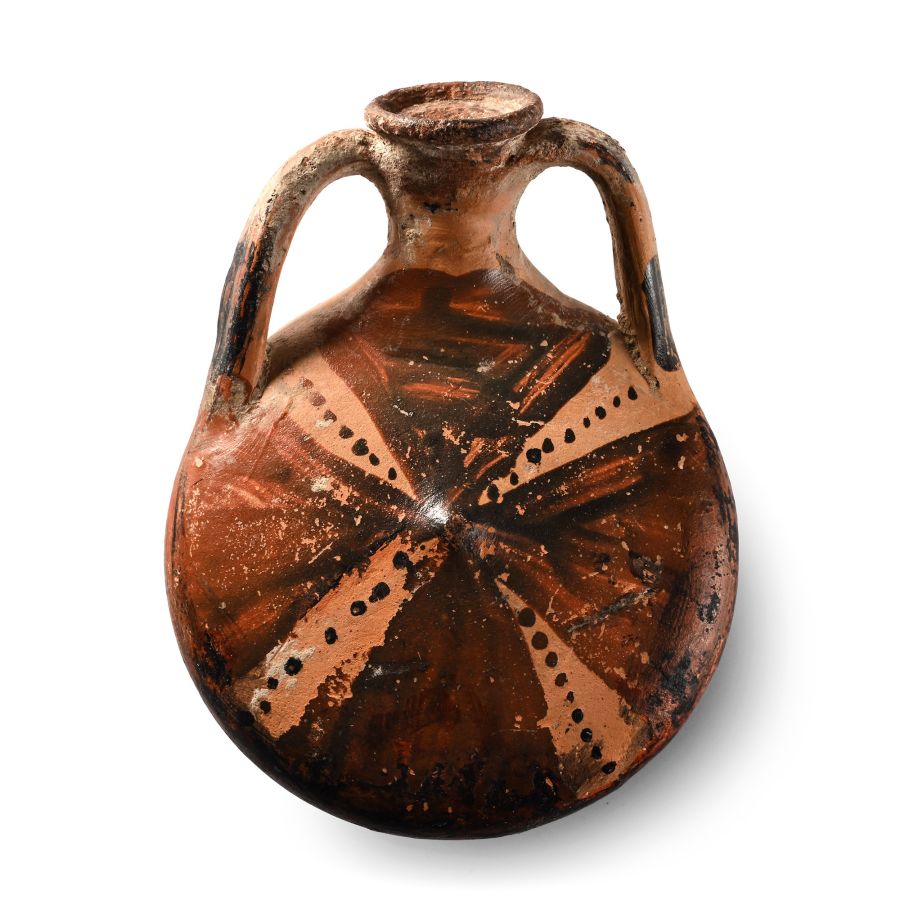
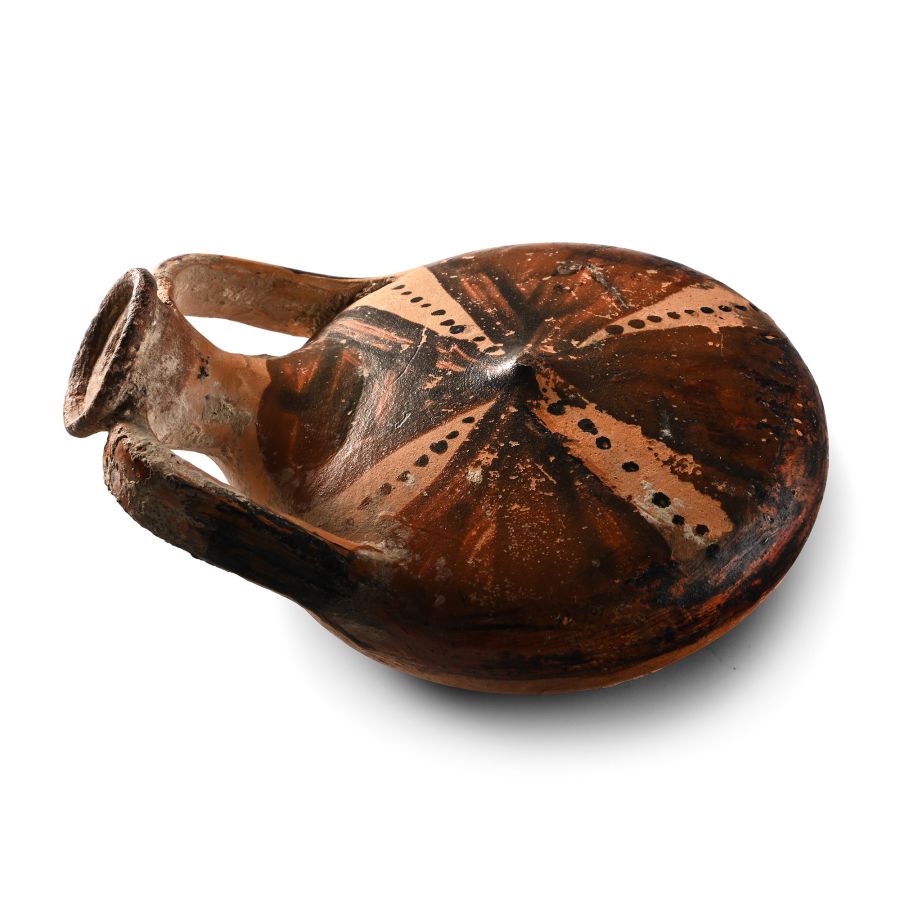
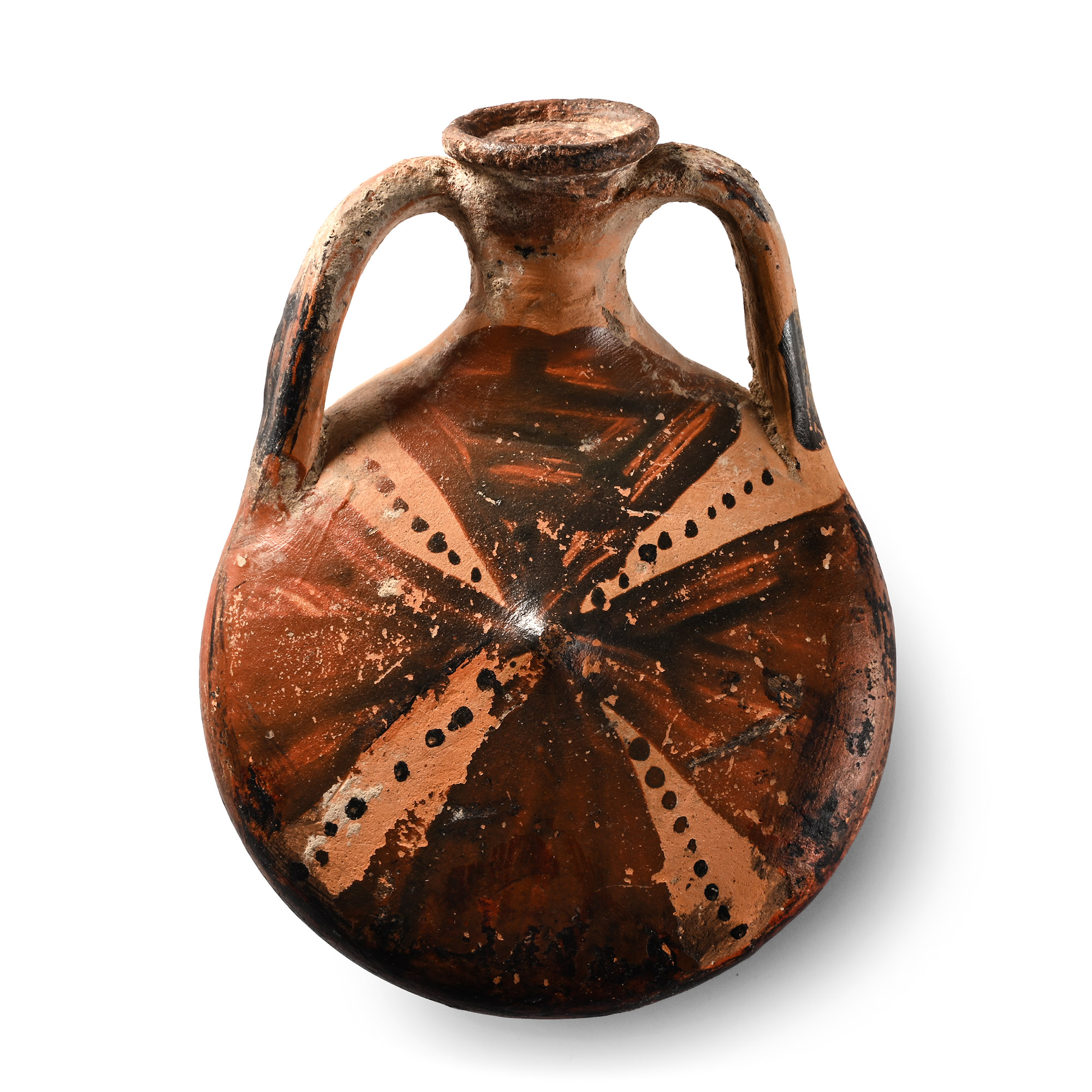
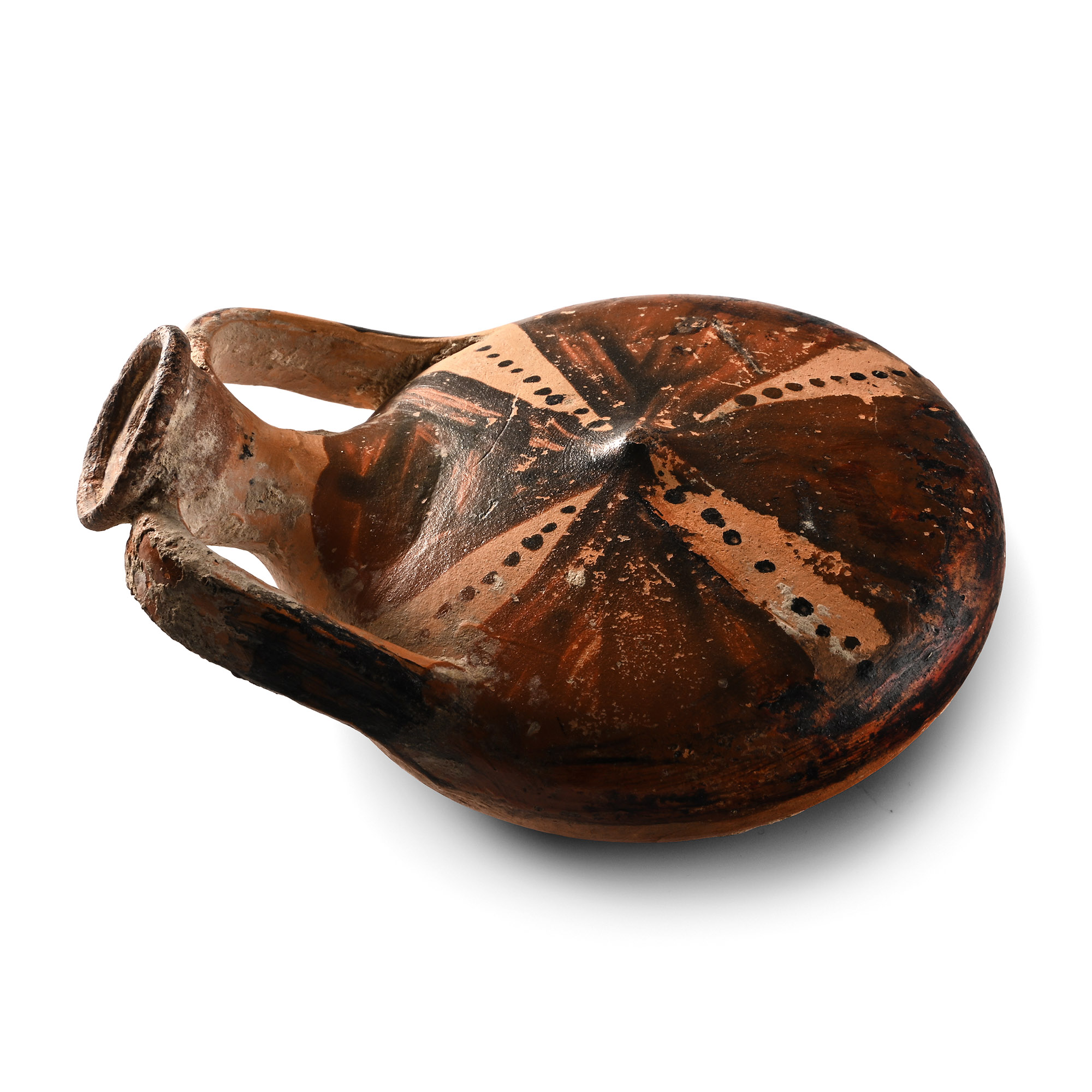
Mycenaean Painted Pottery Flask
14TH-13TH CENTURY B.C.
4 3/8 in. (132 grams, 11.1 cm).
Comprising a circular body with a rounded base and two strap handles, a short neck with an everted rim; the body with a painted expanding cross motif with the arms separated by a band of pellets.
ProvenancePrivate collection, Switzerland, acquired in the 1994.
Private family collection since the late 1990s.
Accompanied by an academic report by Dr Raffaele D'Amato.
This lot has been checked against the Interpol Database of stolen works of art and is accompanied by search certificate number no.13018-246795.
Cf. Karageorghis, V., Cipro, Crocevia del Mediterraneo Orientale, 1500-500 d.C., Milano, 2002, p.46, figs.86-88, for similar pottery.
FootnotesMycenaean ceramics were influenced by Minoan shapes and decorative styles from the late Middle Helladic period. This close relationship – likely accompanied by the development of shared cultural practices and etiquette – creates the hypothesis that pilgrim flasks were introduced to Greece via Crete. Pilgrim flasks were produced in Mycenaean contexts from the Late Helladic IIA:1 period (1420-1390 B.C.).
CONDITIONTimeLine Auctions follows a vetting process to ensure the authenticity and legality of all items, reinforcing our commitment to integrity and responsible trading. Each antiquity, antique, and coin lot undergoes thorough examination by a vetting committee of at least ten external specialists, professional trade association members, scientists, and archaeologists: Our Vetting Process
AUCTIONS:
TimeLine is a leading auction house specialising in antiquities, ancient art, collectables, natural history, coins, medals, and books. Our auctions offer museums, collectors, historians, and enthusiasts the opportunity to acquire unique and historically significant pieces.
LOT 0083
Mycenaean Painted Pottery Flask
Estimate £1,500 - 2,000€1,740 - 2,320 (for guidance only)$2,030 - 2,700 (for guidance only)
-
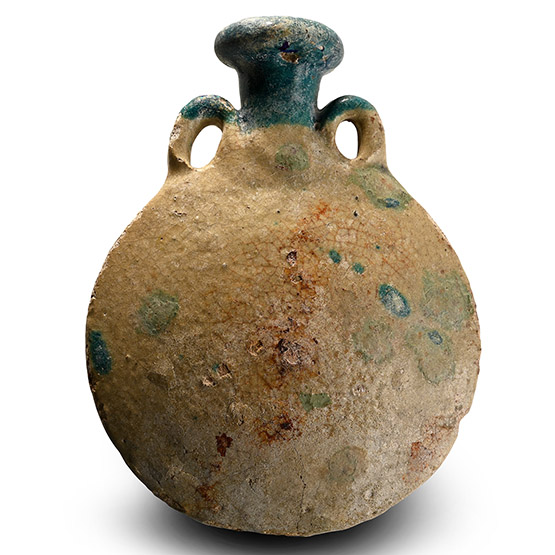
Parthian Blue Glazed Water Vessel
2nd century B.C.Estimate: £400 - 600 (+bp*)
Opening Bid: £160
Discoid body and short tubular neck with everted rim, two loop handles. 561 grams, 19.2 cm
Ex London, UK gallery, 1971-early 2000s. Private collection, London. -
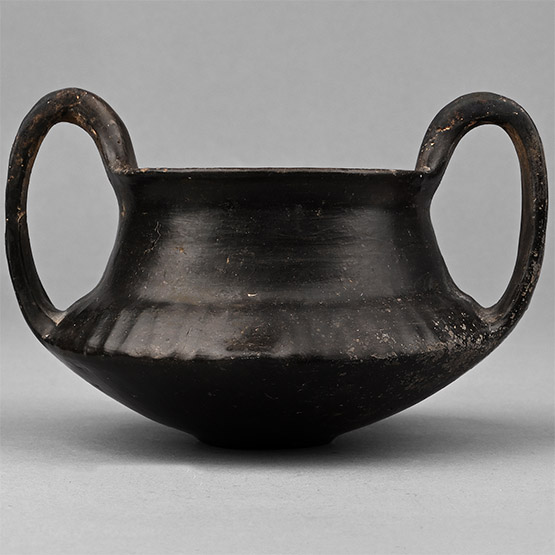
Two-handled Villanova Bowl
8th-7th century B.C.Sold for (Inc. bp): £572
A squat vessel with a small base, raised neck and slightly projecting rim, carinated shoulder with two projecting bosses and a pair of high strap handles. 221 grams, 13.4 cm wide
Old Basel private collection. Elsa Bloch-Diener, Antike Kunst, Bern, 27 July 1990. Private collection, Bern, Switzerland. Private collection, UK. -
.jpg)
Eastern Greek Bronze Ring with Bull
5th century B.C.Sold for (Inc. bp): £1,690
Ellipsoid bezel with incuse profile figure of a bull, frond above. 6.02 grams, 23.53 mm overall, 19.02 x 17.78 mm internal diameter (approximate size British Q 1/2, USA 8 1/4, Europe 18.12, Japan 17)
English art market, 2022. Private collection, England.
