
Loading, please wait...
LOT 0069
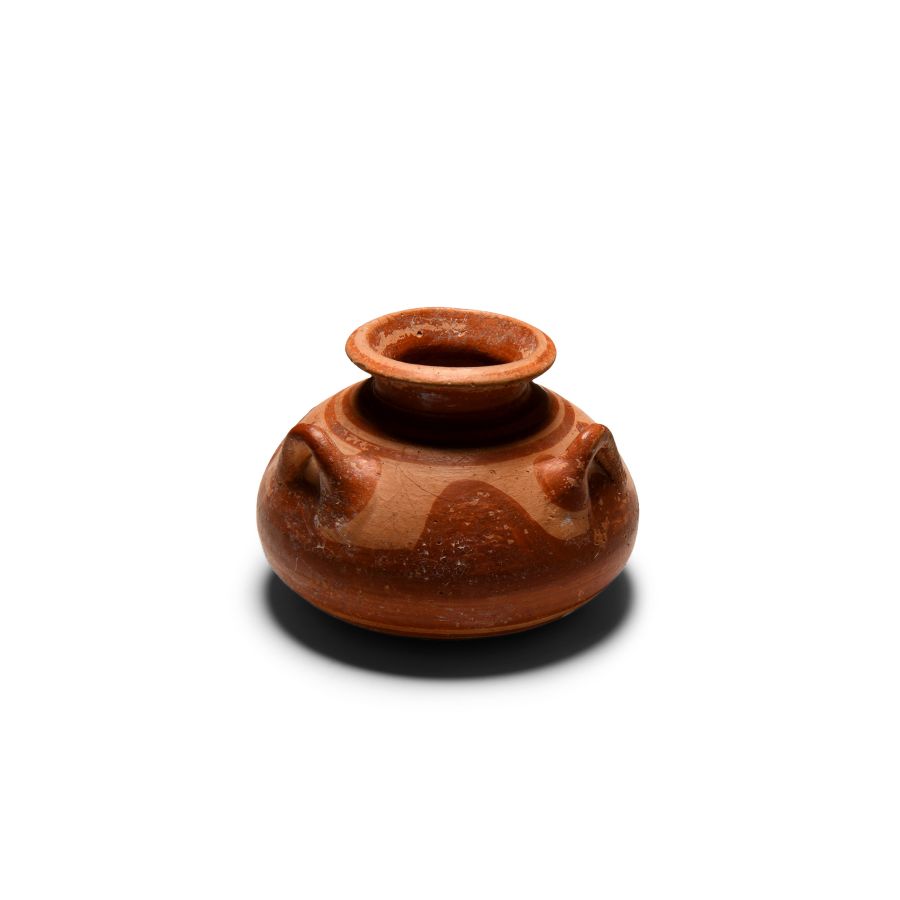
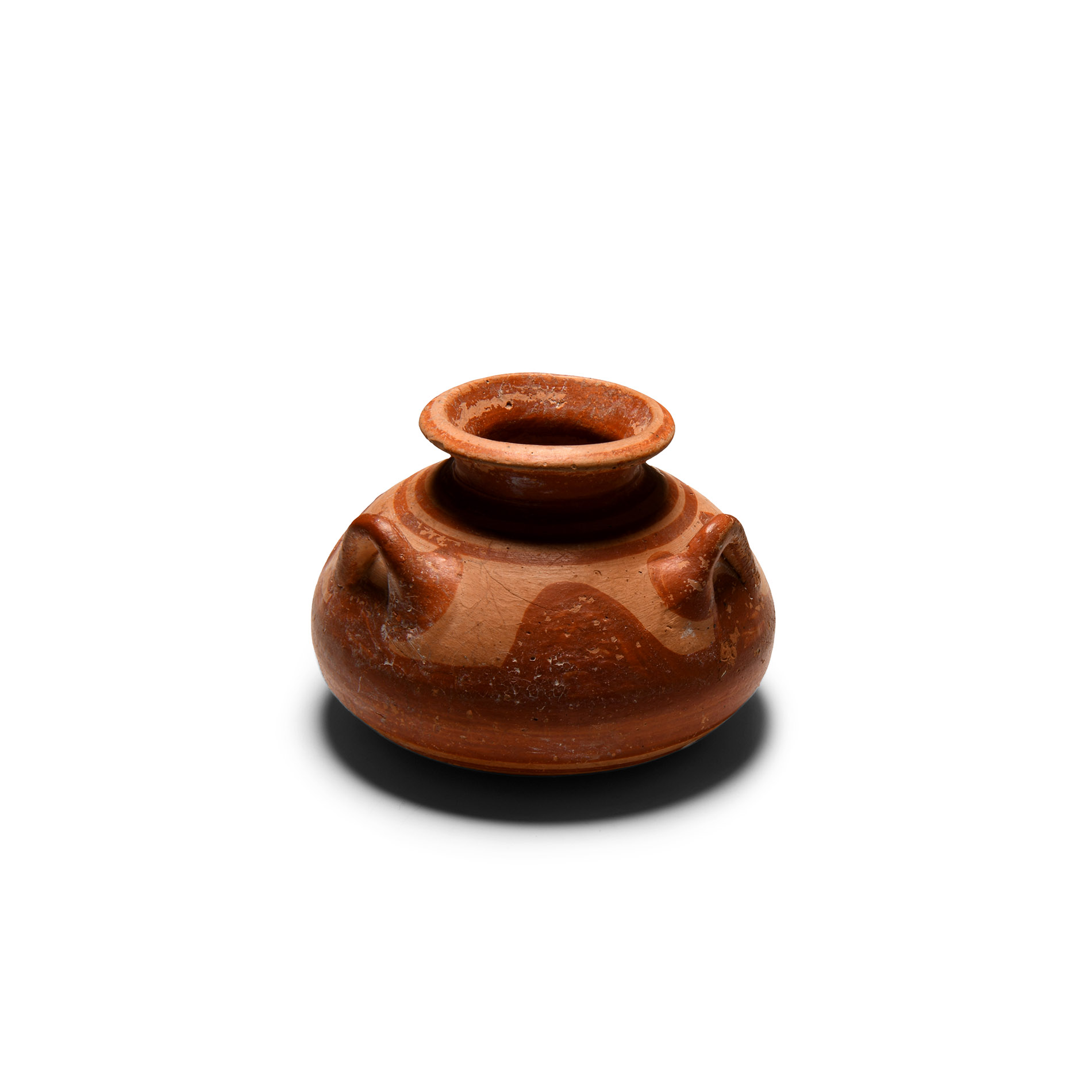
Mycenaean Painted Pottery Alabastron
14TH-13TH CENTURY B.C.
2 3/4 in. (70 grams, 69 mm).
Formed with a squat globular body, everted rim and three lug handles to the shoulder; painted reddish-brown over a cream slip with concentric bands and rings to the mouth, neck, shoulder and base, larger solid undulating forms covering the lower body.
ProvenanceAcquired from Royal Athena Gallery, 2003.
This lot has been checked against the Interpol Database of stolen works of art and is accompanied by search certificate number no.11851-206833.
Cf. Sadberk Hanım Museum, Istanbul, for a very similar example.
FootnotesLate Helladic IIIA period of Mycenaean culture.
CONDITIONTimeLine Auctions follows a vetting process to ensure the authenticity and legality of all items, reinforcing our commitment to integrity and responsible trading. Each antiquity, antique, and coin lot undergoes thorough examination by a vetting committee of at least ten external specialists, professional trade association members, scientists, and archaeologists: Our Vetting Process
AUCTIONS:
TimeLine is a leading auction house specialising in antiquities, ancient art, collectables, natural history, coins, medals, and books. Our auctions offer museums, collectors, historians, and enthusiasts the opportunity to acquire unique and historically significant pieces.
LOT 0069
Mycenaean Painted Pottery Alabastron
Estimate £2,000 - 3,000€2,320 - 3,480 (for guidance only)$2,700 - 4,050 (for guidance only)
-
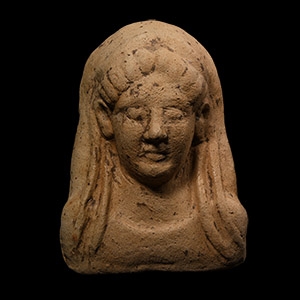
Greek Terracotta Protome Mask
Circa 4th-3rd century B.C.Sold for (Inc. bp): £416
D-shaped ceramic panel with detailing moulding of a female bust with styled hair and soft facial features. 89 grams, 10.9 cm
Acquired 1970s-1996. Property of a North American collector. London collection, 2016. -
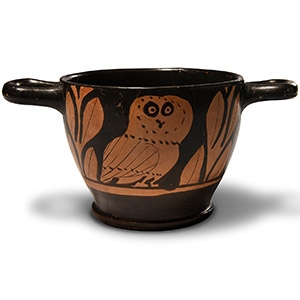
Apulian Red-Figure Skyphos with Owls
5th century B.C.Sold for (Inc. bp): £1,820
The cup with two handles to the neck and a broad, integral foot; both principal faces displaying an owl standing right between laurel branches; repaired. 127 grams, 15 cm wide
Acquired in Europe before 1994. with Christie's, New York, 2 June 1995, lot 95. -
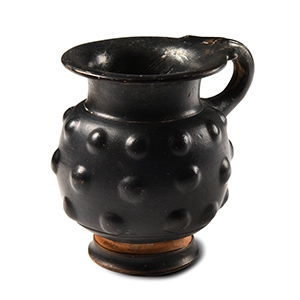
Greek Black-Glazed Pinecone Jug
5th-3rd century B.C.Sold for (Inc. bp): £1,040
With raised domes to the body, broad neck, everted rim, bifurcated handle, foot. 105 grams, 86 mm
Very fine condition.
Acquired European art market, 1980s-1990s. Private English collection.
