
Loading, please wait...


LOT 1703
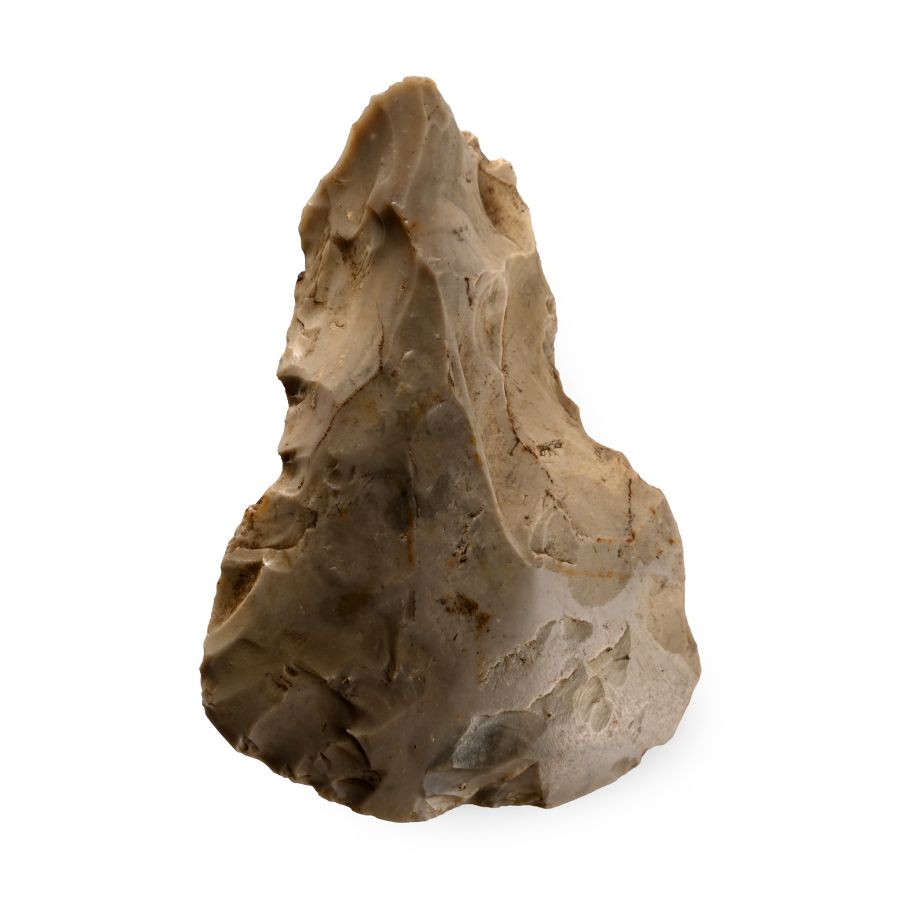
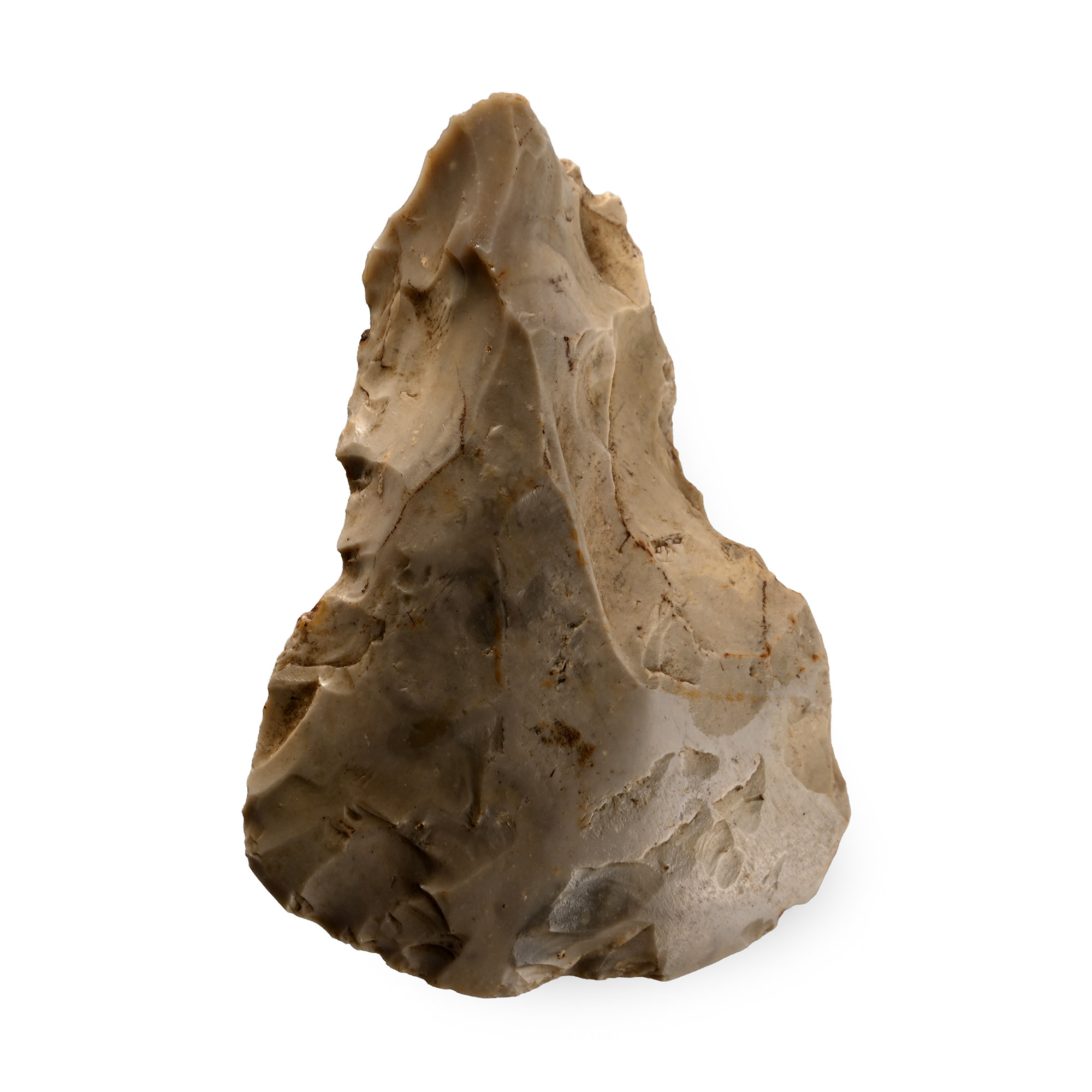
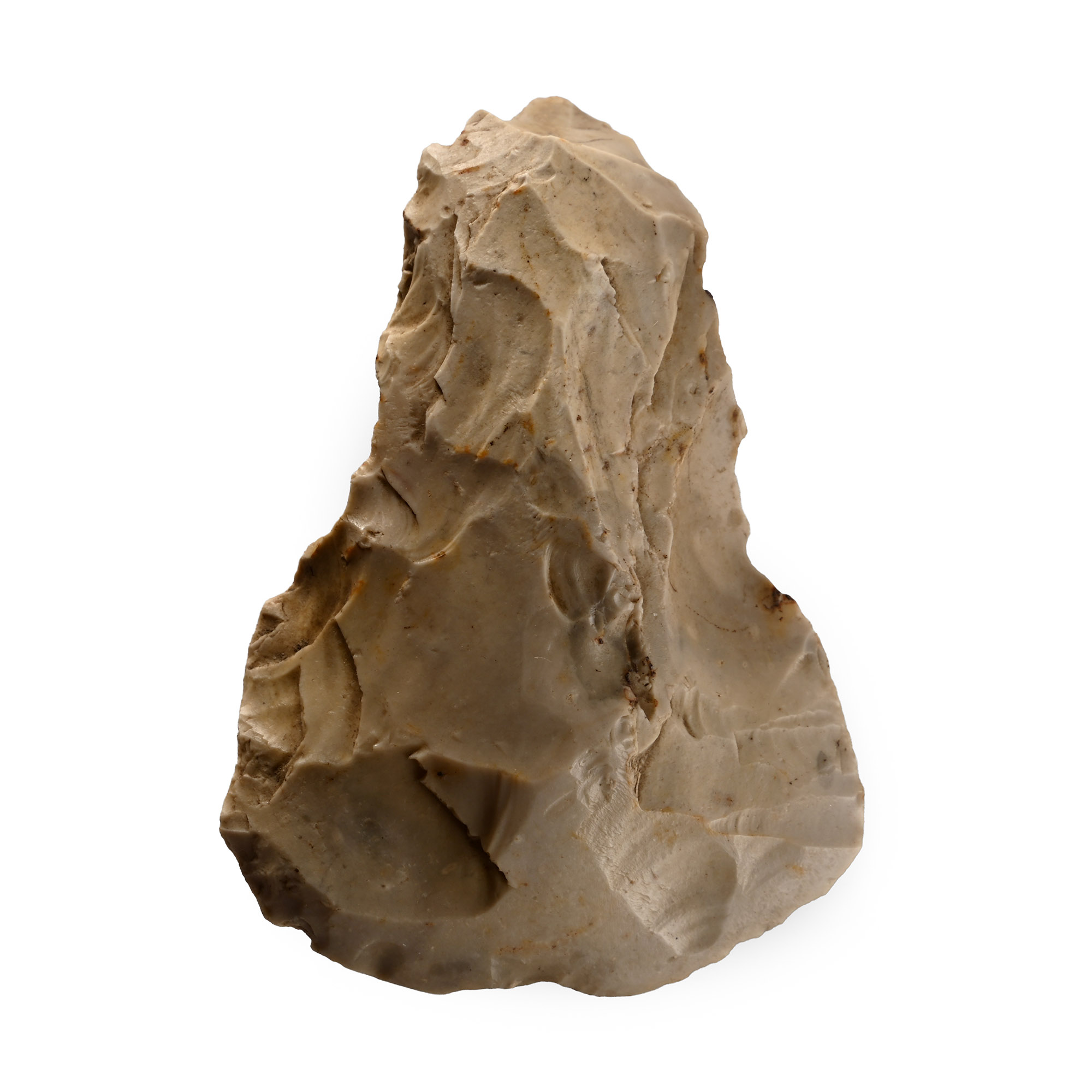
Museum Recorded Stone Age Flint Axe from Essex
MESOLITHIC PERIOD, CIRCA 10,000 B.P.
3 1/4 in. (89.4 grams, 81 mm).
Piriform in plan and lentoid in section with broad cutting edge. [No Reserve]
ProvenanceFound in the vicinity of High Beech and Loughton Camp, Essex, UK.
From the collection of a Stratford-upon-Avon, UK, gentleman.
Accompanied by an original letter from Epping Forest District Museum collections manager dated 7th September 1991, stating that the find was 'most interesting, since the find spot was in the vicinity of both High Beech and Loughton Camp'.
TimeLine Auctions follows a vetting process to ensure the authenticity and legality of all items, reinforcing our commitment to integrity and responsible trading. Each antiquity, antique, and coin lot undergoes thorough examination by a vetting committee of at least ten external specialists, professional trade association members, scientists, and archaeologists: Our Vetting Process
AUCTIONS:
TimeLine is a leading auction house specialising in antiquities, ancient art, collectables, natural history, coins, medals, and books. Our auctions offer museums, collectors, historians, and enthusiasts the opportunity to acquire unique and historically significant pieces.
-
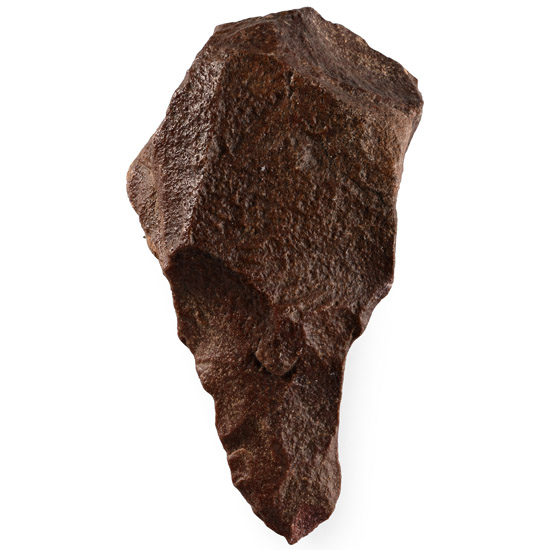
African Stone Age Homo Erectus Knapped Handaxe
Lower Palaeolithic Period, circa 1,000,000-500,000 B.P.Sold for (Inc. bp): £111
With a thick butt and a narrow, tapering point. 497 grams, 13.7 cm
From Wadi Talia, Africa. Ex old German collection formed in the 1970s by Dr J Fehkhaber. Acquired on the European art market. -
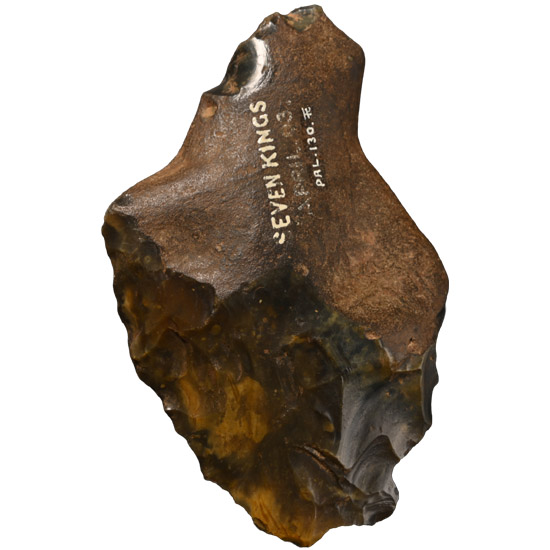
British Stone Age Knapped Flint Axe
Middle Palaeolithic Period, circa 150,000-60,000 B.P.Sold for (Inc. bp): £65
In dark brown flint, an old inked collector's note 'Seven Kings, April [?]3, PAL.130. (monogram)' on one side. 167 grams, 11.5 cm
Found in Seven Kings, East London, UK. From the collection of Martin Doyle, Leverstock, UK, 1980s-2000s. -
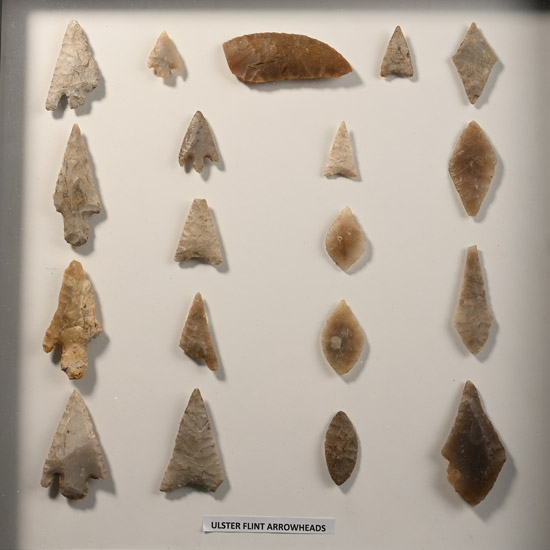
Framed Northern Ireland Stone Age Knapped Arrowhead and Tool Collection
Neolithic-Bronze Age Period, circa 6,000-4,000 B.P.Sold for (Inc. bp): £910
Mixed group of various types, including barbed, tanged, lozenge-shaped, a curved dagger, and others; set in a glazed box frame. 1.1 kg total, 35.5 x 35.5 cm includimg frame
Found Northern Ireland, UK. From the collection of Martin Doyle, Leverstock, UK, 1980s-2000s.
