
Loading, please wait...


LOT 1974
Museum Quality Replica the Babylonian Tablet of King Nabu- apla-iddina, Also Known as the Sun God Tablet in the British Museum
21ST CENTURY A.D.
8 1/4 in. (1.15 kg total, 21 cm including stand).
Resin casting of the tablet with ornament; obverse: frieze with two opposed standing figures below a pediment with mythological creatures, cuneiform text below and in the scene; reverse: dense panel of cuneiform text; cosmological symbols to upper edge; mounted on a custom-made stand. [No Reserve]
ProvenanceFrom the collection of David Donlan (1947-2025), a dedicated and lifelong collector with a passion for the ancient world and the natural sciences, forming his collection from 1960s onwards, using many reputable dealers across the United Kingdom, including the well-regarded Coincraft and The Parthenon Gallery.
LiteratureCf. original at the British Museum under reference W_1883-0120-1.
CONDITIONTimeLine Auctions follows a vetting process to ensure the authenticity and legality of all items, reinforcing our commitment to integrity and responsible trading. Each antiquity, antique, and coin lot undergoes thorough examination by a vetting committee of at least ten external specialists, professional trade association members, scientists, and archaeologists: Our Vetting Process
AUCTIONS:
TimeLine is a leading auction house specialising in antiquities, ancient art, collectables, natural history, coins, medals, and books. Our auctions offer museums, collectors, historians, and enthusiasts the opportunity to acquire unique and historically significant pieces.
LOT 1974
Museum Quality Replica the Babylonian Tablet of King Nabu- apla-iddina, Also Known as the Sun God Tablet in the British Museum
Sold for (Inc. bp): £143
-
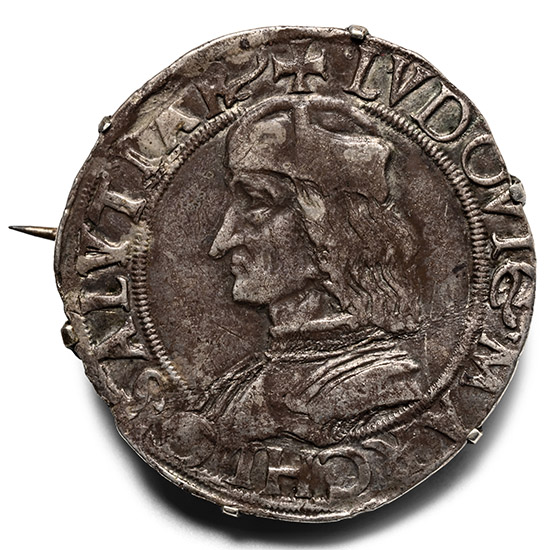
Italy. Marquisate of Saluzzo, Ludovico II Silver Issue in Later Silver Brooch.
AD 1475-1504. Carmagnola mint.Sold for (Inc. bp): £312
☩ LVDOVICVS · MARCHIO · SALVTIAR, bust to left wearing barrette. 6.05 grams, 30 mm
Very Fine. Set in a later brooch frame.
Acquired on the European art market. -
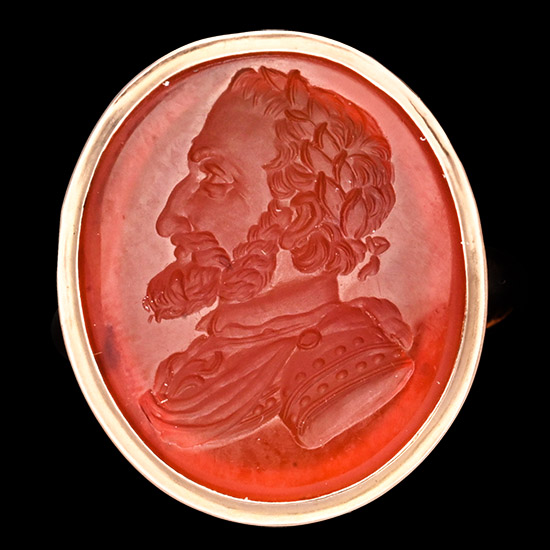
French Carnelian Gemstone with King Henry IV in Gold Ring
19th century A.D.Estimate: £1,200 - 1,700 (+bp*)
Opening Bid: £600
Finely engraved intaglio portraying a left-facing bust of Henry IV (1553–1610), King of France, in armour, with a decorated gorget and distinctive curled beard, set in a high-carat gold bezel and later fitted with a modern plain shank; supplied with a museum-quality impression. 5.24 grams, 21.83 mm overall, 19.35 mm internal diameter (approximate size British P, USA 7 1/2, Europe 16.23, Japan 15)
Acquired on the European art market.
The engraving is directly after a medallic portrait by Guillaume Dupré, Henry IV’s official medallist, which was widely circulated during the king’s reign and thereafter. The king’s profile is clearly drawn from a familiar medallic type, often used in the 17th and 18th centuries as a symbol of royal authority and dynastic legitimacy. -
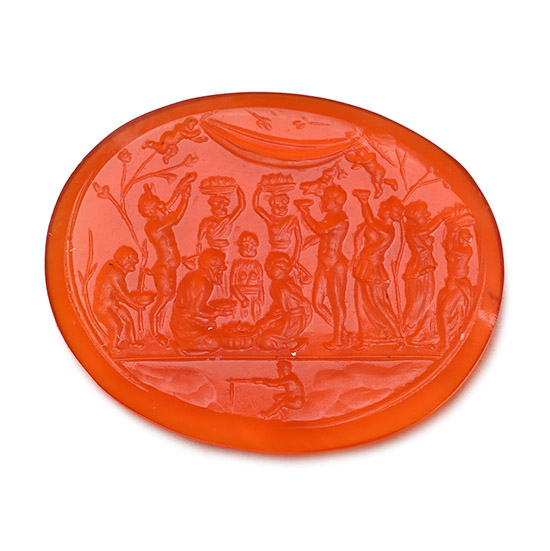
Renaissance Carnelian 'Michelangelo's Seal' Gemstone
18th century A.D.Sold for (Inc. bp): £702
Vibrant orange carnelian intaglio depicting a lively Bacchic scene with satyrs, wine-bearers and other participants beneath a canopy supported by two flying Cupids; below in the exergue, a small figure of a fisherman, fishing with a hook on the sea shore; supplied with a museum-quality impression. 1.21 grams, 21 mm
Acquired on the European art market.
The original 'Seal of Michelangelo' is a famous engraved carnelian gem, acquired by King Louis XIV in 1670. It is now housed in the Bibliothèque nationale de France. Long thought to be an ancient Greek masterpiece, and a subject of debate and controversy, it was subsequently identified by scholars as a Renaissance work by Pier Maria Serbaldi da Pescia.
