
Loading, please wait...



LOT 1969
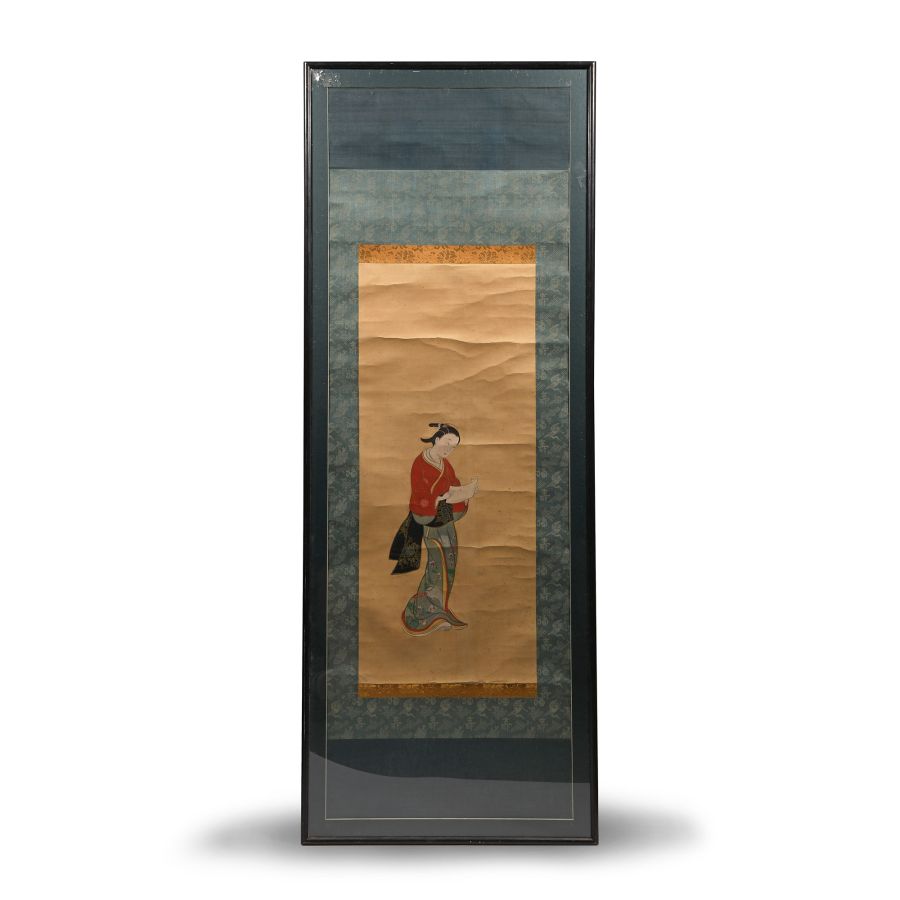
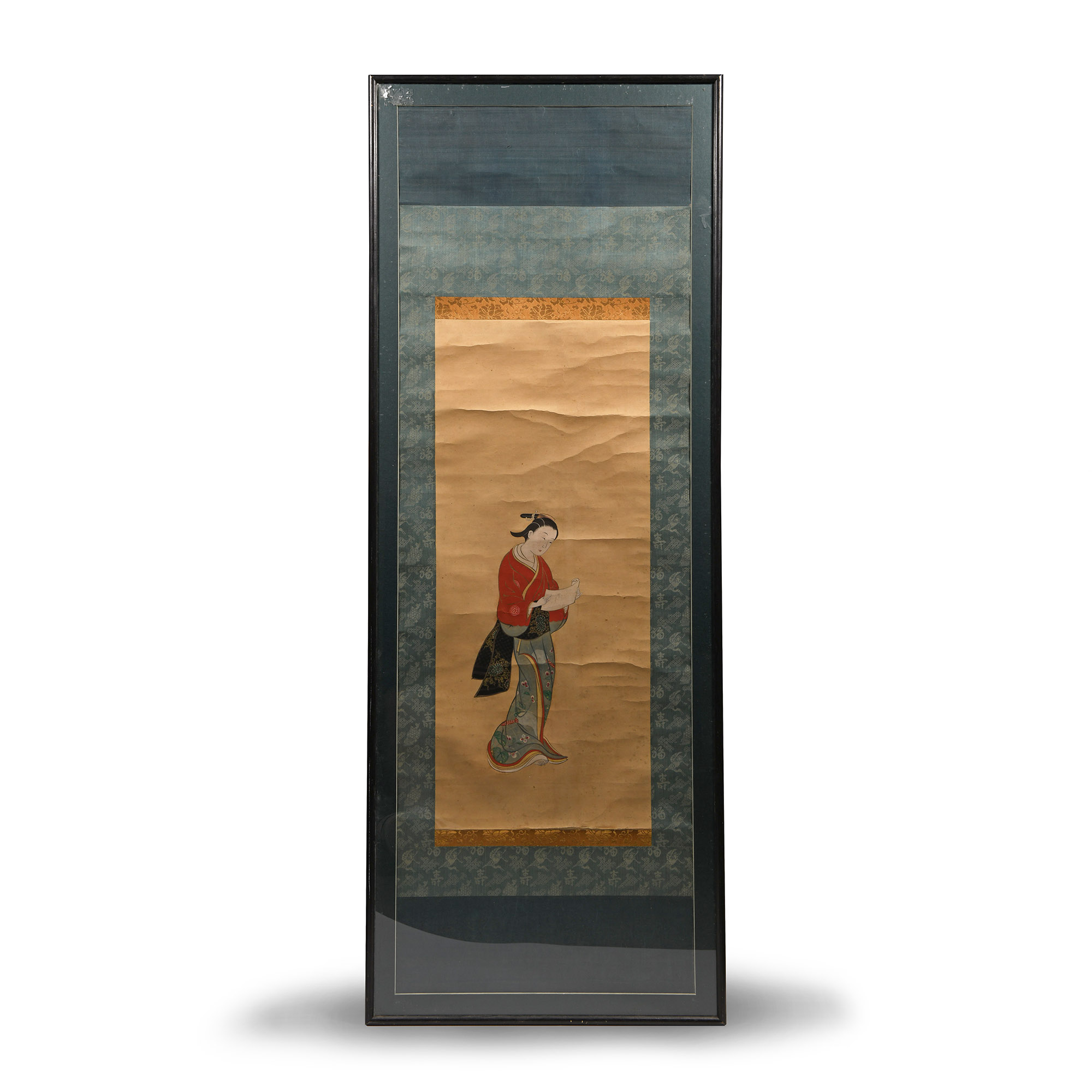
Muromasa School Painting of a Standing Beauty Reading a Letter
JAPAN, 18TH CENTURY A.D.
48 in. (4.35 kg, 122 cm).
Mounted in a glazed wooden frame with reveal; the fabric-edged rectangle with painted motif placed eccentrically, leaning slightly towards the centre; standing female wearing kimono and midriff sash, with hair dressed in 'box shimada' style unfurling a scroll. [No Reserve]
ProvenanceFrom the Manly P. Hall collection (1901-1990), 1950s.
Philosophical Research Society, Los Angeles, USA.
Ex central London gallery.
TimeLine Auctions follows a vetting process to ensure the authenticity and legality of all items, reinforcing our commitment to integrity and responsible trading. Each antiquity, antique, and coin lot undergoes thorough examination by a vetting committee of at least ten external specialists, professional trade association members, scientists, and archaeologists: Our Vetting Process
AUCTIONS:
TimeLine is a leading auction house specialising in antiquities, ancient art, collectables, natural history, coins, medals, and books. Our auctions offer museums, collectors, historians, and enthusiasts the opportunity to acquire unique and historically significant pieces.
LOT 1969
Muromasa School Painting of a Standing Beauty Reading a Letter
Sold for (Inc. bp): £143
-
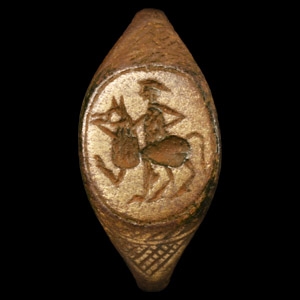
Tudor Period Bronze Ring with Horse and Rider
Circa 16th century A.D.Sold for (Inc. bp): £104
With hatched panels to the shoulders, plaque with intaglio rider on advancing horse. 7.85 grams, 25.07 mm overall, 20.78 mm internal diameter (approximate size British T, USA 9 1/2, Europe 21.26, Japan 20)
Acquired 1970s. From the private collection of a Northern Ireland gentleman. Ex private Merseyside, UK, collection. -
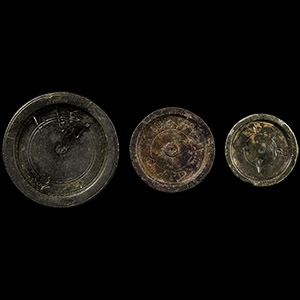
Georgian Bronze Weight Collection
Circa 18th century A.D.Sold for (Inc. bp): £20
A nest of graduated discoid weights stamped with various letters and marks. 196 grams total, 33-51 mm
Ex Simmons Gallery, London E11, UK, in the 1990s. From a North London collection. -
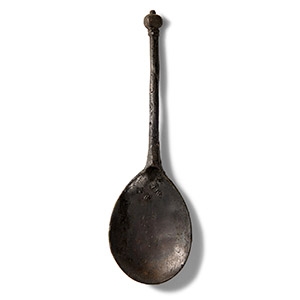
Tudor 'Thames' Pewter Knopped Spoon with Maker's Marks
Circa 16th century A.D.Sold for (Inc. bp): £143
The shallow ovoid bowl stamped to the upper face with the letters W W M and a swan over 'NB' within a roundel, collared finial with apex knop. 64 grams total, 17.5 cm
Found Billingsgate spoil from the Thames foreshore, London, UK.
