
Loading, please wait...

LOT 0359
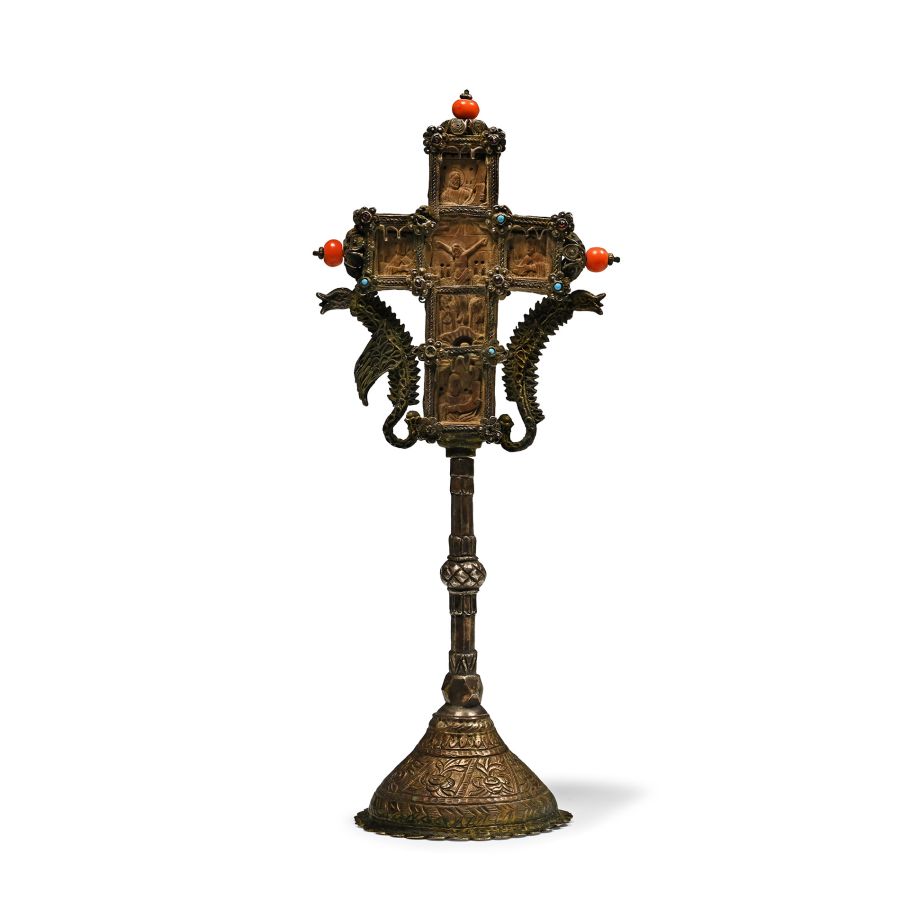
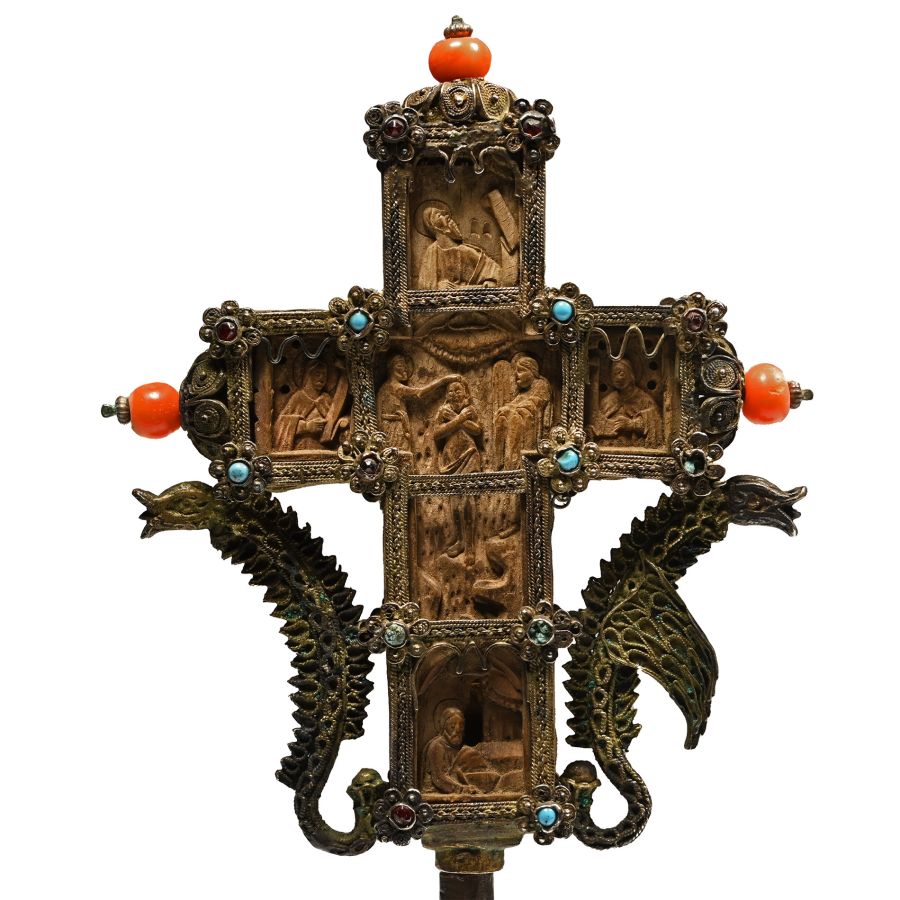
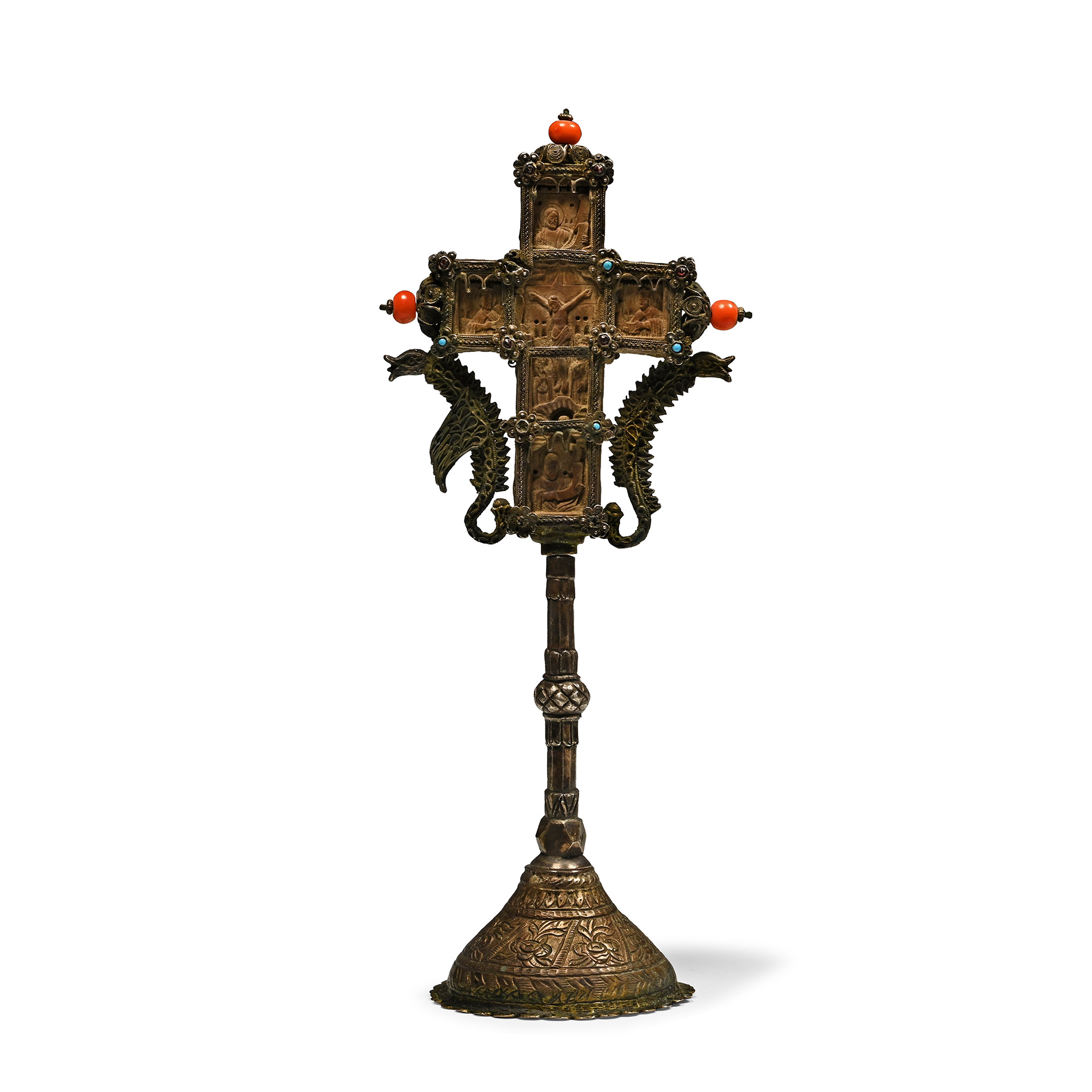
Mount Athos Wooden Cross with Silver-Gilt Mounts
LATE 18TH CENTURY A.D.
8 1/2 in. (170 grams, 21.5 cm).
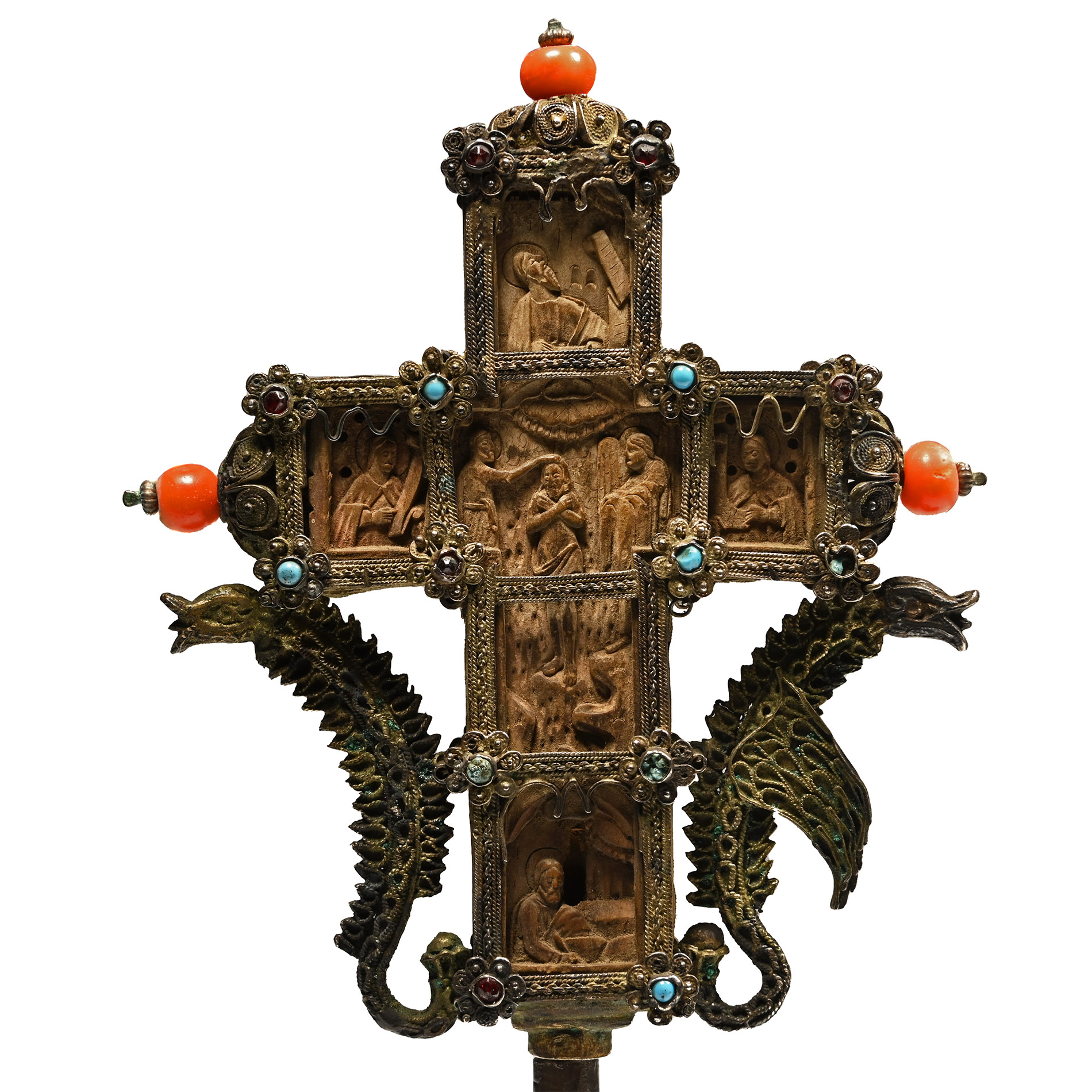
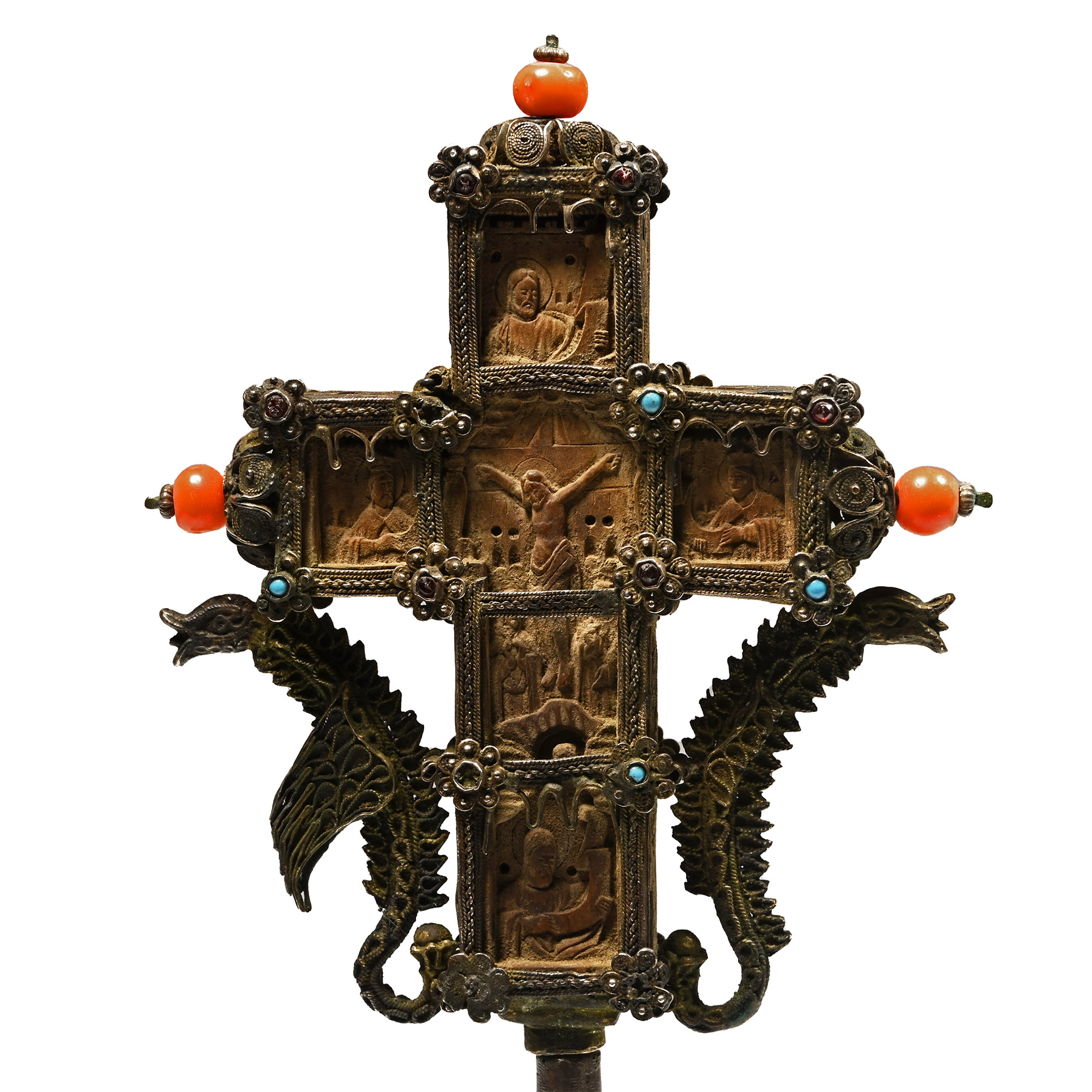
Comprising: a wooden cross with carved scenes from the life of Christ (Nativity and others to one face, Crucifixion and others to the other face) housed in a filigree frame; addorsed winged beasts supporting the arms of the cross; three coral beads to the arms, smaller glass beads to each face; balustered stem and domed base.
ProvenanceEx Iconastas, London SW1, UK, in 2004.
Property of a London, UK, gentleman collector.
Accompanied by a copy of the Iconastas invoice dated 18 February 2004.
This lot is accompanied by an illustrated lot declaration signed by the Head of the Antiquities Department, Dr Raffaele D’Amato.
TimeLine Auctions follows a vetting process to ensure the authenticity and legality of all items, reinforcing our commitment to integrity and responsible trading. Each antiquity, antique, and coin lot undergoes thorough examination by a vetting committee of at least ten external specialists, professional trade association members, scientists, and archaeologists: Our Vetting Process
AUCTIONS:
TimeLine is a leading auction house specialising in antiquities, ancient art, collectables, natural history, coins, medals, and books. Our auctions offer museums, collectors, historians, and enthusiasts the opportunity to acquire unique and historically significant pieces.
-
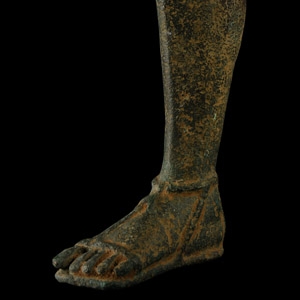
Roman Style Bronze Votive Sandaled Foot
19th century A.D.Sold for (Inc. bp): £46
Hollow-formed lower left leg with integral modelled sandal; open at the knee. 459 grams, 15.5 cm
English private collection. This lot is accompanied by an illustrated lot declaration signed by the Head of the Antiquities Department, Dr Raffaele D’Amato. -
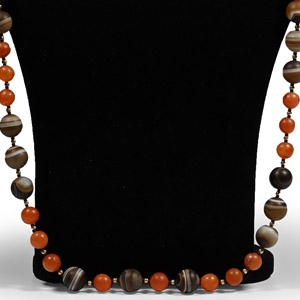
Agate Bead Necklace
20th century A.D.Sold for (Inc. bp): £46
Comprising spherical carnelian and banded agate beads with interstitial seed beads. 132 grams, 98 cm long
From a London, UK, collection, 1990s. This lot is accompanied by an illustrated lot declaration signed by the Head of the Antiquities Department, Dr Raffaele D’Amato. -
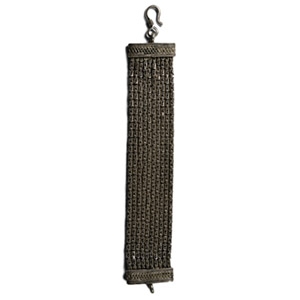
Post Medieval Multi-Stranded Silver Chain Bracelet
20th century A.D.Sold for (Inc. bp): £65
Composed of ten round Byzantine chains with oval terminals, the terminals with applied ropework and filigree decoration; loop-and-hook closure. 131 grams, 22.5 cm
Acquired on the UK art market. Ex property of a County Durham collector. This lot is accompanied by an illustrated lot declaration signed by the Head of the Antiquities Department, Dr Raffaele D’Amato.
