
Loading, please wait...
LOT 3148
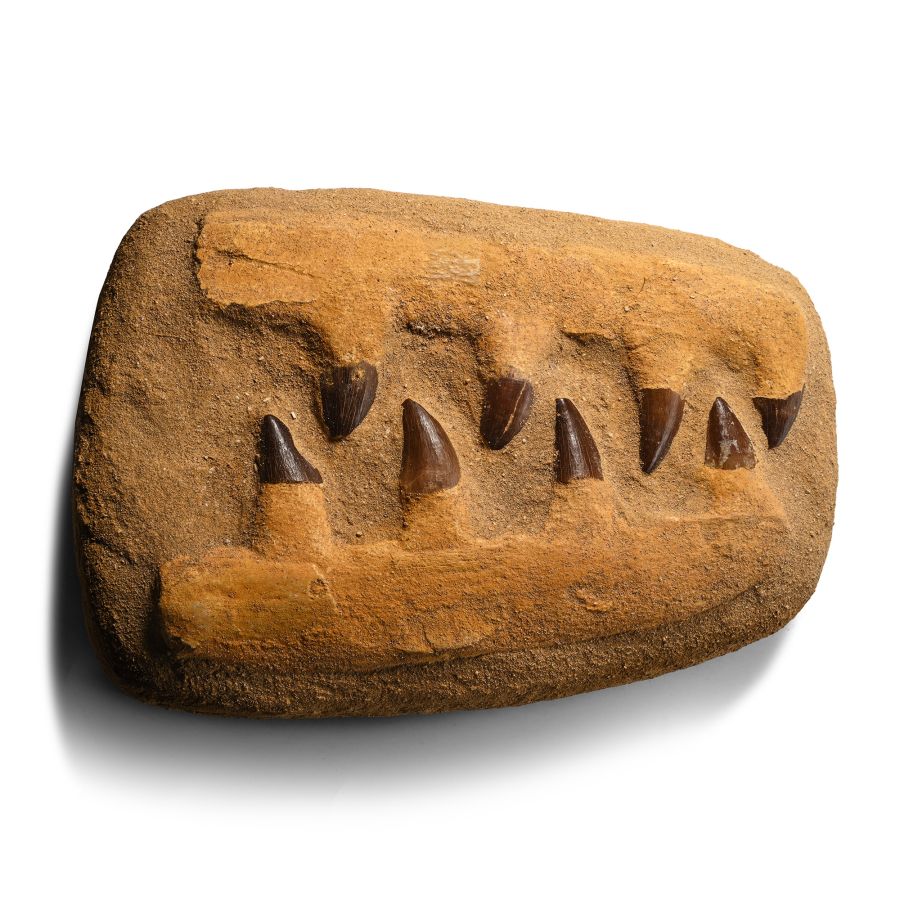
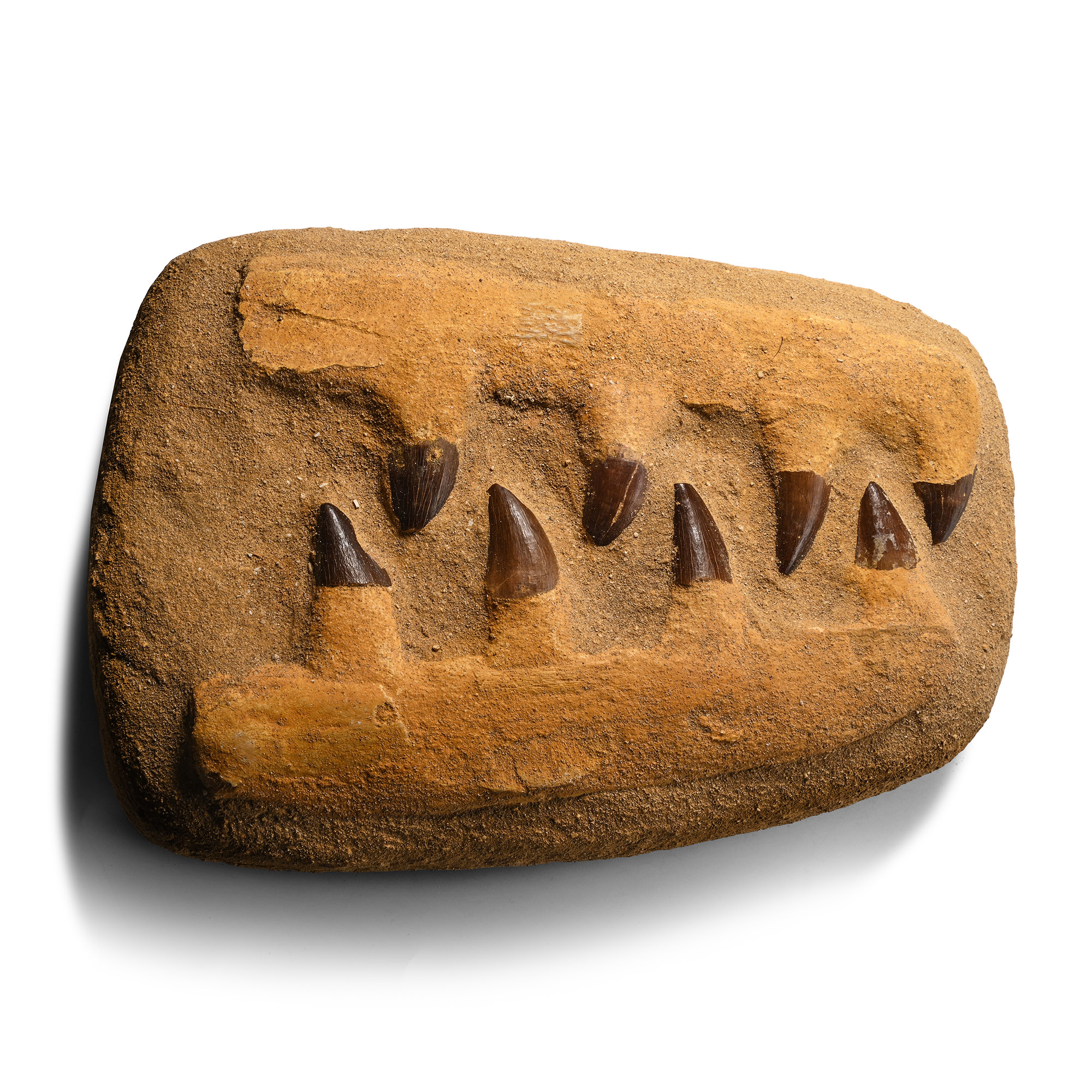
Mosasaur 'Marine Dinosaur' Fossil Teeth in Composite Jaw
CRETACEOUS PERIOD, CIRCA 145-65 MILLION YEARS B.P.
8 1/4 in. (1.62 kg, 21 cm).
Comprising eight Mosasaur prognathodon teeth set in a composite matrix. [No Reserve]
ProvenanceEx Cambridgeshire, UK, collection.
FootnotesThe Mosasaur is an extinct, large marine reptile with an elongated body, long snout and paddle-like limbs. Found worldwide, they competed with other well-known sea predators of the Late Cretaceous, such as plesiosaurs and ichthyosaurs, for food, existing primarily on a diet of ammonoids, cuttlefish and fish.
CONDITIONTimeLine Auctions follows a vetting process to ensure the authenticity and legality of all items, reinforcing our commitment to integrity and responsible trading. Each antiquity, antique, and coin lot undergoes thorough examination by a vetting committee of at least ten external specialists, professional trade association members, scientists, and archaeologists: Our Vetting Process
AUCTIONS:
TimeLine is a leading auction house specialising in antiquities, ancient art, collectables, natural history, coins, medals, and books. Our auctions offer museums, collectors, historians, and enthusiasts the opportunity to acquire unique and historically significant pieces.
LOT 3148
Mosasaur 'Marine Dinosaur' Fossil Teeth in Composite Jaw
Estimate £60 - 80€70 - 93 (for guidance only)$81 - 108 (for guidance only)
Opening Bid
£5 (EUR 6; USD 7) +BP*
-
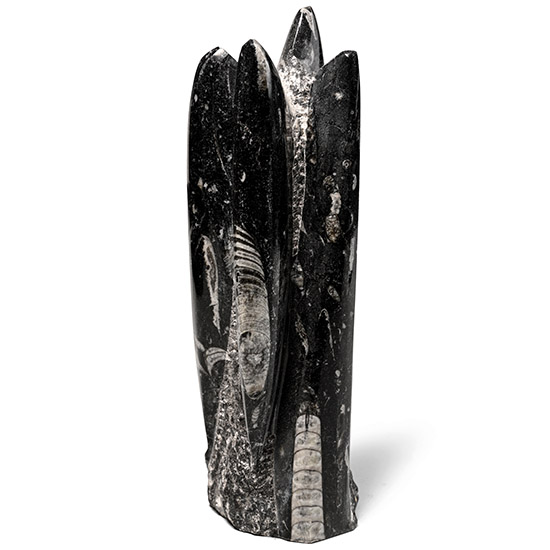
Fossil Orthoceras Polished Display Column
Upper Devonian Period, circa 385-359 million years B.P.Estimate: £40 - 60 (+bp*)
Opening Bid: £5
Comprising variously sized polished Orthoceras sp. specimens on a textured freestanding matrix. 975 grams, 19.5 cm
Ex Cambridgeshire, UK, collection. -
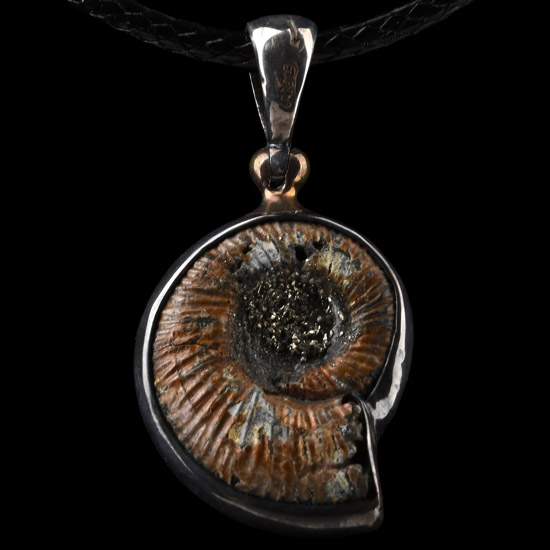
Fossil Ammonite Pendant Necklace
Jurassic Period, circa 199-145 million years B.P.Estimate: £20 - 30 (+bp*)
Opening Bid: £5
The ammonite in a metal setting with a loop and suspended from a cord necklace. 7.6 grams, pendant: 23 mm
Ex Cambridgeshire, UK, collection. -
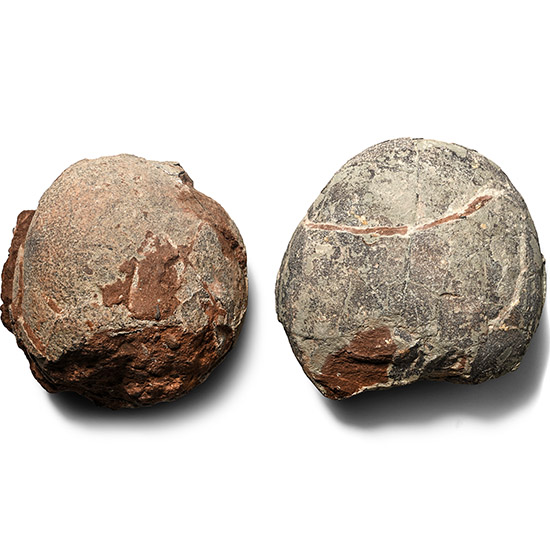
Fossil Hadrosaur Egg Pair
Cretaceous Period, circa 145-65 million years B.P.Estimate: £600 - 800 (+bp*)
Opening Bid: £250
Comprising two hadrosaur eggs retaining evidence of the original leathery surface and how the eggshell was crushed before fossilising. 1.56 kg total, 10.2-10.9 cm
From the Nanxiong formation, China. Previously with Shishang Corporation, Taiwan. From a West London gentleman collector; acquired from a professional fossil company in Taiwan.
Dinosaur eggs are known from about 200 sites around the world, the majority in Asia and mostly in terrestrial (non-marine) rocks of the Cretaceous Period. It may be that thick calcite eggshells evolved during the Cretaceous (145 to 65 million years ago). Most dinosaur eggs have one of two forms of eggshell that are distinct from the shells of related modern animal groups, such as turtles or birds; however, some eggs closely resemble the type of shells seen in present-day ostrich eggs.
