
Loading, please wait...
_900x900.jpg "Monumental Levantine-Egyptian Stone Head of a Pharaoh")
_200x200.jpg "Monumental Levantine-Egyptian Stone Head of a Pharaoh")
.jpg "Monumental Levantine-Egyptian Stone Head of a Pharaoh")
LOT 0016
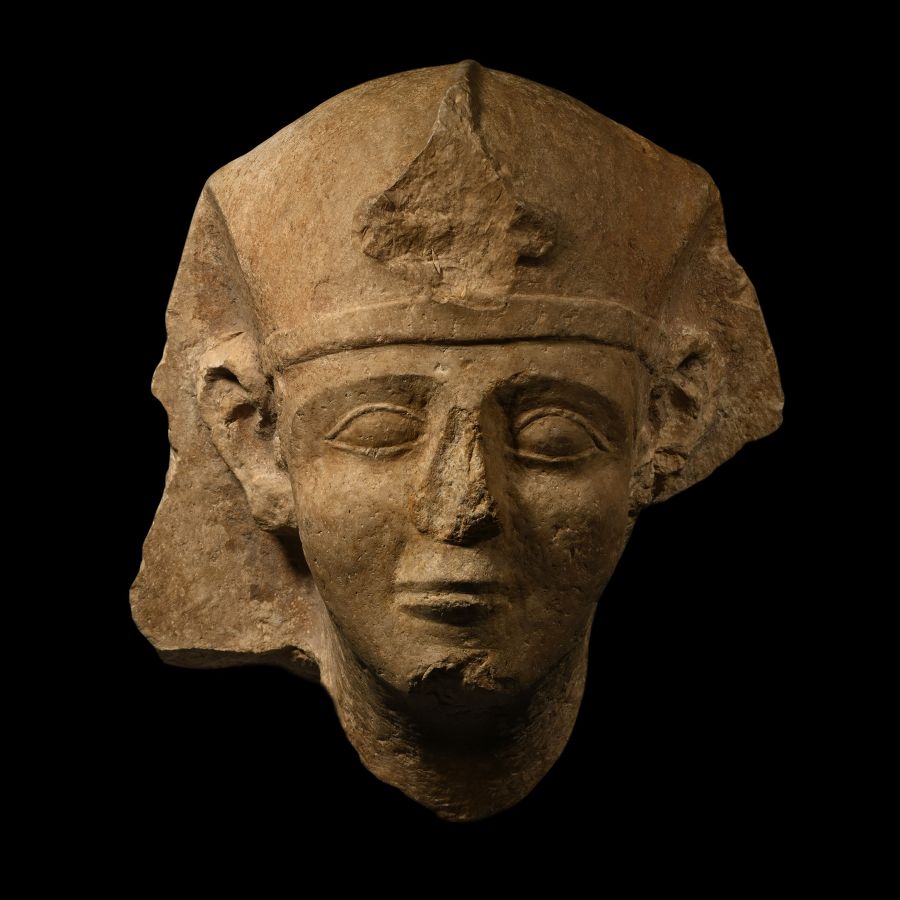
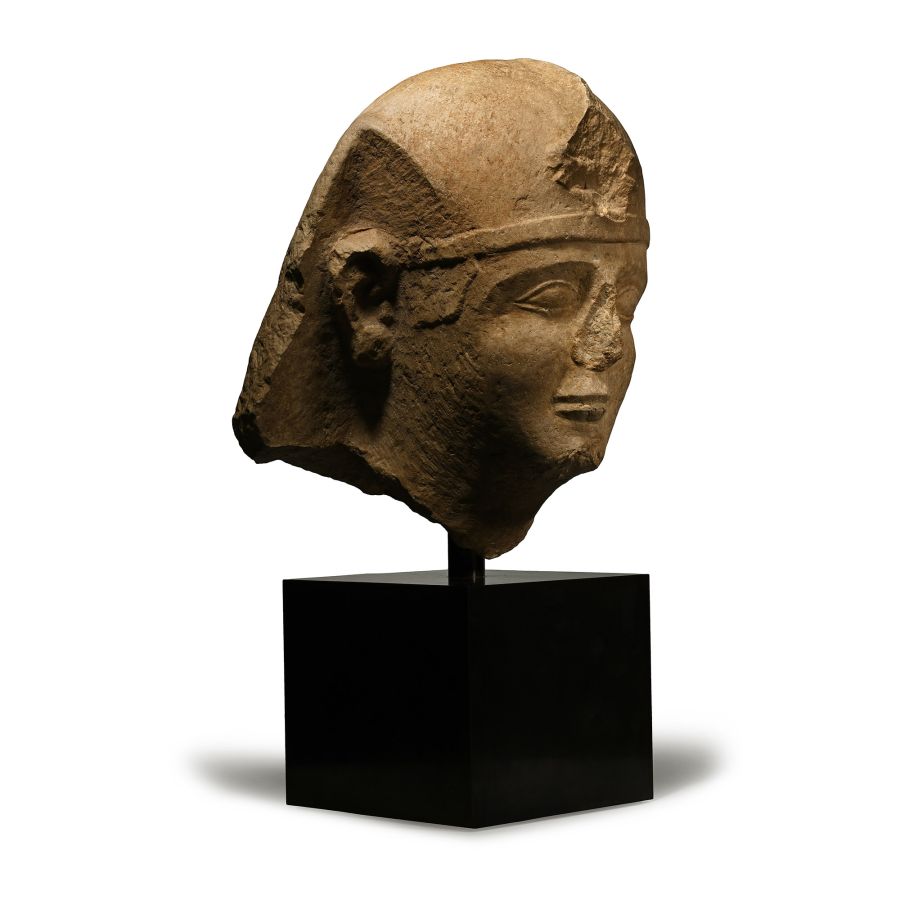
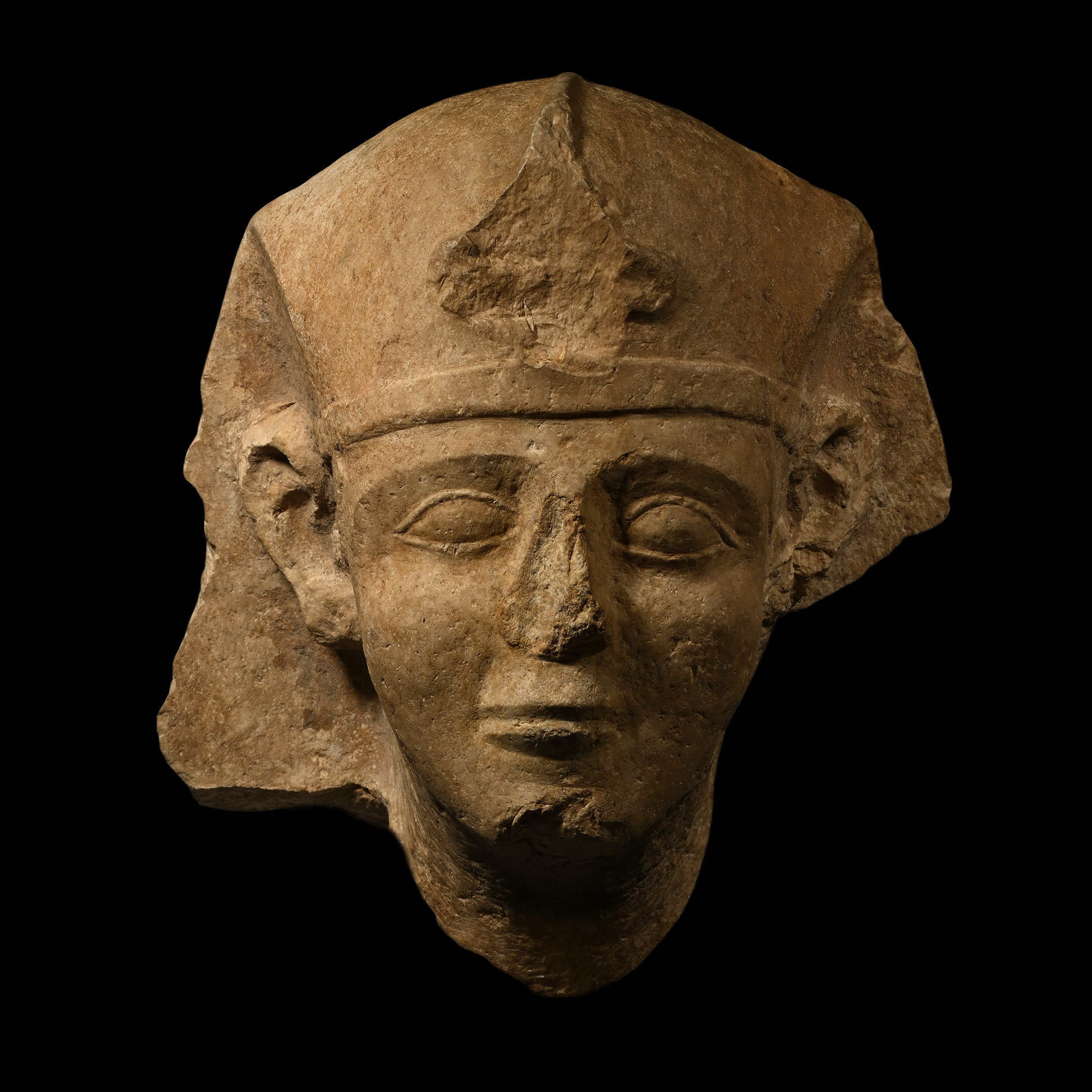
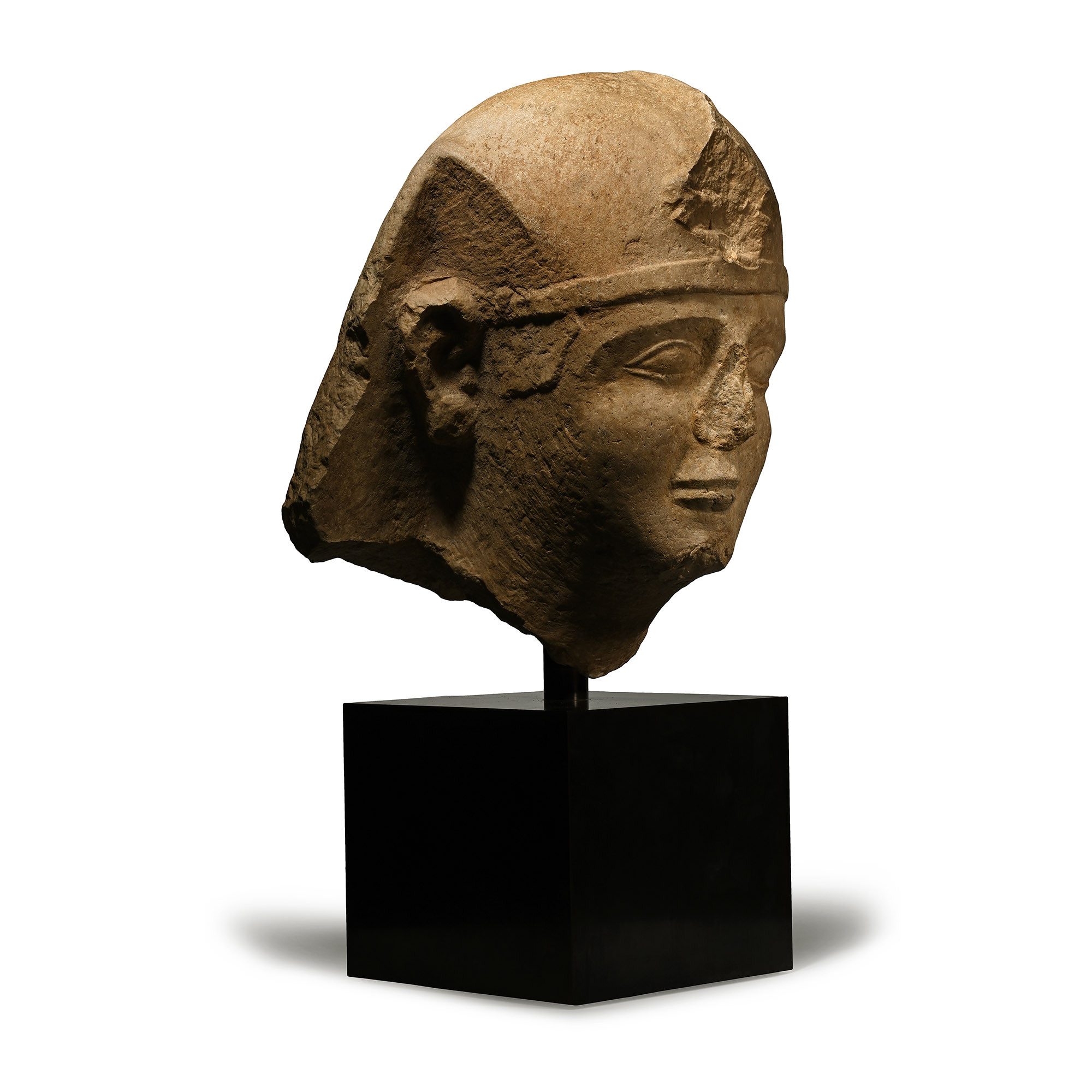
Monumental Levantine-Egyptian Stone Head of a Pharaoh
PTOLEMAIC PERIOD, 332-30 B.C. OR LATER
17 in. (45.15 kg, 43 cm).
An over-life-size head of a pharaoh, likely from a monumental sphinx, wearing the royal nemes headdress with a prominent headband and the remains of a rearing uraeus on the brow with a single coil of the body on either side of the cobra’s hood, its tail extending towards the back of the headdress; the large, almond-shaped eyes prominently outlined, and unlike on some portraits, the cosmetic lines do not extend beyond the outer corner; the fragmentary nose almost spanning the width of the small mouth modelled with straight and somewhat pursed lips; mounted on a custom-made display stand.
ProvenancePrivate collection, Germany, 1975.
European collection, 1980s-late 1990s.
By descent from the above to the present owner.
Accompanied by an academic report by Egyptologist Paul Whelan.
This lot has been checked against the Interpol Database of stolen works of art and is accompanied by search certificate number no.12201-218142.
This lot has been cleared against the Art Loss Register database, and is accompanied by an illustrated lot declaration signed by the Head of the Antiquities Department, Dr Raffaele D’Amato.
Cf. Stanwick, P., Portraits of the Ptolemies: Greek Kings as Egyptian Pharaohs, Austin, 2002, pp. 67, 103 Cat. A27, for similar.
FootnotesThe presence of tool marks around the neck and sides of the head, contrasting the smooth surface of the face and front part of the headdress, suggests that the sculpture is an unfinished piece. The noticeably heavy brow line is a feature of the 30th Dynasty style, which then influenced Ptolemaic royal portraiture (cf. Tomoum, N., The Sculptors' Models of the Late and Ptolemaic Periods, Cairo, 2006, pl.17, for a finished portrait assigned to the 30th Dynasty).
CONDITIONTimeLine Auctions follows a vetting process to ensure the authenticity and legality of all items, reinforcing our commitment to integrity and responsible trading. Each antiquity, antique, and coin lot undergoes thorough examination by a vetting committee of at least ten external specialists, professional trade association members, scientists, and archaeologists: Our Vetting Process
AUCTIONS:
TimeLine is a leading auction house specialising in antiquities, ancient art, collectables, natural history, coins, medals, and books. Our auctions offer museums, collectors, historians, and enthusiasts the opportunity to acquire unique and historically significant pieces.
LOT 0016
Monumental Levantine-Egyptian Stone Head of a Pharaoh
Sold for (Inc. bp): £46,800
-
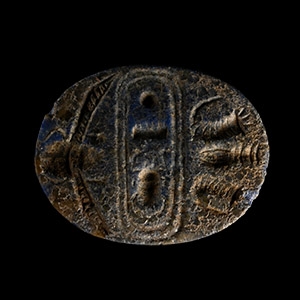
Egypto-Phoenician Lapis Lazuli Scarab with Cartouche for Thutmose III
Late 1st millennium B.C.Estimate: £2,500 - 3,500 (‡+bp*)
Opening Bid: £1,250
With carapace detailing to obverse, plaque with intaglio cartouche for the throne name of Thutmose III men-kheper-Re, winged scarab at one end and a central floral motif flanked by cornucopia at the other end. 7.4 grams, 25 mm
Private collection of Mr S.A., Switzerland, 1990s, thence by descent. This lot has been checked against the Interpol Database of stolen works of art and is accompanied by search certificate no.12127-211877. This lot has been cleared against the Art Loss Register database, and is accompanied by an illustrated lot declaration signed by the Head of the Antiquities Department, Dr Raffaele D’Amato. -
.jpg)
Egyptian Gold Uraeus Amulet
Late New Kingdom, 1279-1070 B.C.Estimate: £250 - 350 (+bp*)
Opening Bid: £125
Depicting a rearing cobra sporting a sun disc with its coiled body below resting on the hieroglyphic neb sign. 0.38 grams, 11 mm
From an early 20th century French collection. This lot is accompanied by an illustrated lot declaration signed by the Head of the Antiquities Department, Dr Raffaele D’Amato. -
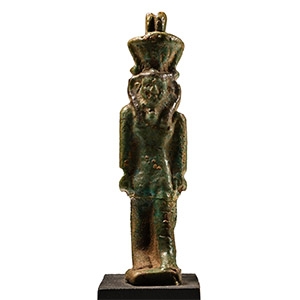
Egyptian Faience Figure of Nefertum
Ptolemaic Period, 332-30 B.C.Estimate: £600 - 800 (‡+bp*)
Opening Bid: £300
Turquoise faience standing figure of Nefertum in a striding pose with arms at the sides, sporting a black coloured tripartite wig surmounted by the god's distinctive headdress consisting of a lotus flower with two plumes on top; a suspension loop at the back; repaired. 71 grams total, 13 cm including stand
Property from an American deceased estate, acquired between 1970 and 1989. with Bonham's, London, 28 October 2009, no.81 [Part]. This lot is accompanied by an illustrated lot declaration signed by the Head of the Antiquities Department, Dr Raffaele D’Amato.
Nefertum was closely associated with the creator god Ptah and the goddesses Sekhmet and Bastet. He represented the first sunlight and the sweet scent of the Egyptian blue lotus flower (nymphaea caerulea). According to beliefs, the sun rose from the bloom of a blue lotus, embodying notions of rebirth and rejuvenation. Additionally, as the lotus was seen as a symbol of fertility, it is possible that this amulet was also worn for that purpose.
