
Loading, please wait...
LOT 0016
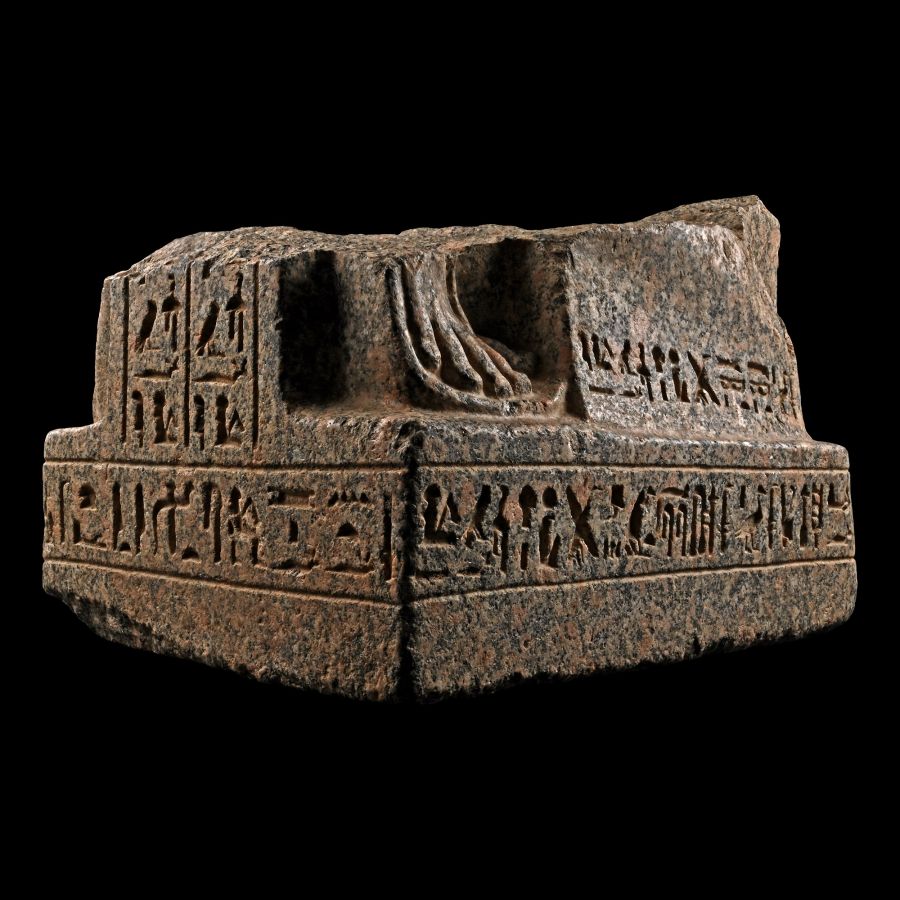
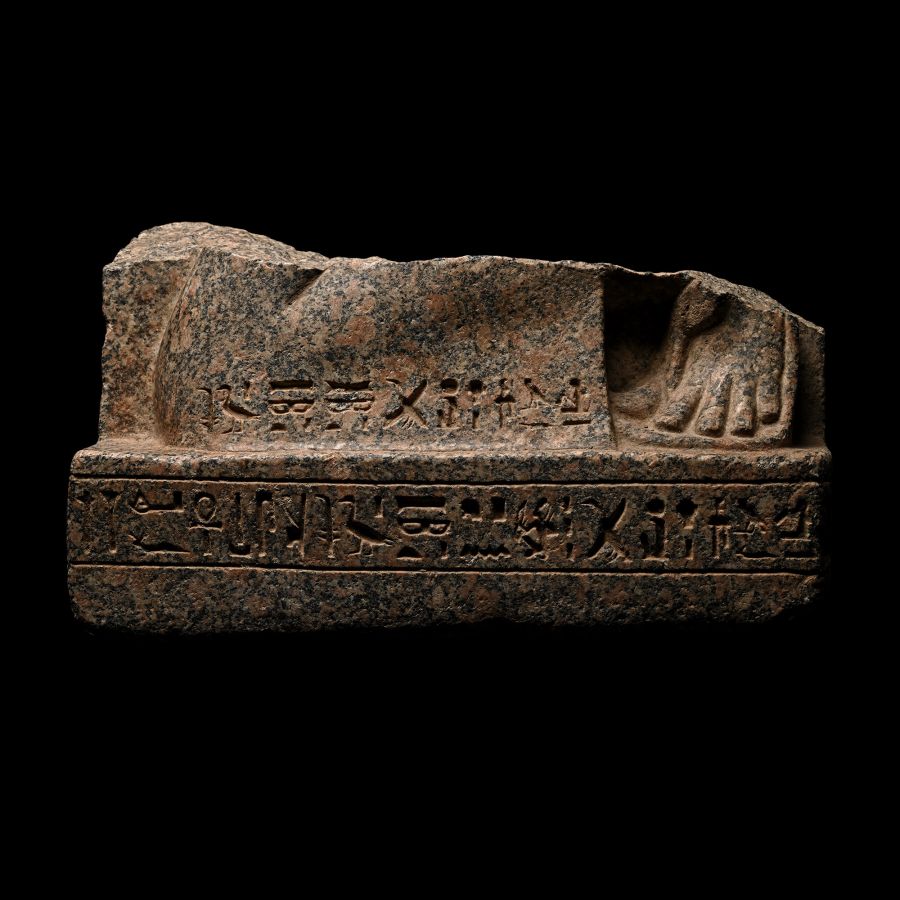
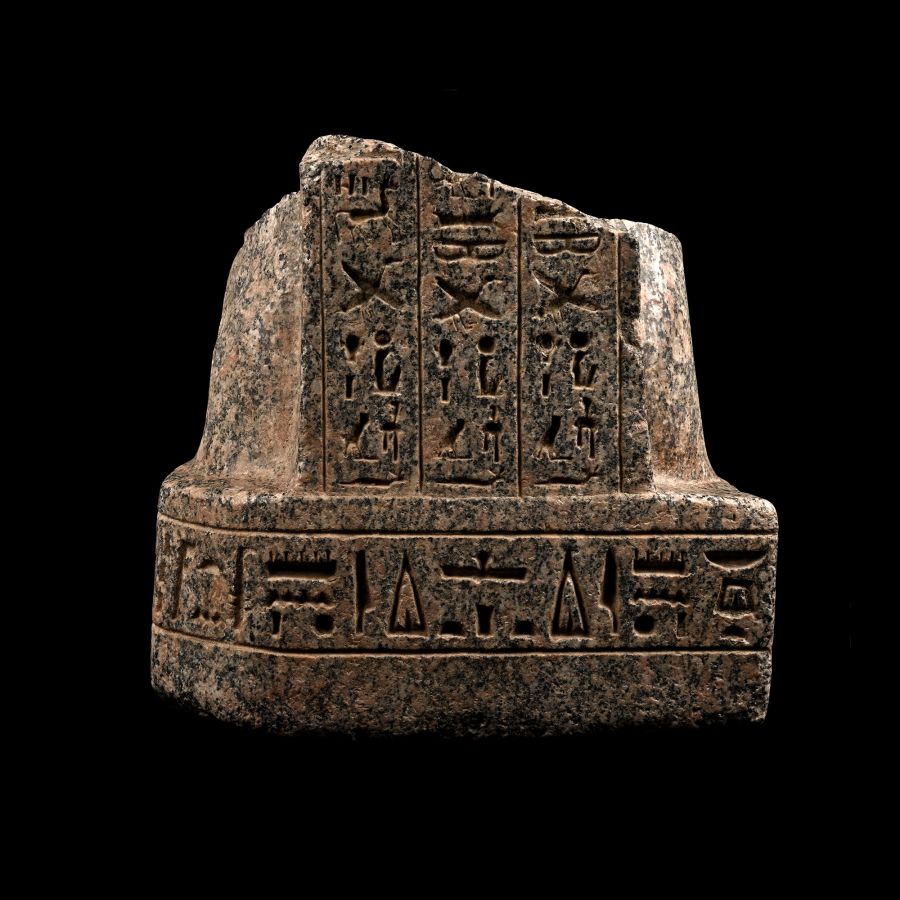
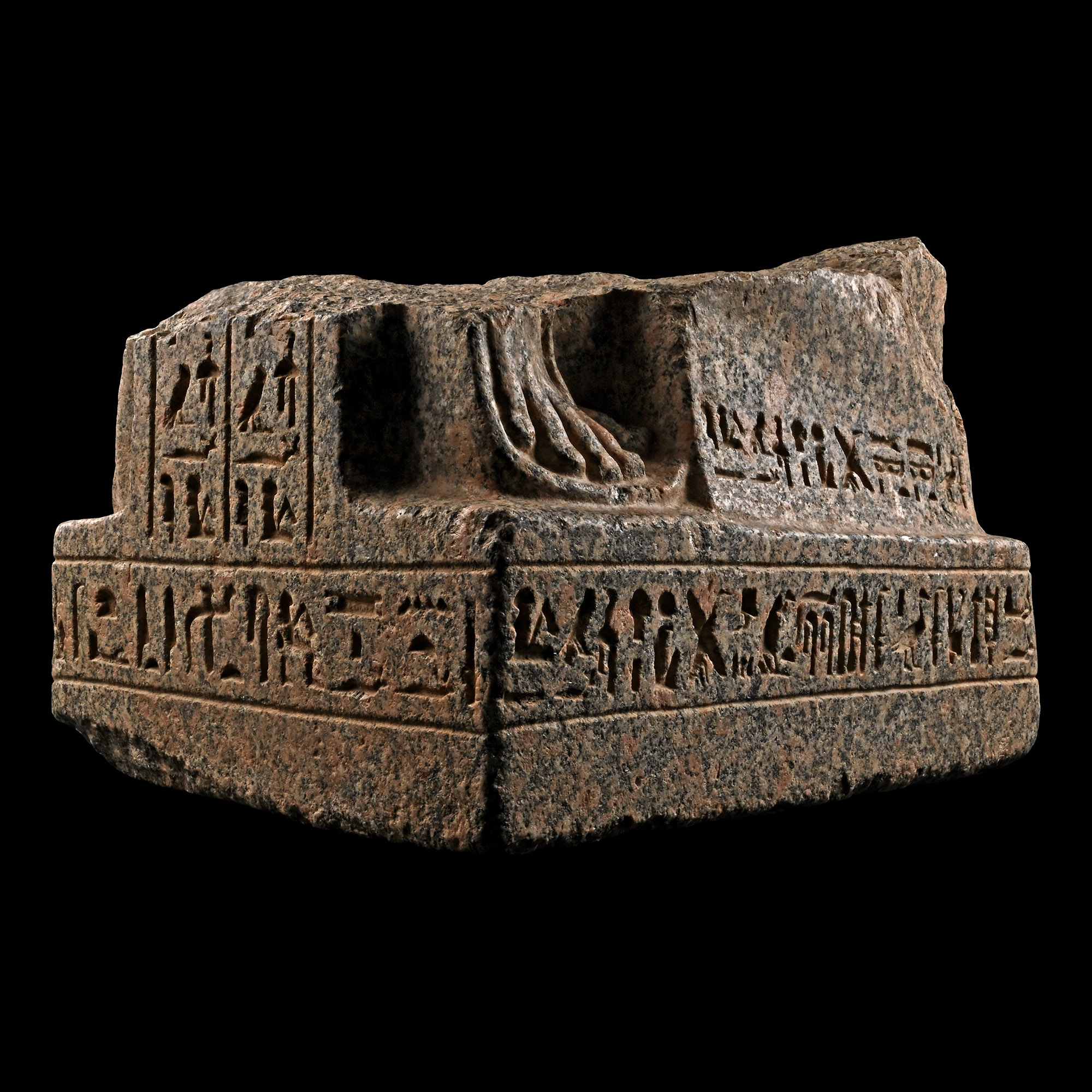
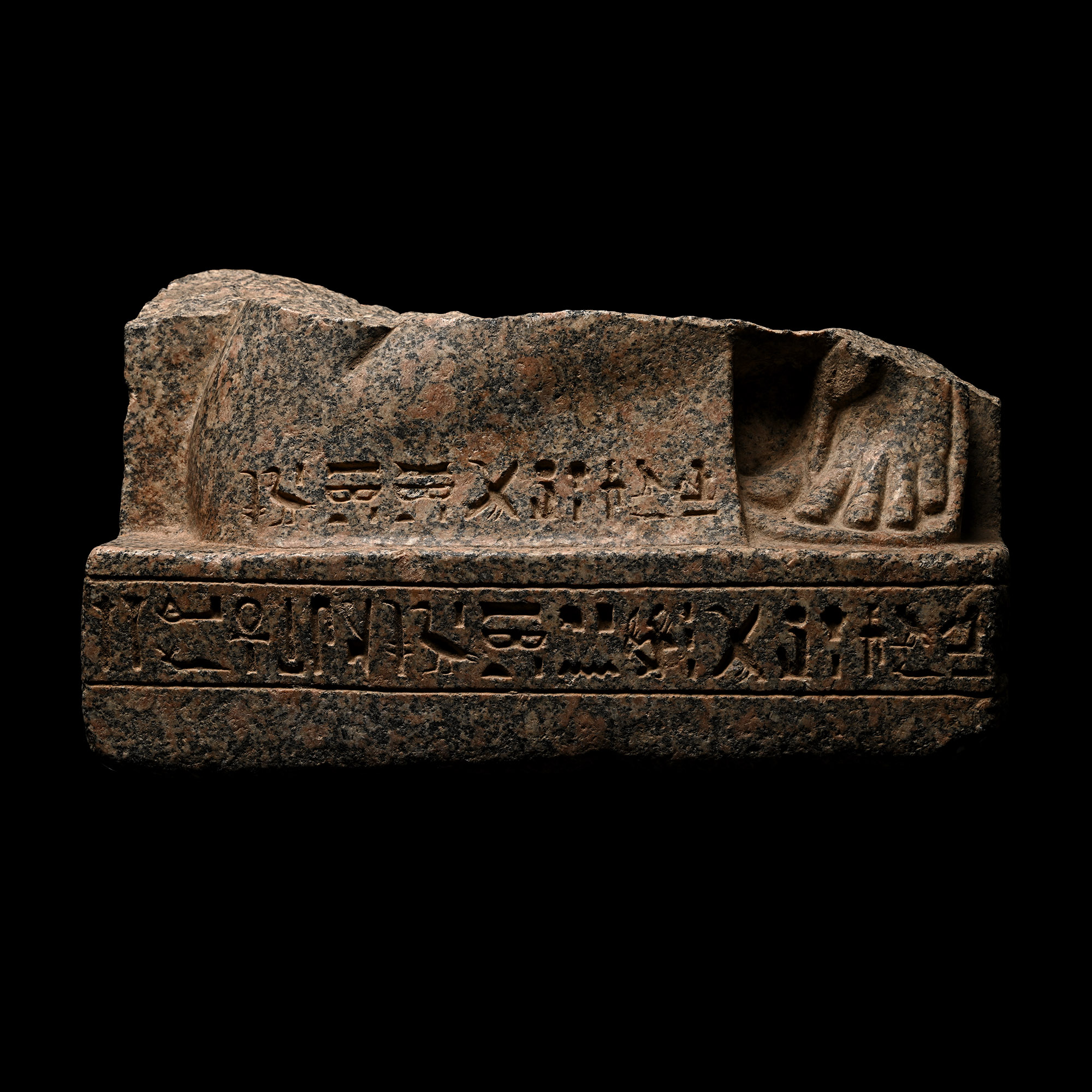
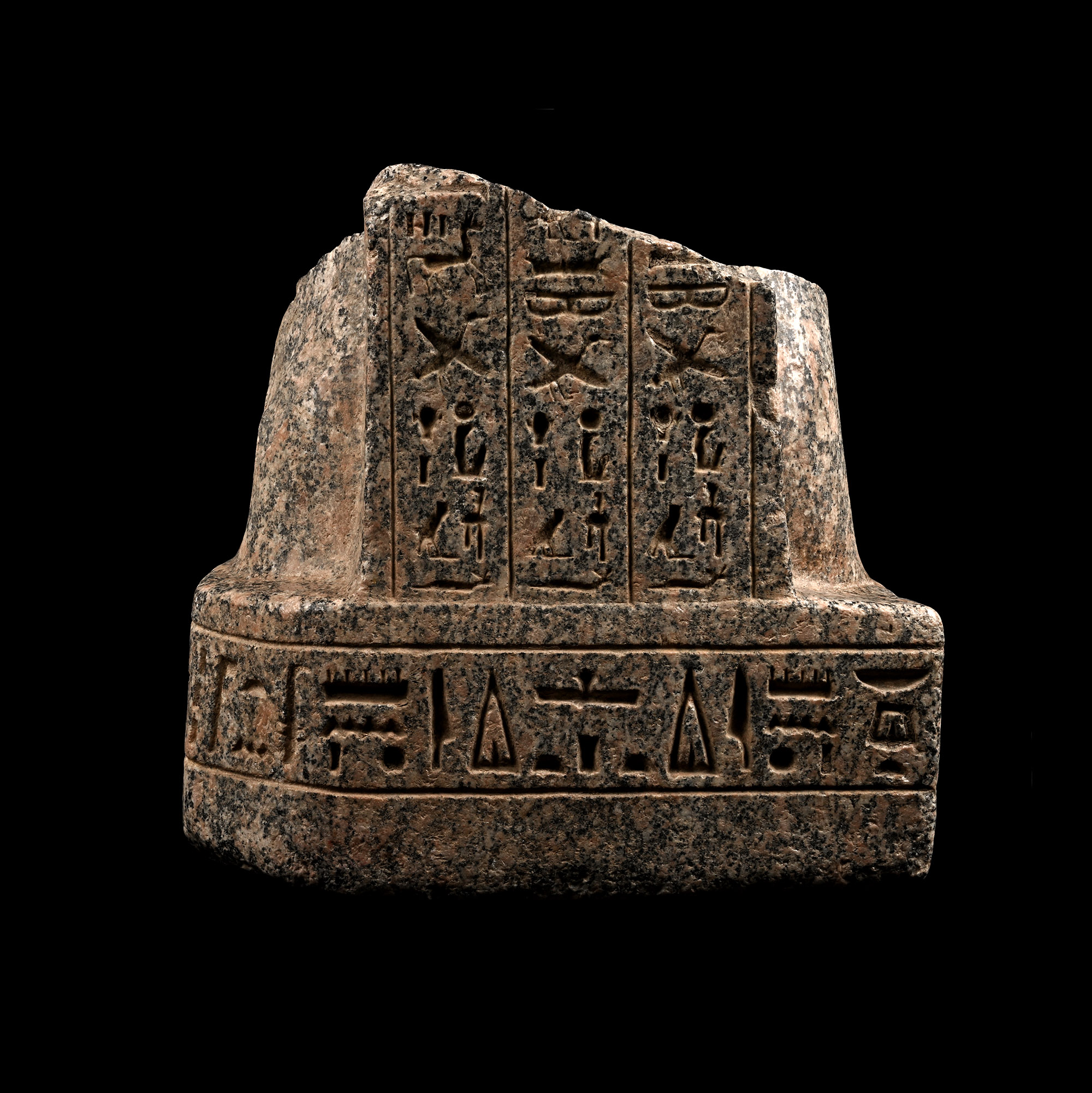
Monumental Egyptian Granite Statue Base For Prince Parahirwenemef
NEW KINGDOM, 19TH DYNASTY, CIRCA 1250 B.C.
23 in. (140 kg, 58.5 cm).
The reddish granite base and lower part of a kneeling statue of Prince Parahirwenemef, preserving the feet and lower legs with finely detailed sandals and well-modelled toes; part of the kilt survives, with a line of sunken hieroglyphs on either side; a broad front pillar and narrower back pillar rise from the base, both inscribed, while hieroglyphic inscriptions continue around all four sides of the plinth; the mirrored base inscriptions comprise offering formulae invoking Amun-Ra on behalf of the prince together with a series of his royal and military titles, including "royal scribe", "overseer of horses", "troop commander", "group marshaler", and the previously unattested title tpy n mšꜥ ("chief of troops"); a separate inscription on the rear of the plinth names the noblewoman Wadjet-khayty as sn.t=f mr=f ("his sister/wife, his beloved"), providing the first substantial evidence for her relationship with the prince and strongly suggesting that she was his wife.
ProvenancePrivate collection of Mr A., acquired circa 1983-1984. Thence by descent, private collection since the late 1990s.
This lot has been checked against the Interpol Database of Stolen Works of Art and is accompanied by a search certificate, no. 12887-241732.
An article on this significant piece is currently being prepared by the Egyptologist Paul Whelan.
The lot has been cleared against the Art Loss Register and is accompanied by a confirmation letter to that effect.
This lot is accompanied by an illustrated lot declaration signed by the Head of the Antiquities Department, Dr Raffaele D'Amato.
Prince Parahirwenemef, the third son of Ramesses II and Queen Nefertari, is depicted in several relief scenes and two colossal statues associated with Ramesses II's temples, as well as in two smaller statues, both surviving only in fragmentary form. The inscriptions on this previously unrecorded statue base preserve the previously unattested military title tpy n mšꜥ ("chief of troops"), expanding the known titulary of Parahirwenemef and reinforcing his close association with the Ramesside chariot corps. The monument also provides the first substantial evidence concerning the noblewoman Wadjet-khayty, previously known only from a brief reference to a lost Karnak monument, strongly supporting her identification as the prince's wife. Together, the inscriptions make an important contribution to the study of Ramesside royal genealogy, military administration, and princely sculpture.
CONDITIONTimeLine Auctions follows a vetting process to ensure the authenticity and legality of all items, reinforcing our commitment to integrity and responsible trading. Each antiquity, antique, and coin lot undergoes thorough examination by a vetting committee of at least ten external specialists, professional trade association members, scientists, and archaeologists: Our Vetting Process
AUCTIONS:
TimeLine is a leading auction house specialising in antiquities, ancient art, collectables, natural history, coins, medals, and books. Our auctions offer museums, collectors, historians, and enthusiasts the opportunity to acquire unique and historically significant pieces.
LOT 0016
Monumental Egyptian Granite Statue Base For Prince Parahirwenemef
Sold for (Inc. bp): £52,000
-
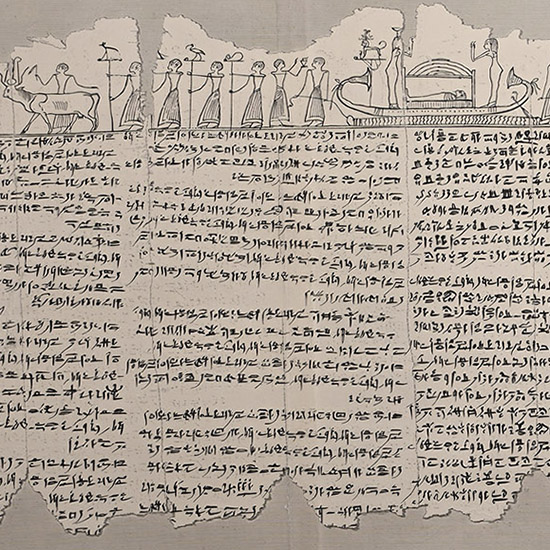
Very Large Egyptian Expedition Lithograph of the Hypogees Papyrus Manuscript from Thebes
Early 19th century A.D.Estimate: £80 - 100 (+bp*)
Opening Bid: £40
Proof etching on laid paper of plate 61 from Vol.II of Description de l'Égypte : ou, Recueil des observations et des recherches qui ont été faites en Égypte pendant l'expédition de l'armée française. entitled Thèbes. Hypogées. Manuscrit sur papyrus. 1ere partie. 207 grams,103 x 68 cm
From the collection of a North American priest. Acquired between 1981-1996. Property of a North American collector.
Produced between February 1802 and 1830 on the orders of Napoleon Bonaparte; published between 1809 and 1828. Just 1,000 copies were distributed to various institutions, printed on laid paper with an 'Égypte ancienne et moderne' watermark. The book is subtitled Recueil des observations et des recherches qui ont été faites en Égypte pendant l’expédition de l’Armée française, publié par les ordres de Sa Majesté l’Empereur Napoléon le Grand (Gathering of observations and discoveries which were made in Egypt during the expedition of the French army, published on the orders of His Majesty the Emperor Napoleon the Great). It was the world's first encyclopedia devoted exclusively to the remains of ancient Egypt. The plates of this book are the first to present the archaeological sites of Thebes (Luxor). The papyrus manuscript was recovered from an underground tomb chamber (hypogeum). The text is written in hieratic, a cursive form of hieroglyphic script often used for religious papyrus documents. The scene in the upper register depicts the funerary procession with lamenting men and women on the right, following the deceased's funerary assemblage, including his mummy on a bark. -
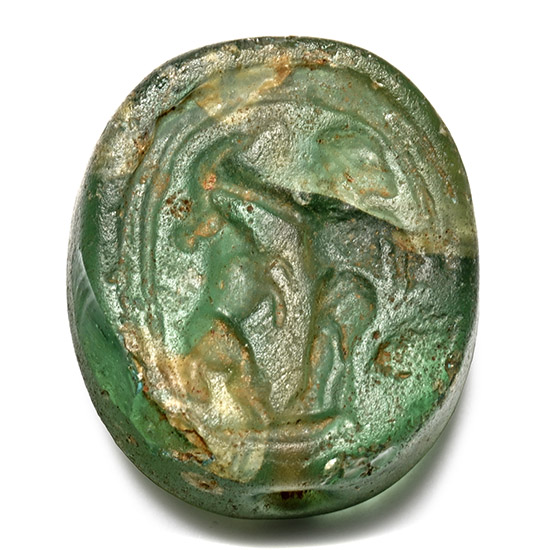
Egypto-Phoenician Glass Scarab Seal with Beast-Tamer Scene
Circa 800-600 B.C.Sold for (Inc. bp): £156
Ellipsoid in plan with transverse piercing, impressed intaglio scene of 'beast-tamer' motif (human figure in profile with one arm extended towards a rampant ibex); aqua glass; repaired. 4.28 grams, 19 mm
Ex the private collection of the late Mr S.M., London, UK, formed from 1979-1999. -
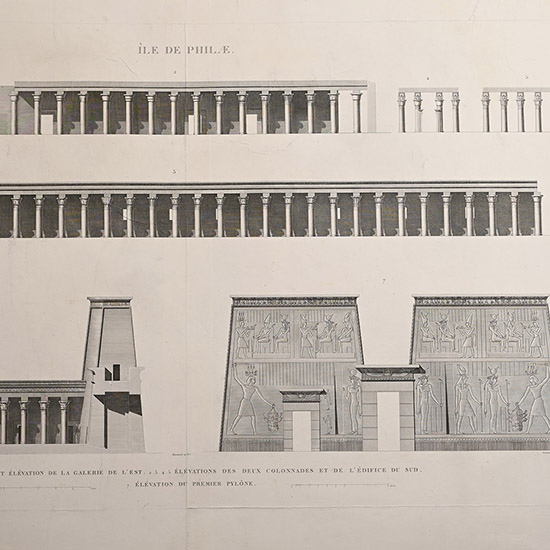
Very Large Egyptian Expedition Lithograph of the Temple of Philae
Early 19th century A.D.Sold for (Inc. bp): £94
Proof etching on laid paper of plate 6 from Description de l'egypte entitled Île de Philae. Coupe et élévation de la galerie de l'est. Élévations des deux colonnades et de l'édifice du sud. Élévation du premier pylône. 252 grams, 104 x 68.5 cm
From the collection of a North American priest. Acquired between 1981-1996. Property of a North American collector.
Produced between February 1802 and 1830 on the orders of Napoleon Bonaparte; published between 1809 and 1828. Just 1,000 copies were distributed to various institutions, printed on laid paper with an 'Égypte ancienne et moderne' watermark. The book is subtitled Recueil des observations et des recherches qui ont été faites en Égypte pendant l’expédition de l’Armée française, publié par les ordres de Sa Majesté l’Empereur Napoléon le Grand (Gathering of observations and discoveries which were made in Egypt during the expedition of the French army, published on the orders of His Majesty the Emperor Napoleon the Great). It was the world's first encyclopedia devoted exclusively to the remains of ancient Egypt. The plates of this book are the first to present the archaeological sites of Thebes (Luxor). The Philae temple complex was one of the major monuments dismantled from its original location and relocated to a new site during the Aswan High Dam project. Most of the complex dates to the Ptolemaic Period, although some earlier and later elements remain.
