
Loading, please wait...
LOT 0016
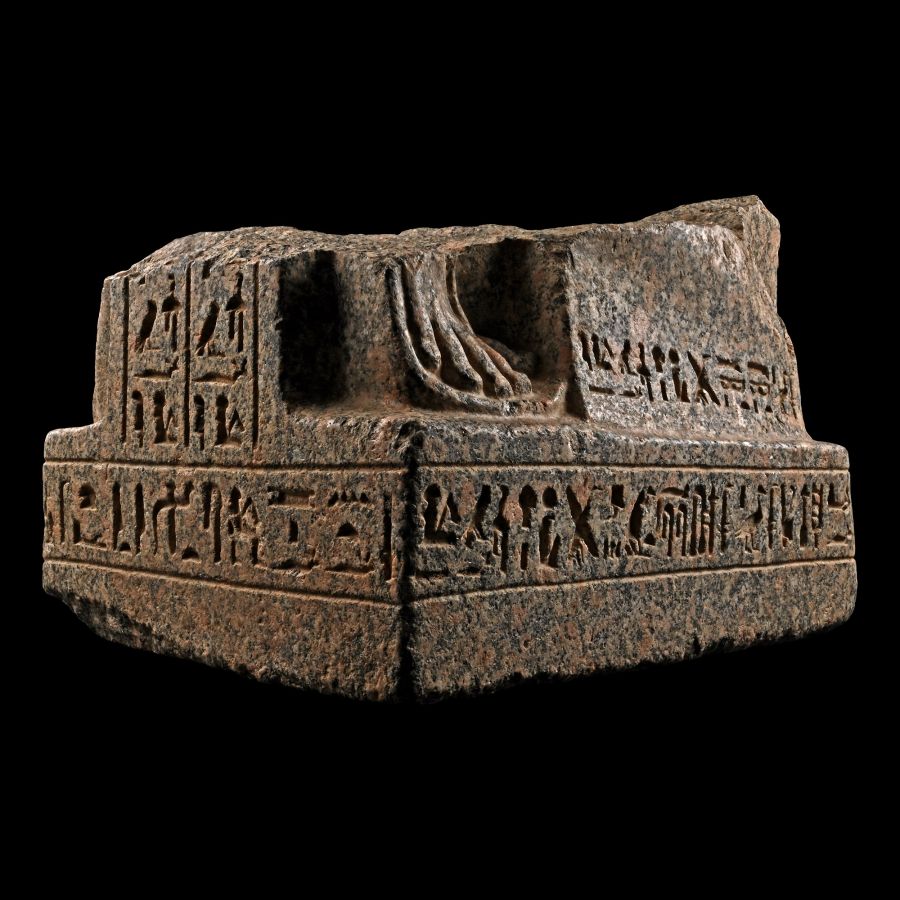
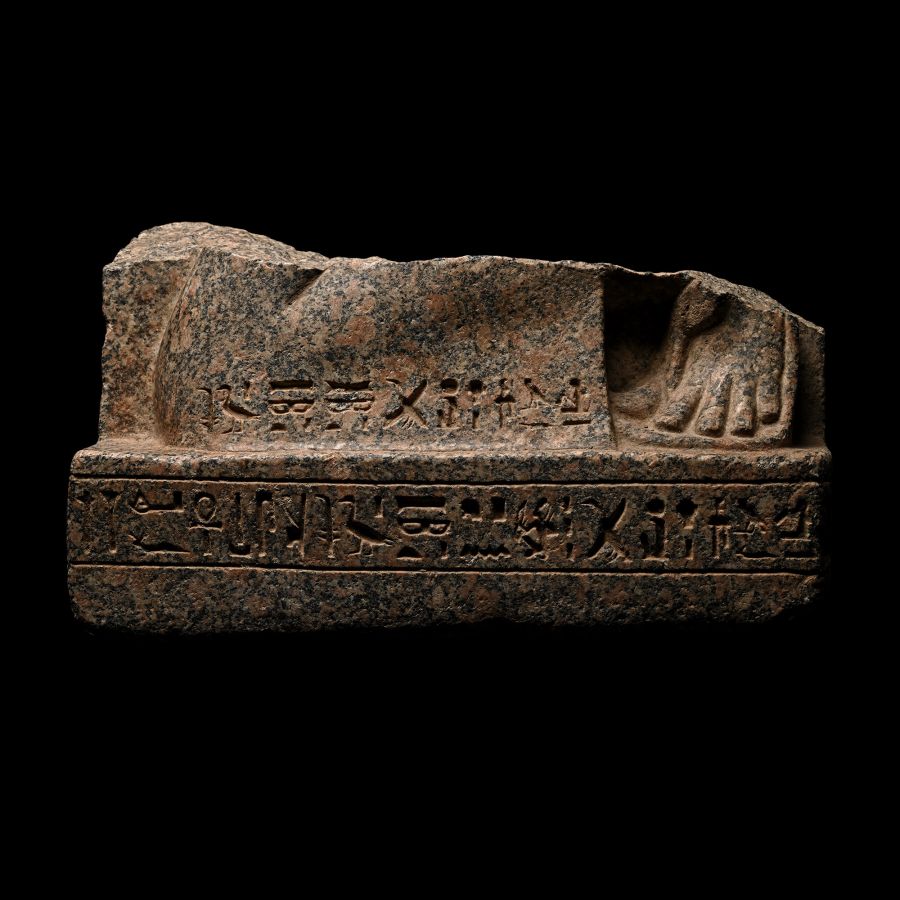
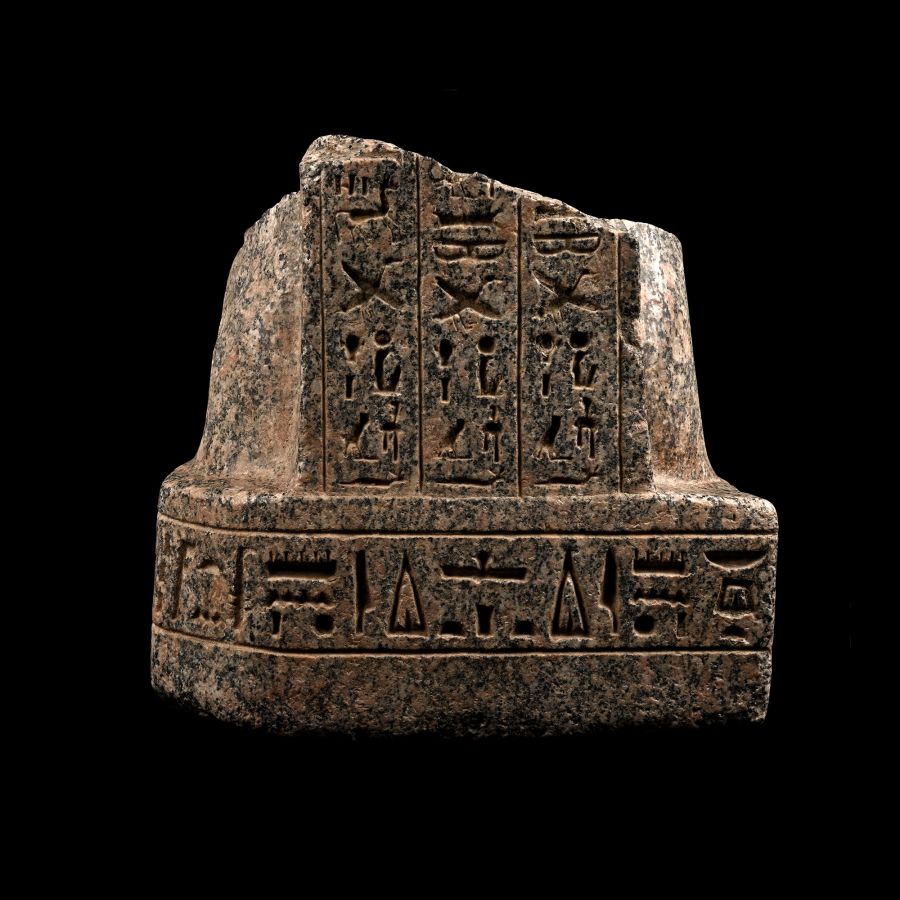
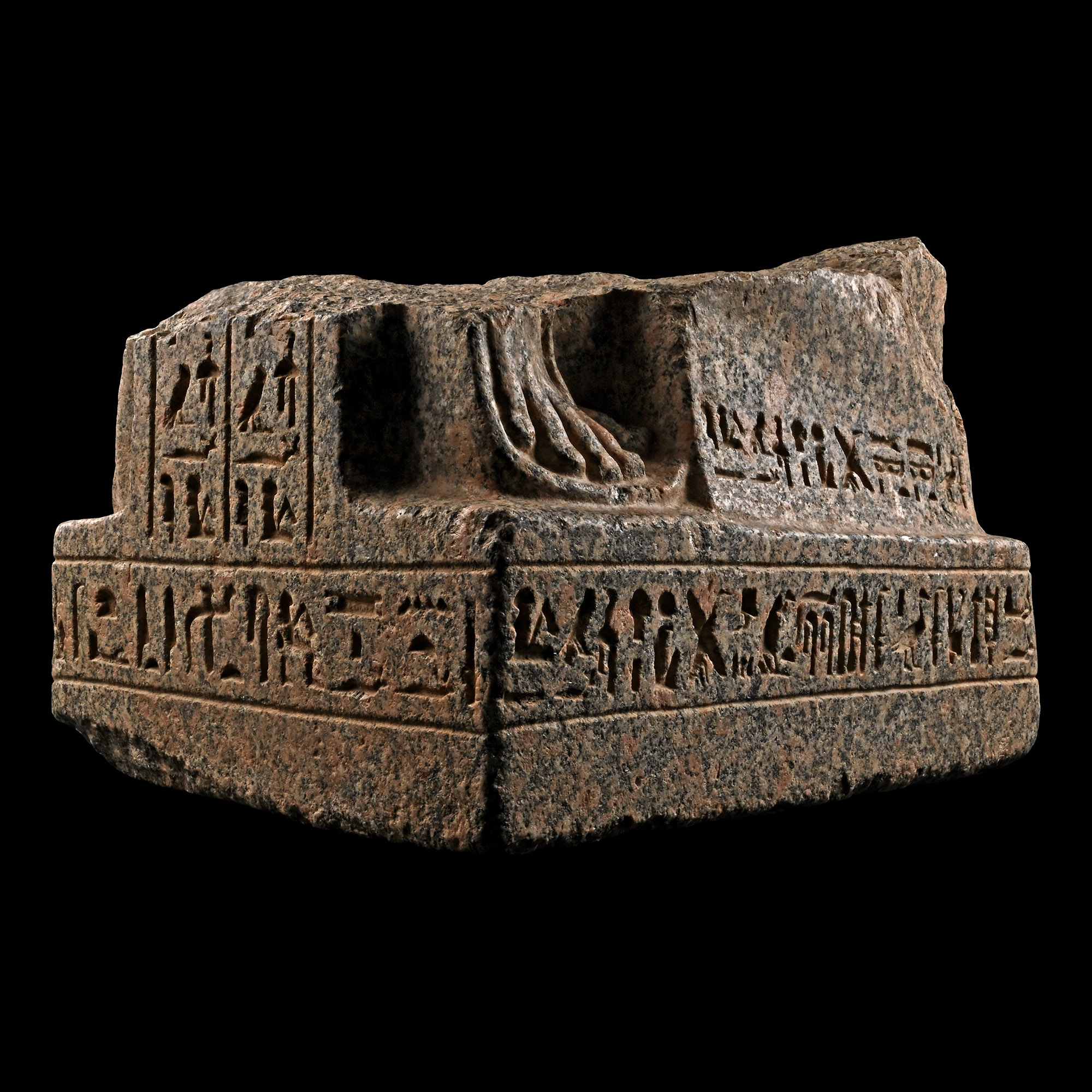
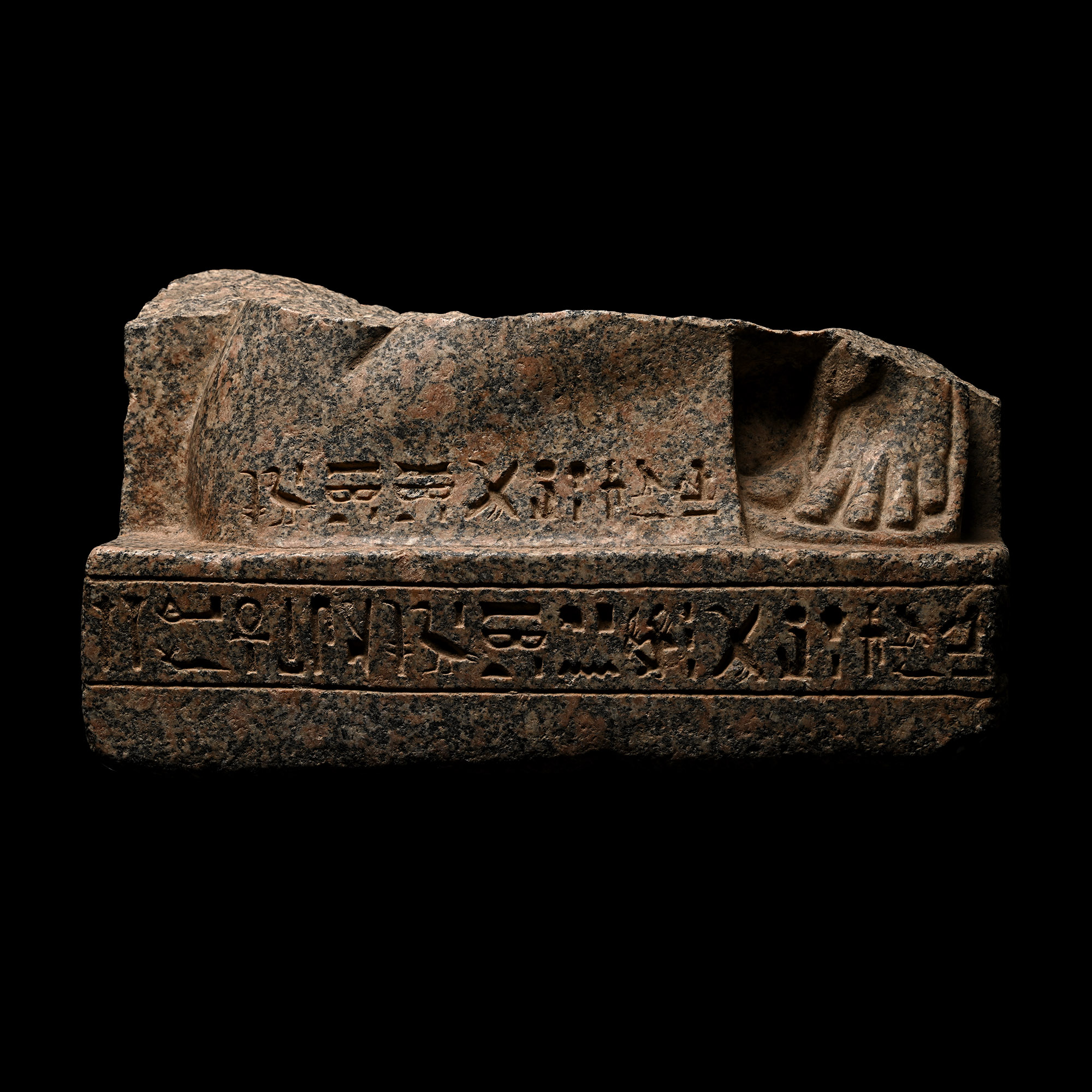
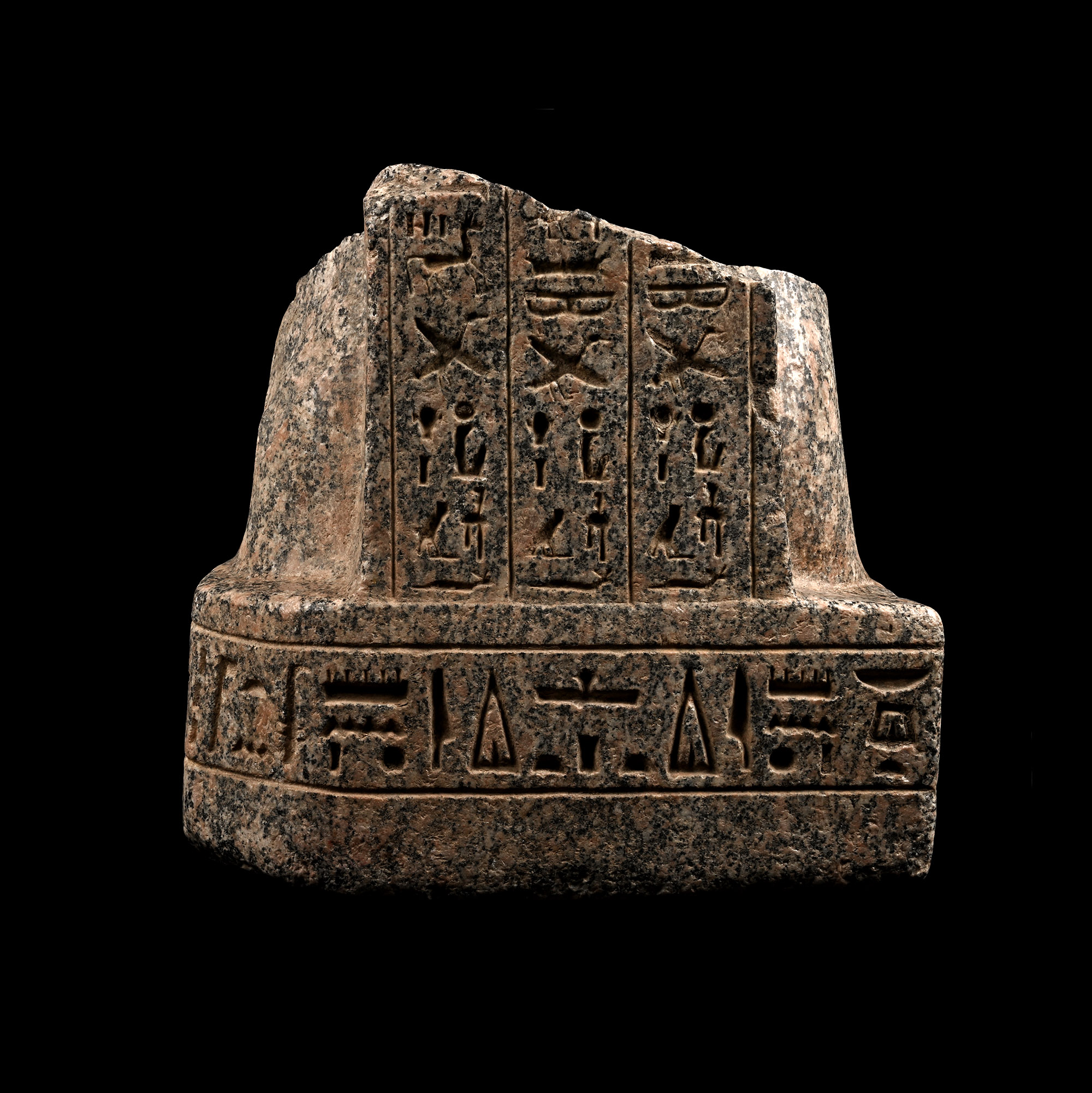
Monumental Egyptian Granite Statue Base For Prince Parahirwenemef
NEW KINGDOM, 19TH DYNASTY, CIRCA 1250 B.C.
23 in. (140 kg, 58.5 cm).
The reddish granite base and lower part of a kneeling statue of Prince Parahirwenemef, preserving the feet and lower legs with finely detailed sandals and well-modelled toes; part of the kilt survives, with a line of sunken hieroglyphs on either side; a broad front pillar and narrower back pillar rise from the base, both inscribed, while hieroglyphic inscriptions continue around all four sides of the plinth; the mirrored base inscriptions comprise offering formulae invoking Amun-Ra on behalf of the prince together with a series of his royal and military titles, including "royal scribe", "overseer of horses", "troop commander", "group marshaler", and the previously unattested title tpy n mšꜥ ("chief of troops"); a separate inscription on the rear of the plinth names the noblewoman Wadjet-khayty as sn.t=f mr=f ("his sister/wife, his beloved"), providing the first substantial evidence for her relationship with the prince and strongly suggesting that she was his wife.
ProvenancePrivate collection of Mr A., acquired circa 1983-1984. Thence by descent, private collection since the late 1990s.
This lot has been checked against the Interpol Database of Stolen Works of Art and is accompanied by a search certificate, no. 12887-241732.
An article on this significant piece is currently being prepared by the Egyptologist Paul Whelan.
The lot has been cleared against the Art Loss Register and is accompanied by a confirmation letter to that effect.
This lot is accompanied by an illustrated lot declaration signed by the Head of the Antiquities Department, Dr Raffaele D'Amato.
Prince Parahirwenemef, the third son of Ramesses II and Queen Nefertari, is depicted in several relief scenes and two colossal statues associated with Ramesses II's temples, as well as in two smaller statues, both surviving only in fragmentary form. The inscriptions on this previously unrecorded statue base preserve the previously unattested military title tpy n mšꜥ ("chief of troops"), expanding the known titulary of Parahirwenemef and reinforcing his close association with the Ramesside chariot corps. The monument also provides the first substantial evidence concerning the noblewoman Wadjet-khayty, previously known only from a brief reference to a lost Karnak monument, strongly supporting her identification as the prince's wife. Together, the inscriptions make an important contribution to the study of Ramesside royal genealogy, military administration, and princely sculpture.
CONDITIONTimeLine Auctions follows a vetting process to ensure the authenticity and legality of all items, reinforcing our commitment to integrity and responsible trading. Each antiquity, antique, and coin lot undergoes thorough examination by a vetting committee of at least ten external specialists, professional trade association members, scientists, and archaeologists: Our Vetting Process
AUCTIONS:
TimeLine is a leading auction house specialising in antiquities, ancient art, collectables, natural history, coins, medals, and books. Our auctions offer museums, collectors, historians, and enthusiasts the opportunity to acquire unique and historically significant pieces.
LOT 0016
Monumental Egyptian Granite Statue Base For Prince Parahirwenemef
Sold for (Inc. bp): £52,000
-
Egyptian Faience Hierogyphic Shabti
Late Period, 664-332 B.C.Sold for (Inc. bp): £221
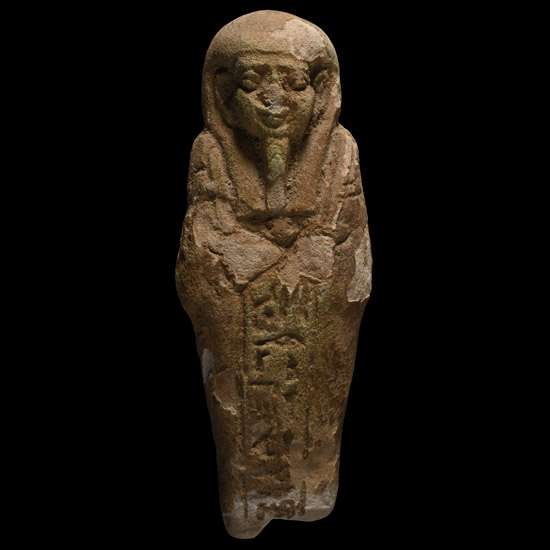
With moulded facial features, tripartite wig, agricultural tools in the crossed hands and a seed-bag to the left shoulder; dorsal pillar; vertical panel to lower body with impressed hieroglyphic inscription: 'The illuminated one, the Osiris, the Controller of the Estates.... (sḥḏ wsı͗r ḫrp-ḥwwt....); lower legs absent. 56.3 grams, 95 mm
From the private collection of a Canadian gentleman living in Essex, UK, formed since the 1920s-circa 1990. Property of an Essex lady until the late 1990s; thence by descent. From the private collection of an Essex gentleman since the late 1990s. -
.jpg)
Egyptian Bronze Seated Bastet Cat Amulet
Late Period, 664-332 B.C.Sold for (Inc. bp): £1,820
Modelled seated on a tongue-shaped base, with simple facial detailing and a suspension loop to the back. 5.76 grams, 21 mm
UK private collection before 2000. London collection, acquired on the UK art market.
The goddess Bastet was believed to be the daughter of the sun god and was shown with the features of a lion up until about 1000 B.C., when she was first portrayed as a cat or human with a cat head. As the daughter of Ra, she was associated with the rage inherent in the sun god's eye, which was considered to be his instrument of vengeance. Her development into a cat goddess occurred during the New Kingdom, but did not fully develop until the Late Period. She was still associated with the destructive power of the sun and was shown on the prow of the solar boat, decapitating the evil serpent Apophis in the Book of the Dead. The maternal, protective and hunting characteristics of the cat are obvious in Bastet, and she was seen as a protector of pregnant women and young children. In the Pyramid Texts, she is invoked by the deceased king to act as his protector and to help him reach the sky to join the sun god; the king proclaims that Bastet is his mother and nurse. Like her counterpart, Sekhmet, Bastet has an aggressive side and, in a text from Karnak, Amenhotep II described his enemies being slaughtered like the victims of Bastet. The goddess had a shrine at Karnak, where she is known as the 'Lady of Asheru', which aligns her closely with the goddess Mut, the consort of Amun-Ra. Her most famous shrine was in the north-east Delta region, at Bubastis, and was known as Per-Bastet or 'the House of Bastet.' Herodotus describes the festival of Bastet as one of the most elaborate in all of Egypt and identifies her with the Greek Artemis. Cemeteries of cats have been excavated at Bubastis, and at Saqqara and Memphis. -
.jpg)
Egyptian Bronze Seated Cat Statuette
Late Period, 664-332 B.C.Estimate: £600 - 800 (+bp*)
Opening Bid: £333
Bastet in crouching pose with her tail wrapped close to right side of her body, seated on a tongue-shaped base, with a suspension loop on the creature’s back. 90 grams, 55 mm
Acquired on the UK art market, 1990s. Private collection, New York, USA.
