
Loading, please wait...
_900x900.jpg "Monumental Early Etruscan Impasto Kyathos")
_200x200.jpg "Monumental Early Etruscan Impasto Kyathos")
_900x900.jpg "Monumental Early Etruscan Impasto Kyathos")
_200x200.jpg "Monumental Early Etruscan Impasto Kyathos")
_900x900.jpg "Monumental Early Etruscan Impasto Kyathos")
_200x200.jpg "Monumental Early Etruscan Impasto Kyathos")
.jpg "Monumental Early Etruscan Impasto Kyathos")
.jpg "Monumental Early Etruscan Impasto Kyathos")
.jpg "Monumental Early Etruscan Impasto Kyathos")
LOT 0538
Monumental Early Etruscan Impasto Kyathos
7TH CENTURY B.C.
9 7/8 in. (1.18 kg, 25 cm wide).
Fluted body tapering to a narrow foot, the shoulders decorated with tiered bosses, short neck with flared mouth; wide handle perforated with a triangle. [No Reserve]
ProvenanceEstate of Mr Bruno Fellinger (1926-2016), Küsnacht, Switzerland.
with Galerie Rhéa, Zurich, Switzerland.
This lot has been checked against the Interpol Database of stolen works of art and is accompanied by a search certificate number no.12648-236390.
Cf. Hall Dohan, E., Italic Tomb-Groups in the University Museum, University of Pennsylvania, 1942, p.83, no.7, pl.44, Vulci Tomb 51, for a smaller parallel; see also Metropolitan Museum of Art, accession number 26.60.44, for a very similar piece.
FootnotesBuccheroid impasto is the name attributed by modern archaeologists to wheel thrown pottery. The clay in these specimens is less refined, and the firing techniques less precise than in the later bucchero ware.
CONDITIONTimeLine Auctions follows a vetting process to ensure the authenticity and legality of all items, reinforcing our commitment to integrity and responsible trading. Each antiquity, antique, and coin lot undergoes thorough examination by a vetting committee of at least ten external specialists, professional trade association members, scientists, and archaeologists: Our Vetting Process
AUCTIONS:
TimeLine is a leading auction house specialising in antiquities, ancient art, collectables, natural history, coins, medals, and books. Our auctions offer museums, collectors, historians, and enthusiasts the opportunity to acquire unique and historically significant pieces.
-
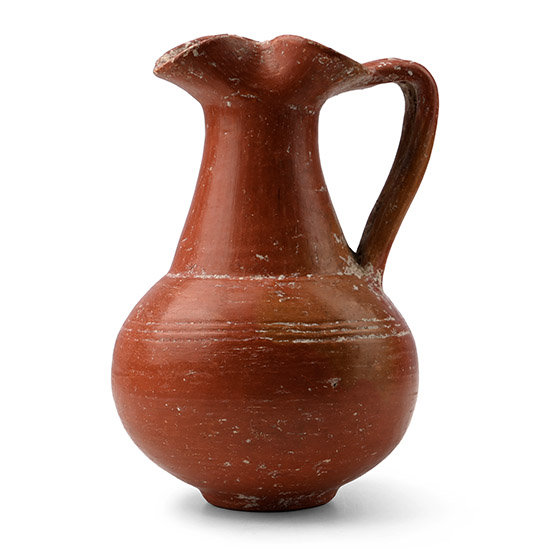
Graeco-Phoenician Glazed Terracotta Oinochoe
7th century B.C.Estimate: £800 - 1,000 (‡+bp*)
Opening Bid: £400
With a folded trefoil mouth, an applied ribbed handle and basal ring, and incised concentric rings above the equator. 491 grams, 17 cm
Private collection, acquired in the late 1980s-early 1990s; thence by descent.
Throughout the 7th century BC, the Phoenician ports received goods from the East, from Cyprus, Eastern Greece, Pithecussa, and even Etruria, likely in exchange for grain, oil, and wine. Among the various archaeological finds unearthed in these ports are Attic, Corinthian, and Rhodian pottery, some of which was manufactured by the Greek colonies of the West, such as Ischia-Pithecussa. -
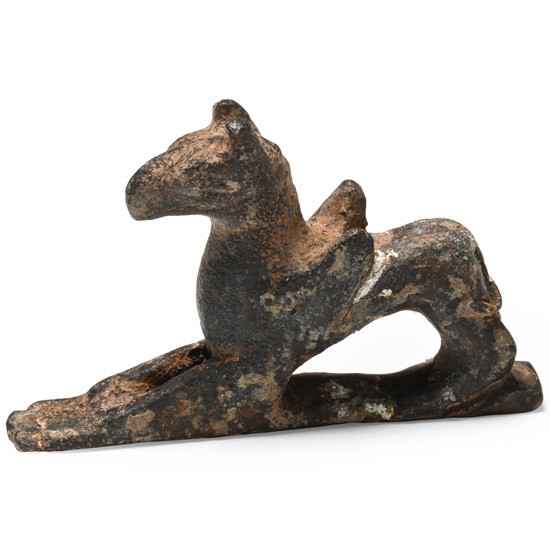
Greek Bronze Gryphon Statuette
Circa 4th-2nd century B.C.Sold for (Inc. bp): £98
Modelled in a typical pose with its front paws extended, an erect head and small wings. 28.4 grams, 46 mm wide
From the private collection of a European gentleman (1942-2024), formed since the 1970s. -
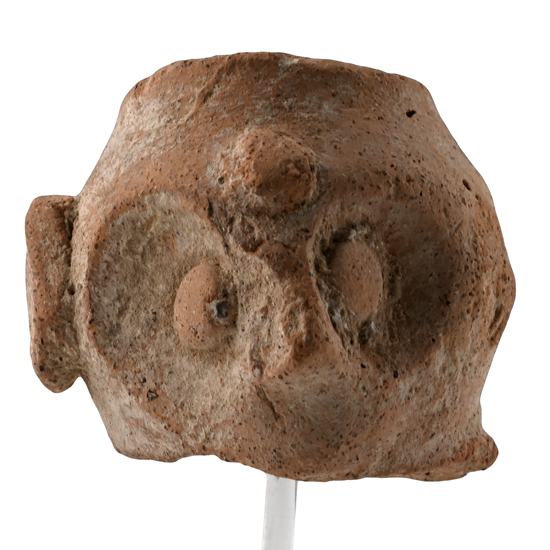
Greek Terracotta Votive Head
Mediterranean, circa 700 B.C.Sold for (Inc. bp): £65
Bulbous head with stylised owl-like facial features, large applied pupils and ear; mounted on a custom-made display stand. 96 grams total, 46 mm (65 mm high including stand)
Acquired from Vanessa Purcell & Company, Manchester, UK, in 1993. From the collection of Mr & Mrs J.G.W. Lee, late Herefordshire collectors, their collection having been established from the 1990s. Accompanied by an original sales receipt.
