
Loading, please wait...
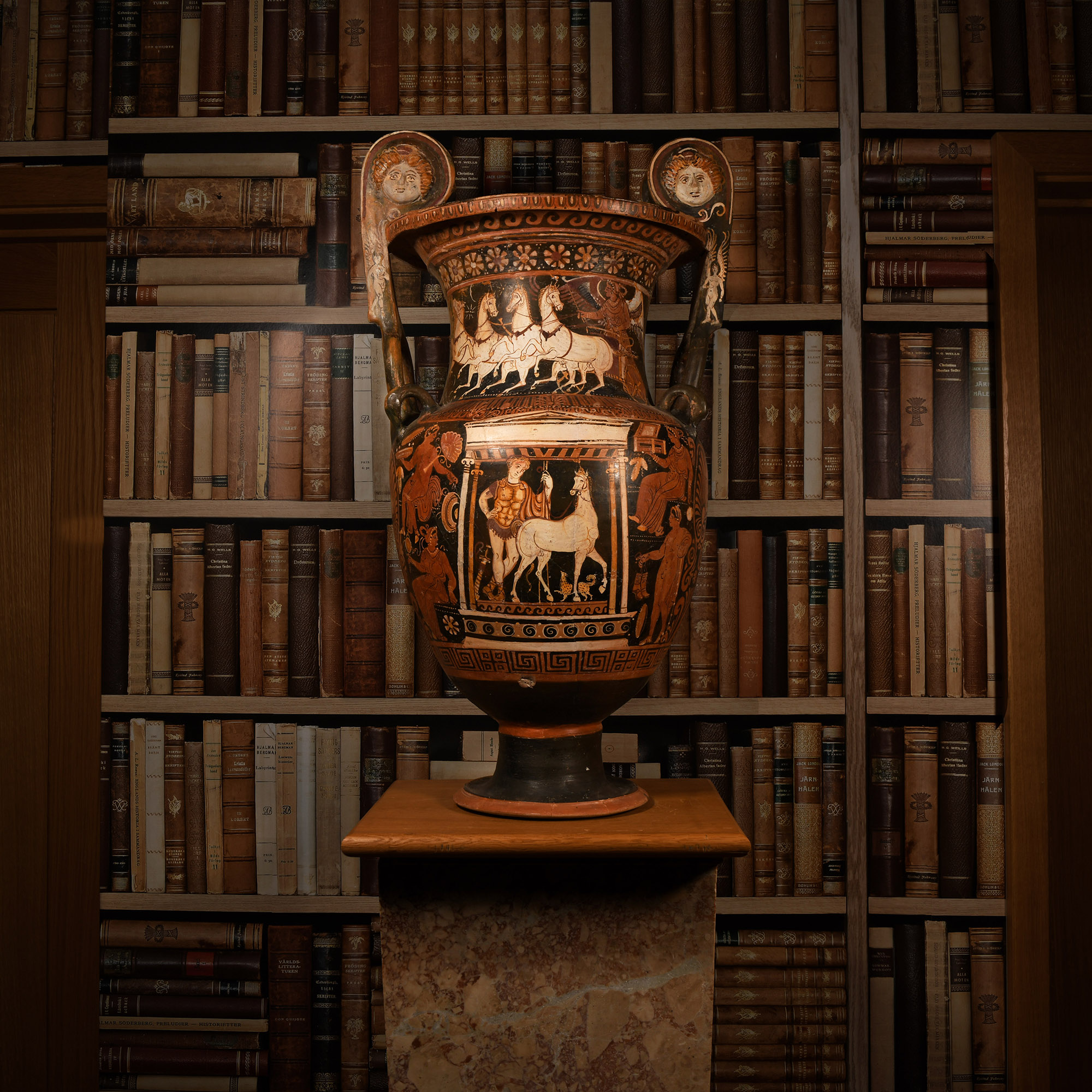
_900x900.jpg "Monumental Apulian Red-Figure Volute Krater Attributed to the Licurgus Painter")
_200x200.jpg "Monumental Apulian Red-Figure Volute Krater Attributed to the Licurgus Painter")
.jpg "Monumental Apulian Red-Figure Volute Krater Attributed to the Licurgus Painter")
LOT 0093
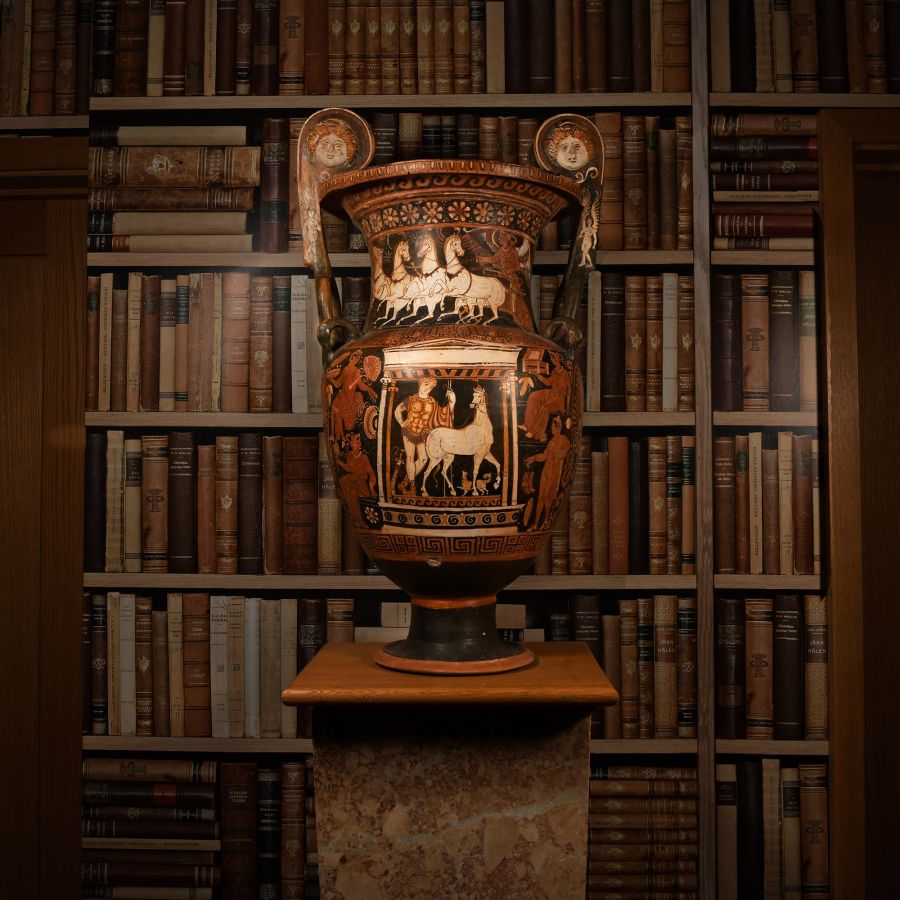
Monumental Apulian Red-Figure Volute Krater Attributed to the Licurgus Painter
CIRCA 330 B.C.
30 7/8 in. (13.85 kg, 78.5 cm high).
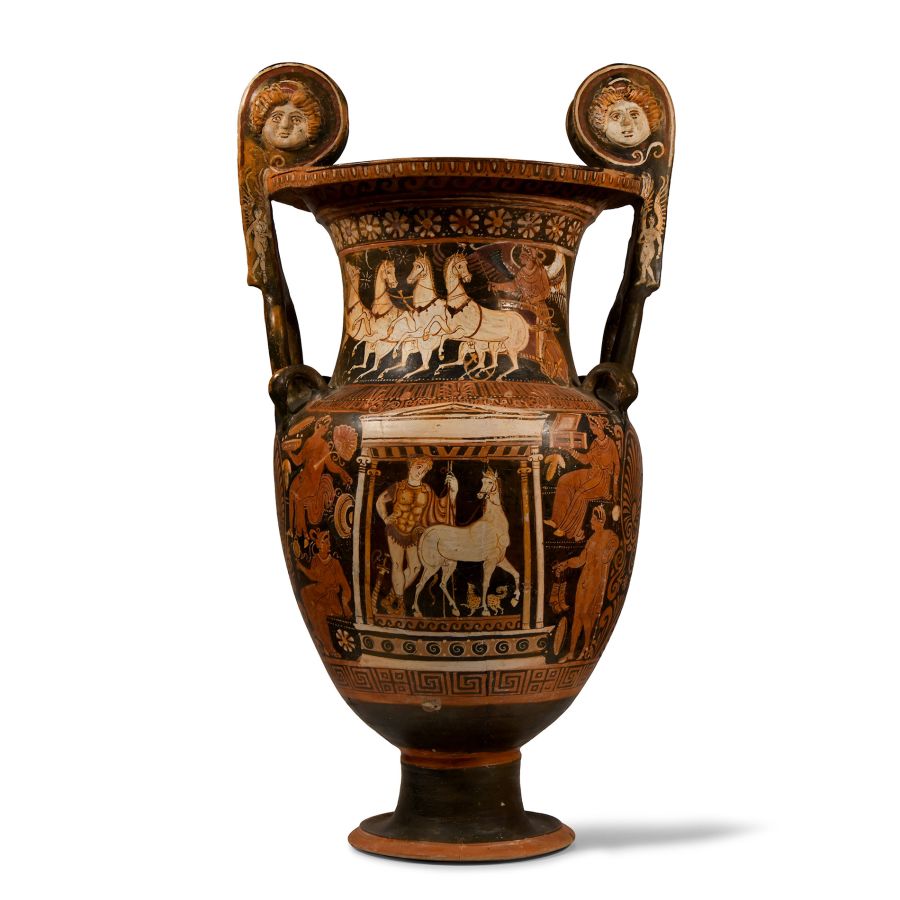
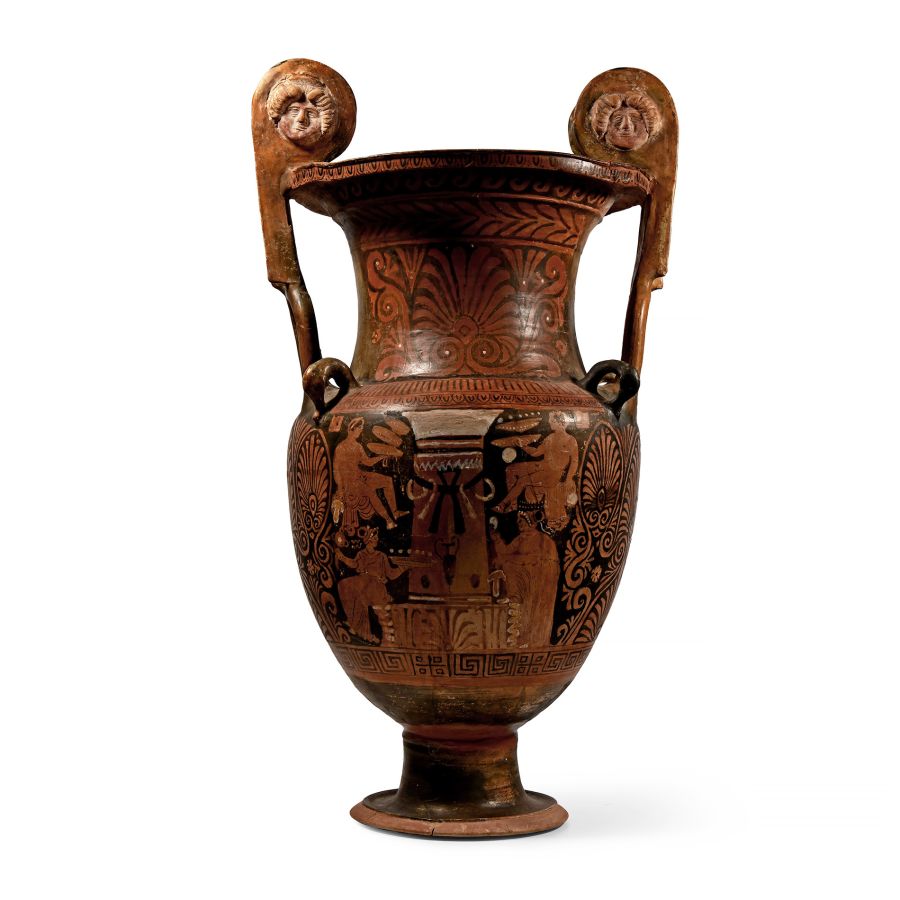
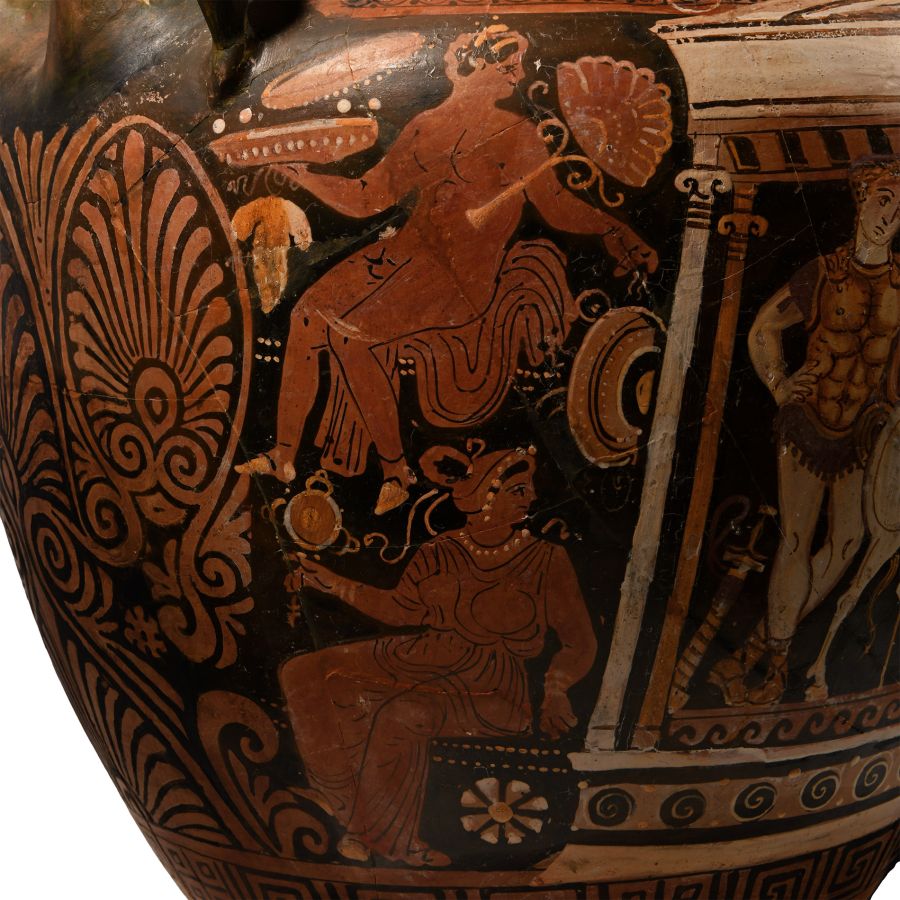
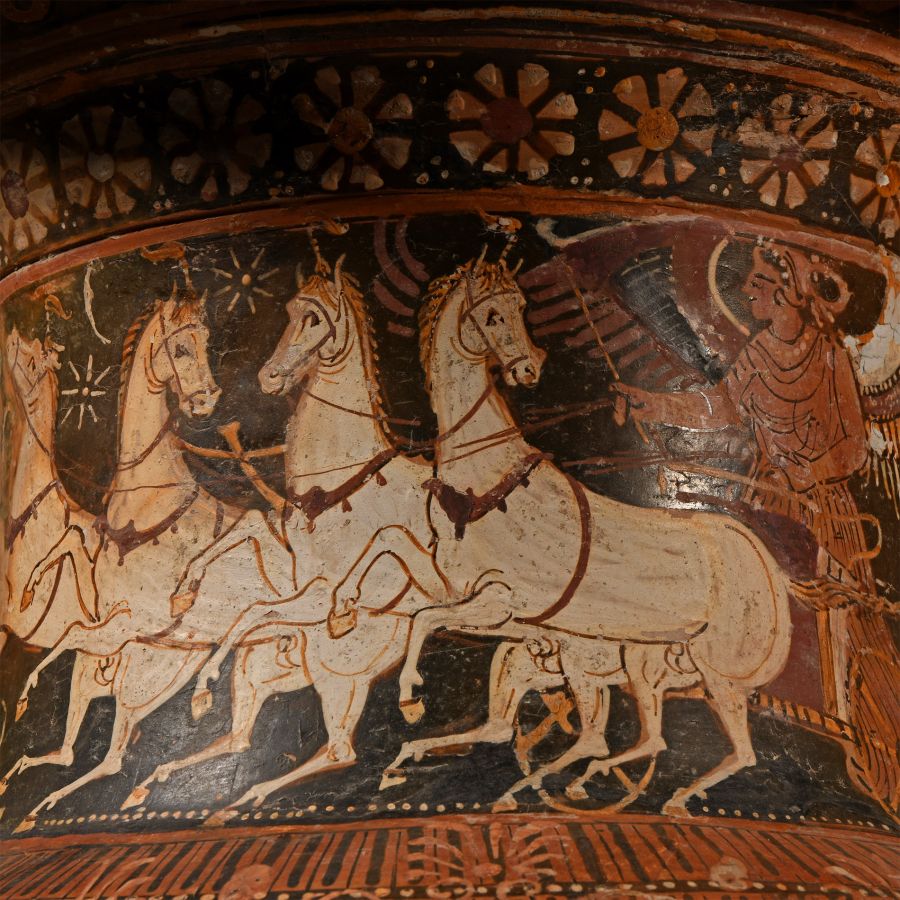
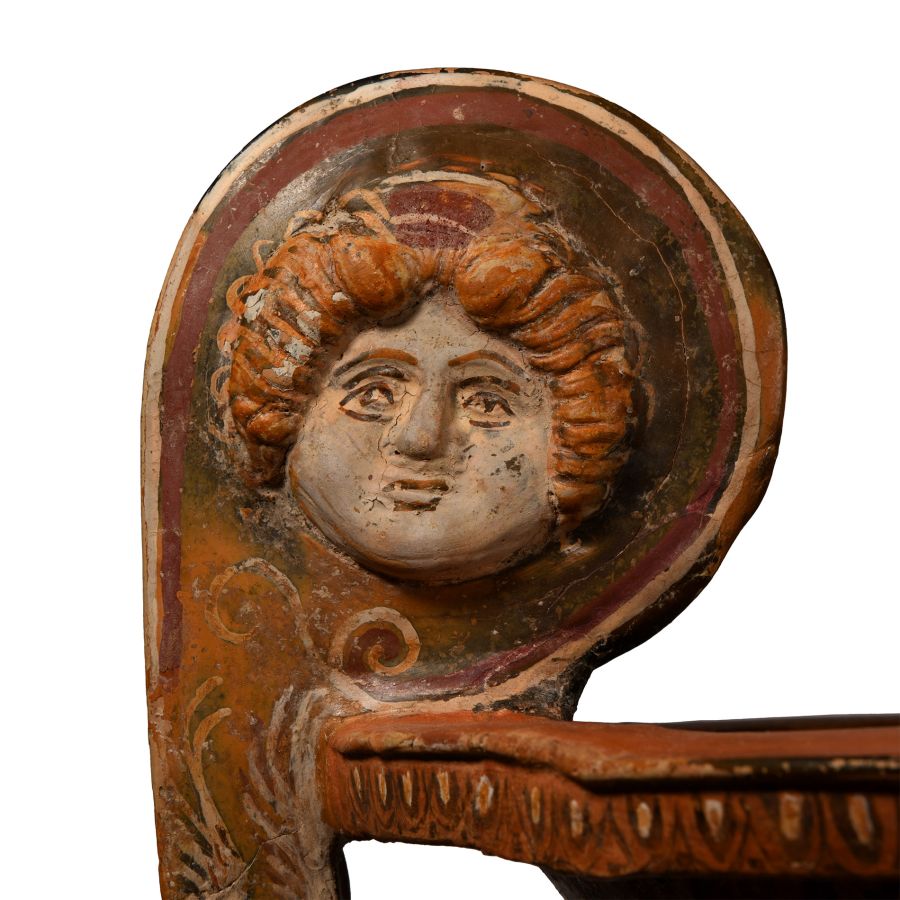
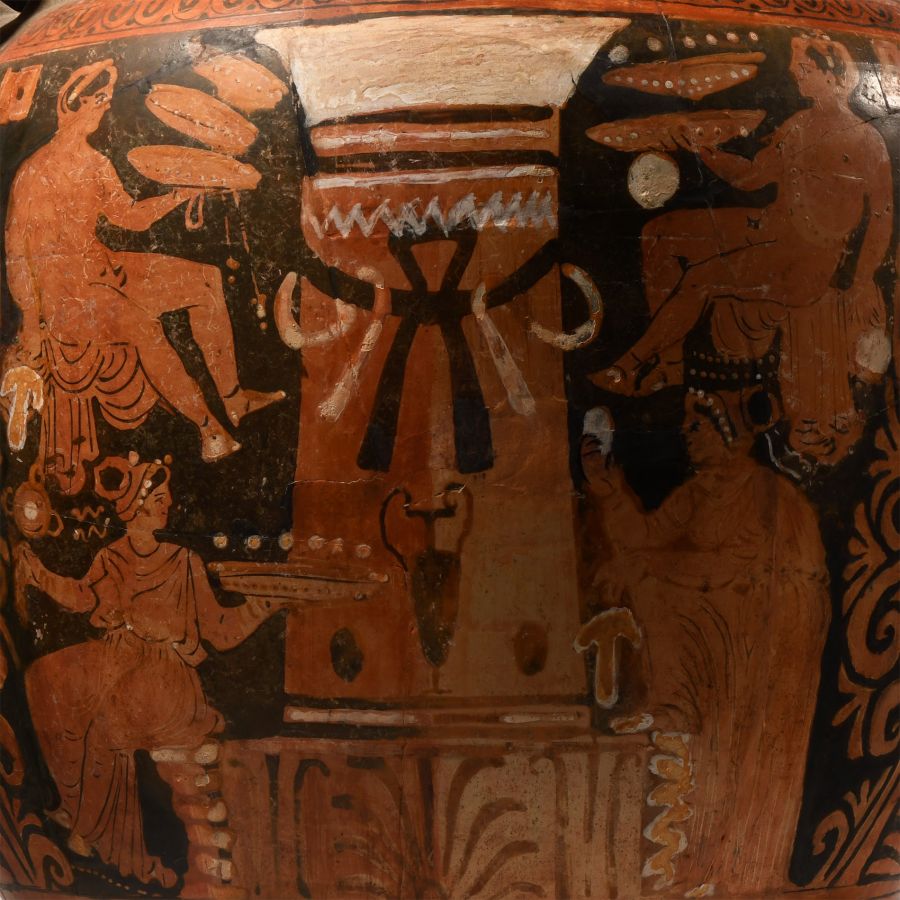
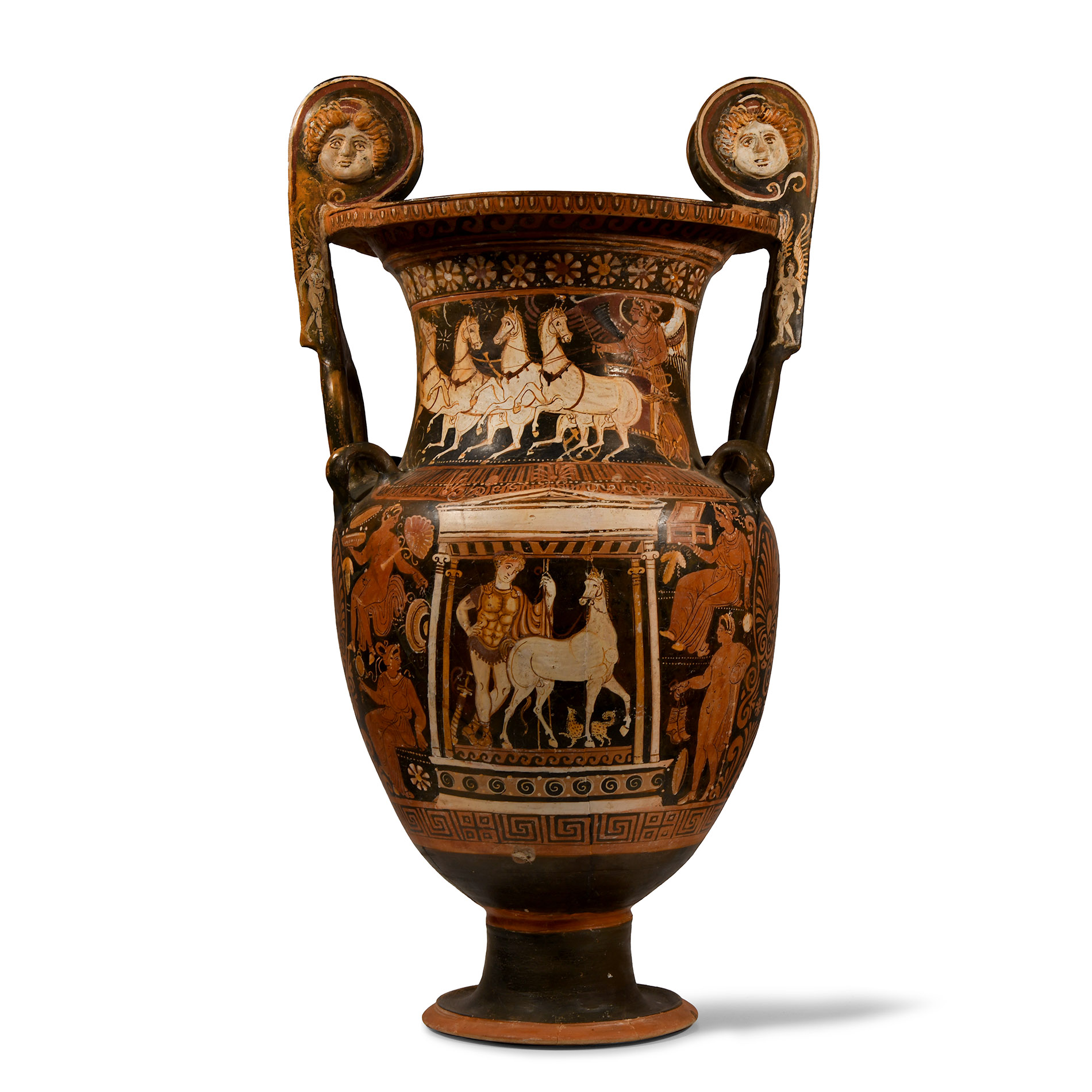
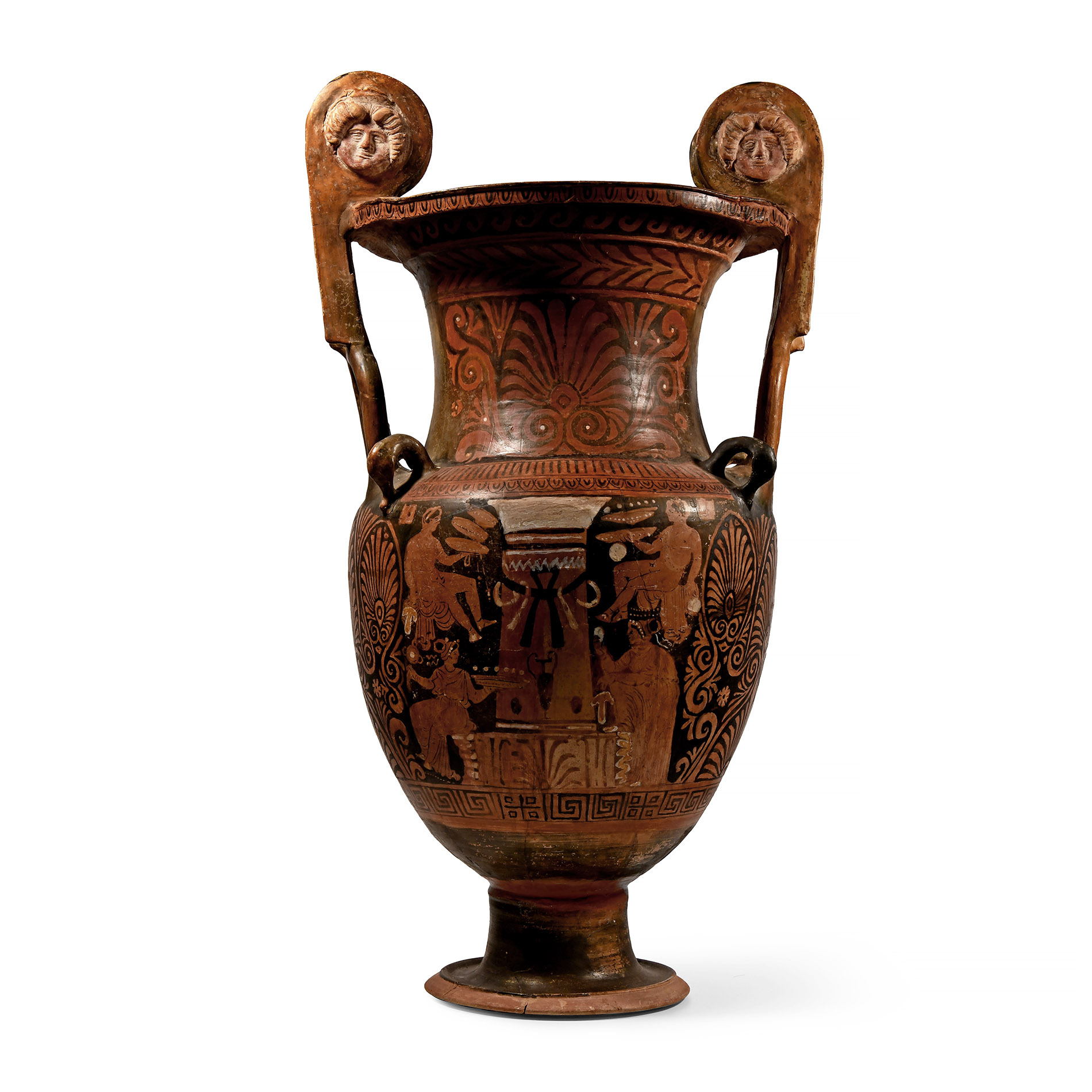
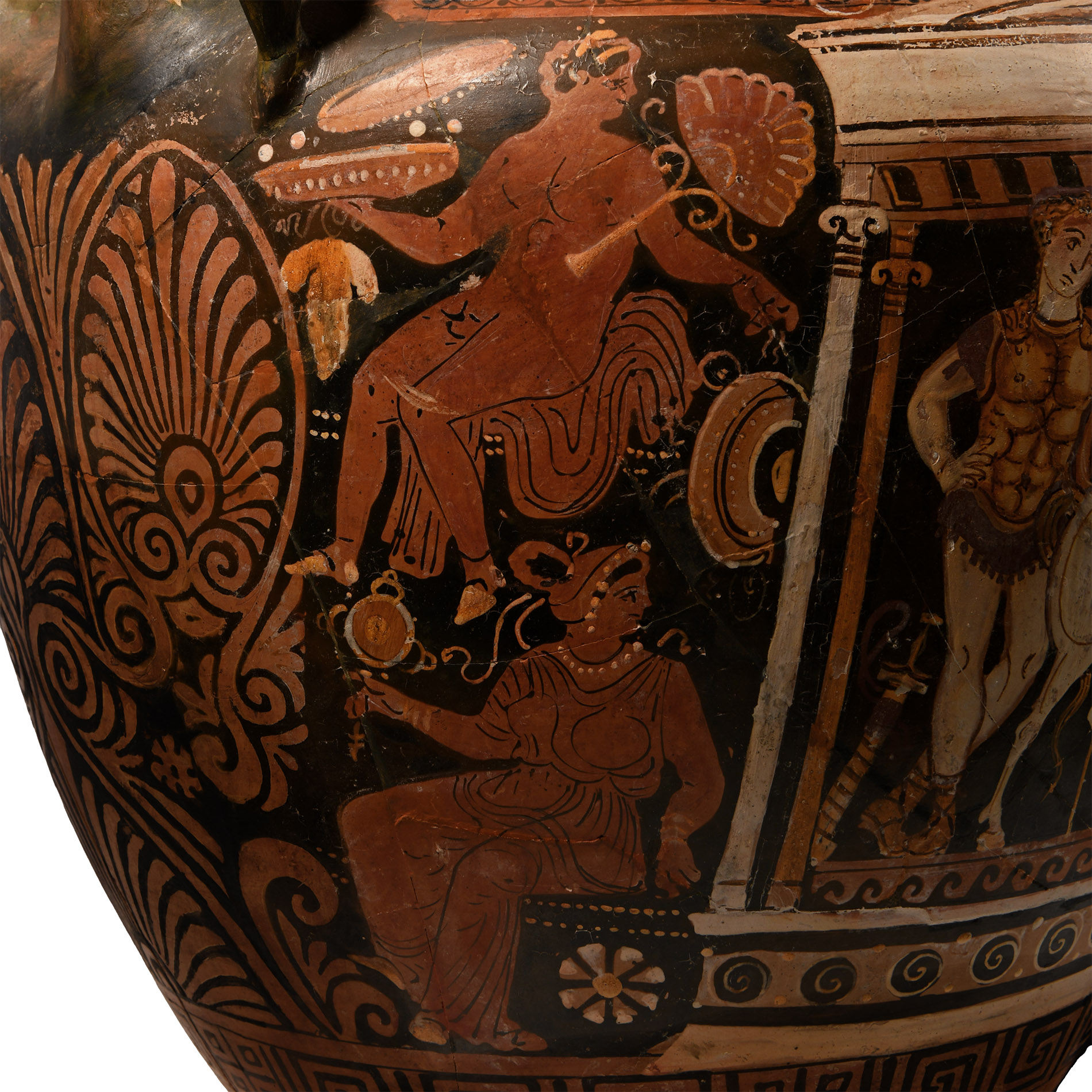
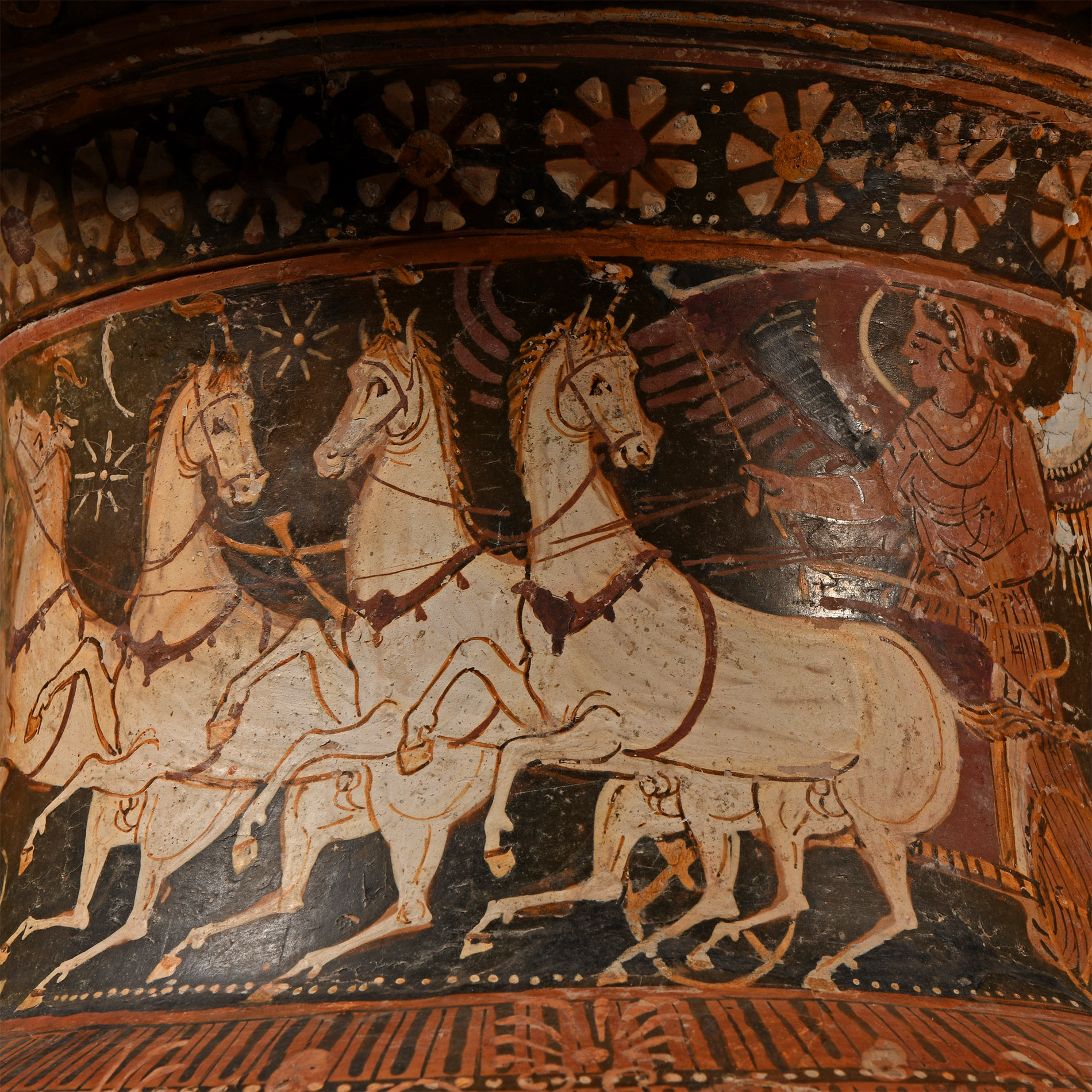
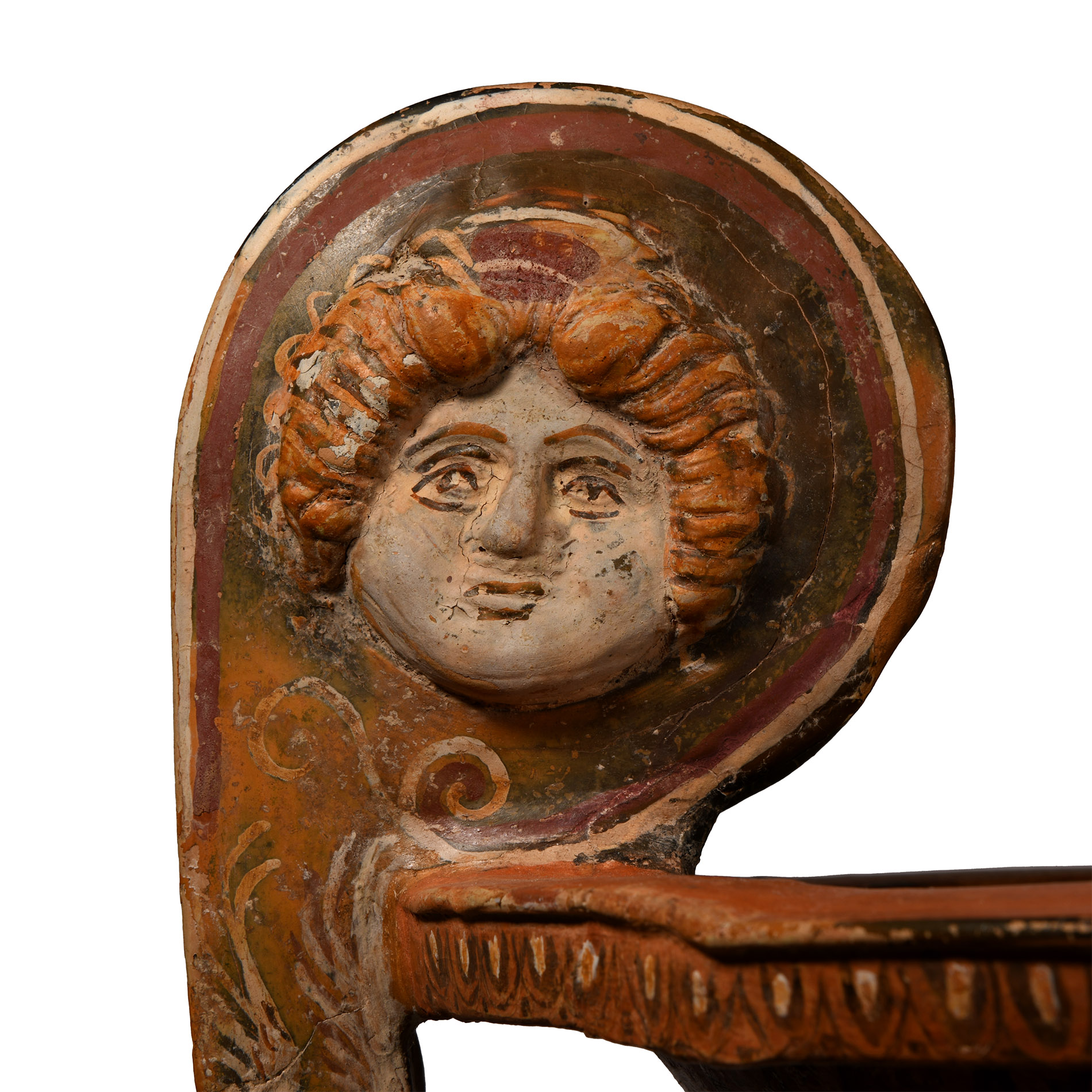
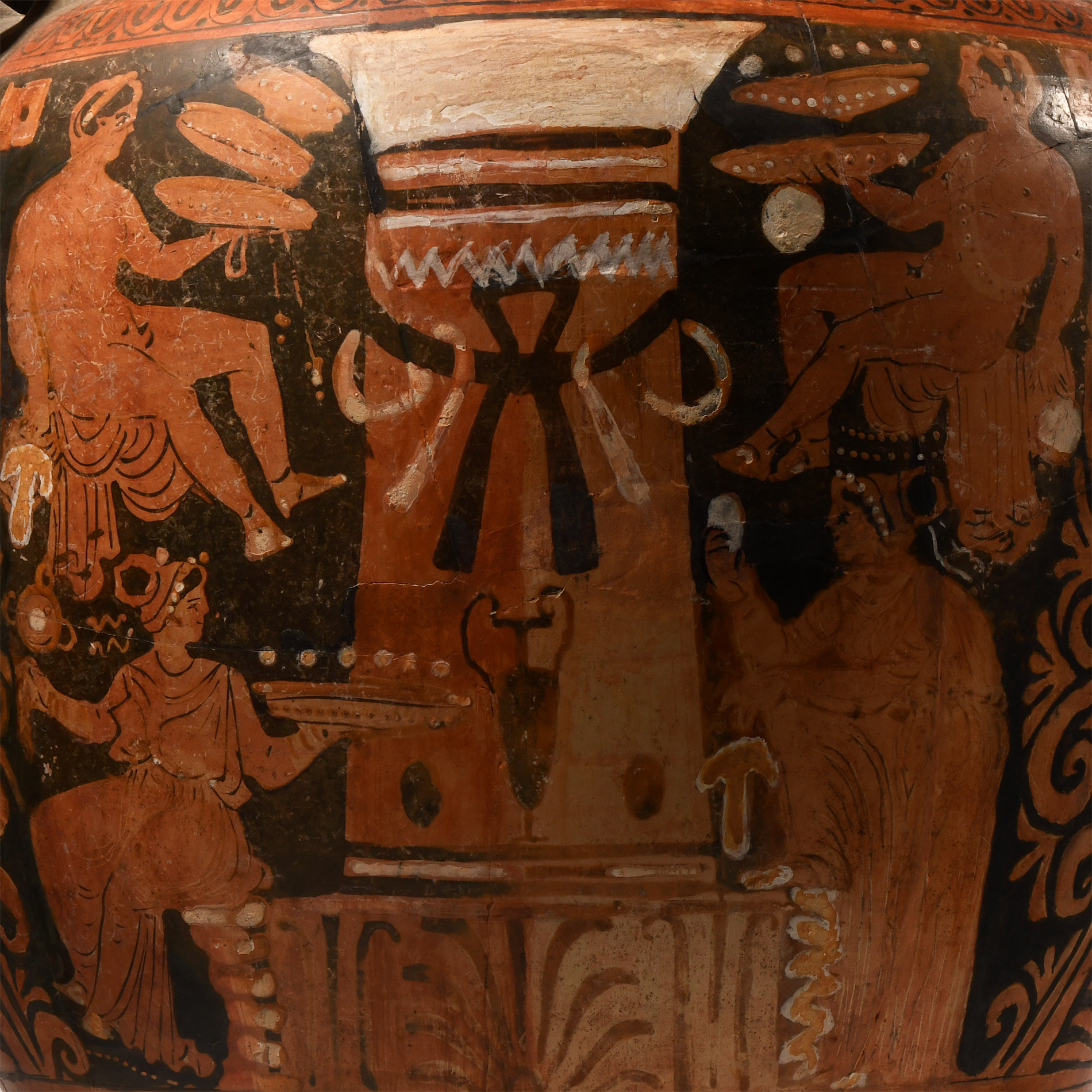
With a flared and carinated foot, meander patterns around the lower body, band of rosettes encircling the neck, gusseted handles with masks to the outer faces opening to two columnar legs, broad shoulder with loops flanking the handles; red-figure scenes to the neck and body: Side a: above, a quadriga with Nike at the reins, wings spread; below, naiskos with flanking columns, hero standing beside his horse, resting on his spear, wearing a muscled armour, surrounded by seated and reclining females and youths in various poses, one of the youths holding the hero's pointed boots in his hand; Side b: above, a palmette, below column with decorative ribbons flanked by two seated males and two females offering votive gifts; some restoration.
ProvenancePrivate collection, Neuchâtel, Switzerland.
Ex collection H.& P. Payot, Clarens, by descent.
Accompanied an academic report by Dr Raffaele D’Amato.
This lot has been checked against the Interpol Database of stolen works of art and is accompanied by a search certificate number no.12066-218199.
Cf. a similar Apulian red-figure volute-krater attributed to the Baltimore painter in Metropolitan Museum, New York, accession no.69.11.7, in Heuer, K.E. ‘Vases with faces: isolated heads in South Italian Vase Paintings’ in Metropolitan Museum Journal,Vol. 50 (2015), pp.62-91, figs.3a-3b; for a volute krater with Nike driving a four-horse chariot see the Apotheosis of Herakles in the Archaeological Museum of Napoli (circa 360-350 B.C.), attributed to the painter of Licurgus, which shows the same decoration with faces on the volute handles.
FootnotesMonumental kraters such as this one are typical of the Apulian red-figure production that developed between circa 440 and 300 B.C. in the region of the Greek colonies of Taranto and Metaponto in Southern Italy, where they were used as tomb markers in cemeteries. Here the painter focuses on the celebration of the hero-warrior, surrounded by young women and men, the image of the victorious leader is emphasised by the full panoply and iconography of Nike.
CONDITIONTimeLine Auctions follows a vetting process to ensure the authenticity and legality of all items, reinforcing our commitment to integrity and responsible trading. Each antiquity, antique, and coin lot undergoes thorough examination by a vetting committee of at least ten external specialists, professional trade association members, scientists, and archaeologists: Our Vetting Process
AUCTIONS:
TimeLine is a leading auction house specialising in antiquities, ancient art, collectables, natural history, coins, medals, and books. Our auctions offer museums, collectors, historians, and enthusiasts the opportunity to acquire unique and historically significant pieces.
LOT 0093
Monumental Apulian Red-Figure Volute Krater Attributed to the Licurgus Painter
Estimate £50,000 - 70,000€58,000 - 81,200 (for guidance only)$67,500 - 94,500 (for guidance only)
-
Etrusco-Corinthian Bowl with Painted Ducks
575-550 B.C.Sold for (Inc. bp): £845
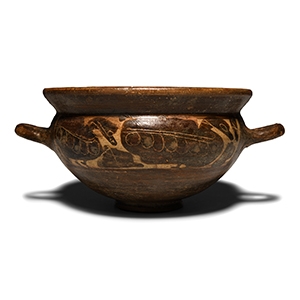
Squat skyphos on a low, pared conical base; two small horizontal handles round in section, short flaring everted rim; painted in dark brown with decoration limited to two window-like areas between the handles; on either side of the bowl two large ducks moving to the right with incision and overpaint clarifying the mass of the bodies, wings indicated with two quick horizontal strokes and a row of pendant arcs or scallops with dots of red and white overpaint for a rich, feathered effect; rosettes filling the space around the ducks. 257 grams, 18 cm wide
In the collection of Mr Ulfert Wilke, founding Director of the University of Iowa Museum of Art. Acquired from Ulfert Wilke on 29 May 1968. From the collection of Dr Howard Sirak, Columbus, Ohio, USA. Ex I.M. Chait Gallery, Los Angeles, USA, 14 December 2020, lot 212. Property of a South Australian private collector, with collection reference 20.34. Accompanied by detailed collector's catalogue pages including description and photograph.
The catalogue cites this piece as no. 3.10 from the Wilke Collection and the original sticker is on the base. The catalogue was for the exhibition at the University of Iowa Museum of Art from 17 March to 30 April 1971. -
Greek Painted Terracotta Trefoil Cup
1st millennium B.C.Sold for (Inc. bp): £91
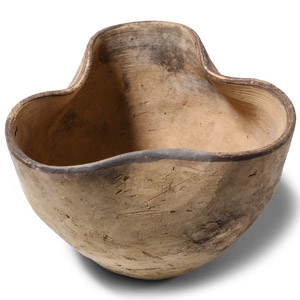
Hemispherical in profile with pinched trefoil format, applied pigment to the rounded rim. 421 grams, 14 cm wide
From a collection acquired on the UK art market from various auction houses and collections mostly before 2000. From an important Cambridgeshire estate; thence by descent.
In many ancient houses a special domestic sacrifice was offered: the remains of burned offering of a chicken or small bird were deposited on the floor of the courtyard, along with certain characteristic small vessels: shallow saucers and plates, covered dishes, wine cups and lamps. -
Greek Chalcidian Black-Figure Amphora with Heracles and Nemean Lion
Circa 650-575 B.C.Sold for (Inc. bp): £45,500
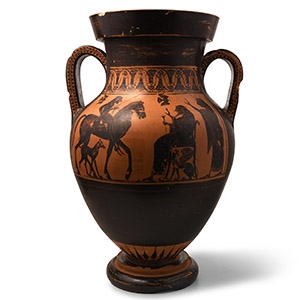
With two figural scenes: Side A: the first of the canonical labours of Heracles, the fight against the Nemean lion - in the centre the hero standing over the lion, strangling it with his left arm while thrusting his sword into its neck; two other standing figures witness the fight - on the right Athena, fully armed and ready to defend Heracles with her lance, and to the left Hermes, recognisable by his hat (petasos), winged boots and the caduceus; Side B: a nude horseman, holding his lance and accompanied by his dog, walking towards a king seated on his throne, holding a sceptre in his left hand; on the far right, a standing woman, probably the king's wife; a sphinx under the throne and two flying birds; some restoration. 3.1 kg, 43.5 cm
Some restoration, in general in good condition.
Ex German private collection. with Hampel Kunst Auction, Munich, 2012, no.867. Private European collection, thence by family descent. Accompanied by an academic report by Dr Raffaele D’Amato. This lot has been checked against the Interpol Database of stolen works of art and is accompanied by a search certificate number no.12069-218134.
The shape is typical of the period, and is decorated with black-figured technique, in which the figures were silhouetted in black slip on a reddish clay ground, and linear elements were incised with a needle, with additional details painted with white and cherry red-slip. The amphora seems to belong to one of the sub-types of the ‘Pseudo-Chalcidian’ group (the Poliphemus group), derived from the main Chalcidian series
