
Loading, please wait...
LOT 0388
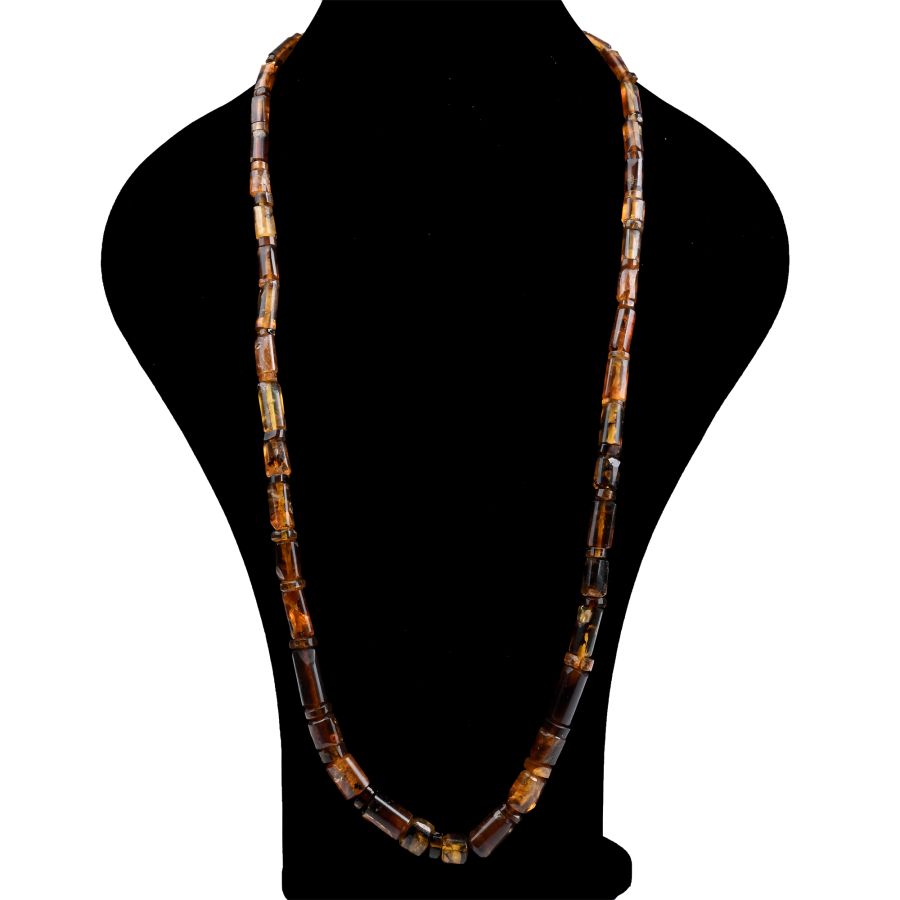
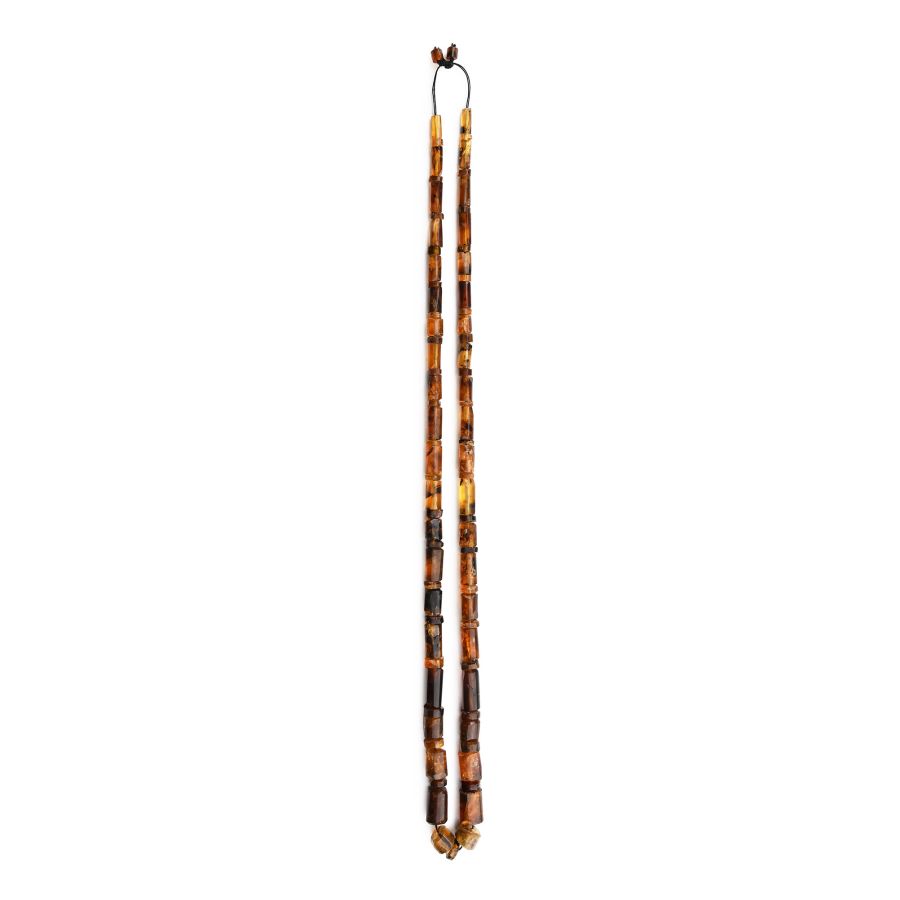
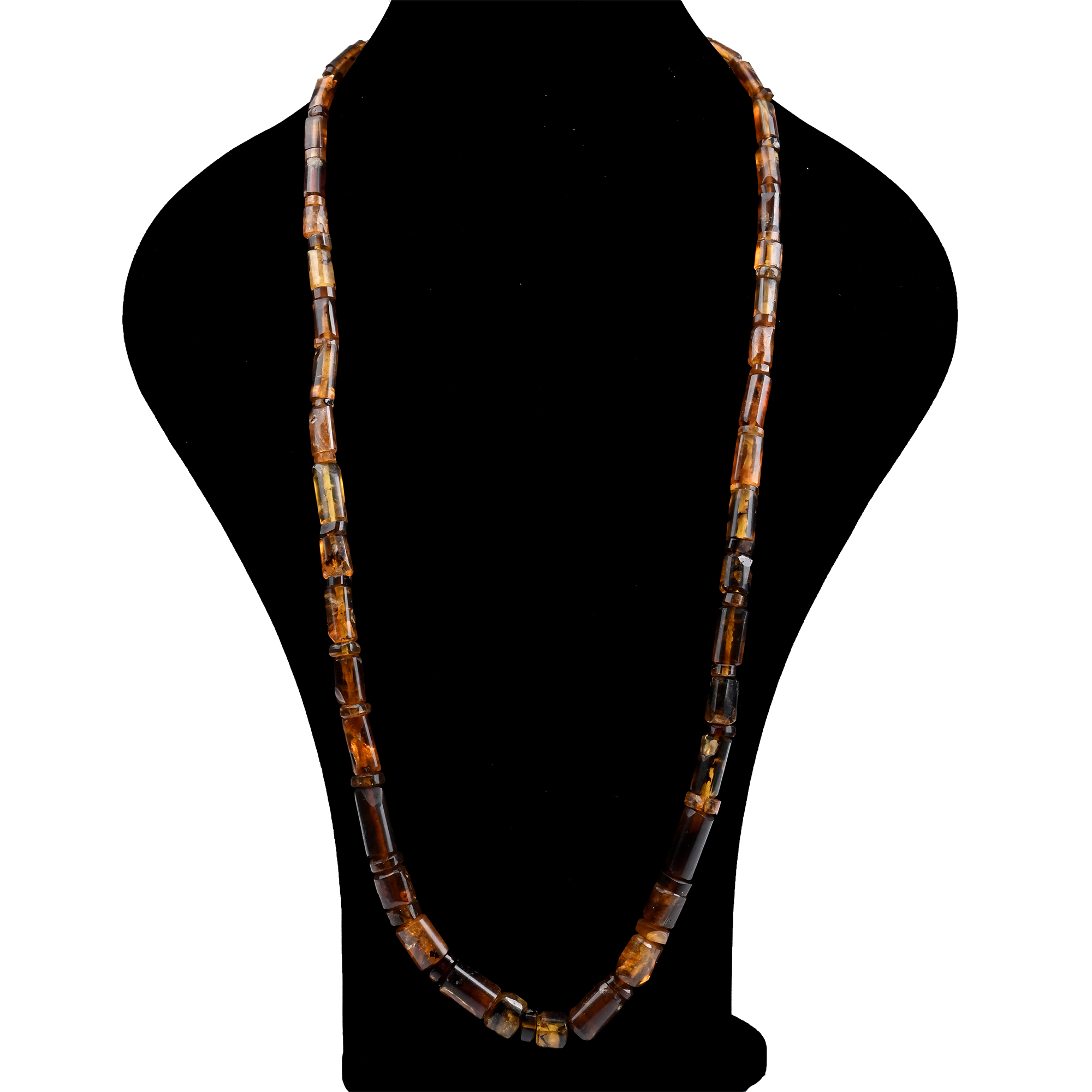
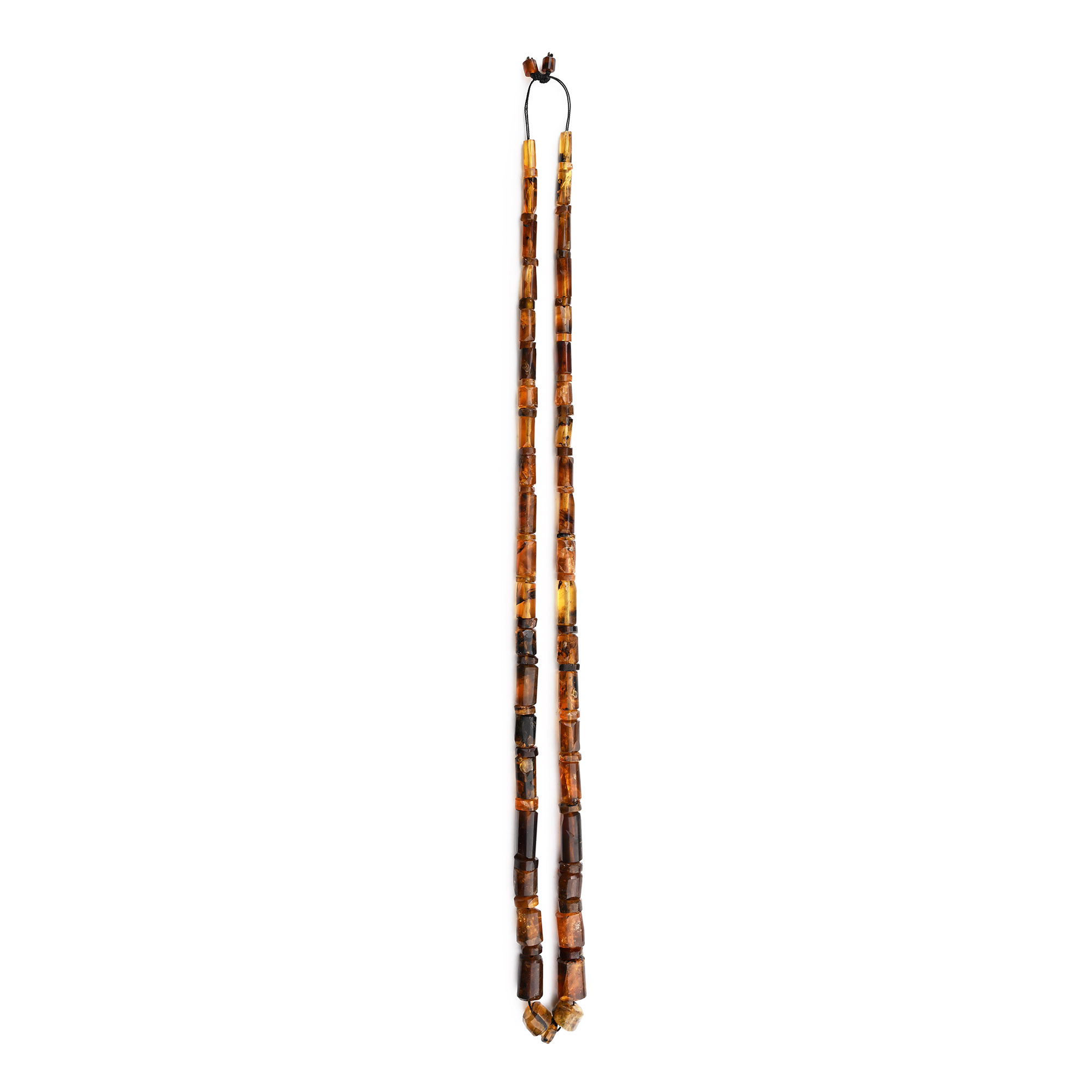
Mizoram Burmese Amber Bead Necklace with Natural Inclusions
CRETACEOUS PERIOD, CIRCA 99 MILLION YEARS B.P.
32 1/4 in. (54 grams, 82 cm).
Restrung necklace of dark honey-coloured beads of cylindrical and annular shape formed by hand, containing various organic inclusions.
ProvenanceFrom the Hukawng Valley in northern Myanmar.
Acquired in Assam in the 1980s.
From the private collection of a Somerset gentleman.
Accompanied by a copy of a letter from Dr Andrew J. Ross FRES, of the National Museum of Scotland, concerning testing carried out on the necklace.
Dr Ross states: 'The internal fractures and flow planes are consistent with what you see in amber, and although it does not contain any identifiable insect inclusions, the organic fragments that are present and the general colours appear consistent with Burmese amber.'
CONDITIONTimeLine Auctions follows a vetting process to ensure the authenticity and legality of all items, reinforcing our commitment to integrity and responsible trading. Each antiquity, antique, and coin lot undergoes thorough examination by a vetting committee of at least ten external specialists, professional trade association members, scientists, and archaeologists: Our Vetting Process
AUCTIONS:
TimeLine is a leading auction house specialising in antiquities, ancient art, collectables, natural history, coins, medals, and books. Our auctions offer museums, collectors, historians, and enthusiasts the opportunity to acquire unique and historically significant pieces.
LOT 0388
Mizoram Burmese Amber Bead Necklace with Natural Inclusions
Estimate £500 - 700€580 - 810 (for guidance only)$680 - 950 (for guidance only)
-

1.9 Metre High Vintage Oak Display Cabinet
Mid 20th century A.D.Sold for (Inc. bp): £7
A large wood cabinet glazed on three sides for the display of a suit of armour or similar; internal light; for collection from our Head Office in Harwich only. Approximately 80 kg, 191 x 69 x 80.5 cm
Property of a UK gallery. -
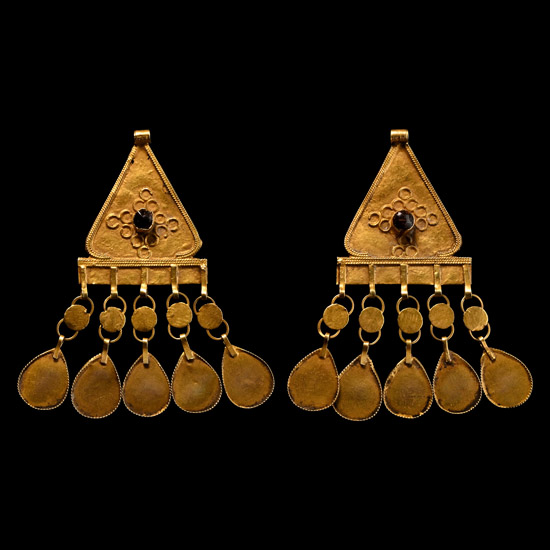
Roman Style Gold Earring Pair with Garnets
20th century A.D.Sold for (Inc. bp): £286
Each a triangular plaque with filigree border, central cell with inset garnet cabochon surrounded by applied filigree annulets, transverse bar below with discoid dangles. 4.04 grams total, 49 mm
with Archaeologia, Switzerland, before 1983. Ex private North American collection. London private collection, 2016. -

Russian Orthodox Enamelled Bronze Travel Icon with Veneration of the Virgin of Vladimir
19th century A.D.Sold for (Inc. bp): £98
Representing the Vladimir Mother of God with the Divine Child; the half-length figure Mary with covered head turned right and with her left hand raised; holding the embracing infant Jesus in her right hand; above them inscription in Greek letters 'ΜΡ ΘΥ' (Mother of God); flanking the central icon and beneath it the images of the Saints Peter, Paul, Peter of Moscow and John Chrysostomos, Saint Gregory and Saint Dimitri; in the foreground the city of Vladimir. 96 grams, 60 mm
Acquired from Chris Martin-Zakheim, Iconastas, 5 Piccadilly Arcade, London SW1. From the private collection of a West London, UK, gentleman, formed since the early 2000s.
The original icon prototype of these smaller icons was the icon of the Virgin Mother of Vladimir with the infant Jesus (the original preserved in the Tretyakov Gallery, Moscow), probably the most famous icon of Russia, which was thought to have been created in Constantinople in the early part of 1100s. This image is sometimes referred to as the ‘tenderness icon’, with artists attempting to show the close relationship of mother and son with their cheeks touching as they embrace.
