
Loading, please wait...
LOT 1978
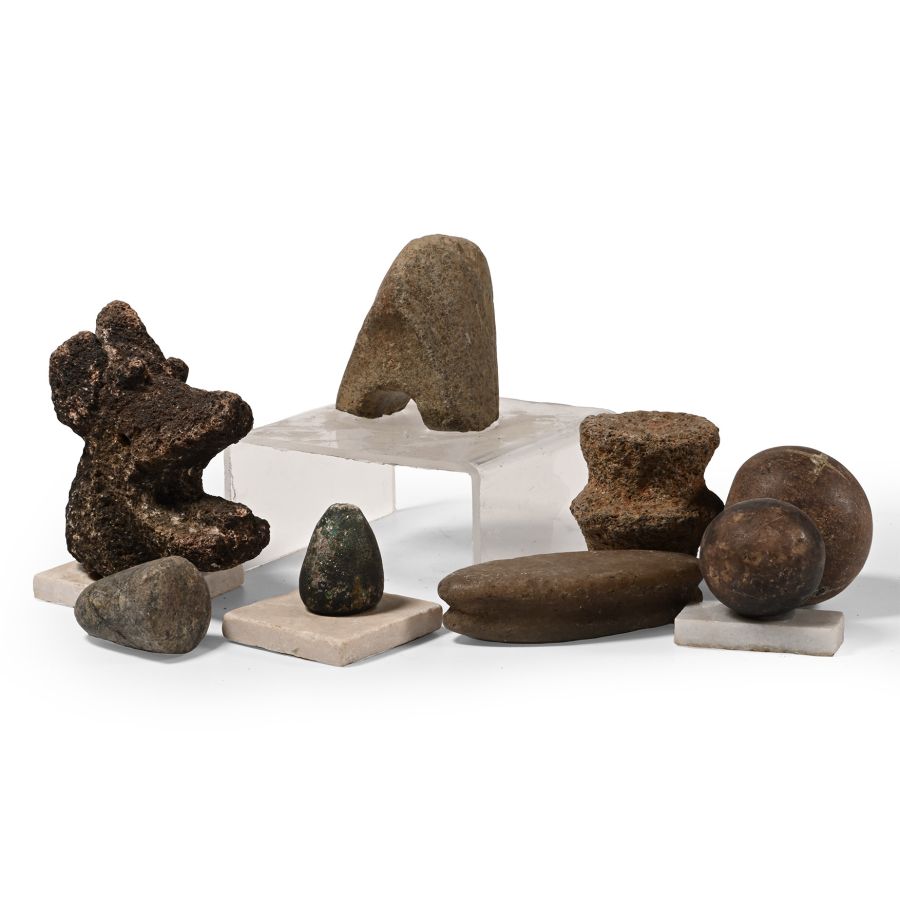
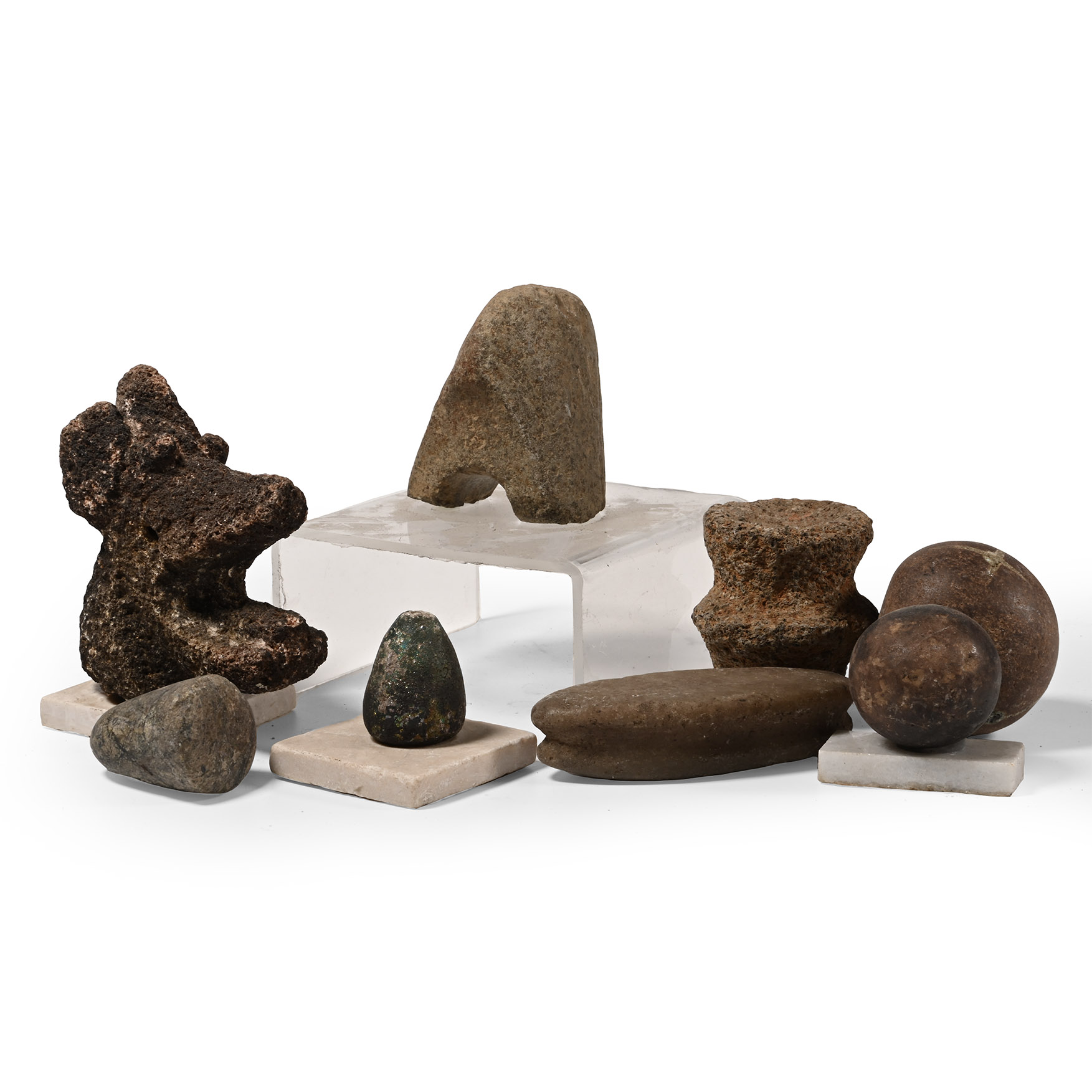
Mixed Stone Artefact Group
20TH CENTURY A.D. OR EARLIER
1 1/2 - 4 3/4 in. (1.24 kg total, 4-12 cm including stand).
Including a dog's head modelled in the round; a small tripod vessel; a hammerstone and other items, some mounted on display stands. [8, No Reserve]
ProvenanceFrom a collection acquired on the UK art market from various auction houses and collections mostly before 2000.
From an important Cambridgeshire estate; thence by descent.
TimeLine Auctions follows a vetting process to ensure the authenticity and legality of all items, reinforcing our commitment to integrity and responsible trading. Each antiquity, antique, and coin lot undergoes thorough examination by a vetting committee of at least ten external specialists, professional trade association members, scientists, and archaeologists: Our Vetting Process
AUCTIONS:
TimeLine is a leading auction house specialising in antiquities, ancient art, collectables, natural history, coins, medals, and books. Our auctions offer museums, collectors, historians, and enthusiasts the opportunity to acquire unique and historically significant pieces.
-
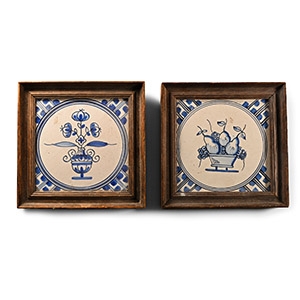
Framed Dutch Blue and White Tile Pair
18th century A.D.Sold for (Inc. bp): £39
Each a square wooden frame with moulded inner ledge, glazed blue-and-white ceramic tile, one with a vase and flowers, the other with a bowl and fruit; birthday greetings legend to reverse. 850 grams total, 16.8 x 16.7 cm each
Private Norfolk collection, early 2000s. -
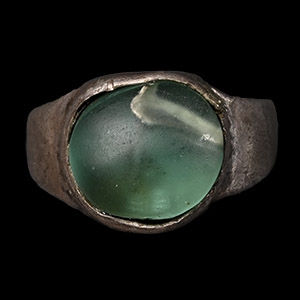
Elizabethan Silver Ring with Green Cabochon
16th-17th century A.D.Sold for (Inc. bp): £124
With a flat-section hoop widening at the shoulders, raised bezel set with a green glass cabochon. 5.94 grams, 28.53 mm overall, 19.74 mm internal diameter (approximate size British T 1/2, USA 9 3/4, Europe 21.89, Japan 21)
Found during a rally at Bridgewater, Somerset, UK, in 1993, and recorded with the museum services on site. From the collection of a Caerphilly, UK, gentleman formed since 1990. -
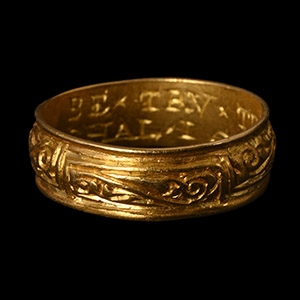
'The Burton Agnes' Tudor 'BE x TRV x TIL x DEATHE x AND x SO // SHAL x I' Gold Double Register Posy Ring
Circa 1550-1600 A.D.Sold for (Inc. bp): £3,900
Barrel-shaped hoop with scrolled panels to the outer face; inner face with legend in two tiered lines of seriffed capitals 'BE x TRV x TIL x DEATHE x AND x SO // SHAL x I' with final curlicue. 5.23 grams, 20.70 mm overall, 18.11 mm internal diameter (approximate size British O 1/2, USA 7 1/4, Europe 15.61, Japan 15)
Found whilst searching with a metal detector in a garden in Burton Agnes, East Riding of Yorkshire, UK, on 8th January 2023, by Christopher Watson. Declared as treasure and disclaimed by the crown with Treasure reference no.2023 T41. Accompanied by a copy of the British Museum's Portable Antiquities Scheme (PAS) report no.YORYM-7CD0D7. Accompanied by a copy of the report for H M Coroner no.2023 T41. This lot has been checked against the Interpol Database of stolen works of art and is accompanied by a search certificate number no.12442-225797.
The legend 'Be true til death and so shall I' is not recorded in that form in Evans's corpus (now nearly a century old), but variants such as 'Be true to me as I to thee' or Be true in heart till death depart' carry a similar sentiment.
